
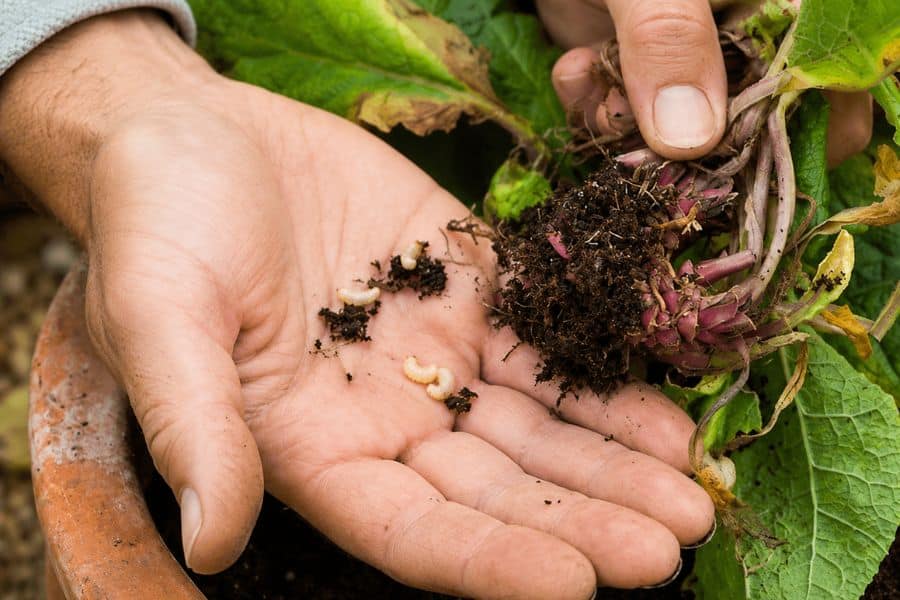
You water the pot on the patio like you have all summer, and the heuchera that looked fine on Tuesday is flopped sideways by Friday. You give it a gentle tug expecting to feel roots. It comes away in your hand like a bad wig, with nothing underneath but a few pale, C-shaped grubs curled in the compost looking very pleased with themselves.
Congratulations, you’ve met the vine weevil. Or rather, you’ve met its children, because the adults have long since wandered off to notch the edges of some other unlucky plant and lay their eggs where you’d never think to look.
August is the month the vine weevil problem tends to be at its worst, and it’s also the month you can actually do something about it that works and without chemicals.
The Vine Weevil Problem That Sneaks Up on Container Gardeners Every August
Vine weevils have a particular fondness for pots, and if you’ve mostly gardened in the ground until now, you might have missed them entirely.
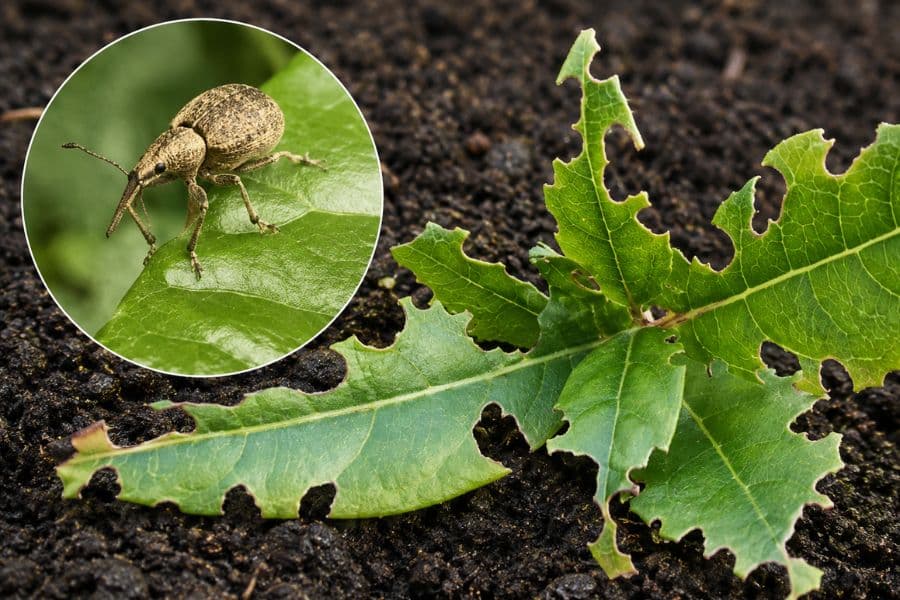
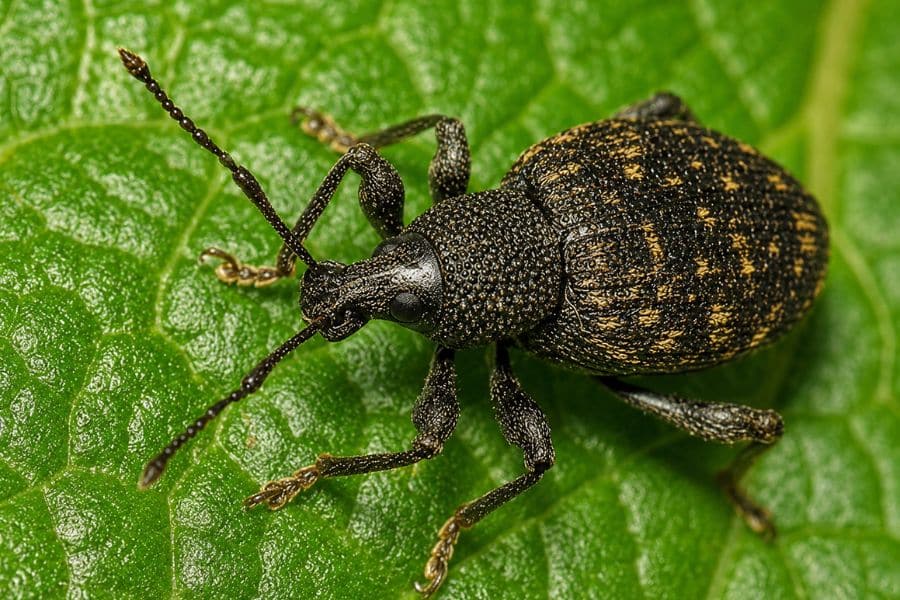
The adults are dull black beetles about a third of an inch long; they can’t fly, and they only come out at night, which is how they’ve managed to eat their way through half your fuchsias without you ever laying eyes on one.
You’ll spot the damage before you spot the culprit: neat little notches taken out of the edges of leaves, as if someone had gone round with a hole punch and got bored halfway.
The adults are annoying but survivable. It’s the grubs that do the real damage, and they do it underground where you can’t see them until it’s too late.
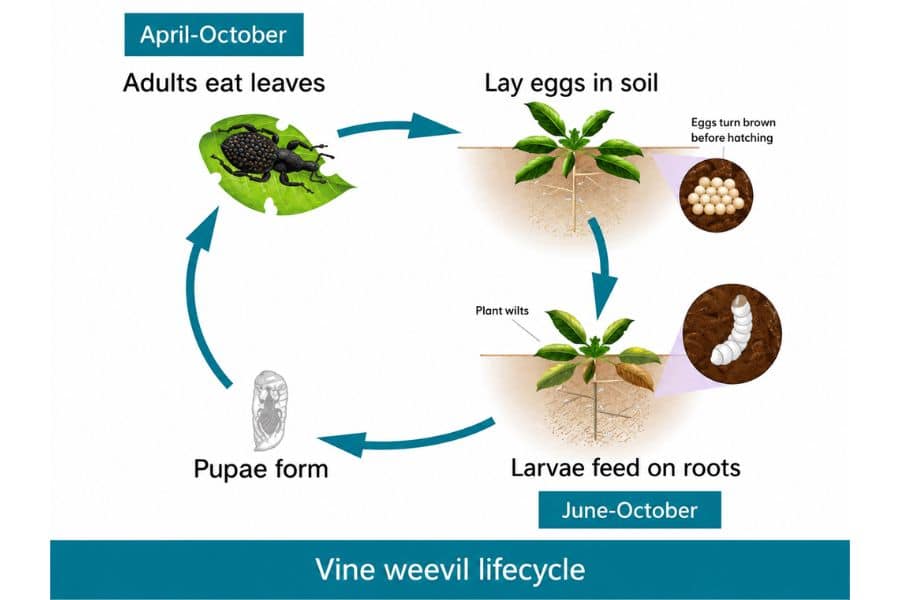
Each female lays hundreds of eggs in late summer, mostly into the loose, moist compost of container plants, which is basically a five-star hotel for a vine weevil larva.
The eggs hatch, the grubs eat the roots from the bottom up, and by the time the plant wobbles or wilts, there’s nothing left holding it in the pot.
Heucheras are the classic victim, along with primulas, cyclamen, strawberries, sedums, sempervivums, and pretty much anything in a container with soft roots. If you’ve ever pulled up a plant that seemed fine yesterday and found it rootless, with a handful of fat white grubs in the compost, you’ve had them.
And if you’ve had them once, you almost certainly have them again, because the adults will have laid the next generation right where the last lot fed.
Why August Is the Month They Love
The reason August keeps coming up in vine weevil advice is straightforward. It’s the point in the year when the soil in your pots is warm enough for nematodes to work effectively, and the grubs are small enough to be easily killed.
Leave it until October, and the soil has cooled off, the grubs have fattened up, and your success rate drops off a cliff.
Try it in April, and the grubs are older and tougher, plus you’ve already lost a season of plants.
The RHS (Royal Horticultural Society) flags late summer and early fall as the sweet spot for this reason
If you look at their monthly job list, watering the nematode treatment into your containers sits right there alongside the usual August chores.
Soil temperature needs to be above roughly 41°F for the nematodes to survive and hunt, and in most yards that gives you a comfortable window from about now through into September before nights start to cool things down.
The other thing about August is that the adults are actively laying. If you treat now, you’re catching the first wave of grubs while they’re tiny and vulnerable, before they’ve done any real damage to your plants.
Wait, and you’re treating a garden full of larger, hungrier grubs that have already chewed through the roots you were hoping to save.
Nematodes: The Fix That Actually Works
Nematodes are microscopic worms that naturally live in soil, and one particular species, Steinernema kraussei, hunts vine weevil grubs. You can buy them on Amazon as a damp powder or a little sponge-like block, mix them with water, and water them into your pots.
The nematodes swim through the compost, find the grubs, get inside them, and that’s the end of that.
They’re harmless to pets, children, birds, bees, worms, and every other useful thing in the yard. The whole process, from opening the packet to putting the watering can down, takes about 10 minutes for a decent-sized collection of pots.
A few practical points worth knowing before you order:
- Order them fresh and use them fast. Nematodes are living organisms, and they don’t sit happily in the fridge for weeks. Order for delivery when you know you’ll have a free evening, and get them into the pots within a day or two of arrival.
- Water the pots first. Dry compost is hostile to nematodes, so give everything a good soak an hour before you apply them.
- Apply in the evening or on an overcast day. UV light kills them, so a bright August afternoon on a hot patio is the worst possible time. I usually do mine after supper when the sun’s off the pots.
- Use a coarse rose on your watering can, or take the rose off entirely. A fine mist strains them out. If your watering can has a fiddly filter, unscrew it for this job.
What to Do the Rest of the Year So It Doesn’t Come Back
One nematode treatment in August will knock the population right down, but vine weevils are persistent, and the adults will find their way back eventually, especially if you have neighbors with untreated pots.
The trick is not to expect a one-and-done cure. Think of it more like an annual habit, the way you’d stake dahlias or cut back lavender after flowering.
A repeat treatment in April or May catches any grubs that overwintered and got missed the first time round. If you only do one, do the August one, because that’s when the population is largest and youngest.
But two treatments a year is what I’d suggest if you’ve had a bad infestation, and it’s cheap enough so it won’t break the bank.
There are a few other things worth doing alongside the nematodes:
- Check plants before you bring them home. Nurseries and garden centers are how vine weevils travel, and a bargain heuchera can bring a whole family with it. Slide the plant out of its pot before you buy and have a look at the roots. If you see any pale grubs, put it back.
- Go out with a flashlight after dark on a mild evening in early summer. The adults come out to feed, and you can pick them off by hand.
- Encourage birds around the yard. Robins, blackbirds, and thrushes will happily eat both adults and any grubs you turn up when repotting. y.
- Repot container plants every couple of years with fresh compost, and take a good look at the roots when you do. It’s a chance to catch any grubs that slipped through and to spot damage before the plant collapses.