
There really is nothing like the joy of growing your own fruit and veg. Being able to go out and pick tomatoes off the vine to eat with your lunch or, in this case, strawberries for a fruit salad. They taste completely different from anything you get at the grocery store.
However, growing them isn’t always easy, and it can be hard to get a successful crop first time around. So much of what you grow depends on the containers and soil you grow them in. Luckily, strawberries don’t require you to have a huge garden with a massive plot or even an allotment.
You can easily grow strawberries in containers on a balcony if you know what to do. These seven DIY strawberry planters are all beginner-friendly, affordable, and proven to work.
1. A Simple Raised Wooden Box Bed
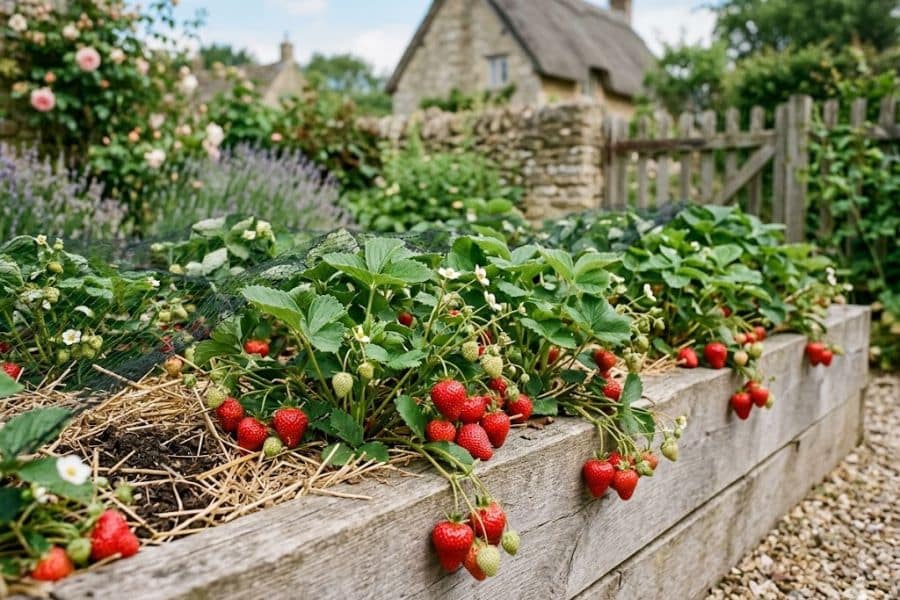
If you’ve never built anything before, this is the place to start. A basic rectangular frame, some boards, a handful of screws, and a drill are all you need.
A raised strawberry box gives you complete control over your soil, drainage, and planting conditions. Aim for at least 8 to 12 inches of depth so the roots have room to spread. Fill it with a good-quality potting mix rather than garden soil, which tends to compact and drain poorly.
Raised beds also warm up faster in spring, which means you could be picking berries earlier in the season than your neighbors.
Cedar is the wood of choice for longevity. If you use untreated pine, paint the inside with a food-safe wood sealant to extend its life.
2. A Cognac Barrel Planter
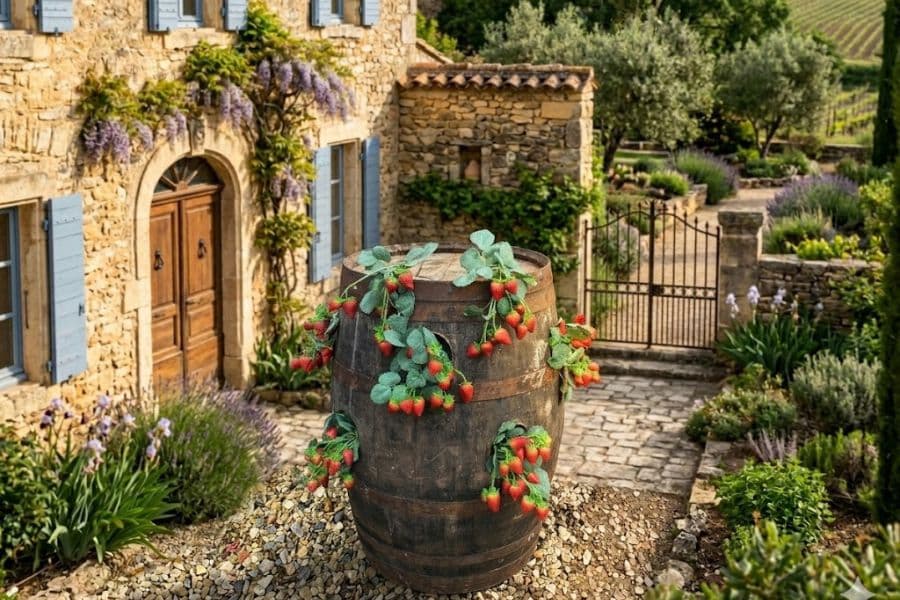
I live near the Cognac region of France, and my neighbor had a load of old Cognac barrels in his barn and gave me some to use in the garden, and they make perfect strawberry planters.
A half barrel is the easiest option to work with. Drill several drainage holes in the base before you fill it. Then add your potting mix and plant your strawberries around the rim and across the top surface, spacing them 8 to 10 inches apart.
A full-sized barrel can hold an impressive number of plants. Some growers also drill extra holes into the sides of the barrel and tuck plants directly into those, too, turning the whole thing into a 360-degree strawberry planter.
A few practical tips:
- The wood from used cognac barrels is naturally weather-resistant, so no sealing is needed.
- Barrels are heavy once filled, so position yours in its final sunny spot before you add the soil.
- Because the barrel holds a decent volume of soil, it retains moisture better than smaller containers, so it requires less frequent watering.
3. A Wooden Pallet Planter
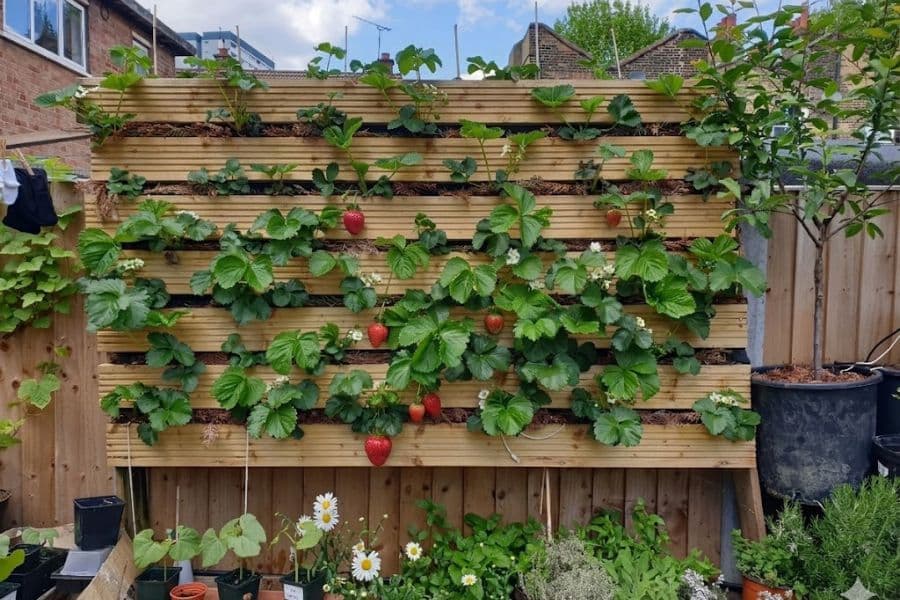
Pallets are cheap, easy to find, and surprisingly effective.
The idea is simple. The strawberry plants sit in the gaps between the slats, and as they grow, the berries hang down for easy picking. Before you fill it, staple landscape fabric to the back and sides to hold the soil in. Then pack it with compost.
A few things to check before you start:
- Look for a pallet stamped HT (heat treated), not MB (methyl bromide). MB pallets are treated with a chemical you do not want near food.
- Choose one with evenly spaced slats and at least six planks on the main surface.
- Make sure it is in good condition with no cracked or rotten wood.
Fill it with quality potting compost, plant one strawberry per gap, and stand it upright once the plants have settled in. You can fit a dozen or more plants on a single pallet.
4. A Tiered Wooden Planter Box
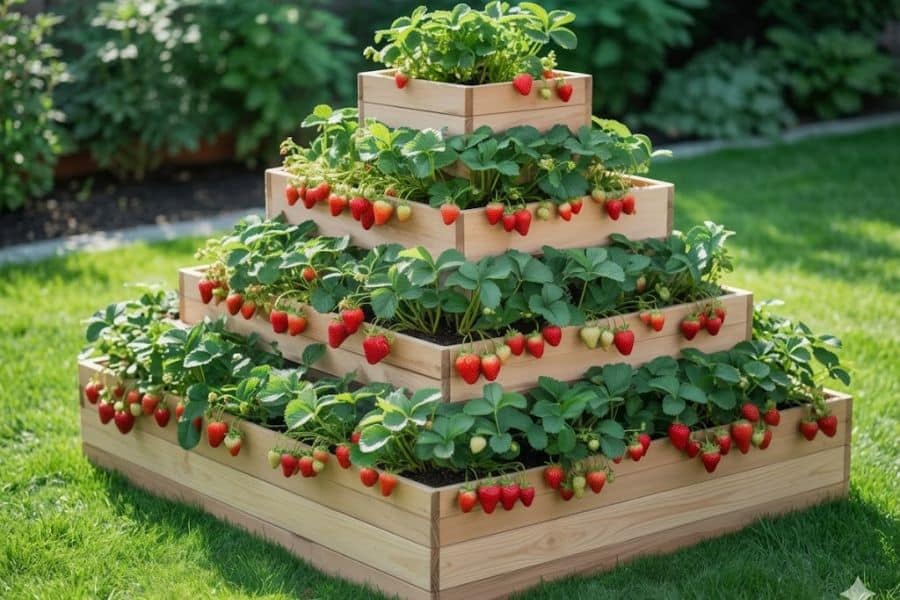
If you want to grow a serious number of strawberries in a compact space, a tiered wooden planter is a fantastic option. Three stacked boxes, each holding around 10 plants, give you a good-looking structure and a generous harvest.
All you need are two 2×4 boards for the legs, plus basic lumber for the boxes. Space the boxes about 2 inches apart as you attach them to the legs.
Cedar and redwood are the best wood choices here. Both naturally resist rot without treatment. If you use pine, seal it with an exterior-grade wood sealer before planting, otherwise it may only last a season or two.
The finished planter has a footprint of around 3.5 x 5 feet, making it well-suited for a patio, porch, or a corner of the yard.
5. A Gutter Planter
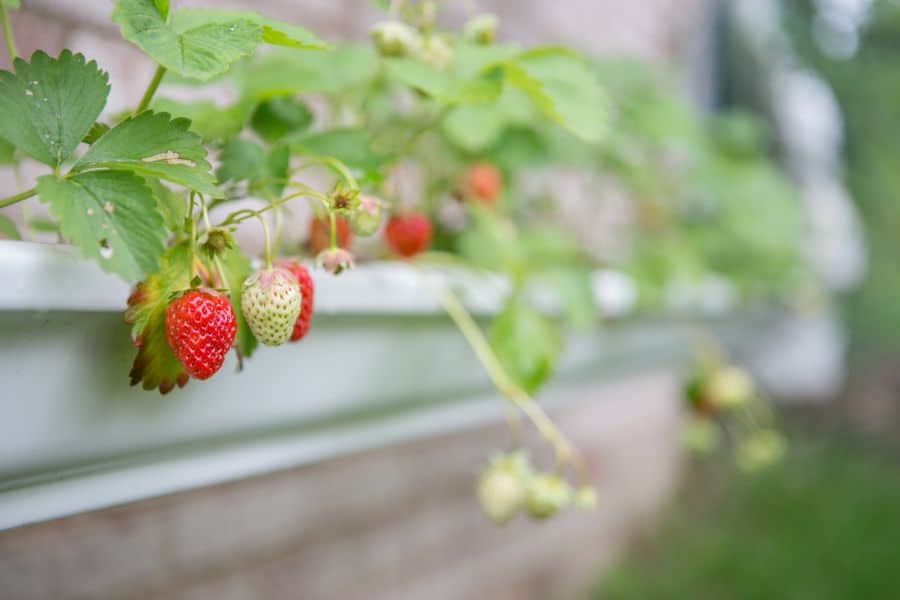
This one is quick, cheap, and incredibly space-efficient. Standard vinyl guttering from any hardware store is all you need.
Here is how to put it together:
- Cut your gutters to the length you want (a hacksaw does the job).
- Drill drainage holes every six inches along the base.
- Fit stop-ends on both sides so the soil stays in.
- Mount the gutters on a fence, wall, or a simple freestanding timber frame.
Because the plants sit up off the ground, they are less likely to suffer from fungal issues like crown rot and fruit rot. Birds and ground-dwelling pests like slugs become less of a problem, too.
Top tip: use the deepest profile gutter you can find. Shallow gutters dry out faster, and strawberries need consistent moisture to produce well.
6. A Hanging Basket
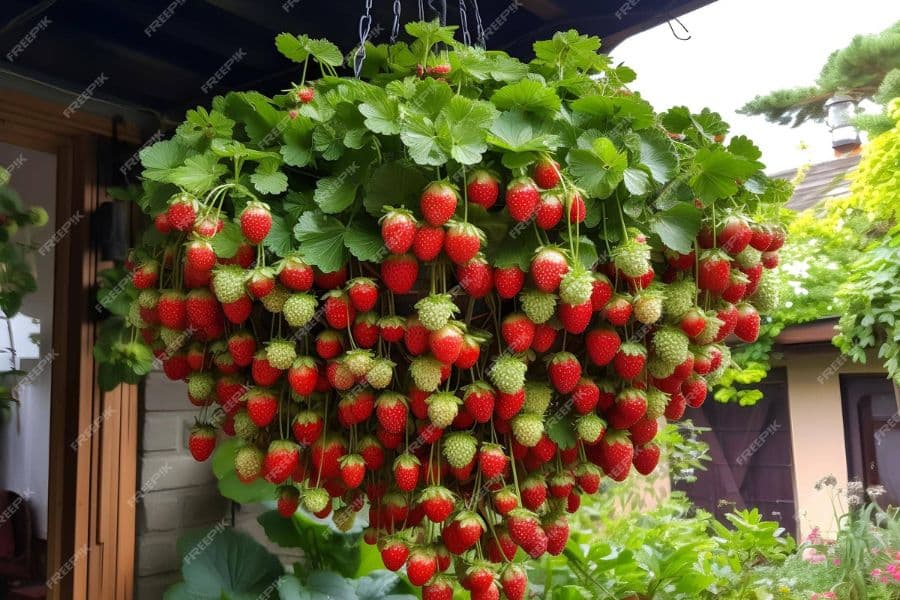
This is the easiest option on the whole list and perfect if you don’t have much space.
A standard 12- to 14-inch hanging basket comfortably holds two to three plants. The strawberries trail naturally over the edges as they grow, which looks great on a porch, pergola, or balcony railing.
The one thing to stay on top of is watering. Hanging baskets dry out fast, especially in warm weather. Check the soil daily and water whenever the top inch feels dry. A moisture-retaining potting mix helps a lot here.
Baskets also keep your fruit completely clear of slugs and soil-borne pests, which is a nice bonus if those have been a problem for you in the past.
7. A Stacked Pot Tower
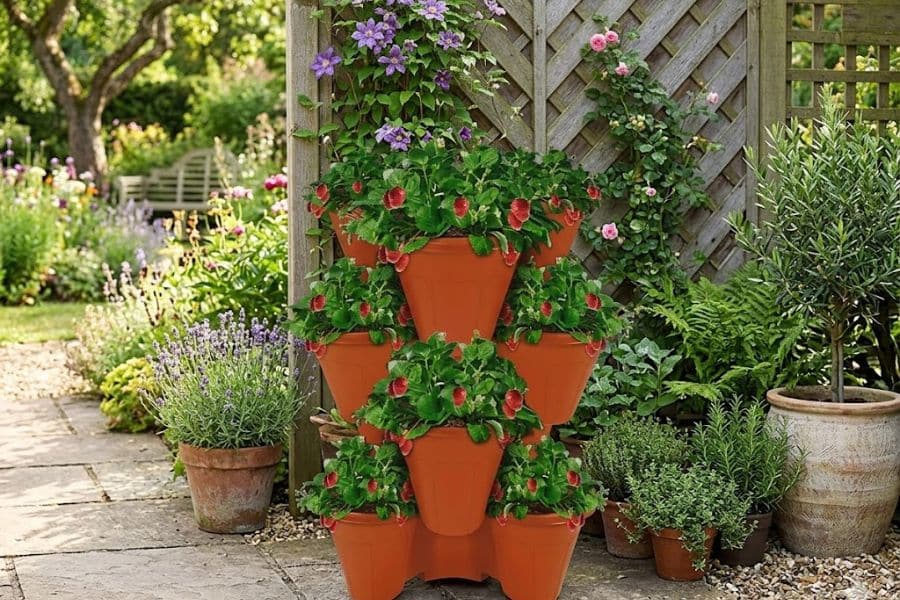
No tools required for this one either. All you need are three or four terracotta or plastic pots in graduating sizes.
Place the largest pot at the bottom, fill it with potting mix, then set a slightly smaller pot on top. Repeat until you have your tower. Plant strawberries around the edges of each pot, pointing them outward so they have room to trail.
A few things to keep in mind:
- Every pot needs drainage holes.
- Do not crowd more than two or three plants per pot, depending on its size.
- Lighter plastic pots are easier to move around to follow the sun.
This setup is very beginner-friendly and takes up almost no floor space.
Top Tips For Growing Strawberries
Once your planter is built, a few simple habits will make all the difference to your harvest.
Choose the right variety
For containers and DIY planters, day-neutral varieties like Albion, Seascape, and Tristar are excellent picks. They produce fruit continuously throughout the growing season rather than all at once. Everbearing varieties like Ozark Beauty also work well, giving you two to three flushes of berries per year.
Give them plenty of sun
Strawberries need at least 6 to 8 hours of direct sunlight each day. More sun means sweeter fruit. A south or west-facing spot is ideal.
Get the crown position right
This is one of the most common mistakes first-time growers make. The crown is the central growing point where the leaves emerge. It needs to sit right at soil level, not buried beneath it. Bury it too deep, and it will rot. Leave the roots exposed, and they will dry out. Right at the surface is the sweet spot.
Water consistently
Container-grown strawberries need to be checked daily in warm weather. Water when the top inch of soil feels dry. The goal is evenly moist soil, not waterlogged. Waterlogged roots cause the same crown rot problems as planting too deeply.
Feed regularly
Strawberries are hungry plants. Once they start flowering, feed them with a high-potassium liquid fertilizer (a tomato feed works well) every two weeks through the growing season. This encourages strong fruit development.
Pinch off first-year flowers on June-bearing plants
It seems counterintuitive, but removing the flowers in year one lets the plant focus energy on building a strong root system. The payoff comes in year two with a much bigger harvest.
Manage your runners
Strawberry plants send out long stems called runners that produce new baby plants. In the first year or two, snip these off regularly. The plant will put all its energy into producing fruit instead of spreading. Once your plants are established, you can let a few runners root to create new plants for free.
Do not overcrowd
Space plants 8 to 10 inches apart. Crowded plants compete for nutrients and are more prone to disease. Give them room to breathe, and they will reward you.