
If you’re a relatively new gardener, then it can be a little daunting knowing what to plant when and how to turn your garden into a blooming paradise. We don’t all have hours to spend planting, weeding, and watering. But that doesn’t mean we don’t want to enjoy some garden time.
And when I say garden time, I’m talking about sitting, reading a book, enjoying a morning coffee, or drinking a glass of wine, watching the sun go down. The last thing you want is an empty garden or one devoid of flowers.
However, if, like me, you’re a tad impatient and want your garden to look like an oasis without too much work, these 9 plants are easy to maintain, cheap to buy, and will give you the garden fix you’re looking for.

9 Easy Flowers to Plant to Turn Your Garden Into an Oasis
Whether you’ve got a big yard, a tiny patio, or something in between, these nine plants will give you more color and life than you’d expect for the effort you put in.
Zinnias
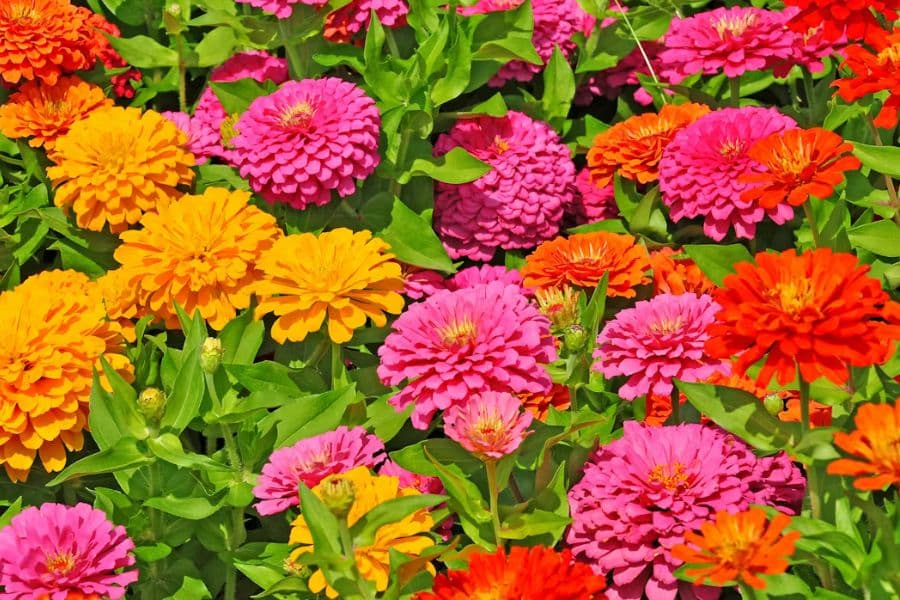
Zinnias give you great bloom for your buck. Plant them once, ignore them mostly, and they’ll reward you with weeks of bold, saturated color from midsummer right through to the first frost. They come in almost every shade except blue, and they’re a magnet for butterflies, which is always a bonus.
Sow seeds directly in the ground after the last frost, when the soil has warmed. They don’t like being transplanted, so skip the fuss of starting them indoors. Once they’re established, deadhead regularly by snipping off spent blooms, and the plant will keep producing more flowers without slowing down.
Marigolds
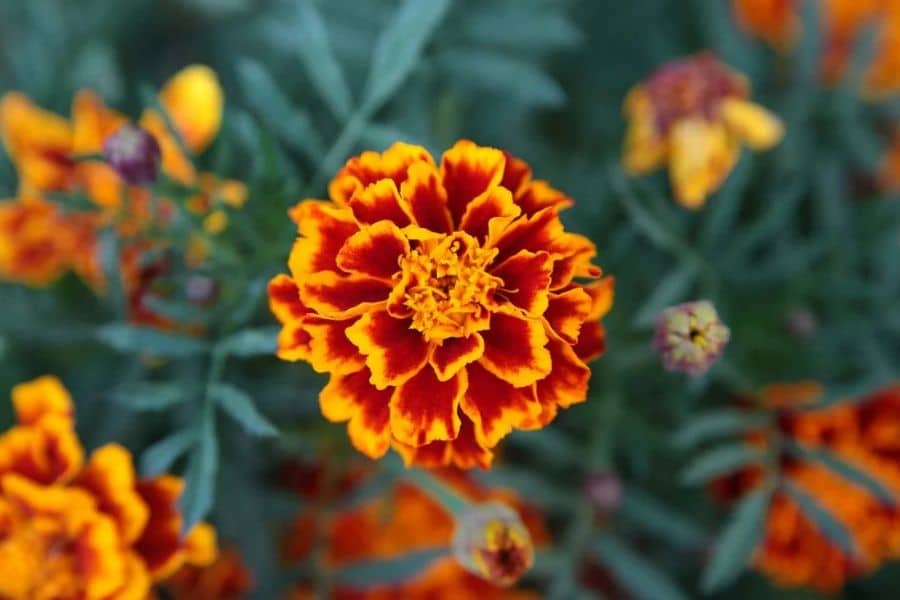
Marigolds have a bit of a reputation as being a plant your grandma would have in their garden. But I’m a big believer in whatever blooms brightly has a space in my garden. And besides, I can never resist jewel colors, and these come in rich oranges, deep burgundies, and creamy yellows, and they bloom practically nonstop from late spring until fall.
They’re also among the few flowers that actually repel garden pests.
Plant them in full sun after your last frost date. They’re drought-tolerant once established, so you won’t need to hover over them with a watering can. Deadheading speeds up flowering, but even if you forget, they’ll still perform well.
Cosmos

Cosmos are among my favorites as they just seem to spread. The feathery foliage and delicate pink, white, and burgundy blooms are gorgeous, and the bonus is that they’re one of the easiest things you can grow from seed. A packet costs less than a coffee.
Sow seeds directly into poor, well-drained soil after the last frost. Rich, fertile soil actually makes them grow tall and floppy, so don’t bother amending the ground. They self-seed freely, meaning you may not have to plant them again next year. Just let some seed heads dry on the plant at the end of the season.
Snapdragons
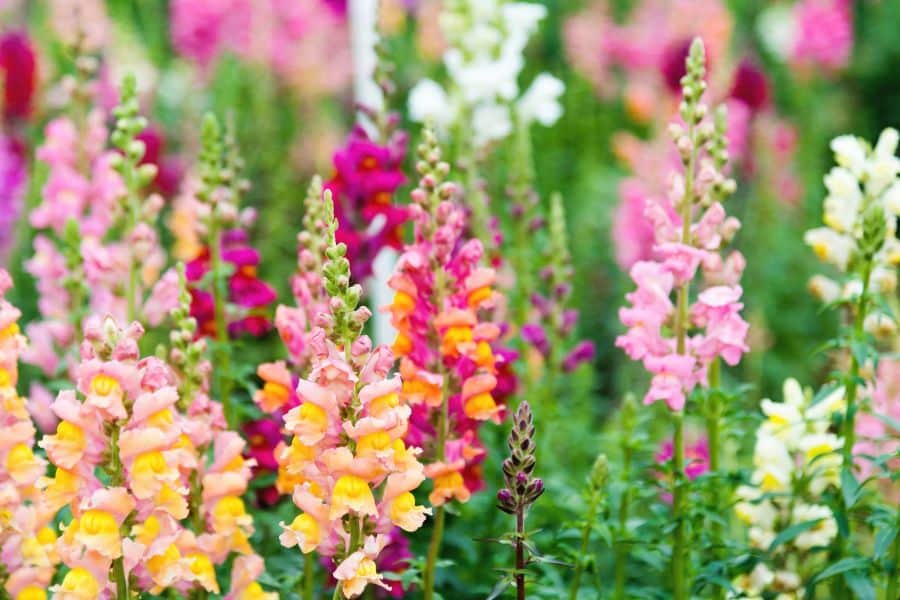
Snapdragons are cool-season flowers, which makes them useful for filling the awkward early-spring and late-fall gaps when most other plants haven’t woken up yet. The flowers come in almost every color imaginable and have that distinctive pinching face.
Plant them in early spring as soon as the soil can be worked, or in fall in mild climates. They prefer cooler weather and will slow down in the height of summer, then often bounce back in the fall. Deadhead regularly to keep the blooms coming, and don’t be surprised if they self-seed and reappear next year.
Black-Eyed Susans
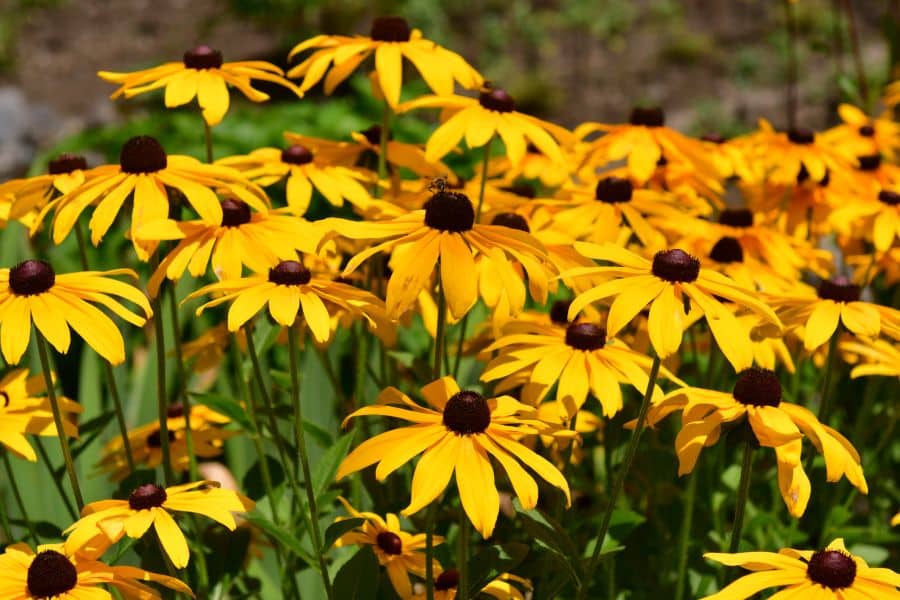
You’ll be pleased to know that Black-Eyed Susans are practically indestructible, so perfect for newbie gardeners. They are cheerful yellow daisy-like flowers, with dark centers, and they bloom from midsummer into fall, filling the gap when spring flowers have faded, and the garden can start to look a bit tired. They’re native to North America, which means they’re already well adapted to a wide range of conditions.
Plant them in a sunny spot and water regularly the first season while they settle in. After that, they’re largely drought tolerant and will spread slowly to fill more space each year. In fall, leave the seed heads standing rather than cutting them down. Finches love them.
Daylilies
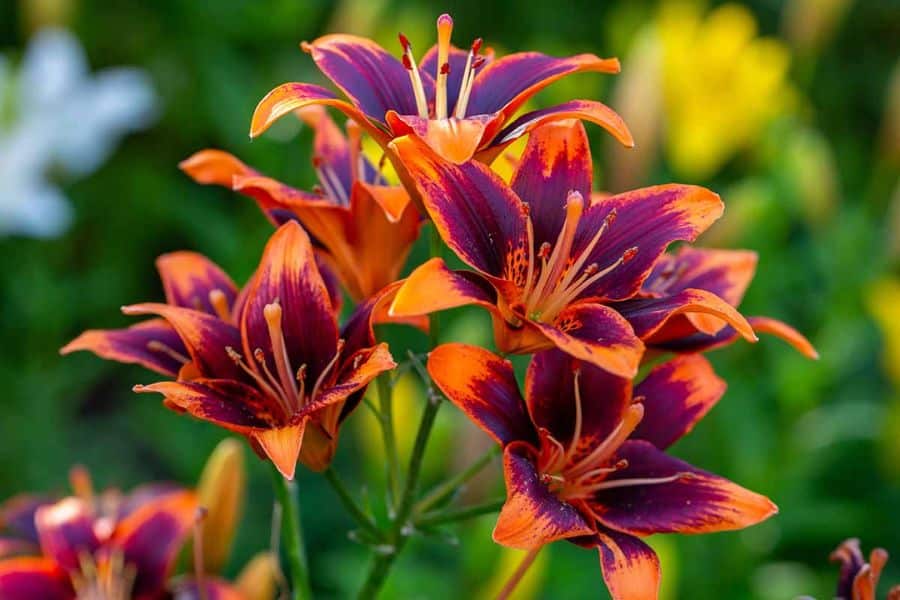
The name is slightly misleading because, while each flower lasts only one day, a single plant produces dozens of blooms over several weeks. Daylilies are really easy to grow. They tolerate poor soil, drought, heat, and general neglect in ways most plants simply don’t. These were some of the first plants I ever tried planting, and I had success with them straight away, which, when you’re new to gardening, is what you’re looking for.
Plant bare-root divisions or potted plants in spring or early fall in a sunny to partially shaded spot. Water them in well and then mostly leave them alone. Every few years, dig up the clumps and divide them to keep the plants producing. You’ll end up with free plants to share or fill other spots in the garden.
Coneflowers
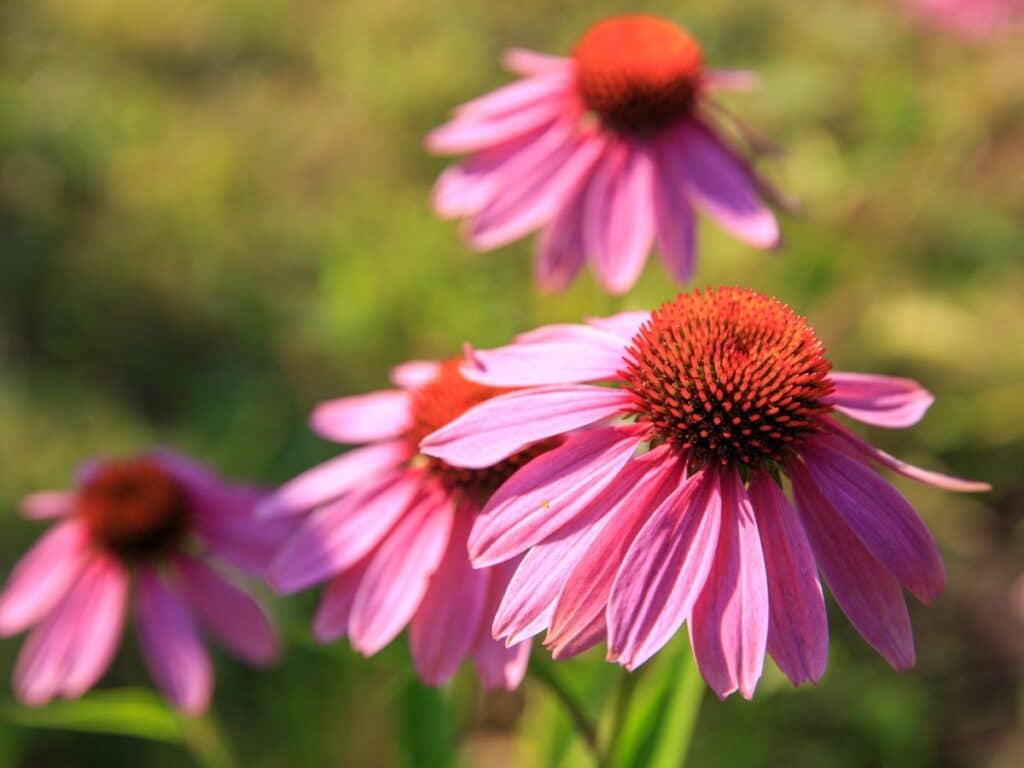
Coneflowers, or echinacea, are so pretty. The flowers are bold and long-lasting, the seed heads feed birds through winter, and they spread slowly over time, so your initial investment keeps paying off. They come in purple, pink, white, orange, and yellow.
Plant them in full sun with good drainage in spring or fall. They’re drought tolerant once established and rarely need fertilizing. Don’t cut back the stems at the end of the season. The seed heads are a critical winter food source for goldfinches, and they look beautiful covered in frost.
Helenium

Helenium produces masses of warm, daisy-like flowers in rich shades of amber, copper, and deep red from late summer into fall, exactly when many gardens are starting to look washed out. It’s also one of the best plants for pollinators at a time when food sources for bees are becoming scarce.
Plant it in full sun in moist but well-drained soil in spring. Taller varieties may need staking if you’re in a windy spot, but newer compact varieties are sturdy enough to stand on their own. Cut plants back by about a third in late May, a technique known as the Chelsea chop, and you’ll get more compact plants with more flowers. Divide clumps every three years to keep them at their best.
Asters
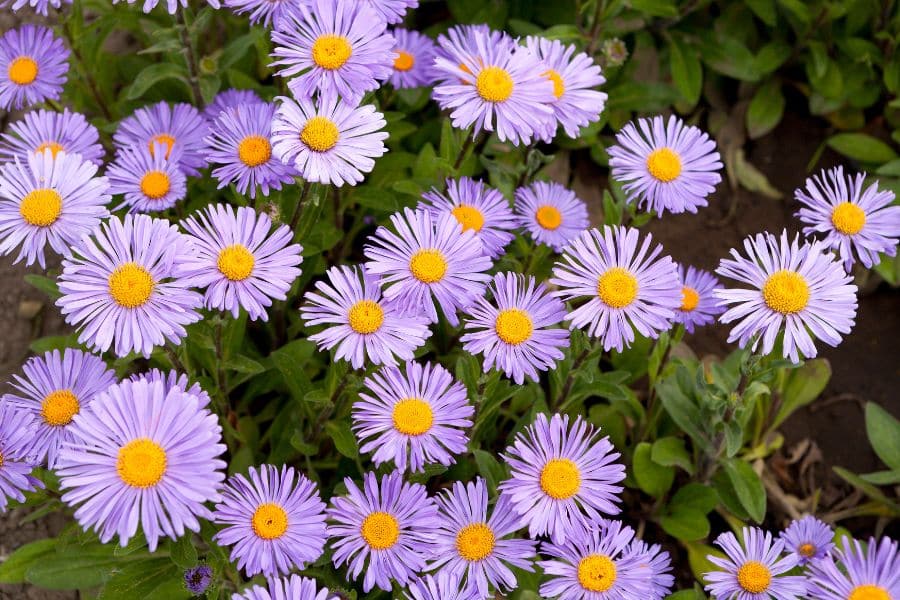
Asters are the last flowers standing before winter. They bloom from late summer through October in shades of purple, pink, blue, and white, and at a time when most gardens have given up, so they’re great to keep some color in your garden for later in the year. Bees and butterflies absolutely rely on them as one of the final nectar sources of the year.
Plant them in spring in full sun with good air circulation around the plants, which helps prevent powdery mildew, something asters can be prone to. Like helenium, pinching them back in late spring encourages bushier growth and more flowers. They spread steadily over time, so dividing them every couple of years keeps them healthy and gives you more plants for free.
Disclaimer: This article is for general information only and is not professional advice. It may contain affiliate links. Please see our full Editorial Policy for details.

Kylie Lang is a nationally syndicated travel journalist with bylines on the Associated Press Wire & more, a lifestyle writer, and the founder and editor of Your Lifestyle Library (yourlifestylelibrary.com). She holds a BA (Honours) in History from the University of Kent and is a member of the British Guild of Travel Writers.