
Spring is finally here in my part of the world, and I’ve just spent the weekend working in the garden. The grass was almost knee high after all the rain we’ve had, and don’t get me started on the weeds. But the sun was shining, and it was just so lovely to be outside and at one with nature again.
The other reason I wanted to get out there is that March and April can make the difference between a garden that thrives through summer and one that limps along, looking like it’s not quite sure what it’s supposed to be doing.
Pruning is so important if you want a healthy, productive garden. Get it right, and you’ll have more flowers, healthier plants, and a garden that’s the envy of your neighbors. Miss the window, and some of those plants won’t forgive you until next year.
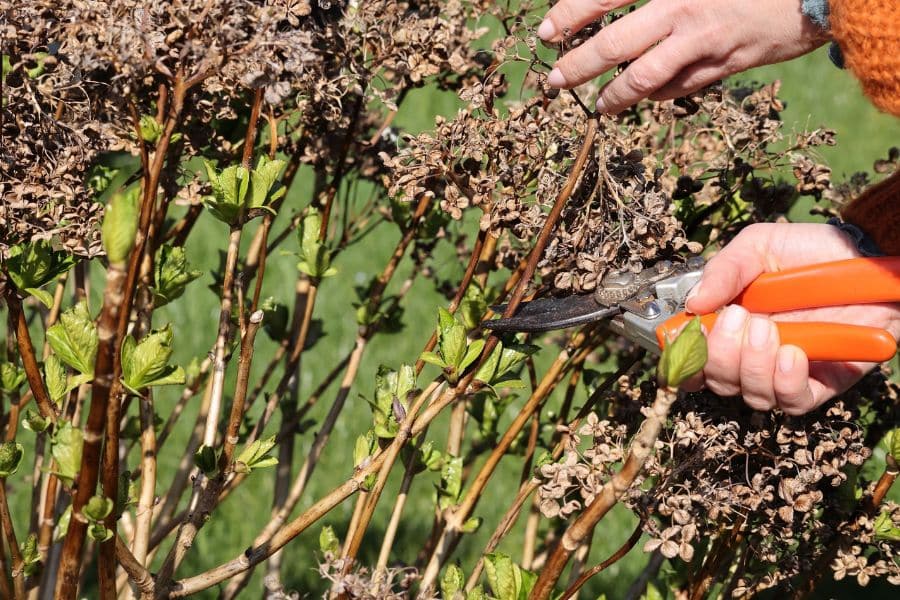
Why Early Spring Pruning Matters So Much
Pruning in late winter and early spring works with the plant’s natural rhythm rather than against it. Most shrubs and climbers are just coming out of dormancy at this point. Their energy is about to move into new growth, and a well-timed prune directs that energy exactly where you want it.
For plants that bloom on new growth, cutting back before the season begins means all that fresh spring energy goes into producing the stems that will carry this year’s flowers. Leave them unpruned, and the plant wastes energy pushing growth from old, tired wood that produces fewer blooms and less impressive ones.
Early spring cuts also heal faster. The plant is in a growing phase, so wounds close up more quickly than they would in the fall. And clearing out dead, damaged, or crossing branches improves airflow, which reduces the risk of disease taking hold as the weather warms.
One rule applies to everything on this list: always use clean, sharp tools. Blunt tools crush stems instead of cutting them cleanly, and dirty blades spread disease between plants. A wipe with rubbing alcohol between plants takes seconds and can save you a lot of heartache.
9 Plants to Prune In April
So let’s talk about which plants need your attention before the end of April, and what to do with them.
Roses
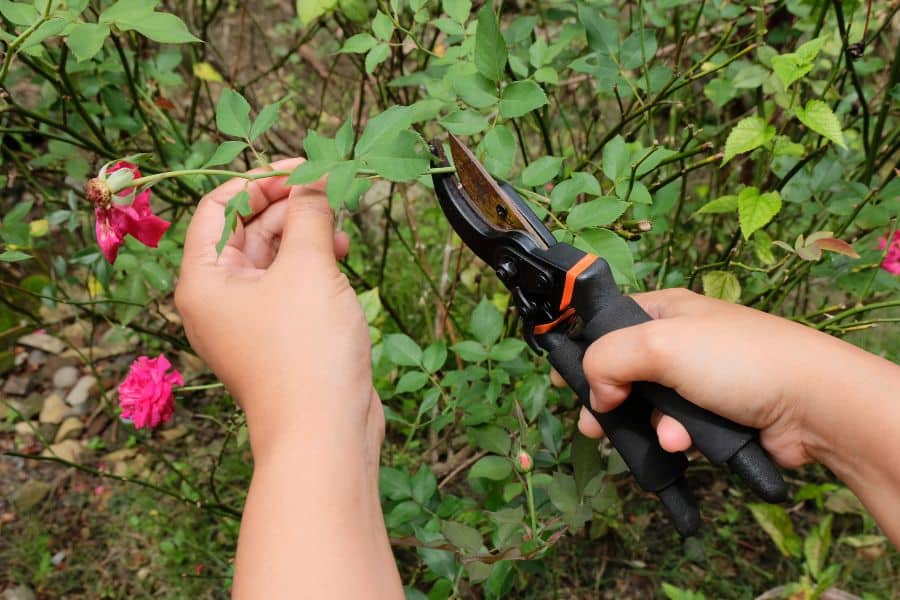
Roses are heavy pruners. They need it, and they reward you generously when you do it right.
For hybrid teas and floribundas, cut stems back by about a third to a half in early spring, making each cut at a 45-degree angle just above an outward-facing bud. That outward-facing part matters because it sends new growth away from the center of the plant, keeping it open and well-ventilated.
Remove any dead wood completely. If you scratch a stem and it’s brown all the way through, it’s done. Cut down to where the wood is white and healthy. Remove any crossing branches, too, anything that rubs against another stem and creates a wound.
Shrub roses respond well to cutting about a third of the oldest stems right down to the ground each year. Rotate which third you remove each spring, and you’ll keep the plant producing vigorous new growth consistently.
The old gardeners’ trick for timing? Wait for forsythia to bloom. When you see those yellow flowers, it’s time to pick up your rose pruners.
Buddleia (Butterfly Bush)
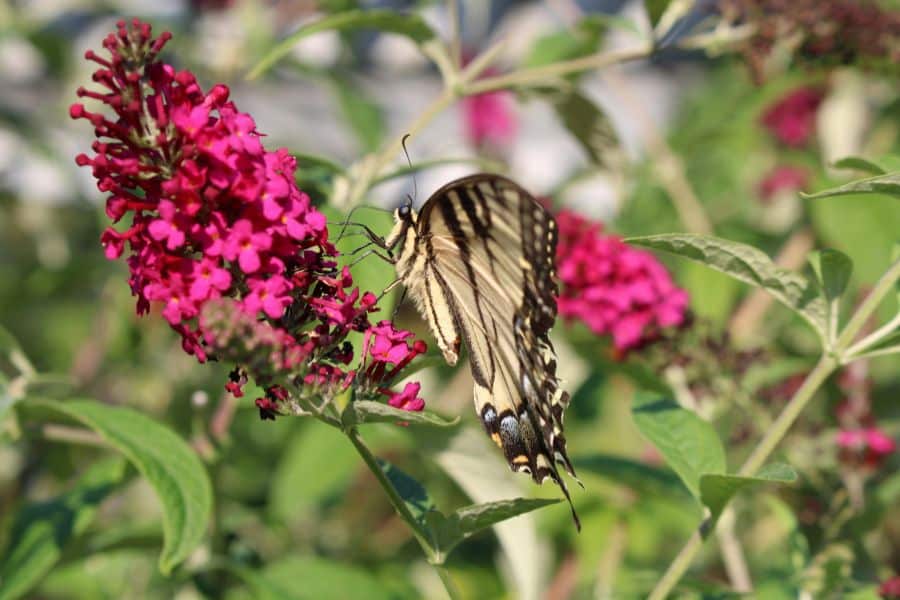
If you’ve ever left a buddleia unpruned, you’ll know what happens. It turns into a scraggly, top-heavy shrub that produces a handful of flowers way up high where you can barely see them. Prune it hard, and the whole plant transforms.
Buddleia blooms on new wood, meaning this year’s fresh growth carries this year’s flowers. That makes early spring the perfect time to cut it back. And when I say cut back, I mean it. Reduce the stems to about 12 to 24 inches from the ground, cutting just above a healthy pair of buds. It looks brutal, but the plant will shoot back with thick new stems loaded with flowers.
If you have an older buddleia that hasn’t been pruned in years, this is also the time to tackle it. Cut it back hard, feed it well, and give it the rest of the season to recover. You may sacrifice a few flowers in the short term, but you’ll end up with a much better plant by next summer.
Wisteria
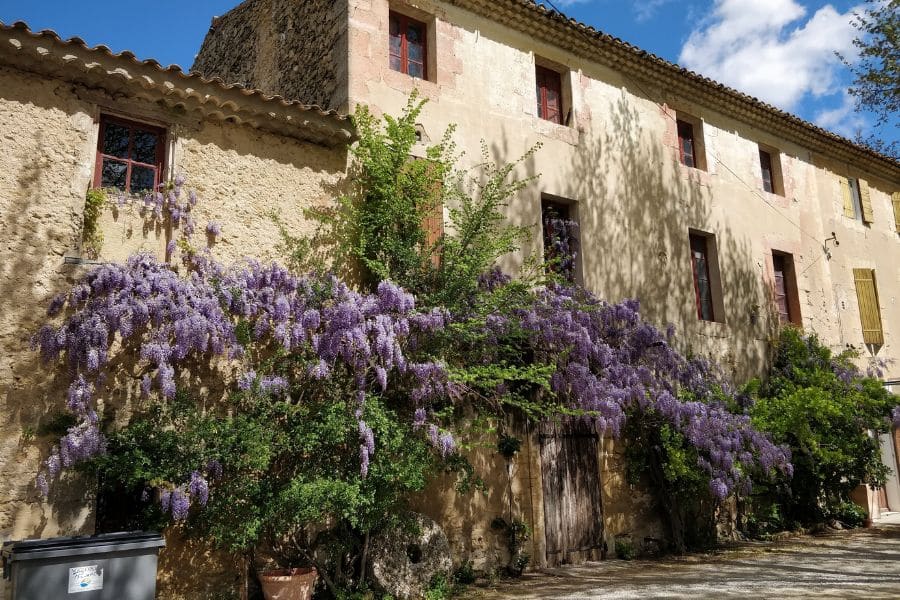
Wisteria has a reputation for being difficult. It isn’t, but it does need pruning twice a year to flower well, and many people only do one of those cuts.
The summer prune, done in July or August, reduces the long whippy shoots to about five leaves from the main framework. The spring prune, done now in February or March before growth kicks off, is equally important. Go back to those same shoots and cut them down further, to two or three buds from the base.
What you’re doing is building up short, stubby flowering spurs. Those spurs are where the blooms come from. A wisteria that has never been properly pruned will grow prolifically and flower poorly.
If your wisteria has gone completely wild, don’t try to fix it all in one season. Take three years to gradually bring it back into shape, removing the most overgrown stems first.
Hydrangea (Panicle and Smooth Varieties)
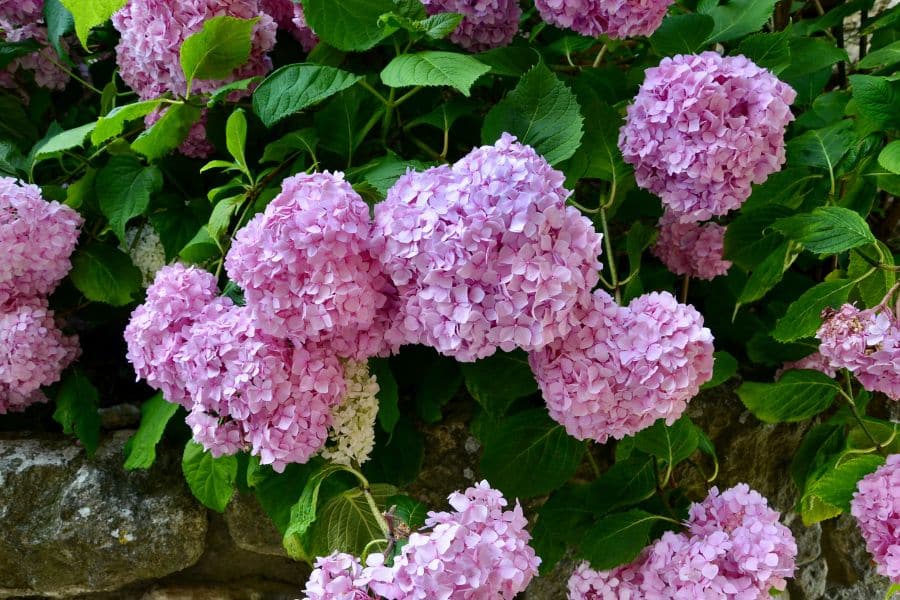
This one comes with an important caveat. Not all hydrangeas should be pruned in early spring. Only the panicle types (Hydrangea paniculata, such as Limelight or Tardiva) and the smooth hydrangeas (Hydrangea arborescens, such as Annabelle) should be cut back now. Both bloom on new wood.
Bigleaf and oakleaf hydrangeas bloom on old wood. Prune those now, and you’ll remove this year’s flower buds entirely. If you’re not sure which type you have, hold off and watch where the flowers appear.
For paniculata varieties, cut each stem back to just above the lowest pair of healthy buds. You can be fairly aggressive with this, significantly reducing the overall size of the plant. For smooth hydrangeas, the same approach applies. They grow back fast and flower on all that fresh new growth.
After pruning, feed with a balanced fertilizer and mulch around the base. These are hungry plants, and they’ll use everything you give them.
Forsythia
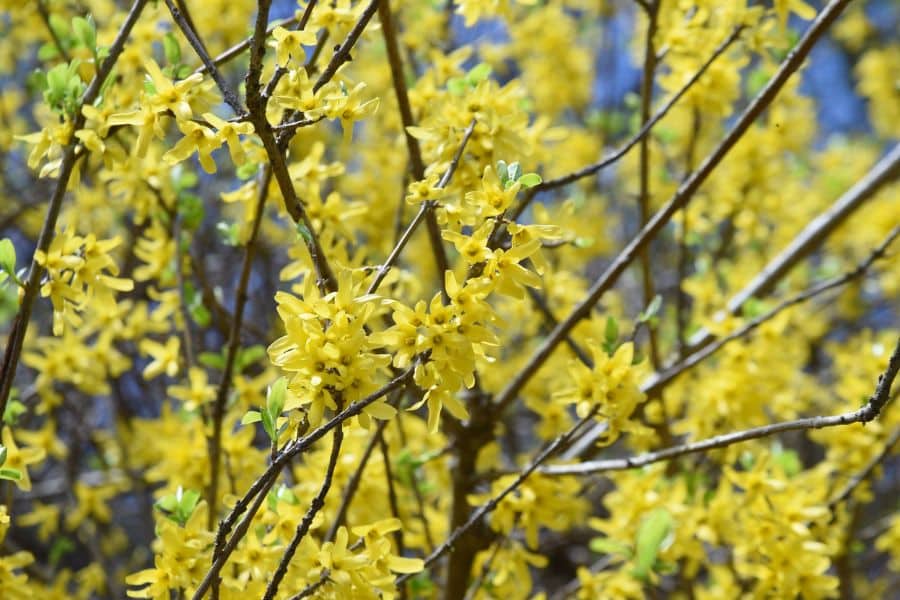
Forsythia is that cheerful yellow shrub that explodes with color before anything else in the garden has woken up. The problem is that if you don’t prune it after it blooms, it quickly turns into a tangled, shapeless mass that produces fewer flowers each year.
Forsythia blooms on old wood. Do not prune it before it flowers in spring, or you’ll cut off all those buds. The window for pruning is right after flowering, which typically falls in late March or April.
Once the flowers fade, remove about a quarter to a third of the oldest stems right down to the ground. This encourages the plant to push strong new shoots from the base, which will be next year’s flowering wood.
If your forsythia has become very overgrown, you can cut the whole thing down to 12 inches and let it start fresh. It will look alarming, and you’ll have no flowers next year, but by the year after, you’ll have a properly shaped, productive shrub again.
Clematis
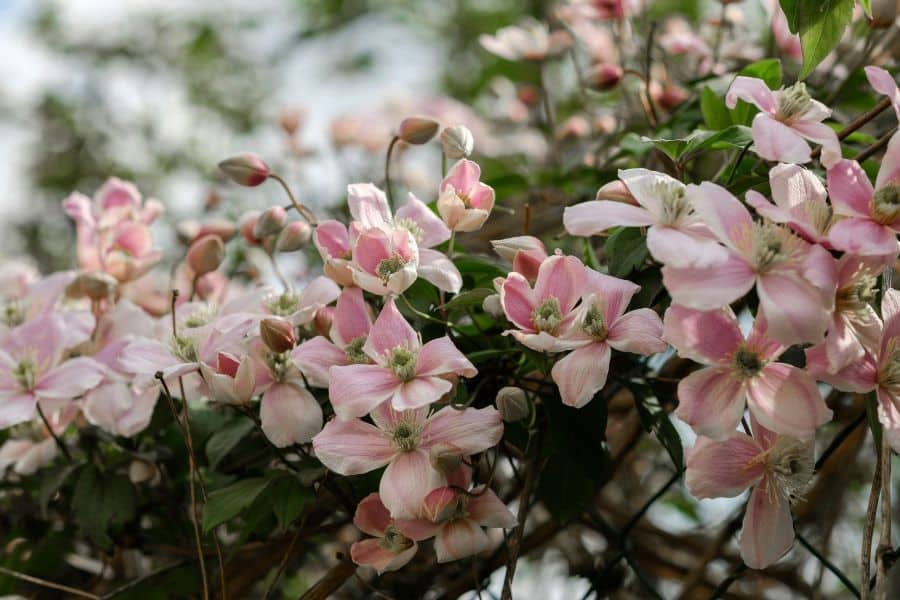
Pruning clematis confuses more gardeners than almost any other plant, and that’s because the right approach depends entirely on which group it belongs to.
Group 1 clematis flowers early on old wood and shouldn’t be pruned in spring at all, just a light tidy after flowering if needed.
Group 2 clematis flowers twice: first on old wood, then on new. A light tidy in early spring, removing dead and weak stems, is enough. Don’t cut back hard or you’ll lose the first flush of flowers.
Group 3 clematis, including the late-flowering viticella and texensis types, flower on new wood and should be cut back hard in late winter or very early spring. Reduce all stems to about 12 inches from the ground, cutting just above a healthy pair of buds. Left unpruned, these become a tangled mass of old wood at the bottom with a small amount of flowering at the very top.
Not sure which group yours is? Check the label if you still have it, or look up the variety online. It’s worth knowing because getting this wrong means no flowers.
Lavender
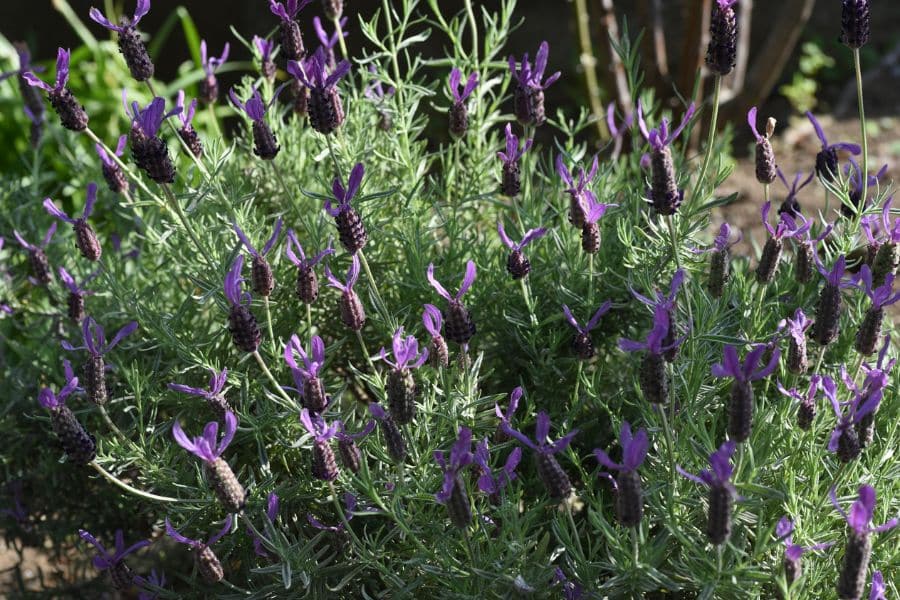
Lavender is one of the most common casualties of incorrect pruning. People either don’t prune it at all, letting it become woody and gappy in the center, or they cut into the old wood, and the plant never recovers.
The rule with lavender is this: cut back into the soft green growth, never into the brown woody stems at the base. Those old woody stems won’t produce new growth. If you cut into them, that branch is done.
In early spring, once the risk of hard frosts has passed, trim the plant back by about a third, shaping it into a neat mound. Remove any stems that died back over winter. The goal is a compact, rounded plant with plenty of young growth that will carry this season’s flowers.
If your lavender has already become very woody and open at the base, it’s time to replace it rather than trying to rescue it. Most lavenders give you about seven to ten years of good performance before they need replacing.
Ornamental Grasses
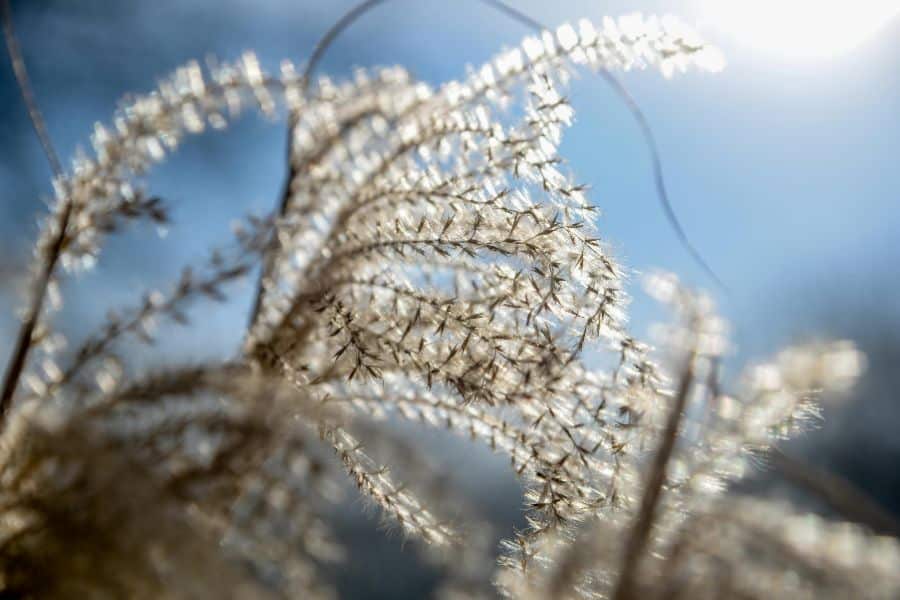
Ornamental grasses left standing over winter provide structure and interest in a bare garden, and they give birds and insects somewhere to be. But by late February or early March, those old stems need to come off.
Cut deciduous grasses back hard, right down to about three or four inches from the ground, before new growth starts pushing through from the base. If you leave it too late and the new shoots are already emerging, be careful not to cut those off along with the old growth. New shoots are usually a brighter green and come from the center of the clump.
Tie the old stems together with a piece of garden twine before you cut. It makes the whole job much cleaner, and you end up with a neat bundle ready for the compost pile rather than stems scattered across the garden.
Leave evergreen grasses like Carex alone. They don’t need the same treatment, and cutting them hard can set them back badly.
Fruit Trees (Apples and Pears)
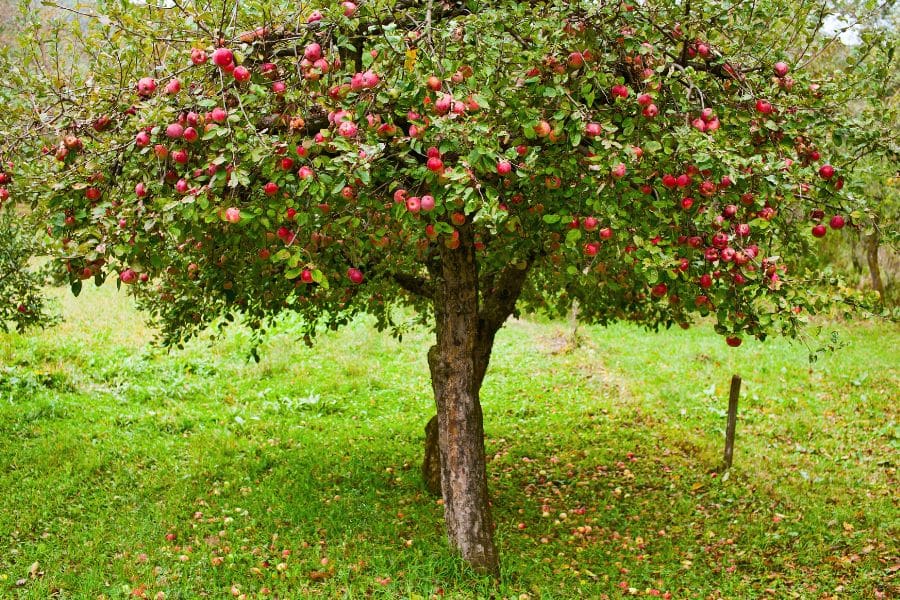
Fruit trees should be pruned while dormant, which in most parts of the US means late winter through to early April before the buds break. This is when you can clearly see the tree’s structure and make decisions without the distraction of leaves.
The goals are simple. Remove dead, damaged, or diseased branches first. Then look for branches that cross and rub against each other. Then remove any growth heading back into the center of the tree. You want an open framework that lets light and air in.
On established trees, remove about 20-25% of the canopy each year. Any more than that in a single season stresses the tree. Always cut back to a healthy bud or a branch junction; never leave stubs.
Cherries and plums are different. Stone fruit trees are susceptible to a fungal disease called silver leaf, which enters through pruning wounds in cool, wet weather. Prune stone fruit in summer, not spring, when the risk of infection is lower.
If your apple or pear tree hasn’t been pruned in years and has become congested, spread the renovation over three or four seasons rather than trying to sort it all at once. Patience pays off with fruit trees more than almost anything else in the garden.
Disclaimer: This article is for general information only and is not professional advice. It may contain affiliate links. Please see our full Editorial Policy for details.

Kylie Lang is a nationally syndicated travel journalist with bylines on the Associated Press Wire & more, a lifestyle writer, and the founder and editor of Your Lifestyle Library (yourlifestylelibrary.com). She holds a BA (Honours) in History from the University of Kent and is a member of the British Guild of Travel Writers.