
It wasn’t till I moved to France that I realized the obsession we have with refrigerating food. And I don’t just mean the obvious stuff like milk, yogurt, butter, and cheese. But stuff that really doesn’t need to be in there.
I’m talking about some of the veggies we pop into our crisper, thinking we’re giving them a longer life. Some of the most common food storage habits in American kitchens are working against your gut health, day after day.
Luckily, most of these mistakes are completely fixable with one small change, but with huge benefits.

7 Everyday Foods Americans are Storing the Wrong Way
The French have long had a reputation for good food and eating well. They even take two-hour lunch breaks to enjoy their food, unlike us, who stuff a quick sandwich.
But taking time to enjoy their food at lunch isn’t the only thing the French have got right. It comes down to how they store their food.
Bread

The ritual of going to the boulangerie for your daily bread is sacred. The French aren’t big on processed bread, and the bread they buy doesn’t have preservatives, so it only lasts for a day. But even then haw they store it is completely different.
Walk into a French kitchen, including mine, and you won’t find a loaf suffocating inside a plastic bag, and it certainly doesn’t go in the fridge. Bread gets a linen cloth or a beeswax bag. That’s it. There’s a reason for that, and your gut will thank you for making the switch.
The Problem
- Plastic bags trap moisture, creating the perfect environment for mold to develop faster than it would otherwise
- Cold storage in the fridge accelerates starch recrystallization, making bread go stale faster, not slower
- Research found that plastic packaging sheds microplastic particles into food through normal everyday contact
- Repeated opening and closing of plastic bags increases the friction that causes those particles to break off
- Microplastics ingested through food have been linked to altered gut microbiota composition and intestinal inflammation
The Fix
- Store bread in a breathable linen or beeswax-lined bag at room temperature
- The beeswax option strikes the balance between airflow and moisture retention that plain linen sometimes misses
- For longer storage, slice the loaf and freeze it, then defrost slices as needed
- No waste, no plastic, no stale bread on day two
Leftovers

Who doesn’t love a good Tupperware dish? If you grew up in the 80s, as I did, they were extremely popular. We all have plenty of plastic storage containers in our kitchens, and most of us reach for them when dinner is finished to store our leftovers.
But storing warm food in plastic and then reheating those same containers is creating a problem you can’t see.
The Problem
- Microwaving food in plastic containers can release millions to billions of microplastic and nanoplastic particles directly into the food
- Even refrigerating food in plastic over several months releases particles, at lower but still measurable levels
- Studies have found that microplastic exposure alters gut microbiota diversity, disrupts the intestinal barrier, and triggers inflammatory responses
- Gut inflammation rarely stays local. Through the gut-brain axis, it ripples outward and affects the whole body
The Fix
- Switch to glass containers for all leftover storage
- Glass doesn’t leach anything into food, is dishwasher-safe, and goes from freezer to oven without issue
- Stainless steel is a solid alternative for packed lunches and on-the-go meals
- If you still have plastic containers, at minimum, stop microwaving food in them. Transfer to a ceramic or glass dish first. It takes thirty seconds
Tomatoes

Once you’ve eaten tomatoes picked straight from the vine in your garden, you’ll never go back. However, tomatoes don’grow in the garden year-round. It’s usually June – September, depending on where you live.
We tend to eat seasonally here in France, certainly in the more rural areas, but tomatoes are among the few things available year-round. But one thing the French never do is store shop bought tomatoes in the fridge.
The Problem
- Temperatures below 12°C (54°F) shut down the genes responsible for producing the volatile compounds that give tomatoes their flavor and aroma
- Research found that after seven days in a standard refrigerator, tomatoes lost a significant portion of those aromatic compounds
- Cold storage doesn’t just slow ripening; it causes internal cellular damage, resulting in a mealy, watery texture
- A tomato that hasn’t fully developed its sugars, acids, and antioxidant compounds delivers far fewer of the beneficial plant chemicals your gut microbiome relies on
The Fix
- Leave tomatoes on the counter, away from direct sunlight, and let them ripen naturally
- To speed up unripe tomatoes, place them in a paper bag with an apple or banana. The ethylene gas the fruit releases does the work in a day or two
- Only refrigerate if a tomato is fully ripe and you genuinely can’t use it that day. Let it come back to room temperature for an hour before eating to recover some flavor
Onions and Garlic

Many French kitchens have wicker baskets and veg trolleys, which not only look lovely with the old, rustic decor but also serve a purpose. Onions and garlic are made to be stored at room temperature with good airflow. The fridge is the last place they should be.
Have you never seen the string of onions and garlic hanging up in a French kitchen? It isn’t just the French being French; it’s for a very good reason.
The Problem
- Cold, humid fridge conditions cause whole garlic bulbs to sprout within days; the cold tricks them into thinking spring has arrived
- Sprouted garlic loses much of its allicin content, the natural prebiotic and antimicrobial compound that makes garlic so beneficial for gut health
- Onions are highly porous and absorb moisture in the fridge, which encourages mold, bacterial growth, and odor transfer from surrounding food
- Neither delivers its gut health benefit when it’s been sitting in cold, damp conditions
The Fix
- Store both in a cool, dry, well-ventilated spot; a mesh or woven basket in the pantry works well
- Airflow is the key factor. Avoid plastic bags, which trap moisture
- Keep them away from each other and away from potatoes. Each releases gases that accelerate spoilage in the others
- Once peeled or cut, refrigerate in a sealed glass container and use within a few days
Potatoes

I remember when I was a kid, my mom used to buy potatoes in huge bags that the greengrocer would deliver on a Friday. It was a massive brown bag that Mom would take through to store in the garage. Never did she put them in the fridge, and they never seemed to go off.
The French do the same thing. My neighbor has a dark pantry where he keeps all his veg, including large bags of potatoes he gets from the weekly market.
The Problem
- Cold temperatures below 7°C (44°F) trigger cold-induced sweetening, where the starch inside the potato converts to simple sugars like glucose and fructose
- When those sugar-loaded potatoes are then baked or fried at high temperatures, those sugars combine with the amino acid asparagine to produce acrylamide
- Acrylamide is classified as a probable carcinogen and has been linked to disruption of the gut microbiome at the mucosal level
- Refrigerated potatoes also develop a gritty, overly sweet texture that ruins the finished dish
The Fix
- Store potatoes in a cool, dark, well-ventilated place, such as a pantry or kitchen cupboard, away from heat sources is ideal
- Use paper or mesh bags, never plastic
- Keep potatoes away from onions, which release gases that speed up sprouting and decay
- Soaking cut potatoes in cold water for 30 minutes before frying reduces surface sugars and lowers acrylamide formation during cooking
Olive Oil
Keeping your olive oil next to your stove might seem like the obvious thing to do, as it’s handy and there when you need it. However, it’s one of the fastest ways to strip it of the properties that make it worth buying.
The Problem
- Extra virgin olive oil gets its gut health benefit from polyphenols, including hydroxytyrosol and oleuropein, which feed beneficial gut bacteria and strengthen the intestinal barrier
- A study found that high-temperature cooking caused a 75% reduction in polyphenol content
- Heat, light, and air all accelerate oxidation. Parking the bottle next to the stove means it’s degrading every single day, even when you’re not cooking
The Fix
- Store olive oil in a dark glass bottle in a kitchen cupboard away from the stove and any windows
- Keep a small ceramic jug near the stove for daily cooking use, and store the main bottle out of the light
- For the full gut benefit, use extra virgin olive oil as a finishing oil, poured over salads, soups, or finished dishes rather than as a high-heat cooking fat
Nuts and Seeds
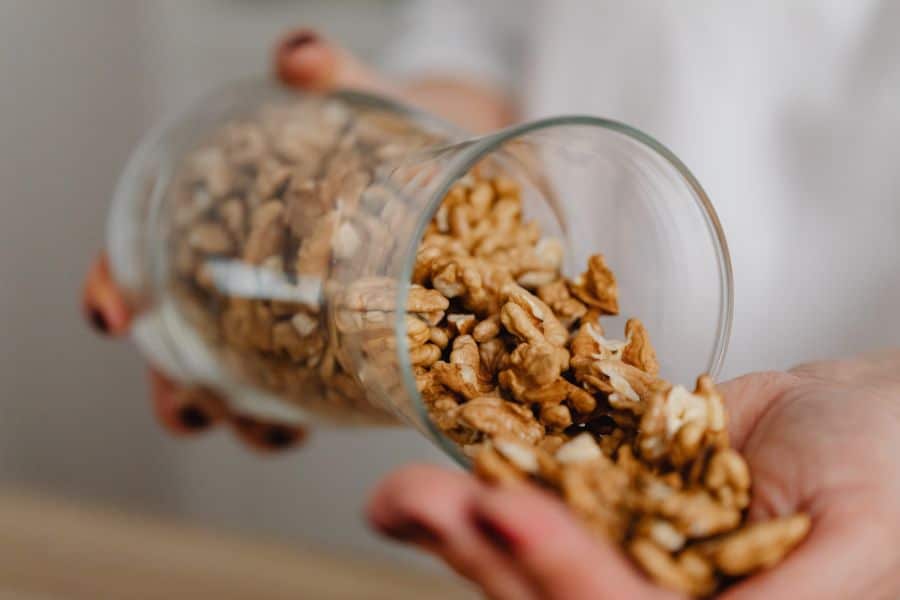
Stop leaving your nuts and seeds in opened plastic or paper bags because it’s doing more harm than good. Suddenly, that healthy snack you’re substituting for the unhealthy chips or biscuits is not such a great option.
The Problem
- Nuts and seeds are high in polyunsaturated fats, which oxidize rapidly when exposed to heat, light, and air
- Oxidized fats generate free radicals and compounds called advanced lipid oxidation end products, which promote inflammation in the gut lining
- Research found that nuts support the microbiome through short-chain fatty acid production, but only when those fats are intact, not oxidized
- Walnuts, pine nuts, pecans, and sunflower seeds are among the most vulnerable. You often can’t detect rancidity by taste alone, especially in mixed nuts or trail mix
- Buying in bulk is a false economy when large quantities go rancid before they’re finished
The Fix
- Store nuts and seeds in airtight glass jars in a cool, dark cupboard
- For seeds used infrequently, the fridge or freezer significantly extends shelf life
- Ground flaxseed goes rancid within days at room temperature. Buy whole and grind as needed, or freeze the ground version
- Buy smaller quantities more often. A fresh batch stored correctly does far more for your gut than a large bag that’s been sitting in the light for weeks
Disclaimer: This article is for informational purposes only and is not intended as medical or nutritional advice. Always consult a qualified healthcare professional before making any significant changes to your diet or lifestyle. Information is accurate at the time of publishing.
Disclaimer: This article is for general information only and is not professional advice. It may contain affiliate links. Please see our full Editorial Policy for details.

Kylie Lang is a nationally syndicated travel journalist with bylines on the Associated Press Wire & more, a lifestyle writer, and the founder and editor of Your Lifestyle Library (yourlifestylelibrary.com). She holds a BA (Honours) in History from the University of Kent and is a member of the British Guild of Travel Writers.