
Do you fall into the category of overenthusiastic gardener? I know I certainly have in the past, and have even managed to kill the odd succulent due to over-watering. And I know I’m not the only one to have committed this gardening sin.
So if you’re like me, a bit handy with the watering can, don’t beat yourself up too much. Most plants die from complete neglect, but the opposite holds true for these nine plants that can survive a drought.
They store their own water, shrug off dry spells, and continue looking incredible while you’re on holiday, dealing with work, or just living your life.

9 Plants That Can Survive a Drought
Desert Rose
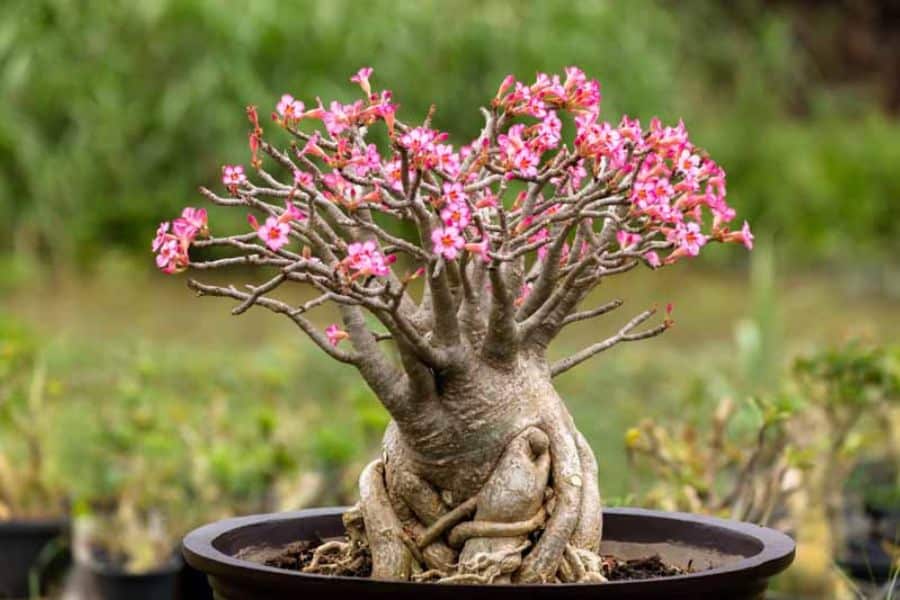
The Desert Rose, known botanically as Adenium obesum, has a swollen, sculptural base called a caudex, branches like a miniature bonsai tree, and clusters of trumpet-shaped flowers in deep pinks and reds.
It originates from the arid regions of sub-Saharan Africa and the Arabian Peninsula, and it has spent thousands of years learning how to store water in that thick, dramatic trunk.
During its growing season in spring and summer, water it deeply, then leave it alone until the soil dries out. In winter, pull back to once a month or less, as it goes semi-dormant.
One important note: keep it away from pets and children. The sap of the Desert Rose contains cardiac glycosides and is toxic if ingested. In parts of Africa, hunters traditionally used it to tip their arrows. Beautiful, but not to be messed with.
Lithops
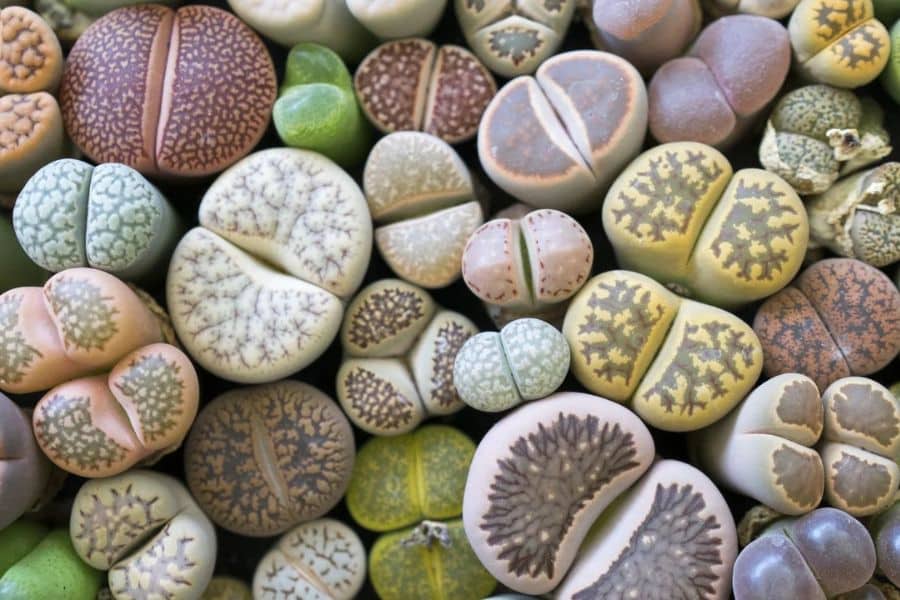
Lithops are native to southern Africa and have evolved to look exactly like the pebbles and stones around them. Grazing animals overlook them entirely. That survival strategy has been so effective that some species thrive in areas with annual rainfall of less than an inch. An inch. Per year.
Each plant consists of two thick, fleshy leaves fused together, and the whole thing stores enough water to survive for months without rain. They were first discovered by British botanist William John Burchell in 1811 in South Africa, who picked up what he thought was a stone and found himself holding a plant.
The trick to growing them is following their seasonal rhythm. Water lightly in spring as new leaves emerge, keep them dry through summer and winter, and water again in autumn around flowering time. They live up to 40 or 50 years with this minimal care.
String of Pearls
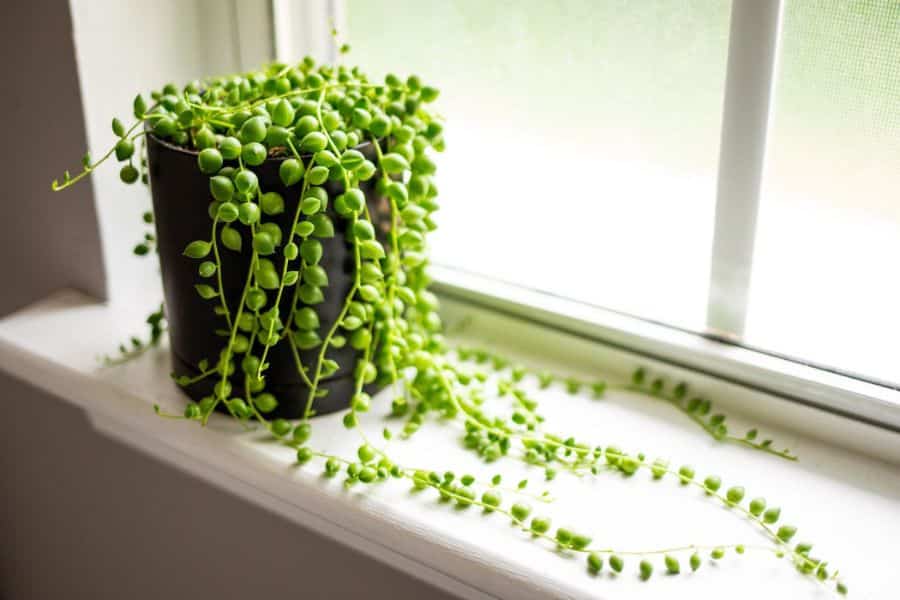
String of Pearls (Senecio rowleyanus) does exactly what it says. Long, trailing stems of perfectly round, bead-like leaves cascade down from their pot, each little sphere acting as a water-storage tank. It was named after British botanist Gordon Rowley, and it grows natively across the dry areas of southwest Africa.
Those spherical leaves are a clever adaptation to desert life. The round shape minimizes the surface area exposed to dry air, reducing water loss. Each leaf also has a tiny translucent strip running across it, allowing light to reach the leaf’s center for photosynthesis without relying solely on the surface.
In winter, reduce watering to once a month. During the growing season, every two weeks or so is usually plenty. The biggest killer is overwatering, so when in doubt, wait another few days.
It trails beautifully from a hanging basket or a high shelf. And if it flowers, which it occasionally does, the small white blooms smell faintly of cinnamon.
Aloe Vera

Aloe vera has been used as a plant for over 6,000 years. The ancient Egyptians called it the plant of immortality. Cleopatra is said to have used it in her skincare routine, and it has been found depicted in stone carvings from ancient Mesopotamia dating back to 2100 BC.
It’s remarkably easy to grow. The thick, serrated leaves store gel that is roughly 99% water, which helps it survive long dry spells in its native North Africa. Water it thoroughly and then leave it for two to four weeks before doing so again. In winter, once a month is more than sufficient.
The fresh gel from a broken leaf can be applied directly to minor burns and skin irritations, which is why it has been a household staple for so long. Keep it in a bright spot, use well-draining soil, and it will reward you with very little drama and occasional pups that will eventually fill the pot.
Haworthia
If you have a north-facing windowsill, a desk in an office, or any spot in your home that lacks brilliant light, Haworthia is the plant for you.
Most succulents need full sun to survive. Haworthia doesn’t. In the wild in southern Africa, it grows in the shade of rocks and bushes, which is exactly why it tolerates lower light indoors better than almost any other succulent. It was formally documented in 1809 and named after Adrian Hardy Haworth, an English botanist and enthusiastic collector of succulents.
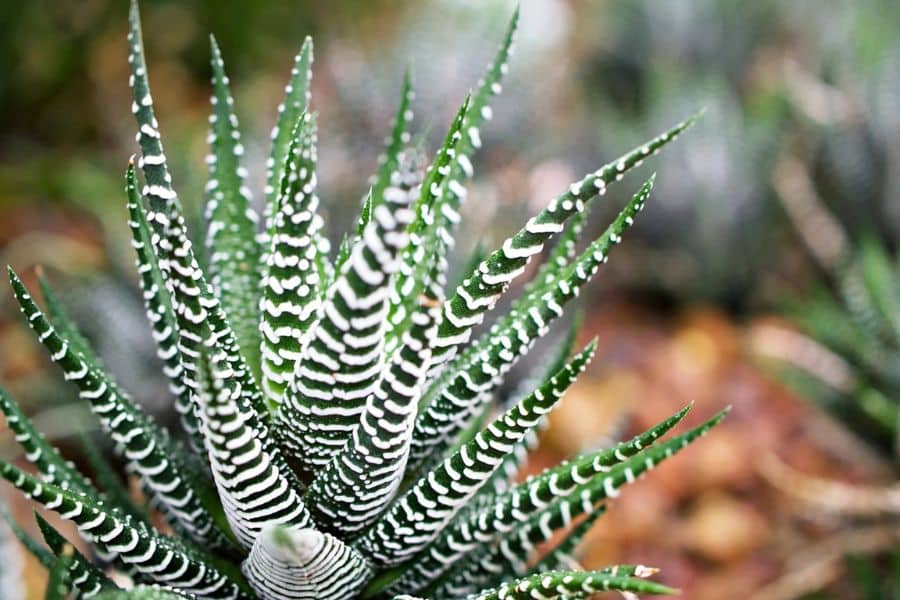
The Zebra Haworthia, with its distinctive white horizontal stripes across dark green leaves, is one of the most popular varieties. During the summer, water every 2 to 3 weeks. In winter, water once a month, and it will be perfectly content. The thick leaves store water efficiently, and the plant is genuinely non-toxic to both pets and people, which sets it apart from quite a few of its succulent relatives.
Burro’s Tail

Burro’s Tail, Sedum morganianum, was first described in Mexico in the 1930s by German botanist E. Walther. It produces long, trailing stems densely packed with plump, blue-green leaves that overlap like fish scales, creating a thick, braided rope. A mature plant can trail three feet or more.
Those chubby leaves store water so effectively that the plant barely notices when you forget to water it. During the growing season, every two weeks works well. In winter, once a month is plenty.
There is one catch with Burro’s Tail: the leaves fall off at the slightest touch. Handle it as little as possible. Do not move it around the house, repot it cautiously, and place it somewhere it can simply hang undisturbed. Leaves that do fall off the stems can be placed on top of moist soil, where they will often take root and produce new plants.
Agave
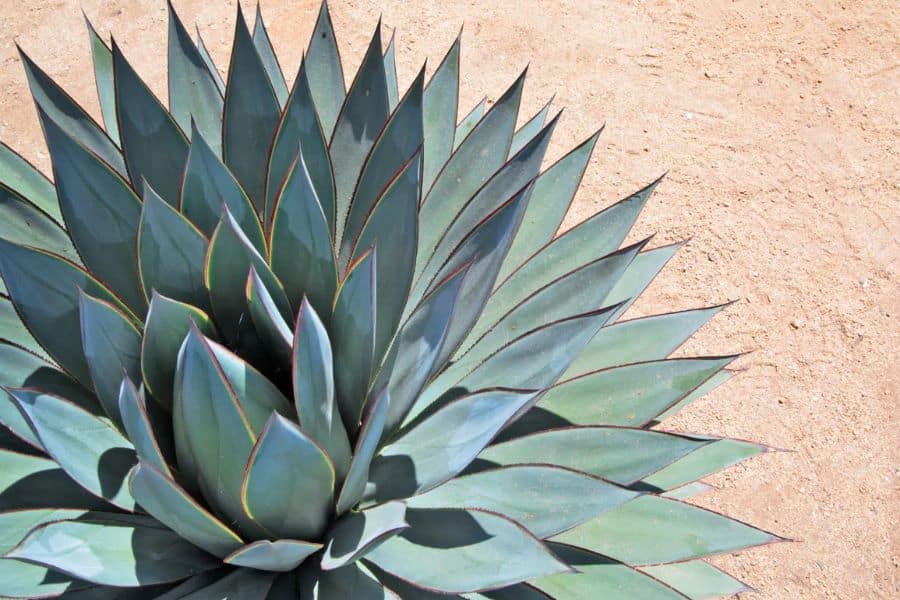
Agave grows in bold rosettes of thick, spined leaves and can make a dramatic statement in a pot on a patio or as an indoor specimen near a very sunny window. There are about 270 recognized species, ranging from compact varieties suitable for containers to the dramatic Agave americana, which can eventually reach six feet tall and twelve feet wide.
Native to the arid and semi-arid regions of the Americas, predominantly Mexico, Agave stores water in its thick, fleshy leaves and can survive long periods without rainfall once established. In winter, water sparingly once a month. From spring through fall, water more thoroughly but still allow the soil to dry out completely between sessions.
One thing to know about Agave americana specifically: it is called the Century Plant because it was once thought to bloom only once every hundred years. It doesn’t quite take that long, but it does take 10 to 30 years to flower. When it finally does, it sends up a stalk that can reach 25 feet tall. Then, unfortunately, the parent plant dies.
Also worth noting: Agave sap can cause skin irritation, so wear gloves when handling.
Echeveria
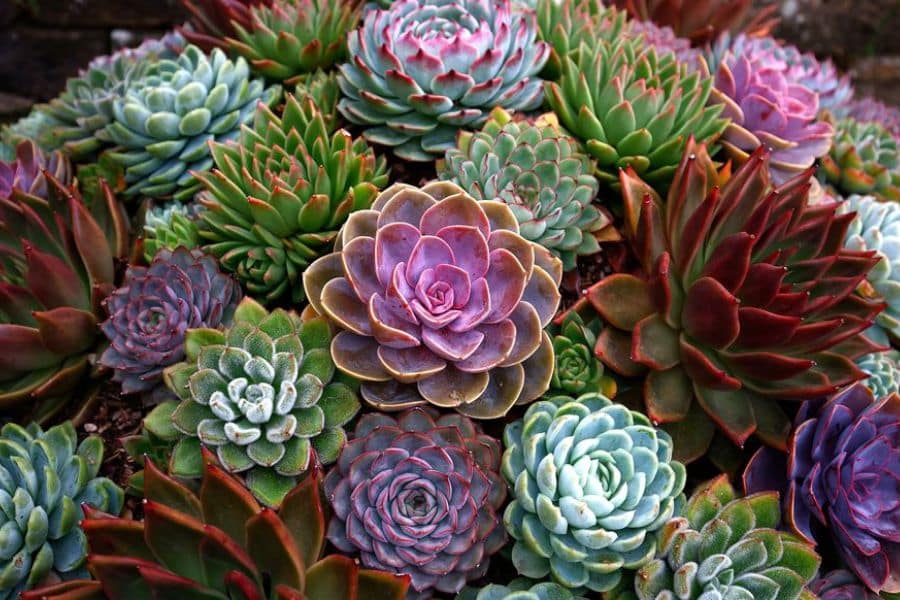
Echeveria is native to the semi-desert regions of Mexico and Central America. It grows in tightly packed rosettes with thick, water-storing leaves that come in hundreds of color variations from pale blue-gray to deep burgundy to frosty silver-green.
There are over 150 recognized species, and they all work on the same principle. The fleshy leaves hold water, which means the plant can handle long dry spells without complaint. In winter, once-a-month watering is sufficient, and some gardeners water even less than that without any issues. In the growing season, aim for every one to two weeks, always allowing the soil to dry completely between waterings.
One practical tip: never water directly into the center of the rosette. Water that collects there can cause rot. Water the soil around the plant instead and let it do its work.
Elephant Bush
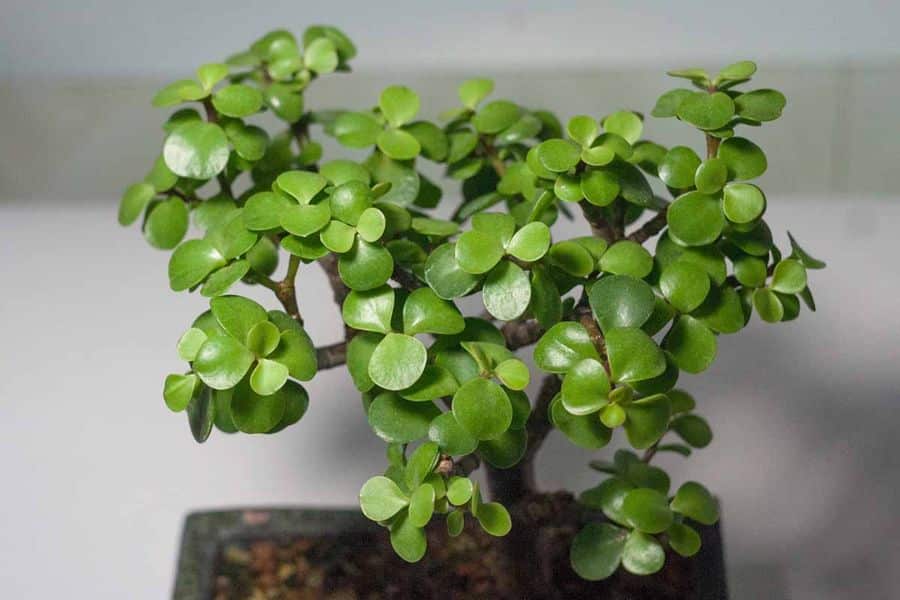
Elephant Bush, Portulacaria afra, is known by several names, including Spekboom (an Afrikaans word meaning “bacon tree,” on account of the edible, slightly tart leaves). In South Africa, it is a favorite food for elephants, rhinos, tortoises, and goats, and has been eaten by people in salads and soups for generations.
It is also one of the most effective carbon-absorbing plants known and has been used in large-scale carbon sequestration programs in southern Africa because it absorbs CO2 more efficiently per unit area than most plants. So growing one is a very small contribution to something much bigger.
As a houseplant, it resembles a miniature jade tree, with small, round leaves on reddish-brown stems. In summer, water every one to two weeks when the top inch of soil dries out. In winter, pull back to every 3 to 4 weeks, or stop altogether if your home is cool and dim. It is non-toxic to pets and humans, making it one of the safest choices on this list.
Disclaimer: This article is for general information only and is not professional advice. It may contain affiliate links. Please see our full Editorial Policy for details.

Kylie Lang is a nationally syndicated travel journalist with bylines on the Associated Press Wire & more, a lifestyle writer, and the founder and editor of Your Lifestyle Library (yourlifestylelibrary.com). She holds a BA (Honours) in History from the University of Kent and is a member of the British Guild of Travel Writers.