
When I’m not weeding, mulching, digging, planting, or generally working in my garden, I love to watch the birds at play. The Hummingbird is so much fun to watch. They’re busy little birds with beautiful jewel colors that catch the eye.
If you’ve ever watched them, they’re surprisingly fast and lead my dog Lottie a merry dance around the garden. It’s like watching a high-speed chase between the two of them.
Watching them continuously hovering over the blooms is quite mesmerizing. They can even fly backwards and do upside-down somersaults. But how do you attract them into your garden?

What Hummingbirds Are Actually Looking For
Hummingbirds migrate, and on their long journeys, they’re looking for food to refuel and tend to follow their favorite blooms as the seasons change.
These tiny birds are burning energy at an extraordinary rate. A hummingbird visits somewhere between 1,000 and 2,000 flowers a day just to stay fueled. They’re on a mission, and they’re looking for the most efficient nectar sources they can find.
Color is the first thing that pulls them in. Red is their biggest trigger, but bright pink, coral, and purple all catch their eye too. Tubular flowers are their preference because the shape fits their long bill perfectly, allowing them to drink deeply without competing with bees and other insects that can’t reach the nectar.
One single plant won’t do much. Hummingbirds are drawn to generous patches of flowers, not a lone bloom here and there. Planting in groups of three or five of the same variety makes your garden far more visible and appealing to them.
A few practical things worth knowing before you plant. Most hummingbird favorites do best in good sun, so a shady spot is generally not where you want to focus your efforts. Keep new plants well-watered while they’re getting established, especially during their first summer.
And if you can choose a mix that blooms at different times across the season, you’ll give hummingbirds a reason to keep returning from spring right through to fall rather than visiting once and moving on.
A garden with layers of color and a steady rotation of blooms is what really keeps them coming back.
9 Flowers to Plant to Attract Hummingbirds
Hummingbirds are drawn to nectar-rich, tubular flowers, particularly in shades of red, orange, and pink. Plant the right things, and you essentially hang a neon “open for business” sign in your garden.
Here are nine plants that will have hummingbirds treating your yard like their personal buffet.
Columbine
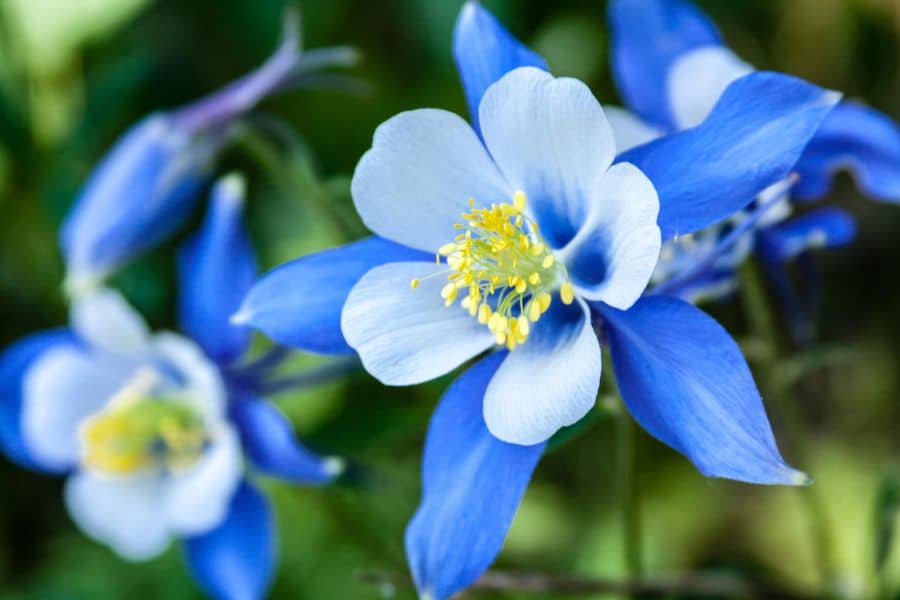
Eastern red columbine (Aquilegia canadensis) starts blooming in spring just as ruby-throated hummingbirds are completing their long migration back north, sometimes traveling thousands of miles from Central America. And the nectar in red columbine contains twice the sugar content of other native columbine varieties.
The flowers hang like little bells on delicate stems, with long hollow spurs where the nectar pools. Hummingbirds have the right bill for the job, reaching all the way in while other insects come up empty-handed.
Columbine grows happily in zones 3 to 8, reaching 2 to 3 feet tall. It loves dappled shade and well-drained soil, and it self-seeds freely, so once you have it, you’re likely to have it for years.
Plant the straight species in red rather than fancy double-flowered hybrid varieties. Those doubles are stunning to look at, but often produce little to no nectar, which is no use to a hungry hummingbird.
Trumpet Honeysuckle
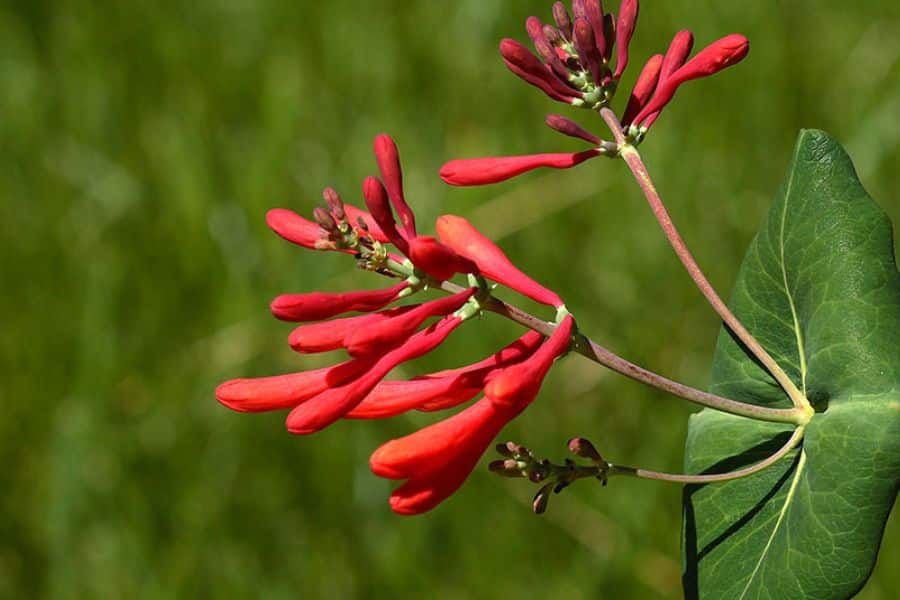
This is the one to grow if you want hummingbirds visiting your fence line or trellis all summer. Trumpet honeysuckle (Lonicera sempervirens) is a native, non-invasive climbing vine that produces clusters of long, slender, tubular flowers in red, coral, and orange from late spring right through fall.
If you’ve heard that honeysuckle is invasive, you’re probably thinking of Japanese honeysuckle (Lonicera japonica), which is a different plant entirely and very much one to avoid. Trumpet honeysuckle is native to the eastern US, grows at a manageable pace, and won’t take over your entire garden overnight.
It thrives in zones 4 through 9, grows well in sun to part shade, and once established, it’s tough, drought-tolerant, and generally unbothered by pests. Train it up a trellis, a fence, or an arbor, and you’ll have a vertical column of color that hummingbirds keep coming back to from one season to the next.
Petunias
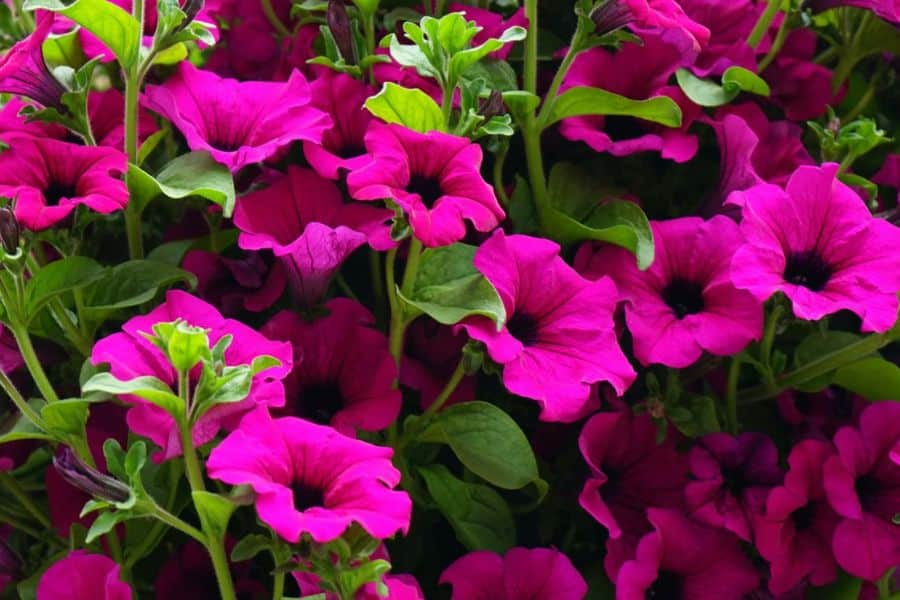
The trumpet-shaped blooms of petunias are a good fit for a hummingbird’s bill, and they produce nectar continuously from spring until the first frost.
They’re annuals, which means replanting each year, but the payoff is reliable, season-long color. Go for single-flowered varieties rather than heavily double-flowered types, similar to columbine; the doubles often have less accessible nectar, and hummingbirds will pass them over.
For the best results, red and deep pink petunias tend to be the biggest draw, but hummingbirds will visit other colors, too. Grow them in containers, hanging baskets, or beds, as long as they get plenty of sun and regular feeding through the season.
Zinnias
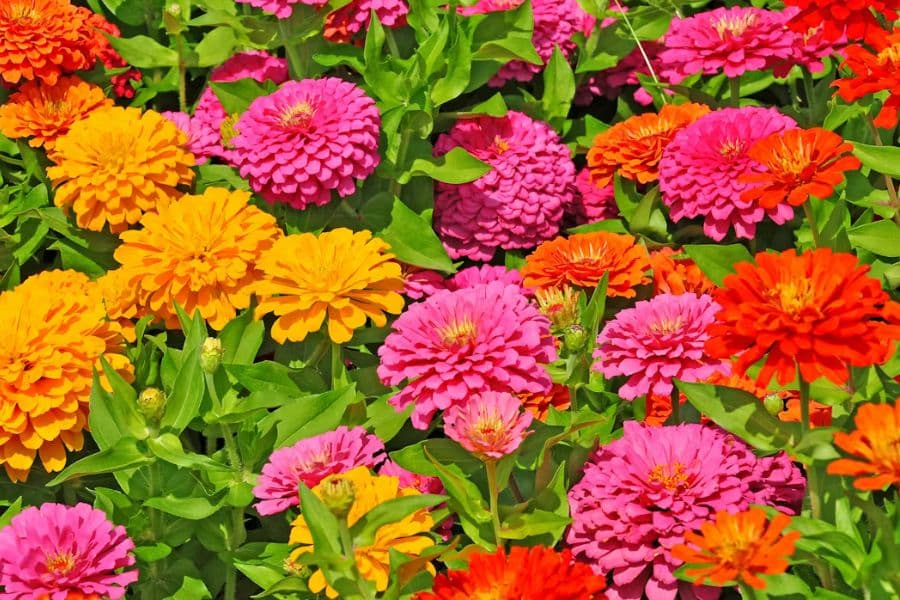
Zinnias are annuals that grow fast from seed, bloom all summer, shrug off heat and drought, and keep producing right up until the cold arrives.
The open structure of single and semi-double zinnia flowers makes it easy for hummingbirds to access the nectar-rich centers. Fully double varieties are more difficult for them to feed from, so those are best skipped if hummingbirds are the goal.
Red and orange zinnias are the most attractive to hummingbirds, though pink, coral, and hot magenta will also attract them. Hardy from zones 2 through 11, they’ll grow in almost any soil. They also make excellent cut flowers, so you’re getting double value from one plant. And if you leave some spent blooms on the plant, the seeds attract finches later in the season, which turns your garden into a multi-species bird magnet without any extra effort.
Cardinal Flower
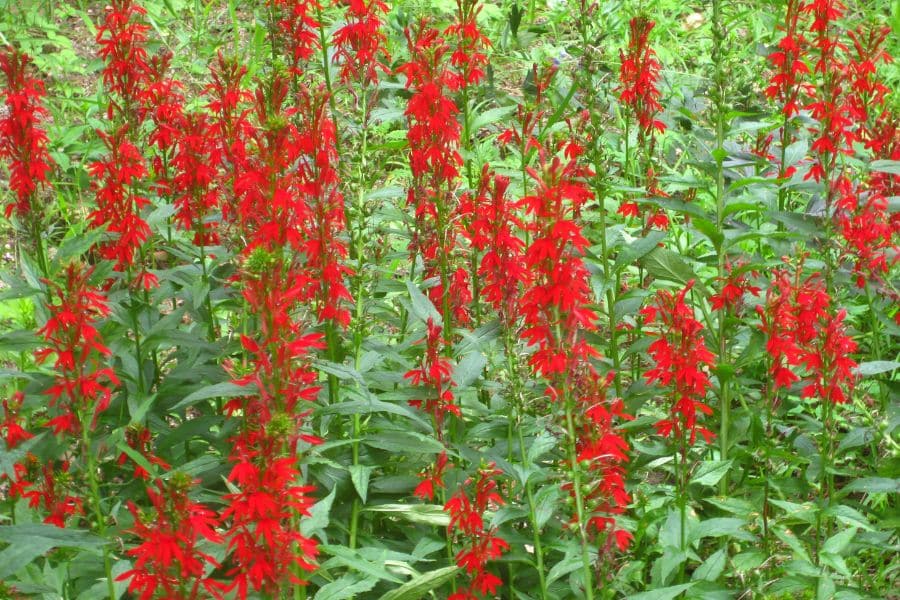
Cardinal flower (Lobelia cardinalis) is a native North American perennial with tall spikes of scarlet red tubular blooms that appear in late summer, precisely when hummingbirds need to fuel up for their southward migration.
The flowers are actually too long for most insects to access, which means hummingbirds aren’t competing for the nectar. The birds and the plant have co-evolved, each depending on the other. Hummingbirds get the nectar; the plant gets pollinated.
Cardinal flower grows 2 to 4 feet tall and does best in moist soil and partial shade, making it a good choice for low spots in the garden or near a pond. It’s native to nearly the entire lower 48 states and much of eastern Canada, so it’s well-suited to North American gardens. Hardy in zones 3 through 9, it reliably comes back each year once established.
Lupine
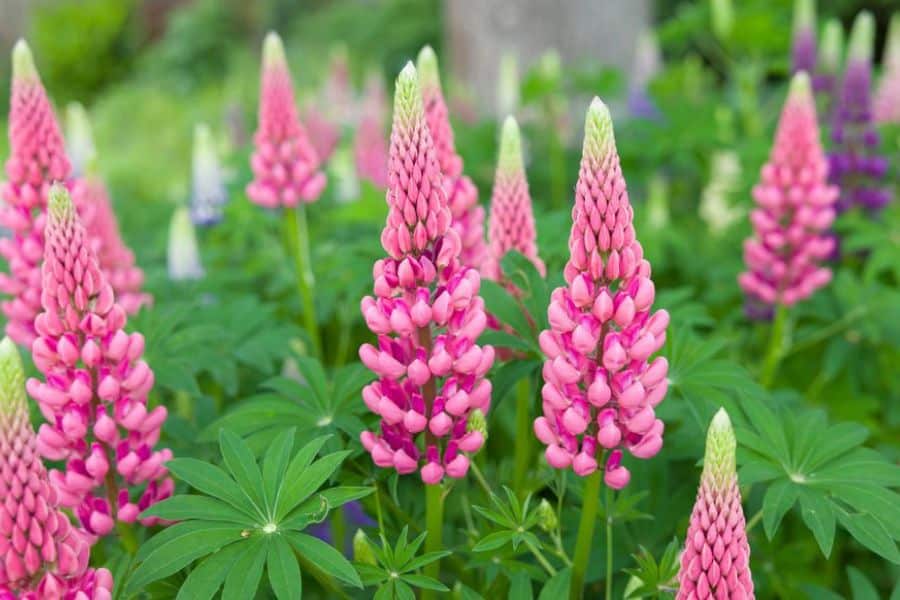
Lupines are tall, densely packed flower spikes in purple, blue, pink, and white that can reach 3 feet or more, and they flower in late spring and early summer.
Hummingbirds are drawn to the colorful spikes, working their way up through the individual blooms. There’s also a practical bonus for the rest of your garden: lupine fixes nitrogen in the soil, which improves growing conditions for neighboring plants. It’s like having a plant that does chores while it’s also looking beautiful.
Lupine does best in cool climates with well-drained soil and full sun to light shade. It can struggle in hot, humid summers, so in warmer zones, treat it as a cool-season plant and get the most out of it in spring. In the US, wild lupine and silvery lupine are among the easiest native species to grow. Check with your local nursery for the variety best suited to your area.
Bee Balm
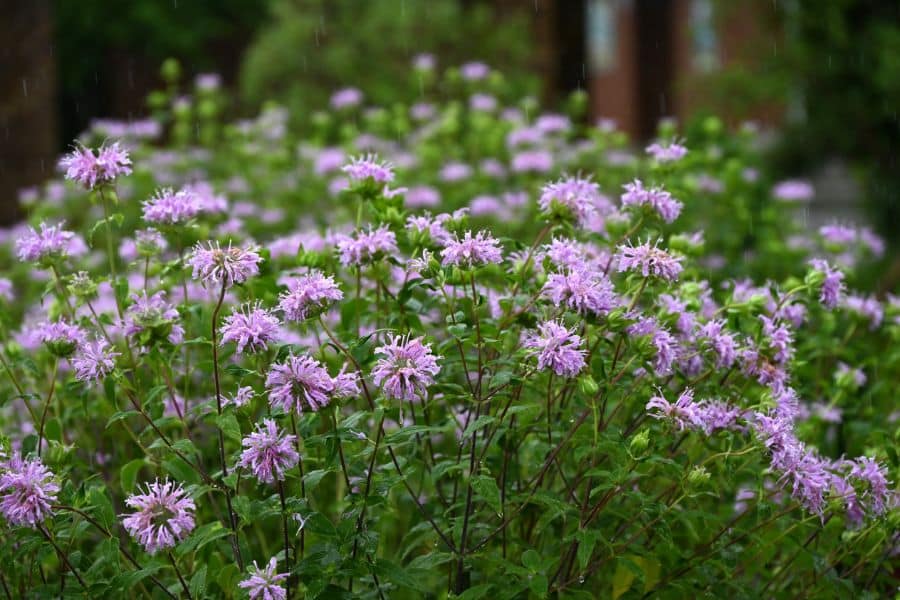
The flower heads of bee balm form a distinctive, spidery circular cluster atop tall stems, and each of those clusters is packed with tubular flowers loaded with nectar. Ruby-throated, Anna’s, and Rufous hummingbirds are all known to visit.
It’s a North American native, a member of the mint family, and has a history as both a medicinal and an edible plant dating back centuries. The aromatic foliage also deters deer, which is a bonus if deer in your area tend to help themselves to everything you plant.
Bee balm comes in red, fuchsia, pink, lavender, and white, and grows 4 to 6 feet tall in full sun to part shade with consistently moist soil. Hardy in zones 3 through 9. It does spread fairly quickly, so plan for that when choosing where to put it. Every couple of years, dividing the clump keeps it healthy and producing well.
Coral Bells
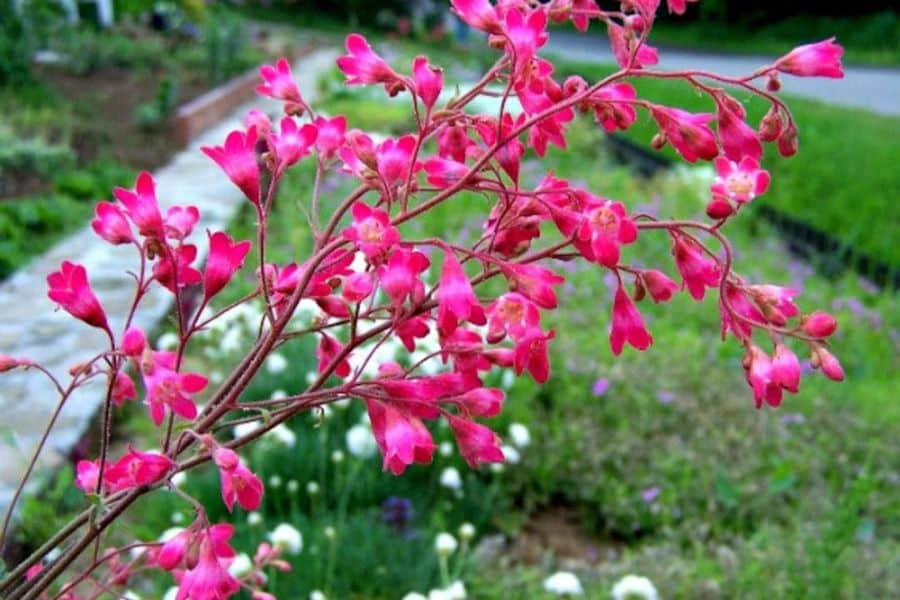
Coral bells (Heuchera) often get planted for their stunning foliage. Rich burgundy, deep plum, lime green, and silver all feature across the many varieties. But it’s the flower stalks that bring the hummingbirds in.
From early summer, long, airy stems rise above the foliage, covered in tiny bell-shaped flowers in pink, red, or white.
What sets coral bells apart from most other plants on this list is its shade tolerance. It does well in conditions where many sun-loving hummingbird plants won’t thrive. If you have a shady border that needs some interest and you’d love hummingbirds to visit that corner of the garden, coral bells are a good answer.
It’s also evergreen in mild climates, meaning the foliage hangs around year-round and earns its space even when it’s not flowering. Hardy in zones 4 through 9, low maintenance, and available in a huge range of foliage colors.
Salvia
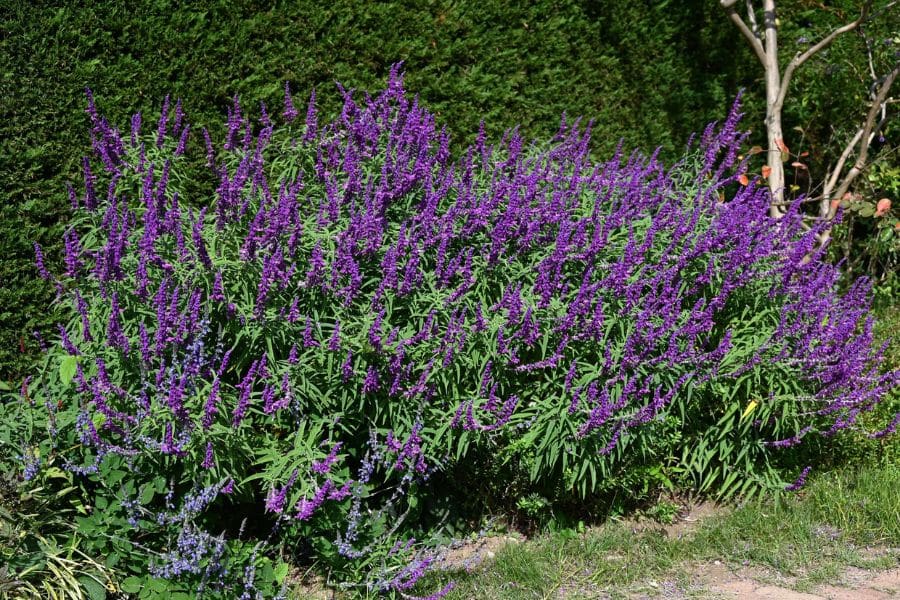
With over 900 species in the genus, Salvia offers something for almost every garden. The flowers appear on tall, slender spikes in red, purple, blue, and white, and the tubular shape is perfectly designed for hummingbirds to feed from.
Some standout varieties to look for: ‘Black and Blue’ (Salvia guaranitica), with deep indigo-blue flowers on 4 to 5-foot stems; ‘Hot Lips’, with red-and-white bicolored flowers that bloom from summer until frost; and Salvia coccinea, a native with small scarlet blooms that hummingbirds go after constantly.
Most salvias are perennial in warmer zones and annual in colder ones. The tender varieties are often grown as annuals across the US, even where they won’t survive the winter, simply because the hummingbird activity they generate is worth the replanting. Grow in full sun with well-drained soil, and deadhead spent spikes to encourage continuous flowering through the season.
A mix of salvia varieties can extend your hummingbird season from spring well into fall, making it one of the most versatile and reliable plants you can add to your garden.