
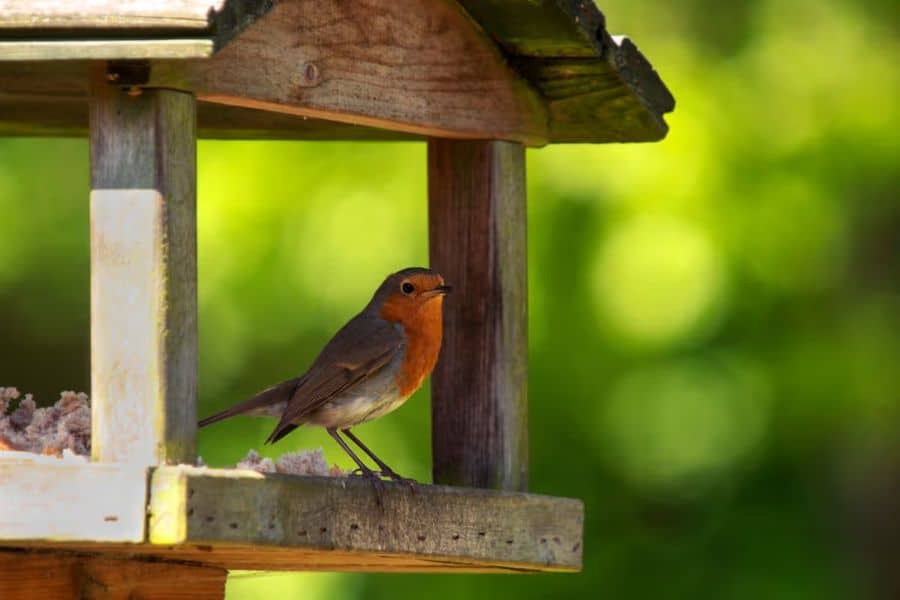
When I was a little girl, I spent quite a bit of time with my Grandma in her garden, and there was a robin who had basically adopted her. He’d show up the second she stepped outside with her trowel, sit on the handle of the wheelbarrow, and watch her like a tiny feathered foreman. She talked to him every time she saw him. And, of course, I was convinced it was the same robin every time.
Years later, in my own garden, I’ve had robins do the same thing. One in particular followed me around for most of last spring while I was digging over a new bed, hopping in for worms the moment I turned my back. He’s still around, or one that looks just like him, and I’m choosing to believe it’s the same bird.
How to attract robins is one of the most Googled phrases around birds, and I’m pleased to say they’re not hard to attract. The trick is getting them to keep coming back.
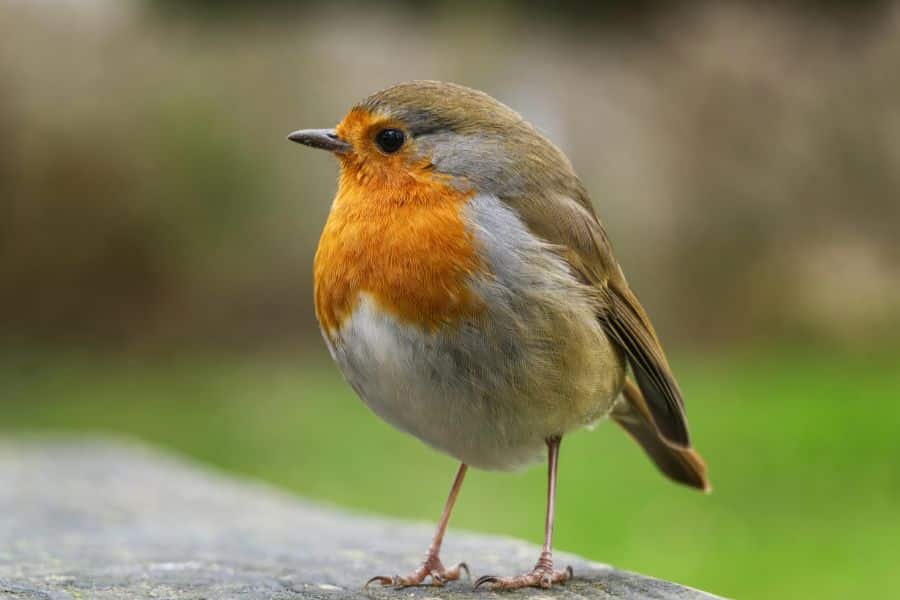
How to Attract Robins to Your Garden and Keep Them Coming Back All Year
Robins are creatures of habit, which works in your favor. Once they’ve decided your garden is a good spot, they tend to stick around, and a male will often hold the same territory year after year. So the aim is to make your garden the place they choose to set up shop.
The ingredients are simple enough. Food they actually want, water they can drink and bathe in, somewhere to shelter and nest, and a garden that hasn’t been doused in chemicals. Get those right, and you’ll have robins.
Feed Them What They Actually Want
Robins aren’t really tube-feeder birds. They’re ground feeders, mostly, and their beaks aren’t built for cracking sunflower seeds out of a hanging port. A swinging feeder full of niger seed won’t do much for them. What they want is soft food, scattered low, ideally somewhere they can dart in and out from cover.
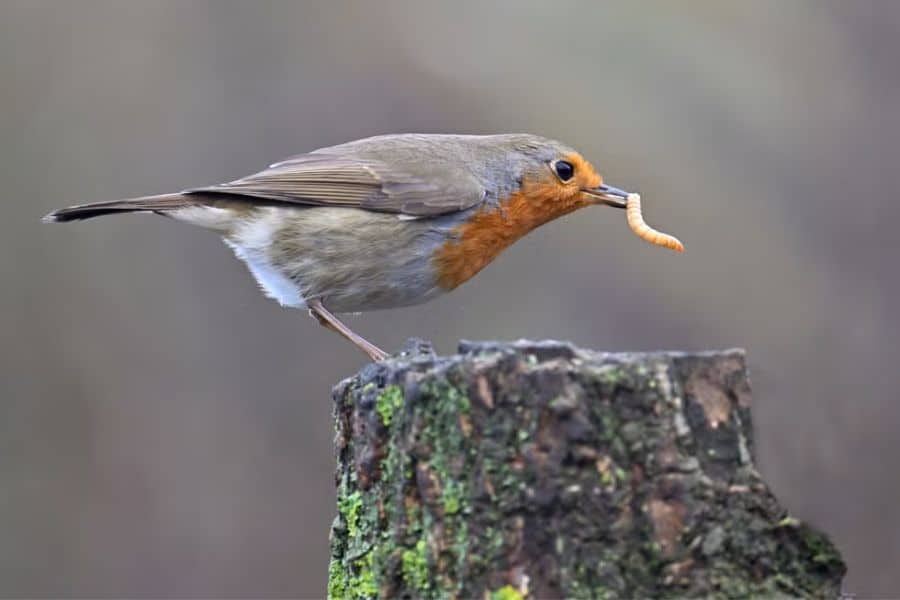
Mealworms are the gold standard. Dried mealworms are fine, though if you soak them in warm water for 10 minutes first, they’re easier for the birds to swallow and much more useful in nesting season, when chicks need the moisture. Live mealworms, if you can stomach buying them, are basically robin candy.
A few other things Robins love:
- Suet pellets or crumbled fat balls, scattered on the ground or on a low tray. Mine ignored the hanging fat balls entirely until I crumbled one onto a paving slab, and then it was gone in an afternoon.
- Grated mild cheese in small amounts. Sounds odd, but they love it, especially in winter when they need the fat. Don’t go mad with it.
- Sultanas or raisins, soaked first so they’re soft. My husband thinks I’m running a bird cafe, which is fair.
- Cooked, unsalted rice or porridge oats, sprinkled thinly. Useful in cold snaps.
What to skip: anything salty, anything moldy, and large dry chunks of bread, which fill them up without feeding them properly. A bit of crumbled wholemeal is fine occasionally.
Give Them Water They Can Actually Use
People put up feeders and forget that birds need to drink and bathe year-round, including in the depths of winter when most natural water sources are frozen. A robin with reliable water nearby is a robin who’s much more likely to stick around.
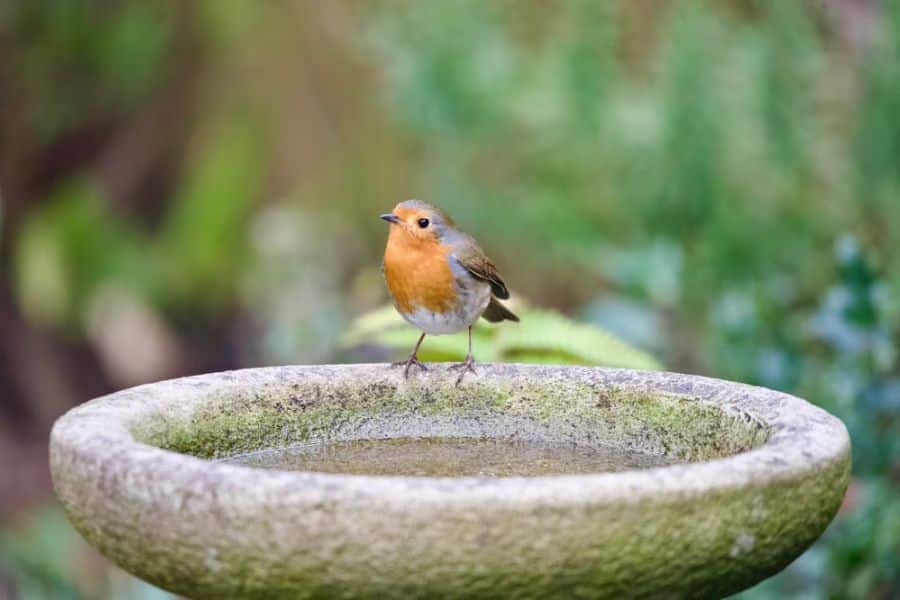
The bath itself doesn’t need to be fancy. Robins like shallow water, no more than about two inches deep, with a rough surface they can grip. A wide terracotta saucer on the ground works brilliantly, and costs very little.
If you’ve got a proper bird bath, pop a flat stone in the middle, so smaller birds have somewhere to perch. I’ve watched a robin use the stone as a launchpad to splash about, then sit on the rim and shake himself off like a tiny wet dog.
A few things that make a real difference:
- Change the water every couple of days, more often in hot weather. Standing water gets grim fast, and birds know it.
- In winter, break the ice each morning, or float a ping pong ball on the surface so the slightest breeze keeps a patch open.
- Sit the bath near cover but not right under it. Robins want a clear flight path in and a bush to bolt to if a cat appears, with a couple of feet of open ground between them and any ambush point.
Plant Things That Pull Their Weight
A garden of bare lawn and tidy paving isn’t a robin’s idea of a good time. They want layers. Low cover to dart into, mid-height shrubs to perch on, and some kind of denser thicket where they might nest.
A lot of the plants robins love are the same ones that make a garden feel alive anyway, so it slots in with normal gardening rather than being a separate project.
Dense shrubs are the big ones. Hawthorn, holly, ivy left to climb a wall or fence, pyracantha, and any kind of mixed native hedge will earn its keep. Ivy in particular is a robin’s favorite for nesting, and it flowers late in the year, which feeds insects, which then feed the robins.
And then there’s the worm factor. Robins follow the spade. They’re one of the few garden birds that have worked out that people equal food, because for centuries they followed wild boars and deer turning over the forest floor, and now they follow us doing the same job with a fork.
Every time you dig over a bed, you’re putting on a show. A garden with healthy soil, leaf litter, and a compost heap will have worms and grubs, and a robin will find them within minutes.
Make It Feel Safe
A robin won’t stay anywhere he doesn’t feel safe, no matter how many mealworms are on offer. Cats are the obvious issue, but it’s also about clear sightlines, escape routes, and not being startled every five minutes. A garden that feels chaotic to a robin will get a couple of visits and then nothing.
If you’ve got cats in the area, and most of us do, keep feeding stations a few feet away from dense low cover where a cat could hide. Counterintuitive, I know, because you’d think birds want to be right next to a bush. They do want cover nearby, but they want to see what’s coming. A scattered feeding patch on a lawn with a shrub eight feet away is better than one tucked under the same shrub.
A few things that help:
- A small brush pile in a corner. Robins love a brush pile, and so does almost everything else with feathers. Mine sits behind the shed, and it’s basically a wildlife hotel.
- An open-fronted nest box, which is what robins prefer rather than the standard hole-fronted kind. Tuck it into ivy or a thick climber, about five feet up, somewhere shaded and out of the wind. Don’t put it where you can stare at it all day, no matter how tempting. They want privacy.
- Less tidying. Leave leaf litter under hedges through winter. It’s full of insects, which is full of breakfast.
- Skip the pesticides. Slug pellets, lawn treatments, insect sprays, the lot. Robins eat insects and worms, and if those insects have been poisoned, so has the robin. A garden run without chemicals will have more bugs, which means more birds, which means fewer pests anyway.
Keep It Going Through the Year
Robins are around year-round in most of the UK and much of the US, but their needs shift with the seasons, and a garden that supports them in one month might not support them in another. The point of all this is consistency. A robin who knows there’s food on the patio every morning, water in the saucer, and a thick hedge to nest in, won’t go looking elsewhere.
In spring, which is where we are now, they’re paired up and either building or already on eggs. This is when soaked mealworms and live food really matter, because the chicks need protein and moisture. Don’t move feeding stations around, and try not to crash about near any hedge where you suspect a nest.
Through summer, food matters less because there’s plenty of it about, but water becomes important. A heatwave with no water source is brutal on small birds. Keep the bath topped up daily.
In autumn, leave the seed heads and the leaf litter, resist the urge to tidy everything down to the soil, and your robin will thank you by sticking around. Winter is when feeding really earns its keep: fat-rich food, unfrozen water, and a sheltered corner out of the wind.
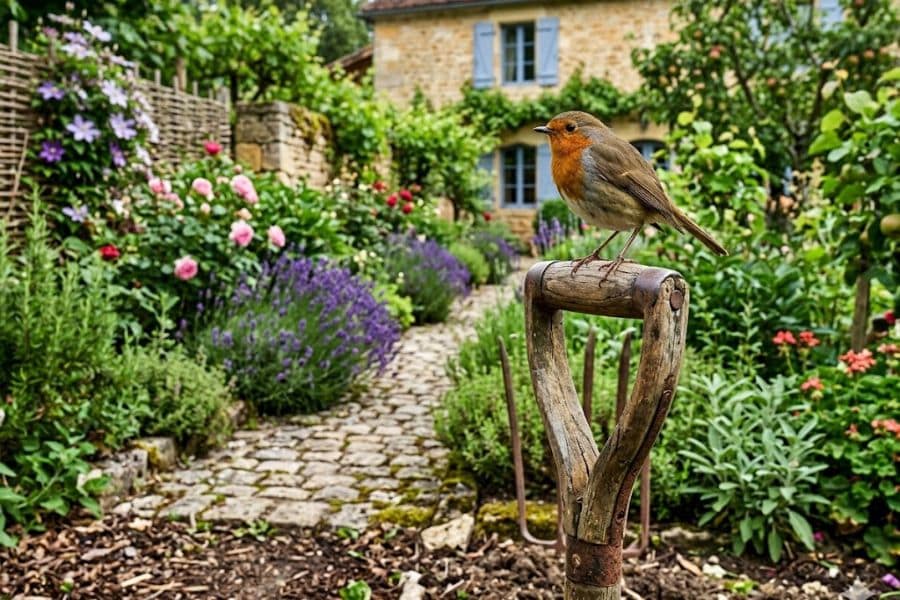
That’s the season a robin will become almost tame, sitting two feet away from you on a fork handle, waiting for whatever you turn up next.
My Grandma would have been so proud to see my little robin, who has been a regular visitor over the year.