
There’s a lilac bush in my neighbor’s front garden that I can smell from halfway down the street. Every May, it just stops you in your tracks because it looks as good as it smells; it’s just beautiful.
Lilacs are having a moment right now, and I’m seeing them everywhere on my Pinterest feed. No complaints here as I love looking at them, whether in real life or on a screen. So how do you recreate all that lilac loveliness in your own backyard?
What you need is the right variety for the space you’ve actually got, a spot that gets enough sun, and a bit of patience in the first year or two. I’ll walk you through all of it, including the small-space tricks that mean a balcony or a six-foot border can still give you that knock-you-over fragrance in spring.

How to Create a Lilac Garden That Smells as Good as It Looks
The first thing to know about lilacs is that the classic ones, the big old-fashioned Syringa vulgaris bushes your grandmother probably had, can get enormous. We’re talking 12 to 15 feet tall and almost as wide.
If you’re working with a small garden, those varieties will eat your space in about four years, and you’ll spend the rest of your life pruning them back, which actually reduces flowering. Not the dream.
The trick is matching the variety to the spot. There are dwarf lilacs that top out at four feet, patio lilacs grafted onto a single trunk so they look like little trees, and reblooming varieties that flower in spring and again in late summer. Once you know what’s available, the planning gets a lot easier.
And here’s something I wish someone had told me earlier: lilacs flower on old wood, which means the buds for next year’s blooms form on this year’s growth right after this year’s flowers finish. Prune at the wrong time, and you cut off all next spring’s flowers in one afternoon. I’ve had this problem as I can be a little over-enthusiastic with the secateurs.
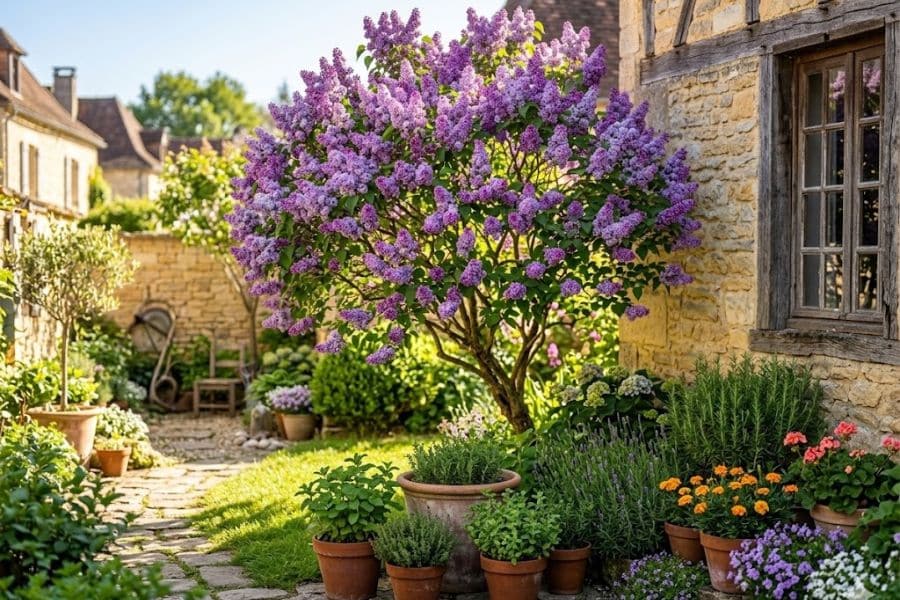
Picking the Right Lilac for a Small Space
If your garden is tight, look at the Bloomerang series first. They stay around four to five feet, they’re tidy, and they flower in spring and then again on and off through summer into early fall. The scent is a little softer than the old-fashioned ones, but it’s still there.
Dwarf Korean lilac (Syringa meyeri ‘Palibin’) is another small-space favorite. It grows to around five feet, has slightly smaller leaves that don’t get the powdery mildew the old vulgaris types catch every August, and the flowers are this soft lavender-pink. You can also buy it as a standard, meaning grafted onto a clear stem so it looks like a tiny tree.
For really tight spots, like a balcony or a courtyard, consider ‘Tinkerbelle’ or ‘Miss Kim’. Both stay compact, both bloom heavily for their size, and ‘Miss Kim’ has the bonus of decent fall color, which is rare for a lilac.
A few things to keep in mind when you’re choosing:
- Check the mature size, not the pot size. The label tells you what it’ll be in 10 years, and lilacs hit that size faster than you’d think.
- Sniff before you buy if you can. Scent varies wildly between cultivars, and some of the prettier modern ones barely smell at all, which defeats the whole point.
- Look for grafted standards if you want maximum impact in minimum floor space. They’re more expensive, but they earn it.
- Ask whether it’s a reblooming variety if extended flowering matters to you. The Bloomerang series is the easiest to find.

Sun, Soil, and the One Thing People Get Wrong
Lilacs need sun. Full sun. At least six hours a day and ideally more. This is the single most common reason people email me, saying their lilac has been in the ground for three years and refuses to flower. It’s almost always too much shade.
They’ll grow perfectly happy green leaves in part shade and produce nothing else, which is the gardening equivalent of a houseguest who eats all your snacks and contributes nothing.
Soil-wise they’re not fussy, but they really do prefer slightly alkaline conditions. If your soil is acidic (azaleas and rhododendrons thrive, hydrangeas turn blue), a handful of garden lime worked into the planting hole, plus a top dressing every couple of years, makes a real difference.
Drainage matters too. Lilacs hate wet feet, and I don’t blame them. If your spot puddles after rain, plant on a slight mound or pick somewhere else.
The one thing people get wrong, beyond the sun issue, is feeding them too much nitrogen. A lawn fertilizer drifting onto your lilac, or a generic high-nitrogen feed, will give you a lush green bush with no flowers.
Lilacs want a balanced feed in early spring, or better yet, a scoop of compost and some bone meal around the base. That’s it. They’re low-maintenance once they’re settled, and overfeeding actively hurts them.
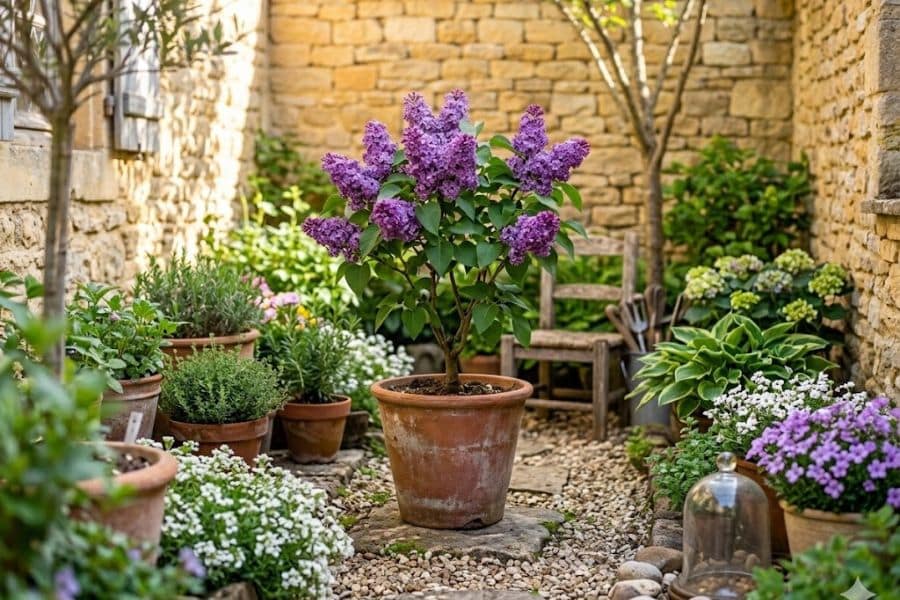
Growing Lilacs in Pots and Tiny Gardens
You can absolutely grow lilacs in containers, but be honest with yourself about the pot’s size. A dwarf lilac needs at least a 15-gallon container, ideally a larger one. Anything smaller and you’ll be watering twice a day in July, and the roots will cook.
Drainage holes are non-negotiable. Use a good quality potting mix, not garden soil, and mix in some grit or perlite for drainage. A handful of slow-release fertilizer in spring and a mulch of bark or gravel on top to keep the roots cool.
In winter, if you’re somewhere that gets properly cold, wrap the pot in hessian or bubble wrap or move it against a sheltered wall. The roots in a pot are more exposed than they would be in the ground, and a hard freeze can damage them.
A few small-space tricks I’ve picked up along the way:
- Plant something low and pretty at the base of a potted lilac. Creeping thyme, alyssum, or trailing lobelia. It hides the bare lower stems and stops the pot from looking like a stick in a tub for nine months of the year.
- If you’ve only got room for one lilac, put it where you’ll smell it. By the back door, under a kitchen window, next to where you sit outside in the evening. The point of a lilac is the scent, and you want to be ambushed by it daily.
- Espalier or train a small lilac against a fence if you’re really tight on space. It takes patience, but you end up with a flat, wall-hugging shape that takes up almost no floor space.
- Pair it with something that flowers later. Lilacs are gorgeous for three weeks, and then they’re just a green shrub. A clematis trained through it, or a late perennial like a hardy geranium at the base, keeps the spot interesting all season.

Pruning Without Killing Next Year’s Flowers
Right, pruning. This is where most lilac heartbreak happens. The rule is simple but easy to forget: prune within three weeks of the flowers fading. Not in fall, not in winter, not in early spring. Within three weeks of the blooms going over. After that, the plant starts forming next year’s flower buds, and any pruning removes them.
What you’re doing when you prune is three things. First, deadhead the spent flower clusters by snipping just above the next set of leaves. This isn’t strictly necessary, but it tidies up the plant and directs more energy toward next year’s blooms.
Second, removing any dead, crossing, or weak stems back to the base. Third, on older bushes, take out one or two of the oldest, thickest stems right at ground level every few years to encourage fresh growth from below.
If you’ve inherited a huge overgrown lilac and you’re tempted to chop it back hard, you can, but accept that you’ll lose at least one season of flowers and possibly two. The rejuvenation method is to take out a third of the oldest stems each year for three years, rather than cutting the whole thing down at once. Slower but kinder, and you still get some flowers each spring as it recovers.
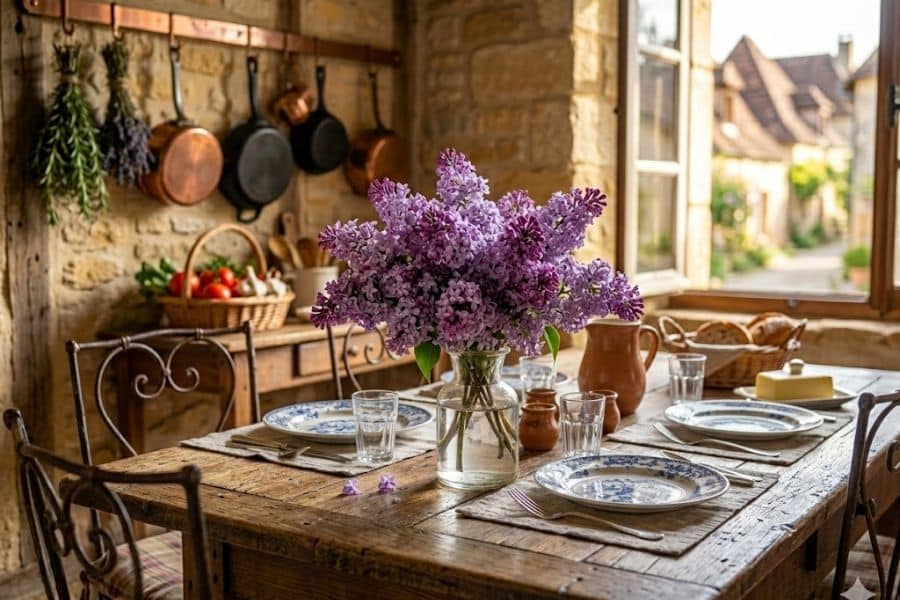
Making the Most of Lilac Season Indoors
The other half of growing lilacs is cutting them and bringing them inside, because a vase of lilacs on the kitchen table is one of the great small pleasures of spring. They have a reputation for wilting quickly in water, but there’s a trick that actually works.
Cut them in the morning when they’re full of water, choose stems where about two-thirds of the florets on the cluster are open, and split the bottom inch of the woody stem with secateurs or a knife. That split lets the stem take up water properly.
Strip off any leaves that would sit below the water line, because lilac leaves rot fast and turn the water green within a day. Pop them in cool, deep water with a tiny splash of bleach or a flower food sachet, and keep the vase out of direct sunlight. Done properly, they’ll last four or five days, which is about all you can ask of any cut flower this fragrant.
A few small bunches around the house beat one big arrangement, in my opinion. One on the bedside table, one in the bathroom, one by the kettle. You open a door, and the whole room smells like spring, and for those three weeks in May, the house feels completely different.