
I walk my dog for a brisk, bordering on power-walking, 60-minute walk every day. I love checking my fitness app when I’ve finished to see how many calories I’ve burned. I have a competition with myself to see if I can beat my record.
Surely the weight will drop off if I keep going at this rate? Nope! The scales say otherwise, and even my clothes don’t feel looser, usually a better guide than the scales.
But why? Surely my trusty app isn’t lying to me? I mean, why would it? It doesn’t have a hidden agenda, or does it?
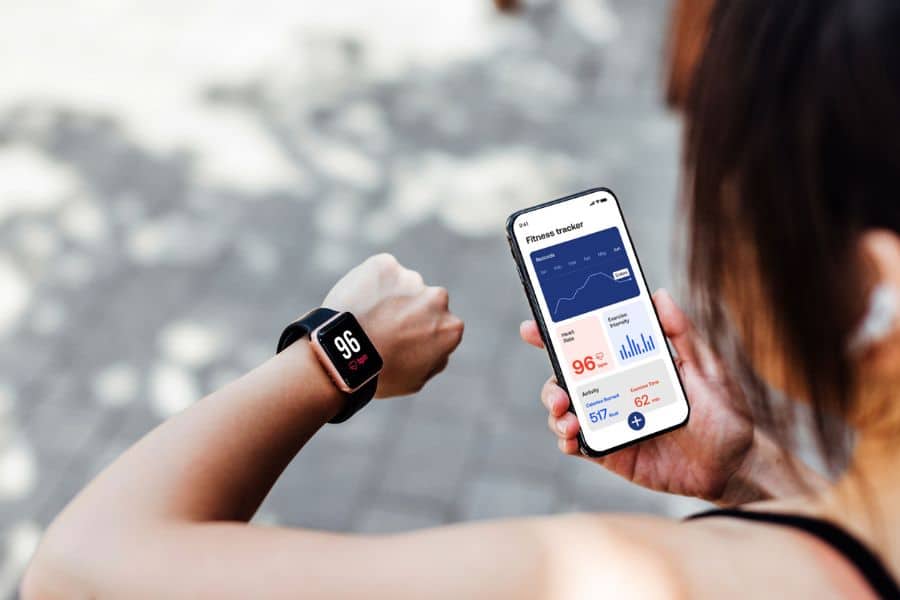
How Wrong Is the Calorie Burn Number On Your Fitness App?
Researchers have been testing wearables against gold-standard lab equipment for years now, and the results aren’t reassuring. A Stanford study put seven popular wrist devices through their paces and found that while heart rate readings were within a few percent of accurate, energy expenditure was a different story.
Every single device missed the mark on calorie burn, with error rates ranging from around 27 percent on the best to over 90 percent on the worst. Not great.
A later review looking across dozens of consumer wearables found the same pattern repeating: heart rate, fairly good. Step count, usually decent on flat ground. Calories burned, all over the place, with most devices off by 30 to 50 percent on common activities and worse on cycling, weight training, and anything that isn’t steady-state walking or running.
What that means in real-life numbers: if your watch tells you a spin class burned 500 calories, the truth might be 280. Or 700. The device has no idea. It’s making an educated guess based on your age, weight, sex, heart rate, and a movement pattern it’s trying to recognize. That’s a lot of guessing layered on top of more guessing.
Why the Number Is So Off in the First Place
Wrist-based trackers can’t see inside your body. They measure your pulse with a green light on your skin and your movement with an accelerometer, then run those signals through an algorithm that estimates how hard you’re working.
The algorithm was built using averages from study participants who probably don’t share your exact metabolism, muscle mass, or fitness level.
The further your activity drifts from steady walking or running, the worse the estimate gets. Weight training is a classic example. You’re standing still between sets, your heart rate spikes and drops, and the watch has no clue whether you just deadlifted 80 kilos or scrolled Instagram.
Cycling fools it too, because your arm isn’t swinging the way it does when you run. HIIT classes, rowing, swimming, and yoga all confuse the algorithm in different ways.
Then there’s the basal metabolic rate question, which is the calories your body burns just keeping you alive. Most apps roll BMR into the daily total, which inflates the number considerably. So when your watch says you burned 2,400 calories today, a chunk of that is just you existing, not you exercising.
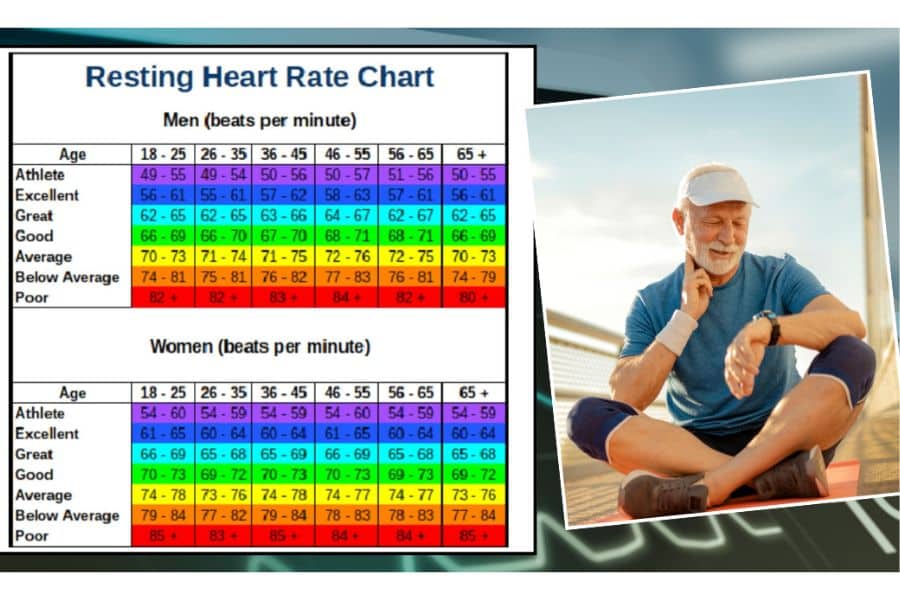
Resting Heart Rate, the Number Actually Worth Watching
Here’s where wearables earn their keep. Heart rate measurement on most decent devices is accurate enough to be useful, especially overnight when you’re still. Your resting heart rate, taken first thing in the morning or pulled from your watch’s sleep data, is one of the most honest markers of cardiovascular fitness you’ve got.
As you get fitter, your resting heart rate tends to drift down over weeks and months. Mine sat at around 68 a couple of years ago. After a stretch of consistent walking and a bit of strength work, it settled into the high 50s. That’s a real change in my heart’s efficiency, and no calorie number on a screen would have shown me that.
The other thing resting heart rate is good for is catching when you’re overdoing it or coming down with something. If yours suddenly jumps five or ten beats above your normal baseline for a few days running, that’s worth paying attention to.
Poor sleep, too much alcohol, stress, the start of a cold, hard training without enough recovery, all of those show up here before they show up anywhere else. It’s the closest thing to a daily readout of how your body’s actually doing.
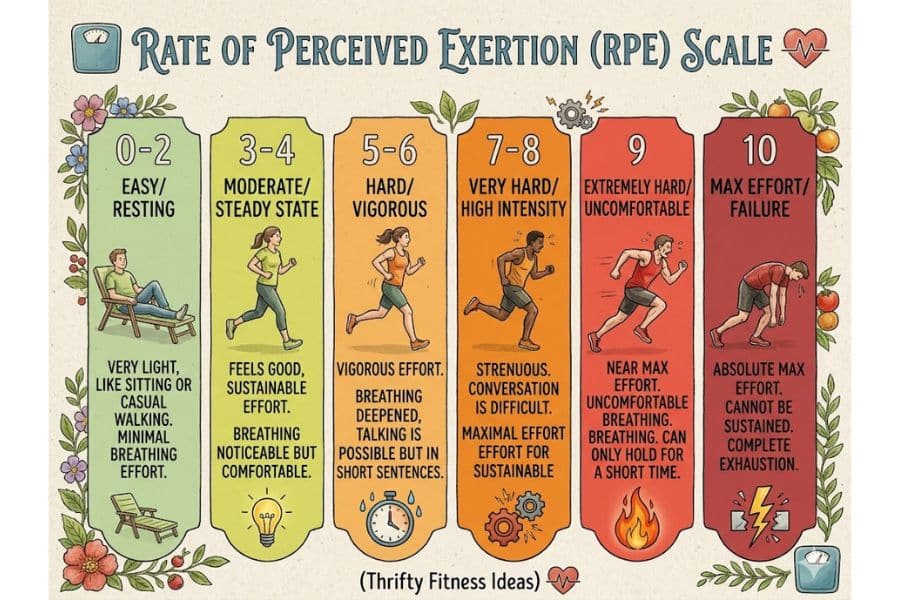
Rate of Perceived Exertion Scale
Before anyone had a smartwatch, exercise scientists used the Rate of Perceived Exertion scale, typically a 1-to-10 rating of how hard a session felt. Studies comparing RPE to lab measurements have shown it tracks remarkably well with actual exercise intensity.
The way I use it: at the end of a workout, I ask myself where it landed on a scale from 1 (sitting on the sofa) to 10 (couldn’t do another second). A walk to the shops might be a 3. A brisk uphill hike, a 6 or 7. A hard interval session, an 8 or 9.
Over time, you build a calibrated sense of effort that no algorithm can replicate, because you’re the only one inside your body.
Why this matters more than the calorie figure: if every workout you do is hovering at a 4, you’ll plateau no matter what your watch says you burned. If you’ve got a mix of easier sessions and a couple of properly challenging ones each week, you’re probably progressing. The number on your wrist can’t tell you that. Your own honest read of effort can.
Strength Benchmarks That Don’t Lie
If you lift weights or do any kind of resistance training, you’ve got access to the most honest feedback there is: the bar, the dumbbell, or your own body weight. Either you can do more reps than last month, lift a heavier weight, or hold a plank longer, or you can’t. No algorithm involved.
Functional markers count too. Can you carry the shopping up two flights of stairs without stopping? Get off the floor without using your hands? Walk for an hour without your hips complaining?
These are the things that matter when you’re 65. A calorie estimate from a Tuesday workout three years ago will mean nothing then. Being able to lift your own suitcase into the overhead locker will.
What to Do With Your Watch Instead
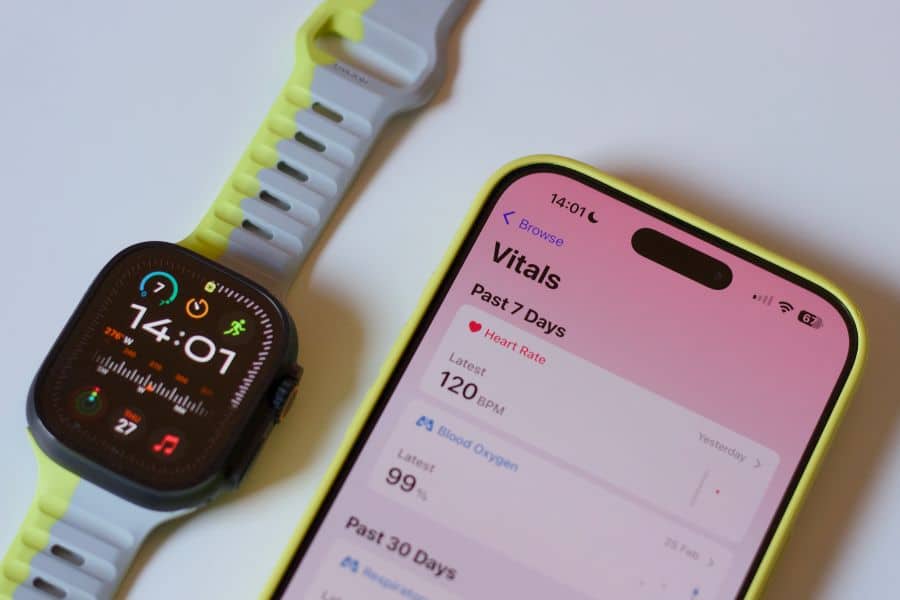
I haven’t binned my watch, but I stopped treating the calorie figure as gospel. Here’s how I use the device now, and what I ignore:
- Steps. Pretty reliable, useful as a rough daily movement target. I aim for around 8,000 most days because the evidence on mortality benefit flattens out somewhere between 7,000 and 10,000 for most adults.
- Resting heart rate trend. I look at the weekly and monthly graphs, not the daily figures. Sudden jumps tell me to back off. A slow drift downward tells me the training’s working.
- Sleep duration. Total hours and bedtime consistency are the bits I trust. The breakdown of REM versus deep sleep is more guesswork than science on most devices, so I don’t read too much into it.
- Heart rate during exercise. Useful for keeping easy sessions actually easy. If I’m meant to be doing a recovery walk and my heart rate’s at 140, I’m walking too hard. Most of us underdo the easy and overdo the hard, and this one number helps fix that.
- Calories burned. I look at it the way I look at the horoscope in a magazine. Mildly entertaining, not something to plan my day around.
Medical disclaimer: This article is for general information only and isn’t a substitute for personalized medical advice. If you have a health condition, take medication, or are starting a new exercise program, check in with a qualified healthcare professional before making changes.