
It’s that time of year when I start to swap my wardrobe over. All the big woolly jumpers get taken out and vac-packed into a suitcase and shoved under the bed, not to see the light of day again until winter hits. My shorts and summer dresses come out of the same suitcase and are hung in the wardrobe again.
However, when I try to do up my favorite pair of shorts, I realize that the comfort eating I did in the colder months is telling a story all of its own. It’s the same story it tells every time at this time of year. I start to panic and shove the shorts unceremoniously back into the drawer.
It’s the same story every year. No matter how hard I try to keep the weight under control, the older I get, the harder it becomes to keep it off. So this year, I’ve been trying something different, weight-loss pilates.
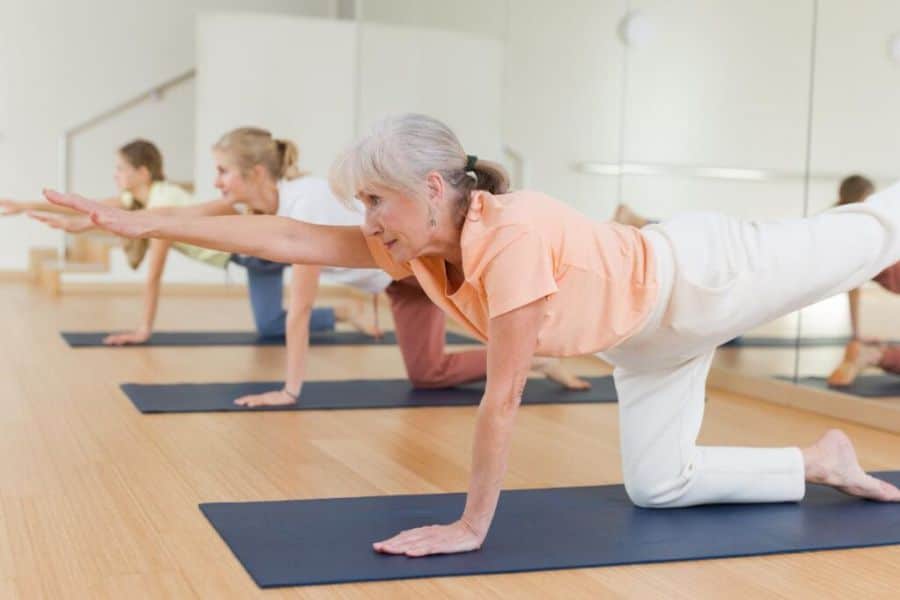
Why Your Body Responds Differently to Exercise When You Age
The reason the same things you did in your thirties no longer produce the same results has a lot to do with what’s happening hormonally. As estrogen levels drop, the body becomes better at storing fat, particularly around the middle. Muscle mass naturally decreases, too, which slows your metabolism.
The exercises that served you well when you were younger were often cardio-heavy. They burned calories during the session, you felt good, and you went home. The problem is, once the session ends, so does the calorie burn.
Pilates works differently.
Pilates exercises build lean muscle, and muscle burns more calories than fat, even when you’re sitting still. When you increase your muscle mass, your body is working harder around the clock. You’re burning more calories watching TV, sitting reading, and even sleeping.
Stress causes the body to hold on to fat, particularly around the belly, due to the hormone cortisol. Pilates has a calming effect on the nervous system. A calmer body is far more willing to let go of stored fat than a stressed one. So those twenty minutes on the mat are doing more than you might think.
5 Pilates Exercises That Will Get Your Body Summer Ready
The Hundred
This exercise wakes up your core and gets your circulation moving fast, which is exactly what you want at the beginning of a session.
- Sit on your mat and roll back slowly, bringing your chin toward your chest and hovering your shoulder blades just above the ground.
- Extend your legs to a 45-degree angle, feet together, toes pointed.
- Reach both arms forward and begin pulsing them up and down in small, controlled movements, breathing in for five counts and out for five counts.
Your core is doing all the work here. Your arms are just along for the ride.
The Roll Up
The roll-up movement looks deceptively simple. The slower you go, the harder it is. You’ll feel your deep abdominal muscles working in a way that a standard crunch simply doesn’t reach. This is the exercise that does the most to flatten the midsection over time.
- Lie flat on your back, legs extended, arms reaching overhead.
- Take a breath in, and on the exhale, begin to curl up slowly, lifting your arms, your head, your shoulders, and continuing until you’re sitting tall with your hands reaching toward your toes.
- Then breathe in, and use control to roll back down one vertebra at a time.
Single Leg Circles
Moving your leg gently in a circle doesn’t sound like it would do a lot. How hard can it be?
Quite hard, as it turns out. It’s working your hips, your core, and your stabilizing muscles, all of which are working hard to hold firm while the leg moves. That’s where the deep core stability gets built.
- Lie on your back, arms at your sides, both legs extended.
- Engage your core and press your lower back gently into the mat.
- Lift your left leg toward the ceiling and begin to draw slow, controlled circles in the air, keeping your pelvis absolutely still.
- Do a set in one direction, then the other, then switch legs.
The Double Leg Stretch
For this exercise, your core has to fight to keep everything together as your arms and legs pull away from your center. Breathe out and bring everything back in.
Your lower back stays pressed into the mat throughout. The moment it lifts, your core has stopped doing its job.
- Lie on your back and bring both knees into your chest.
- Lift your head, neck, and shoulders off the mat.
- Place your hands on your shins.
- Take a breath in, and at the same time, reach your arms overhead and extend both legs to a 45-degree angle.
Side Kneeling Obliques
This is the exercise for your waist. It’s a lateral challenge that targets the obliques in a way that no amount of crunches ever will.
- Come into a side-kneeling position with one knee on the mat and the opposite leg extended to the side, foot flat on the floor.
- Your bottom hand goes on the mat for support. Stack your hips and shoulders, and reach your top arm up overhead, fingers long.
- Press gently into the mat with your bottom hand and lift your hips slightly to feel the contraction through the side of your body.
- Hold it for a moment, breathe, then lower and repeat before switching sides.
How Long Before You See Results?
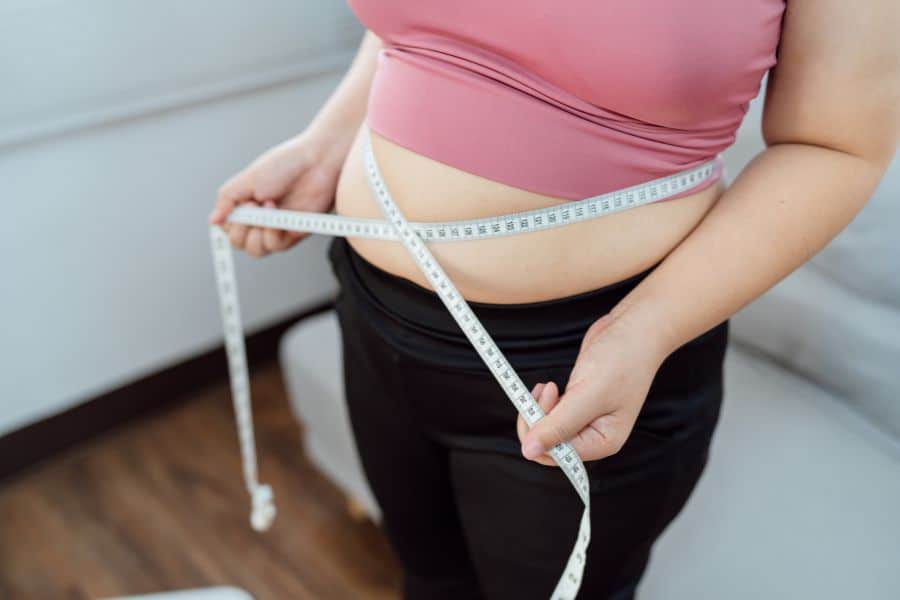
It’s the million-dollar question and the one that sees so many people quitting if they don’t see immediate results. But patience is a virtue, especially when it comes to Pilates. Research on Pilates and body composition suggests that noticeable changes take around 8-12 weeks.
The other thing worth knowing is that consistency beats intensity every single time. A twenty-minute session three times this week will do more for you than one long session, followed by nothing for ten days. Short and regular is the whole game.
How To Speed Up the Process
Pilates, on its own, can absolutely help you lose a dress size. If you want to speed things up, add a daily walk or some light cardio on the days you’re not doing Pilates. Your body will respond faster when you give it a little more to work with.
And then of course, there is what you eat. You don’t need a diet, just make sure you’re eating good protein, plenty of vegetables, and enough water, which will support everything the Pilates is doing underneath.
Disclaimer: This article is for informational purposes only and is not a substitute for professional medical advice. Always consult your healthcare provider before starting a new exercise routine, particularly if you have an existing injury or health condition.