
I don’t know about you, but since I’ve hit my fifties, my stomach seems to have grown in pounds the way I’ve grown in years. It’s so frustrating. I’ve gone from a size 8-10 to a size 14-16; it’s beyond depressing. It doesn’t seem to matter how small my dinner portions are, it doesn’t make a difference. The weight stays on, and my tummy doesn’t shrink.
Now I’m not one for crash diets, and living in France, where bread, cheese, and wine are staples, it’s hard to stick to a dieting regime. Plus, there’s apéro hour, which the French love, and now I do too. But, I do eat pretty healthily, wine and cheese aside, so it’s gauling when my stomach refuses to comply.
These seven core exercises have been a Godsend, as they’re slowly but surely helping my belly beat the flab and boost my confidence in my figure.

7 Standing Core Exercises To Flatten Your Belly Fast
Standing Oblique Crunches
Difficulty: 3 out of 5
This one targets the waistline, and I love it because it feels simple yet still gets me sweating. It works the obliques, the muscles down the side of your stomach, which are often overlooked.
What you’ll need: Nothing at all. Just a bit of space to move side to side.
How to do it: Stand tall with your feet about shoulder-width apart. Place your hands lightly behind your head, elbows out wide. Lift your right knee up toward your right elbow while bending sideways at the waist, then return to standing. Switch to the other side. Move at a steady pace, almost like a rhythm, and keep going for about 12 to 15 reps on each side.

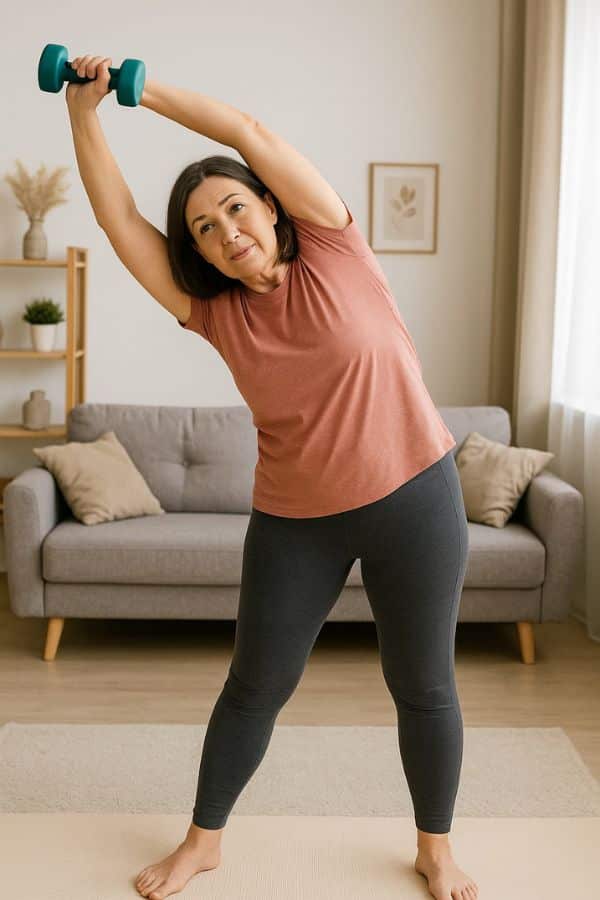
Standing Side Bends With Weights
Difficulty: 2 out of 5
This is one of those moves that looks almost too easy, but if you keep at it, you’ll really feel it working down your sides. It helps strengthen the obliques while also providing your core with additional stability training.
What you’ll need: A dumbbell, kettlebell, or even a heavy water bottle will do. I’ve been known to use a tin of baked beans or soup.
How to do it: Stand up straight with your feet hip-width apart and hold the weight in your right hand. Keep your left hand resting lightly on your hip. Slowly bend sideways at the waist, lowering the weight toward your knee without leaning forward or back. Come back to standing tall. Do 12 to 15 reps, then switch the weight to your other hand and repeat on the left side.
Found this useful? Get more like it in your inbox as a Lifestyle Library Insider.
Standing Knee Lifts With a Twist
Difficulty: 4 out of 5
This one feels like a proper ab workout, especially once you get into the rhythm. It targets your core from different angles because you’re lifting your knees while also twisting through your torso.
What you’ll need: Nothing but some space to move.
How to do it: Stand with your feet hip-width apart and your hands behind your head, elbows pointing out. Lift your right knee as you rotate your torso to bring your left elbow toward it. Lower back down, then switch sides. Keep your movements controlled and avoid pulling on your neck. Aim for 12 to 15 reps per side.

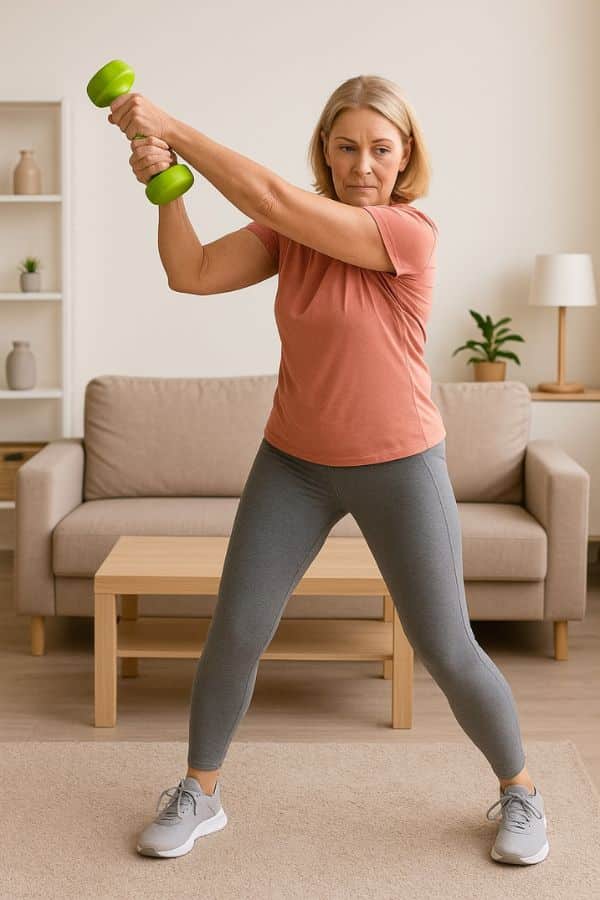
Woodchopper
Difficulty: 3 out of 5
This move feels powerful, almost like you’re swinging an axe, and it really fires up your core. It works the abs, obliques, and even gets your shoulders involved.
What you’ll need: A dumbbell, medicine ball, or anything with a little weight that you can hold safely.
How to do it: Stand with your feet shoulder-width apart and hold the weight above your right shoulder. In one controlled movement, rotate your torso and bring the weight down diagonally across your body toward your left hip. Return to start and repeat for 12 to 15 reps. Then switch sides. Keep your arms slightly bent and focus on turning through your core, not just swinging with your arms.
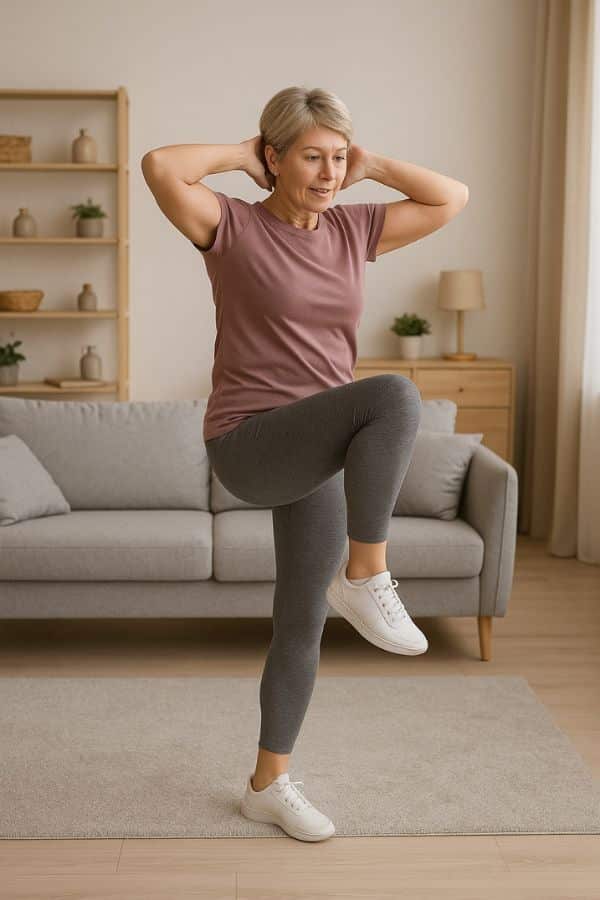
Standing Bicycle Crunches
Difficulty: 4 out of 5
I really like this one and have found it super effective. It mimics the floor version, but standing up keeps your back and neck out of the strain zone. It’s a great way to hit your abs and obliques while also sneaking in a bit of balance work. It’s surprising how unbalanced I’ve become as I’ve gotten older.
What you’ll need: Nothing at all.
How to do it: Stand tall with your hands behind your head and elbows wide. Lift your right knee while rotating your torso to bring your left elbow toward it. Lower back to start, then repeat on the opposite side. Keep the pace steady, almost like pedaling a bike in the air. Go for 12 to 20 reps, depending on how strong you’re feeling.
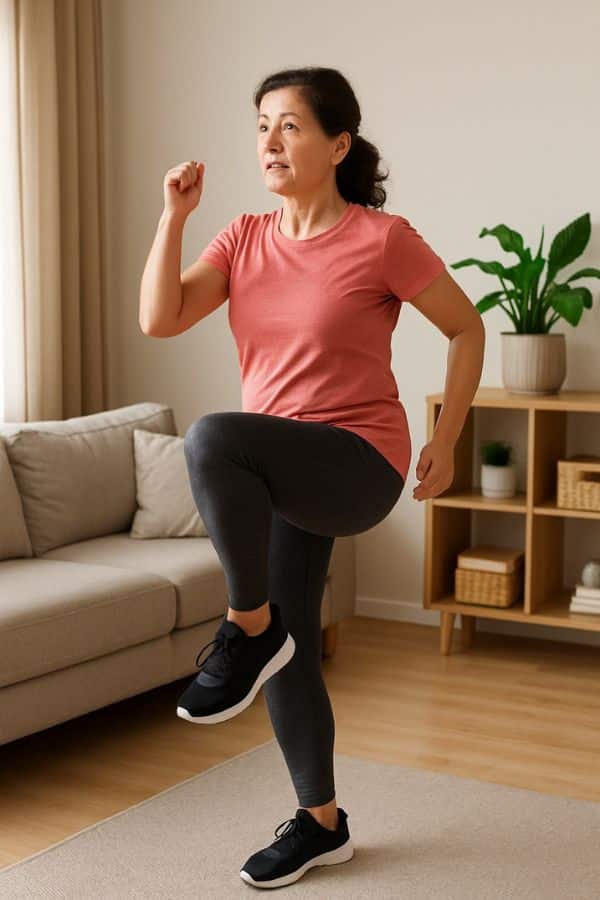
Standing Mountain Climbers
Difficulty: 5 out of 5
This one gets your heart rate up fast and challenges your core at the same time. It’s a mix of cardio and ab work, which makes it tougher but also more effective. If it’s raining and I haven’t been able to go for a walk, I make sure to do these.
What you’ll need: Just enough room to jog in place without bumping into anything.
How to do it: Stand with your feet hip-width apart and arms bent at your sides. Start jogging on the spot, driving your knees up as high as you can. As your knees lift, pump your arms like you’re climbing a steep hill. Keep your core tight and aim to go for 30 to 60 seconds.
Reverse Chop (Low to High)
Difficulty: 3 out of 5
This move is the opposite of the woodchopper and gives your abs a strong diagonal workout. It also engages your arms and shoulders, making it feel like a full-body move, even though the core is leading the effort.
What you’ll need: A dumbbell, medicine ball, or even a bag of flour if that’s all you’ve got.
How to do it: Stand with your feet shoulder-width apart and hold the weight down by your right hip. Rotate your torso as you lift the weight diagonally across your body toward your left shoulder. Return to start and repeat for 12 to 15 reps. Then switch sides. Keep your movements smooth and avoid leaning too far back.

That’s the full set. Seven standing moves that can be done almost anywhere. They won’t flatten your stomach overnight, but if you stick with them, they’ll strengthen your core, boost your balance, and give you that extra bit of energy in your day.
What I like most is how easily they fit into real life. You don’t need a gym, you don’t need fancy gear, and you don’t need to spend an hour on the floor. Just a few minutes, a couple of times a week, and you’ll start to feel the difference.
And remember, don’t expect perfection or instant results. This is about small, steady wins that build up over time.
Disclaimer: This article is for informational purposes only and is not a substitute for professional medical advice, diagnosis, or treatment. Results will vary depending on the individual, and there is no guarantee these exercises will flatten your stomach or produce specific outcomes. Always consult with your doctor or a qualified health professional before starting any new exercise program, especially if you have pre-existing conditions or concerns.
About this article: Our health articles are based on published studies and advice from experts such as physiotherapists and dietitians, and the sources are linked in the article.
Disclaimer: The content in this article is for informational purposes only and is not intended to replace professional medical advice, diagnosis, or treatment. Always consult your doctor or healthcare provider before making changes to your diet, supplements, medication, or health routine. This article may contain affiliate links.
Become a Lifestyle Library Insider
Health tips, money know-how, travel deals and garden ideas for life after 50, straight to your inbox.

Kylie Lang is a nationally syndicated travel journalist with bylines on the Associated Press Wire & more, a lifestyle writer, and the founder and editor of Your Lifestyle Library (yourlifestylelibrary.com). She holds a BA (Honours) in History from the University of Kent and is a member of the British Guild of Travel Writers.