
I always remember my mom telling me she walked to school every day, come wind, rain, or shine. The walk was over three miles, and there were no buses or a fancy car to take her or pick her up, as her mom didn’t drive.
Walking was exercise, along with playing outdoors and various sports. There were no gyms in those days; most families only had one car, and so if you wanted to get anywhere, you walked, whether that was to your destination or to the bus or train station.
Sadly, in our commercial-filled world, where we’re constantly shown the latest and greatest gym equipment, fitness gimmicks, and diet pills, we’ve forgotten the power of walking not only to stay fit but also to maximize weight loss.
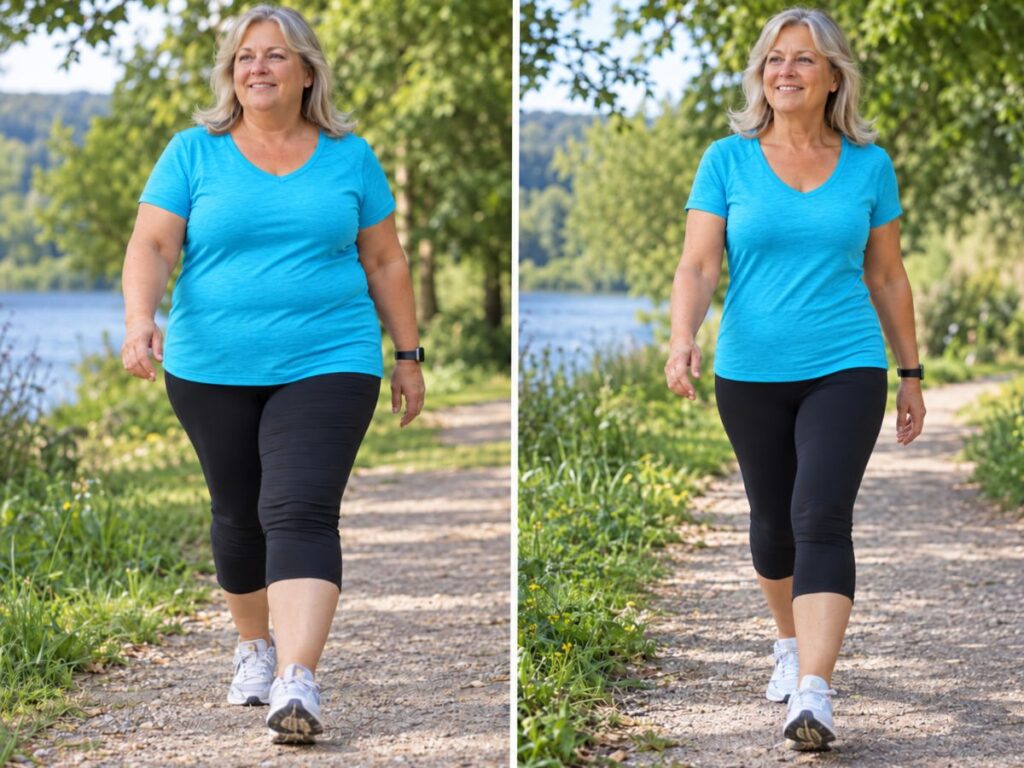
How Much Walking Maximizes Weight Loss?
The honest answer is that it depends on your starting weight, what you eat, how you sleep, how much you already move, and any medical conditions. Nobody can give you a precise number without knowing those things, and anyone who does is guessing.
The research does say that 150 to 250 minutes a week of light-intensity exercise, burning an energy equivalent of 1,200 to 2,000 calories, is enough to prevent adults from gaining more than 3% of their body weight in the first place.
So if weight loss is the aim, the biggest takeaway from all the research is a walking habit you can actually sustain and won’t give up on in a couple of weeks.
Will 30 Minutes a Day Actually Move the Scale?
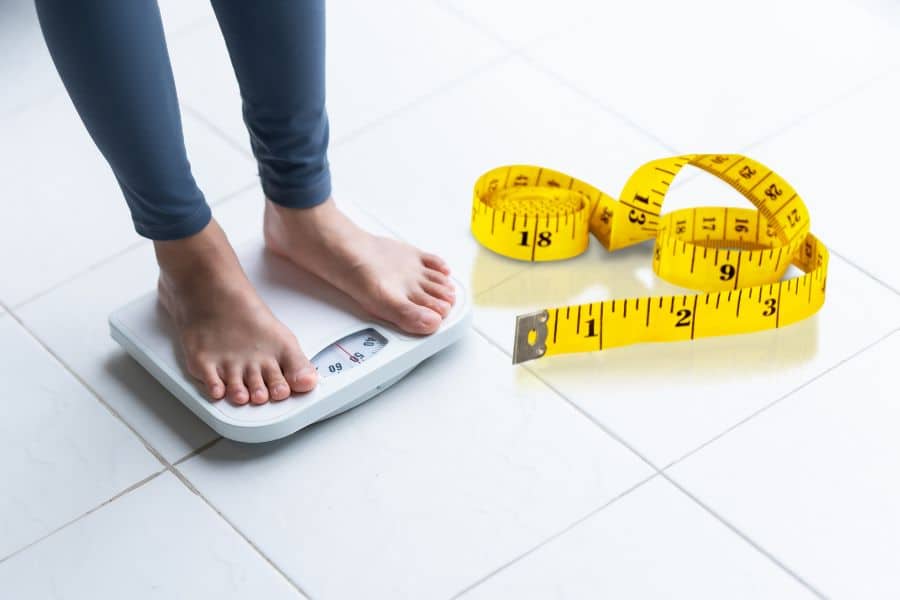
A person weighing 154 pounds walking at a moderate pace (about 3.5 mph) for 30 minutes burns up to 140 calories. That’s not the transformation the diet industry likes to sell, but it’s real, sustainable, and it compounds.
The heavier you are, the more you burn per walk. A 220-pound person burns roughly 70% more calories than a 130-pound person on the same 30-minute walk. If you want to know how many calories you’ll burn based on your weight, try this calculator.
And then there’s the belly-fat question. A trial that randomized participants into different exercise groups found that the ones exercising at the highest level, the equivalent of jogging about 20 miles a week- saw a 6.9% drop in visceral fat, the deep fat that sits around your organs, plus a 7% drop in subcutaneous fat, the kind just under the skin.
The low-exercise groups saw no measurable change in visceral, subcutaneous, or total fat. As exercise physiologist Cris Slentz put it, a brisk 30-minute walk 6 times a week can prevent visceral fat from accumulating in the first place.
So walking doesn’t spot-reduce belly fat, nothing does, but it does chip away at the fat that most affects your long-term health.
The Habit That Seems to Get the Best Results
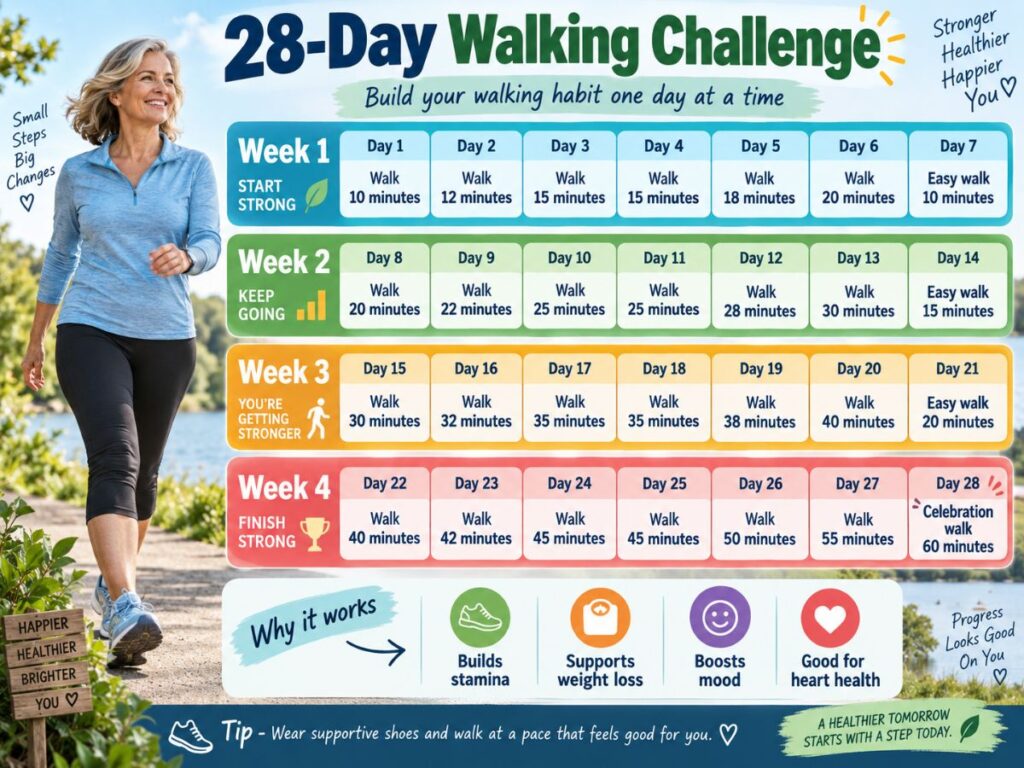
A four-month trial of 315 adults with central obesity, meaning fat around the middle, found that 75 minutes of brisk interval walking in a single weekly session reduced body fat and trimmed waistlines about as effectively as splitting the same 75 minutes across three separate days.
Interval walking is what makes the real difference. Alternating a few minutes of fast walking with a few minutes of slower walking is a form of interval training that can improve both heart health and general fitness beyond what a steady stroll delivers.
You’re not sprinting, but varying the pace enough that you feel the difference.
Step-count research also shows a pattern worth knowing. Among people taking fewer than 8,000 steps a day, those who accumulated most of their steps in one or two longer walks of at least 10 to 15 minutes had a lower risk of death and cardiovascular events than those who racked up the same steps in scattered bouts of under five minutes each.
The step count is the same either way, but longer, continuous walks seem to do something short bursts don’t quite match.
So one longer, brisk walk with intervals, at least once a week, backed up by shorter daily walks on the other days, gives you the best bang for your buck.
How to Walk So It Actually Counts

The talk test defines a moderate pace as brisk enough to talk but not sing. If you can belt out a chorus without pausing, you’re strolling. If you’re gasping and can’t get a sentence out, you’ve overshot.
If you’re unsure, Mayo Clinic has a checklist for good walking form, but here’s the breakdown:
- Keep your head up and look forward, not down at your feet.
- Swing your arms freely with a slight bend at the elbows, and a bit of pumping is fine.
- Tighten the stomach muscles a little, keep your back straight, and roll each foot from heel to toe.
On shoes: proper walking shoes make a bigger difference than most people realize. You want proper arch support, a firm heel, and thick, flexible soles that cushion and absorb shock.
Old flip-flops or worn-out sneakers are how you end up with a sore back or a shin splint two weeks in, and quitting.
Warm up by walking slowly for 5 to 10 minutes to loosen the muscles, then pick up the pace. At the end, do the same in reverse: walk slowly for 5 to 10 minutes to cool down, then stretch gently.
How to Get the Steps In When Your Day Is Already Full
The CDC‘s target of 150 minutes of moderate activity a week can be broken up any way you like. 30 minutes 5 days a week is a fairly easy schedule to maintain, but 22 minutes every day works too. Whatever fits.
None of that replaces a real, sustained walk. But it fills the days you can’t fit a real one in, or if it’s pouring with rain, and over a week it adds up to more than you’d think.
What Walking Does Beyond the Scale
If weight is the reason you started, fine. But the reason to keep going has more to do with everything else that comes with the habit. Regular brisk walking helps prevent or manage heart disease, stroke, high blood pressure, several cancers, and type 2 diabetes.
It reduces the risk of dementia, including Alzheimer’s, and reduces the risk of depression. It improves sleep, mood, memory, balance, muscle endurance, and immunity, and reduces short-term feelings of anxiety after a single moderate-to-vigorous session.
Emerging research also links walking to longevity and reduced severity of infectious illness. Physical activity may help reduce the risk of serious outcomes from things like COVID-19, flu, and pneumonia.
## Sources
goodhousekeeping.com. https://www.goodhousekeeping.com/health/fitness/a73790595/walking-weight-loss-tips/
medscape.com. https://www.medscape.com/viewarticle/588611
tdeecalculatorkit.com. https://tdeecalculatorkit.com/tdee/calories-burned/walking/30-minutes
corporate.dukehealth.org. https://corporate.dukehealth.org/news/visceral-fat-build-high-cost-inactivity
sciencedaily.com. https://www.sciencedaily.com/releases/2026/08/260801042831.htm
news-medical.net. https://www.news-medical.net/news/20251028/New-research-highlights-crucial-role-of-continuous-walking-patterns-for-cardiovascular-benefit.aspx
Moving Matters for My Health. https://www.cdc.gov/moving-matters/about/index.html
sportsmedicine.mayoclinic.org. https://sportsmedicine.mayoclinic.org/news/walking-trim-your-waistline-improve-your-health/
pmc.ncbi.nlm.nih.gov. https://pmc.ncbi.nlm.nih.gov/articles/PMC3810417/
Tips for Getting More Active Minutes. https://www.cdc.gov/nccdphp/dnpao/features/getting-more-active-minutes/index.html
mayoclinic.org. https://www.mayoclinic.org/healthy-lifestyle/fitness/in-depth/walking/art-20046261
Benefits of Physical Activity. https://www.cdc.gov/physical-activity-basics/benefits/index.html
Disclaimer: The content in this article is for informational purposes only and is not intended to replace professional medical advice, diagnosis, or treatment. Always consult your doctor, physical therapist, or healthcare provider before starting a new exercise program, particularly if you have existing joint, cardiovascular, or balance conditions.

Summer Williams is a lifestyle writer and social media manager and a writer and editor of Your Lifestyle Library (yourlifestylelibrary.com). She holds a BA (Honours) in Journalism from Sheffield Hallam University. She also creates content under her brand Summer Elizabeth Creative.