
I’ve suffered with my back for years now, and most of it I can trace straight back to my old job. I was an event designer for over ten years. Hauling heavy boxes, bending the wrong way, rolling great round banqueting tables across sand. You name it, I did it. And now I’m paying for it.
What I hadn’t clocked was that my shoes were adding to the aches and pains too. Then, a few weeks ago, I developed plantar fasciitis in my right heel. Oh my word, the pain. It’s horrible.
That’s what sent me down the research rabbit hole. It’s what we all do the minute something starts hurting: we go straight online and don’t come up for air.
In this case, it was time well spent because much of what I found had nothing to do with injury at all.
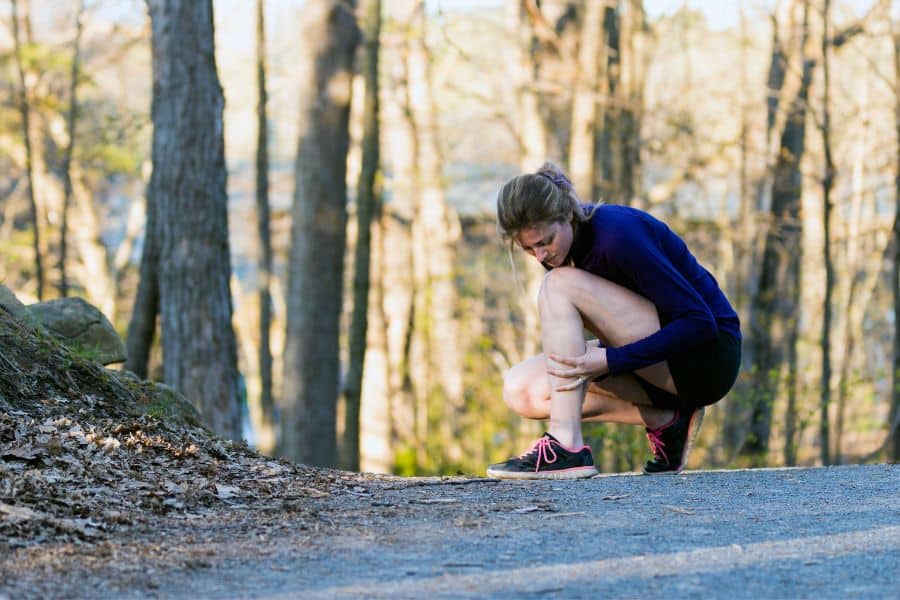
7 Walking Habits Making You Age Faster
So here are seven walking habits that could be aging you without you realizing it, and the simple changes that fix them.
1. Walking Too Slowly
Pace matters far more than people think. A big UK study of over 400,000 people found that brisk walkers had longer telomeres, the little caps on the ends of your DNA that fray as you age.
The gap between the brisk walkers and the slow strollers worked out at around 16 years of biological aging. Sixteen years, from pace alone.
The fix: You don’t need to march. Walk like you’re a little late for something. Warm enough to feel it, slightly breathy, but still able to hold a conversation. It’s one of the easiest ways to turn back the biological clock without changing anything else.
2. Worn-Out Shoes
Walking shoes don’t last forever, even when they still look fine. The cushioning that soaks up the shock wears out long before the uppers do, usually somewhere between 300 and 500 miles.
Once that foam has gone flat, every step drives the impact straight up into your heels, knees, and hips. It’s hard because your shoes start to feel like comfy slippers that you could spend all day in, but they’re the ones doing you the most harm.
The fix: Replace walking shoes every 300 to 500 miles, or roughly every six to twelve months if you walk most days. Press your thumb into the midsole. If it feels hard and dead rather than springy, it’s done.

3. Looking Down
I blame cell phones. Ever since they came into existence, it seems we can’t walk anywhere without looking at them. And what happens is we drop our heads and our eyes on the phone.
Hold your head forward at a sharp angle like that, and you pile a shocking amount of load onto your neck, close to the weight of a small child. That collapses your chest, shortens your breathing, and tips you into a shuffle without you noticing.
The fix: Eyes up and out to the horizon. Phone away while you walk. Picture a string gently pulling you up from the crown of your head.
4. Overstriding
This one is the opposite of what you’d expect. Reaching your leg way out in front feels like you’re covering more ground, but your heel lands ahead of your body and acts like a brake.
Every stride jars up through the knee. Doing it for years takes a real pounding on your knees, which takes its toll as you age.
The fix: Shorter, quicker steps. Aim to land with your foot underneath you, not out in front. More small steps, not longer ones.

5. Stiff Arms
Walking with your arms clamped to your sides or your hands stuffed in your pockets kills the natural rotation of your spine. Your arms and legs are built to work in opposite pairs, and that swing is what keeps you balanced and moving smoothly.
The fix: Let your arms swing, bent at about 90 degrees, with the opposite arm to the opposite leg.
6. Lazy Glutes
Sit down for most of the day, and your glutes more or less forget their job. Then when you walk, your lower back and hamstrings pick up slack they were never meant to carry, and that’s how you finish a lovely walk with an aching back. Mine is a cautionary tale.
The fix: Wake them up before you head out. A few glute squeezes and some standing exercises make a real difference. And if your lower back has started nagging, or the pain shoots down your leg, it’s worth learning how to settle sciatica and joint pain before it gets worse.
7. Hard Ground
Concrete is about the least forgiving surface there is, and it returns almost all the impact of each step straight back up into your joints. Pavements every day, all day, soon add up.
The fix: Swap in softer ground whenever you can. Grass, a park trail, a woodland path, even a running track. Your knees, your hips, and that sore heel will all thank you.
Plantar Fasciitis, and How To Ease It
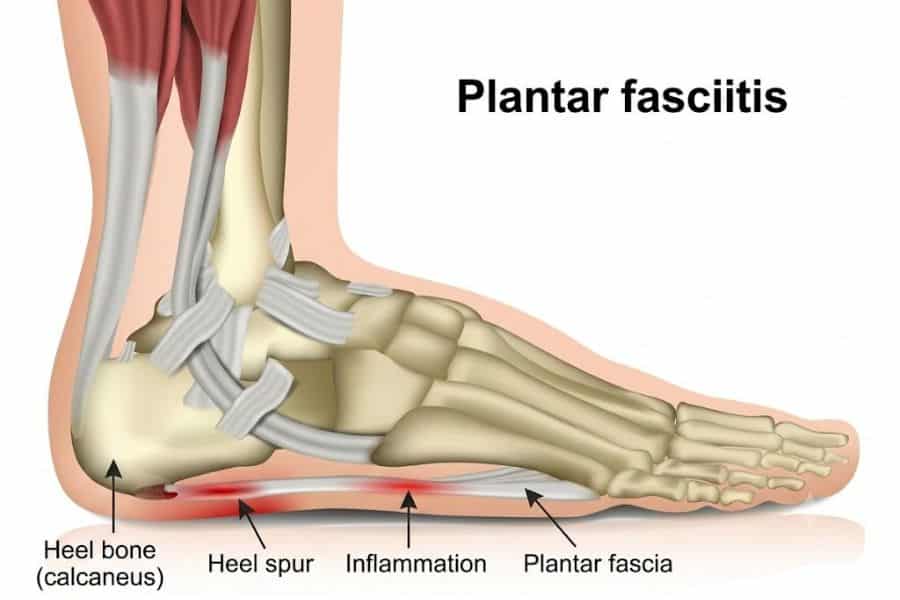
Since it floored me, let me save you some of the panic. Plantar fasciitis occurs when the band of tissue running along the sole of your foot, from your heel to your toes, becomes overloaded and inflamed.
The classic sign is that first step out of bed in the morning, a stabbing pain in the heel that eases off once you get moving. If that’s you, you’ll know exactly what I mean.
It usually comes from a mix of things. Tight calves, unsupportive shoes, carrying a bit of extra weight, standing on hard floors, or suddenly upping your walking.
The good news, and there is some, is that around 90 percent of people get better without any surgery at all. The catch is that it can be stubborn and take months. Here is what actually helps:
- Stretch your calves and the sole of your foot every day. This is the big one. One study found that eight weeks of steady stretching cut heel pain by about half.
- Roll your foot over a frozen water bottle. Cold and a massage in one, and it feels wonderful on a sore heel.
- Rest it and ice it for 15 to 20 minutes at a time, a few times a day.
- Wear supportive, cushioned shoes, even indoors. Padding about barefoot on hard tiles is the enemy.
- Ask about a night splint if it won’t shift. It holds your foot stretched while you sleep, so that first morning step doesn’t set you back.
The Shoes You Wear Matter
I’m female, so I love shoes; not all of us do, but I do. At one time, I had over a hundred pairs, from heels in every color to flats and runners. I’d spent years running around in flimsy shoes with no support at all, and it’s all taken its toll on me.
A good walking shoe does three jobs. It cushions the impact, it supports your arch, and it holds your heel steady. Flat canvas pumps, worn-out flip-flops, and most fashion flats do none of them.
If you’re on your feet a lot or walking any distance, that lack of support travels all the way up, into your heels, knees, hips, and back.
You don’t have to spend a fortune. Look for a proper cushioned sole, a bit of arch support, and a firm heel that doesn’t collapse when you press it. Try on shoes at the end of the day, when your feet are at their largest, and replace them before they go flat.
When I worked as an Event Director in Australia, I was on Hayman Island in tropical north Queensland and on my feet 12 hours a day. I used to wear nurses’ shoes as they are also on their feet all day. These shoes were ugly as sin, but boy, did they feel good. They were comfortable, supportive, and built for the work I was doing.
Products Worth Buying That Actually Help
None of this is essential, but a few cheap bits made a real difference for me:
Foot Massager

I have been using this foot massager pretty much every day in conjunction with seeing a physio to help me manage it quicker, and it’s been a Godsend.
Compression Socks

I realize they’re not the sexiest of things, but boy, can they help, especially if you’re prone to getting swollen feet at the end of the day.
Arch-support insoles

I got these as soon as the plantar fasciitis started, and they help. They’re also a fraction of the price of new orthopedic shoes.
Disclaimer: The content in this article is for informational purposes only and is not intended to replace professional medical advice, diagnosis, or treatment. Always consult your doctor, physical therapist, or healthcare provider before starting a new exercise program, particularly if you have existing joint, cardiovascular, or balance conditions.

Kylie Lang is a nationally syndicated travel journalist with bylines on the Associated Press Wire & more, a lifestyle writer, and the founder and editor of Your Lifestyle Library (yourlifestylelibrary.com). She holds a BA (Honours) in History from the University of Kent and is a member of the British Guild of Travel Writers.