
There is nothing worse than a sleepless night. I don’t seem to have any problem getting to sleep; it’s staying asleep that is so elusive. I’m so sick of waking at 2 am thinking it’s time to get up, only to realize there’s another four hours before the alarm goes off.
Once I’ve looked at my phone to see what the time is, there’s no going back. My mind is awake, and try as I might, I can’t switch it off. I start mentally going through all the things I need to do, any problems there are, who I need to call, bills I need to pay, and the list goes on.
If any of this sounds familiar, you’ll be pleased to know I’ve found the solution, several, actually, for lack of sleep. And, more importantly, they work. No vague promises of solutions that turn out to be baseless, but science-backed strategies that do the trick and cost you nothing.

9 Simple Strategies to Help You Sleep Better
Lack of sleep issues are incredibly common, and they can make you feel like you’re running on empty, no matter how early you get to bed. The good news? Experts have figured out exactly what’s going on and how to fix it.
Get Up if You Can’t Sleep

Yes, I know, this one feels completely counterintuitive, but sleep experts consider it the single most effective long-term strategy for people who struggle to stay asleep. I’ve tried it, and it works.
So, if you’ve been lying awake for what feels like 20 minutes or more, get out of bed. Go to another room with dim lighting. Read a physical book or listen to something calm. Don’t do chores, check your phone, watch TV, or turn on bright lights. These things will wake you up, and that’s not the idea. However, neither is staying in bed when you’re tossing and turning.
Why? Because staying in bed while awake and frustrated teaches your brain to associate the bed with wakefulness. Getting up breaks that association. Over time, your brain relearns that bed equals sleep, and only sleep.
Being in a calm, quiet, and relatively dark space helps you reset, and you’ll find you’re much more able to go to sleep when you do go back to bed.
Do a Brain Dump Before You Get Into Bed

If your brain tends to come alive the moment your head hits the pillow, as mine does, this is one of the best ways to switch it off.
Keep a notebook on your nightstand (not your phone). About 30 minutes before bed, spend ten minutes writing down everything that’s on your mind. To-do items for tomorrow, anything you’re worried about, half-formed thoughts, anything that’s likely to keep you awake. Get them all out and onto the page.
The act of writing signals to your brain that these things have been captured and don’t need to be rehearsed overnight. It closes the mental loops that would otherwise wake you up at 3 am convinced you’ve forgotten something important.
This one has been a game-changer for me. I now actually love the ritual, although I tend to do it before I go upstairs to bed.
Cool Your Bedroom Down

Your body needs its core temperature to drop by 1 to 2 degrees to fall into deep sleep and stay there. If your room is too warm, that process gets disrupted, and you end up waking in the night.
The ideal sleep temperature is between 60 and 67 degrees Fahrenheit. If you’re not there, you might be unknowingly sabotaging your sleep.
A warm bath or shower about 90 minutes before bed can help speed up the process. It draws blood to the surface of the skin, and when you step out, your body sheds that heat quickly, dropping your core temperature and priming your body for sleep.
Stop Watching the Clock

I’m so guilty of this one. It’s habit for me to wake, reach for my phone, and check the time. But it’s one of the biggest sleep saboteurs.
When you wake in the night and immediately check the time, your brain kicks into calculation mode. It starts doing the math. Three hours left. Two and a half. You’ll be exhausted tomorrow. That single thought sets off a stress response, your heart rate rises, cortisol kicks in, and suddenly you’re more awake than you were thirty seconds ago.
Turn your alarm clock away from the bed. If you use your phone as an alarm, put it face down across the room. If you wake up, your only job is to get comfortable and rest. The time is irrelevant.
Let the Light Work For You

Your body runs on an internal clock, and that clock is almost entirely controlled by light. Most people think about avoiding light at night, but what you do in the morning matters just as much.
Getting bright natural light within 30 minutes of waking signals to your body that the day has started and sets a 24-hour countdown for when your brain will release melatonin that evening. Get it right in the morning, and your sleep timing rights itself.
In the evenings, dim the lights at home an hour or two before bed and step away from screens. The blue light from phones and TVs signals to your brain that it’s still daytime, and your melatonin production stalls as a result.
Block Out Disruptive Noise

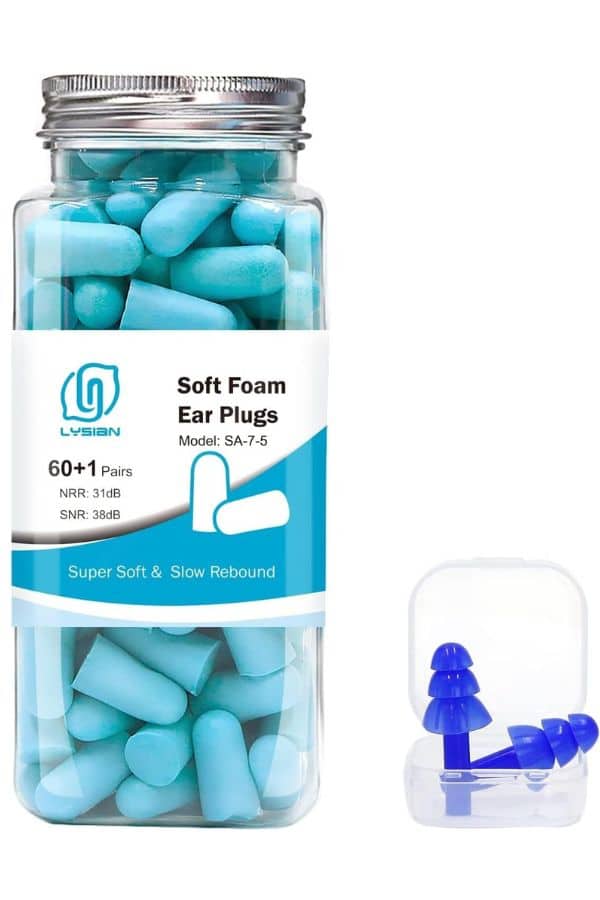
Your brain doesn’t fully switch off during sleep. It keeps scanning for threats and sudden sounds, including a partner snoring (boy, does my husband snore), a car outside, or a house settling, can jolt you out of a deep sleep cycle before you realize it.
A consistent background sound can prevent this by masking those sudden interruptions. A white noise machine is ideal, but a simple fan running in the room does the same job. The steady sound creates a floor that absorbs unexpected noises before they reach you.
I use earplugs to help with this, and they’ve worked wonders. I thought they’d be really uncomfortable, but I got used to them really quickly. They are like the ones you get on long-haul flights, and they fit nicely in your ear and block out a lot of noise, including my husband’s snoring.
Watch What You Eat in the Evening

If you often wake up feeling anxious, jittery, or wired somewhere around 3 am, your blood sugar could be the cause.
A sugary snack, dessert, or alcohol in the evening causes a spike in blood sugar followed by a crash a few hours later. Your brain registers that crash as an emergency and floods your system with stress hormones to wake you up. You feel it as a racing heart or an inexplicable sense of anxiety.
Stop eating at least two to three hours before bed. If you need a snack, make it something small with protein and healthy fat, like a small handful of almonds. And treat alcohol as the sleep disruptor it is, even if it feels like it helps you wind down at first.
I did a trial of this, and for two weeks I only drank alcohol at the weekend, and I noticed a huge difference. Not only did I sleep better, but I woke feeling less groggy and more ready to take on the day.
Living in France, it’s common to have wine with your meal, but by limiting it to weekends only, I now really look forward to it rather than it being an everyday occurrence.
Try a Rest Protocol Instead of Forcing Sleep
Lying in the dark trying to force yourself to sleep is one of the worst things you can do. The harder you try, the more awake you become.
Changing your goal from “fall asleep” to “rest” takes the pressure off entirely. Non-Sleep Deep Rest (NSDR) and Yoga Nidra are audio-guided protocols that guide you through systematically relaxing your body and calming your nervous system, without requiring you to sleep. You can find free versions on YouTube. Keep a pair of earbuds by your bed so they’re ready to go.
Many people find they fall asleep during the protocol without even trying. And on the nights they don’t, they still wake feeling more rested than if they’d spent the time staring at the ceiling.
Use Supplements Strategically
Sleep supplements are helpers, not fixes. They work best as a layer of support alongside the behavioral changes above. The first time I tried a sleep supplement was when I went into pre-menopause, as sleep was just not happening.
Magnesium glycinate or magnesium threonate are the forms most associated with sleep quality. This is the supplement I took and still use when sleep is being stubborn and not happening. They help relax the muscles and calm the nervous system.

Chamomile tea taken about an hour before bed has a mild but real sedative effect. Tart cherry juice contains a small natural amount of melatonin and can support your body’s own production.
None of these will transform your sleep on their own, but paired with a consistent routine, they can take the edge off restless nights and help your body settle into better patterns.
Disclaimer: The health and wellness content in this article is for informational purposes only and is not a substitute for professional medical advice, diagnosis, or treatment. Always consult your healthcare provider before making changes to your routine, particularly if you have an existing health condition or are taking medication.
Disclaimer: The content in this article is for informational purposes only and is not intended to replace professional medical advice, diagnosis, or treatment. Always consult your doctor, physical therapist, or healthcare provider before starting a new exercise program, particularly if you have existing joint, cardiovascular, or balance conditions.

Kylie Lang is a nationally syndicated travel journalist with bylines on the Associated Press Wire & more, a lifestyle writer, and the founder and editor of Your Lifestyle Library (yourlifestylelibrary.com). She holds a BA (Honours) in History from the University of Kent and is a member of the British Guild of Travel Writers.