
I’m a relatively new gardener. I’ve only been really invested for the last seven or so years. Before that, I had a gardener. Lazy? Not really because work was manic and I didn’t have the time or inclination.
Now it’s a different story. The garden is my happy place where I destress, take my temper out on the weeds, and reconnect with nature. I revel in getting my hands dirty and enjoy spending as much time as I can planning my garden.
But nothing gets on my nerves more than weeds, however much I enjoy the physical exertion of pulling them up. The worst offenders are the weeds between your patio stones.
I even poured a layer of concrete underneath before laying the slabs on top. But still the weeds reappear with startling regularity.
If you’ve spent time on your hands and knees pulling them out, you already know how fast they come back. The good news is that I’ve recently discovered a few smart fixes that will stop weeds before they start, and most of them cost very little.
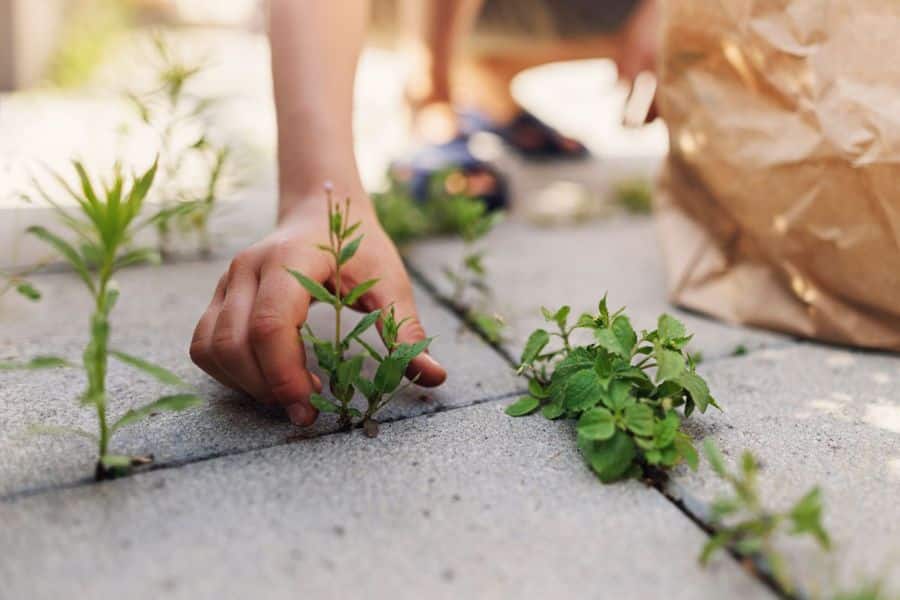
How To Get Rid of Weeds Between Your Patio Stones
The gaps between patio stones are basically a five-star hotel for weeds. Wind drops seeds into the cracks, moisture collects in the sand underneath, and before long, you’ve got a thriving little weed garden you didn’t ask for.
The trick to beating them permanently is to take away their growing space. Once the gaps are sealed or filled, there’s nowhere for seeds to take root. Here’s how to do it.
Seal the Pavers and the Sand
Sealing is one of the most effective long-term solutions, and it does double duty. It hardens the sand in the joints to block weed growth and creates a waterproof barrier over the pavers themselves, helping them resist stains and weather damage.
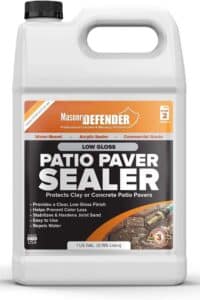
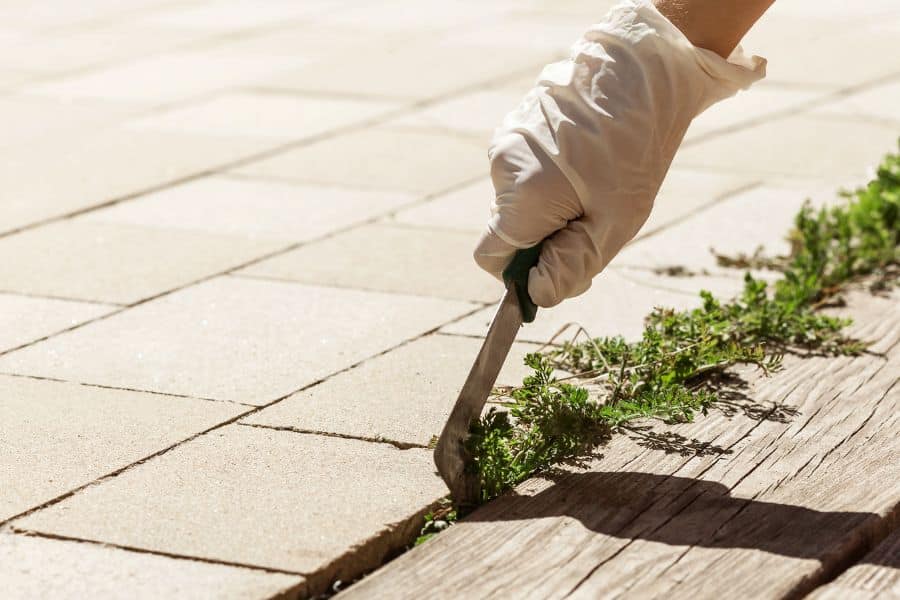
Before you even open the sealant, you need to clear out whatever is already growing. A patio weeding tool like this one or even an old screwdriver works well for getting into tight gaps. Take your time here. Any roots left behind will push through again.

Once the weeds are out, scrub the pavers down with soapy water and rinse thoroughly. You want a clean surface so you’re not sealing in dirt or staining.
When everything is completely dry, apply the sealant using a garden sprayer rather than a roller. The spray gets into the joints and coats the sand much more evenly. Apply a generous coat over the whole surface, including the gaps, let it dry fully, then add a second coat for extra protection. Stay off the patio for 24 hours.
For concrete pavers, look for a water-based concrete sealant. For natural stone pavers, choose a product formulated specifically for stone, as the wrong sealant can cause discoloration.
Switch to Polymeric Sand
If sealing sounds like more work than you want to take on right now, polymeric sand is a brilliant alternative.

Unlike the regular sand that’s probably sitting between your pavers at the moment, polymeric sand contains bonding agents that activate when they get wet. Once it dries, the sand hardens into a firm, slightly flexible barrier that weeds simply can’t push through.
The catch is that you need to remove all the existing sand from the joints first to make room for the new material. Use a stiff brush or a leaf blower to clear it out. Then sweep the polymeric sand into the gaps, tamp it down firmly, and activate it with water from a garden hose. Keep foot traffic off the patio for at least 24 hours while it sets.
Polymeric sand is widely available at home improvement stores and is one of the more affordable long-term solutions.
The Boiling Water Trick
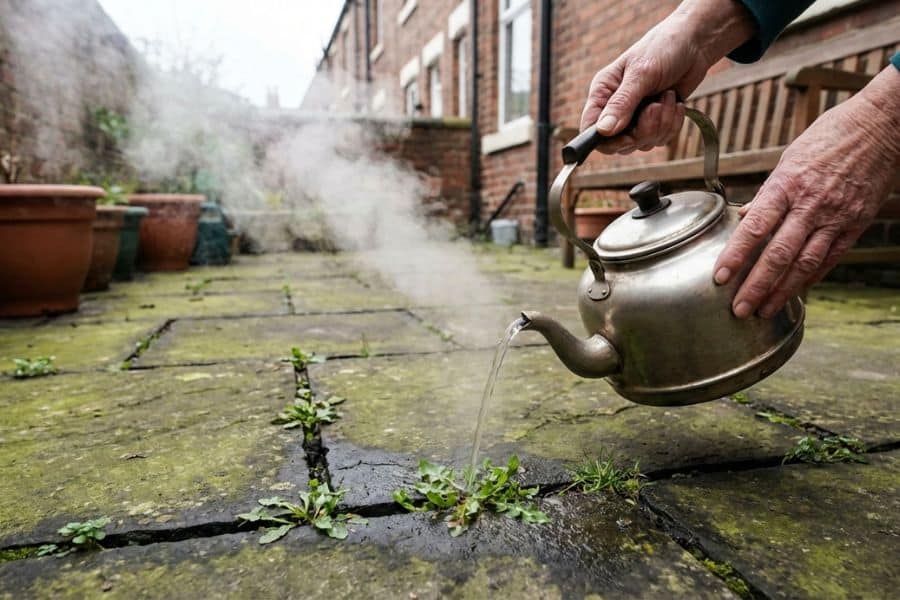
This was the trick my dad used to swear by when we were kids, and to be fair, I don’t remember seeing weeds coming through the cracks in his patio. Pouring boiling water directly onto weeds between patio stones kills them at the root without any chemicals.
Unfortunately, though, it’s not a permanent fix on its own, which is why I saw dad doing this on a regular basis. But it’s a good way to clear existing growth before you move on to a longer-term solution.
Just be careful not to pour it over any nearby plants you actually want to keep.
White Vinegar for Stubborn Weeds
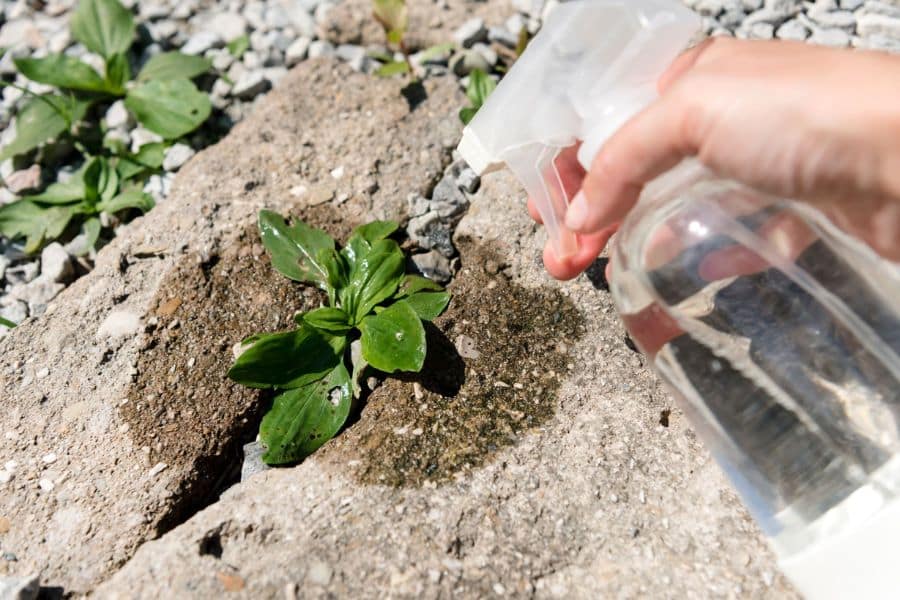
Undiluted white vinegar, applied directly on a warm, dry day, is surprisingly effective for getting rid of weeds between your patio stones. I actually used this on some particularly stubborn bamboo in our garden. I poured it into the stem of the bamboo once I’d cut it down to a tiny stump in the ground, and it worked.
The acetic acid draws moisture out of the leaves and kills the plant within a day or two.
For weeds that keep returning, add a small amount of dish soap to the vinegar to help it stick to the leaves before it evaporates. Spray it directly onto the weed, not onto the surrounding sand or soil, and repeat after a few days if needed.
This works best on younger weeds. Established ones with deep roots may need more than one treatment.
Top Tips for Keeping Weeds Gone for Good
Getting rid of weeds is one thing. Keeping them away is another. These habits make a real difference:
Pull weeds as soon as you spot them. A tiny weed with a shallow root takes seconds to remove. Leave it for two weeks, and it becomes a project.
Check your drainage. Water pooling in the gaps between stones encourages both weed growth and sand displacement. Make sure your patio has a gentle slope away from the house.
Reapply the sealant every 2 to 3 years. It breaks down over time, especially in climates with harsh winters or heavy rainfall.
Brush the patio regularly. A stiff outdoor broom once a week dislodges seeds before they have a chance to germinate. It sounds too simple, but it genuinely makes a difference.
Top up polymeric sand when you notice gaps deepening. Once the barrier thins, weeds quickly find their way back in.
A weed-free patio is absolutely achievable. It just takes the right fix applied once, and a little maintenance to keep it that way.
Disclaimer: This article is for general information only and is not professional advice. It may contain affiliate links. Please see our full Editorial Policy for details.

Kylie Lang is a nationally syndicated travel journalist with bylines on the Associated Press Wire & more, a lifestyle writer, and the founder and editor of Your Lifestyle Library (yourlifestylelibrary.com). She holds a BA (Honours) in History from the University of Kent and is a member of the British Guild of Travel Writers.