
Autumn is when birds and butterflies begin their big migration to warmer climates, and you may see monarch butterflies feasting on the last of your flowers to fuel the long journey ahead.
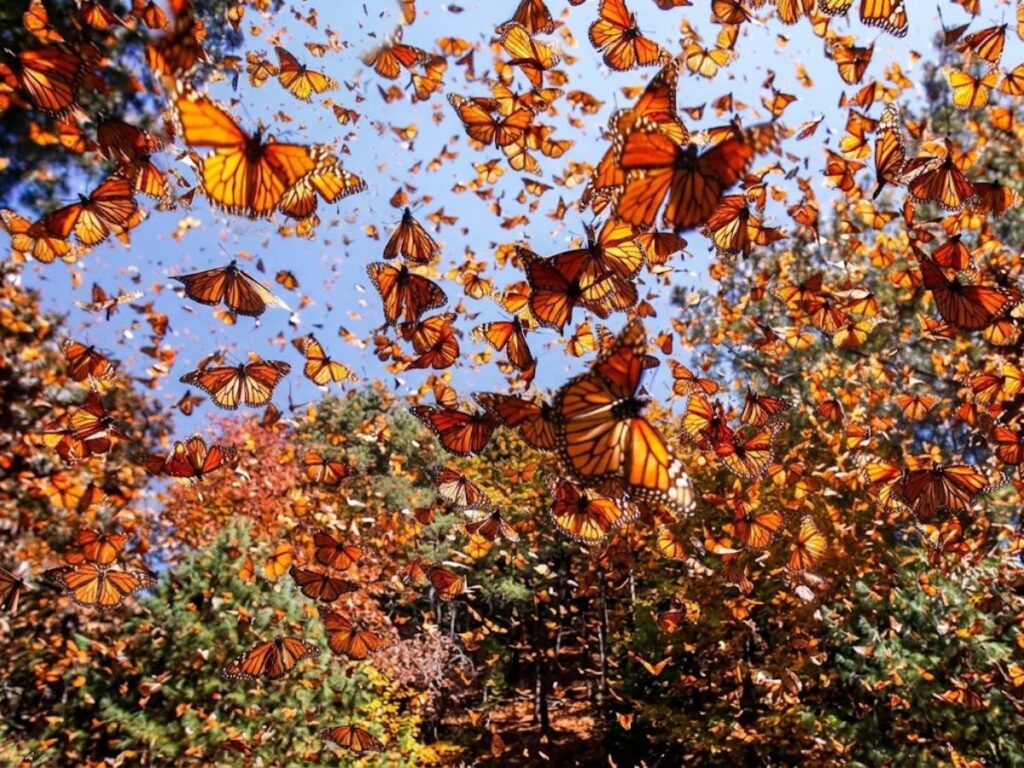
Monarchs east of the Rocky Mountains can travel up to 3,000 miles to reach the oyamel fir forests of central Mexico, while the population west of the Rockies heads for the California coast. They fly by day, gather in roosts at night, and most arrive by early November.
Since the early 1990s, the eastern monarch population has dropped by 80 percent, which is so sad. And while you can’t single-handedly help to bring that number down, there are things you can do to help them as they prepare for Fall migration.
1. Plant Native Milkweed for Your Region
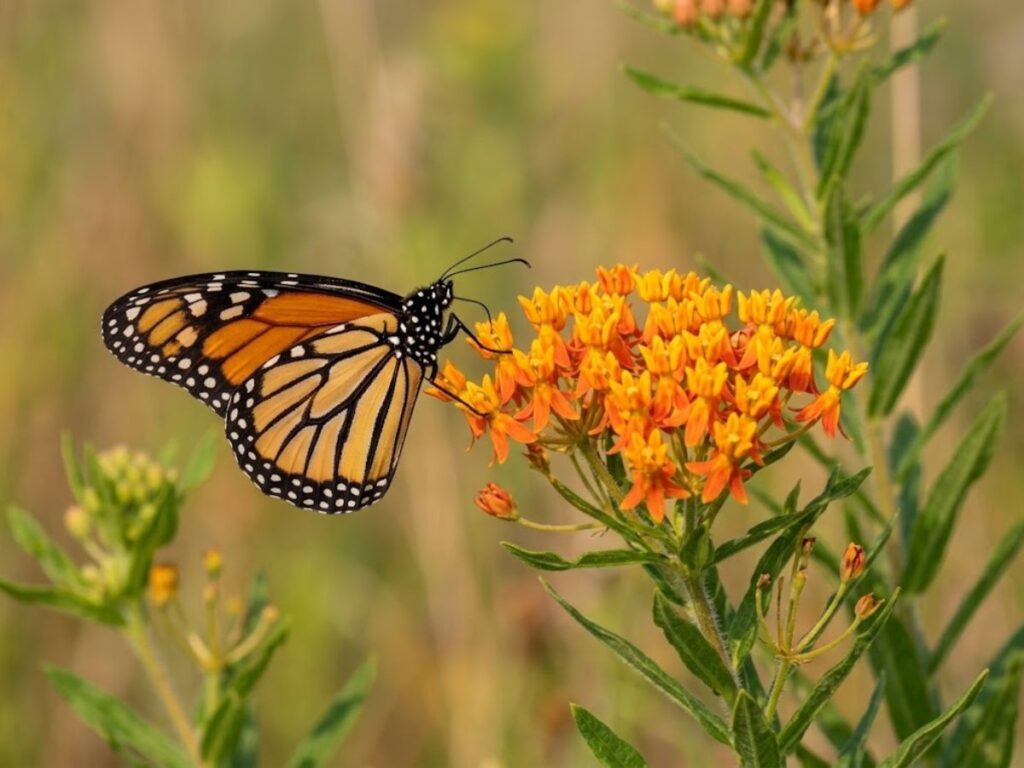
Milkweed is the only plant monarch caterpillars can eat, and it’s where the adults lay their eggs, tucked on the undersides of the leaves.
The Xerces Society recommends planting locally native milkweed species, ideally from regionally sourced seeds or plants. Of the more than 70 milkweed species native to the US, fewer than 20 are usually available commercially, so you may have to hunt a little.
Top Tip: If you can’t find a regional milkweed near you, plant native wildflowers instead. Adult monarchs still need the nectar to fuel the flight, mate, and lay eggs on milkweed further along the route.
2. Keep Something in Bloom From Midsummer Into Fall
Monarchs aren’t fussy; they’ll drink from almost anything with nectar. What you do need is a succession of flowers, so something is always open when they show up.
Spring gets them started with lilacs, penstemon, and columbine. Summer keeps them going with floss flower, monarda, and liatris.
The plants that really count for the fall migration are what’s blooming from midsummer onward: asters, goldenrod, ironweed, liatris, Joe-Pye weed, mountain mint, and purple coneflower are all nectar-rich natives that carry them through.

3. Put Out a Pot
You don’t need a yard to be part of this. A balcony, a fire escape, a little strip by the front steps, all of it counts. Migrating monarchs look down at a patchwork of concrete and lawn and look for anywhere to refuel, and a single generous pot of nectar plants is a rest stop.
A large pot planted with something like liatris or aster will work harder than three tiny pots of annuals. If you can squeeze in a small milkweed too, even better.
4. Ease Up on the Pesticides
Spraying the whole yard for mosquitoes takes out the beneficial insects along with them, monarchs included.
Be picky about what you spray and when. Handpick cabbage loopers off the brassicas, tolerate a few holes in the roses, and if you must treat something, do it at dusk when pollinators aren’t out, and target the specific plant rather than blanketing the yard.
Top Tip: If you hire someone to treat your yard, ask exactly what they’re spraying and where. A general fogging, right when migrating monarchs are moving through, can wipe out a good patch of the food chain for them.

5. Leave Roosting Trees and Shrubs Standing
Monarchs fly by day and roost together at night, sometimes in groups of ten, sometimes in the hundreds or thousands, hanging off the same tree in a cluster.
If you’ve got mature trees or a dense hedgerow along the property line, resist the urge to tidy them up in September and October. That scrappy corner of the yard you keep meaning to clear could be exactly what a passing roost is looking for.
6. Report What You See
Scientists tracking monarchs rely heavily on regular people writing down what they see in the yard. Programs like Project Monarch, Journey North, and the Monarch Larva Monitoring Project all take reports from anyone willing to send them in.
In the fall, Journey North is particularly keen on roost sightings, whether the roost holds 10 butterflies or 1,000. The pattern of where they’re stopping tells researchers how the migration is actually going in real time.
You note the date, the location, roughly how many butterflies you saw, and submit it.
Disclaimer: This article is for general information only and is not professional advice. It may contain affiliate links. Please see our full Editorial Policy for details.

Kylie Lang is a nationally syndicated travel journalist with bylines on the Associated Press Wire & more, a lifestyle writer, and the founder and editor of Your Lifestyle Library (yourlifestylelibrary.com). She holds a BA (Honours) in History from the University of Kent and is a member of the British Guild of Travel Writers.