
Yesterday, I was kneeling by the back border with a watering can, having a quiet moan to myself about the insane heat we’re experiencing right now, when a fat bumblebee dropped onto a catmint flower right next to my hand.
My usual reaction would be to scream and run. I’m no good with anything that stings. But this bumblebee was quite chilled out. He sat there. I sat there. We both kind of took a breather, neither in a hurry to move.
Bees are fascinating creatures, and so hardworking. I’ve been making a conscious effort to make my garden more of a pollinator haven, and it seems to be working, if that bee last night was anything to go by.

How to Build a Pollinator Patch In a Weekend
The idea here is small and doable. A defined patch, somewhere between the size of a doormat and a small dining table, that earns its keep by feeding pollinators from early spring right through to the first frosts.
You’re simply carving out one corner of your yard and making it work harder than the rest.
Pick a spot that gets at least 6 hours of sun a day, because most of the plants that bees and butterflies go mad for want full sun.
One more thing to consider: if your soil is awful, like solid clay, which mine is, or pure builder’s rubble, mix in a few bags of compost before you plant. If it’s halfway decent, leave it be. A lot of pollinator favorites, lavender especially, don’t like soil that’s too rich.
Saturday Morning: Plan the Patch and Buy the Right Plants
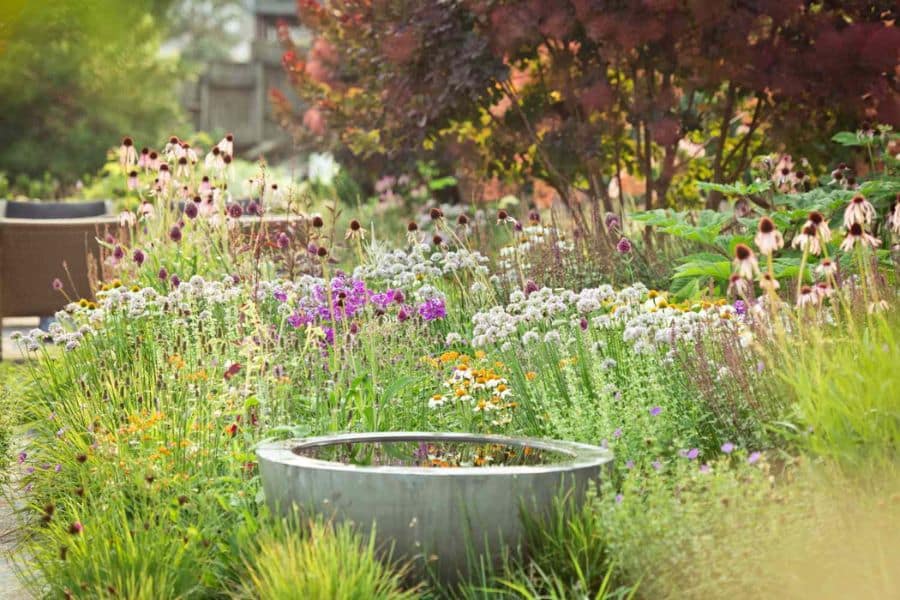
First job, mark out your patch. Aim for something at least 4 feet across at its widest. Smaller than that and you can’t fit enough plants in to keep something flowering all season, and the whole point of a pollinator patch is that there’s always a buffet open somewhere.
Then, the shopping list. The trick is to pick plants that bloom at different times so you’ve got nectar on the menu from March through October.
Hummingbirds especially are around for far more of the year than people realize, and bees wake up earlier each spring, so an early bloomer matters. Here’s the rough mix I’d push you toward for a small patch. Choose 5 or 6 of these depending on space:
- Lavender, for the bees, the smell, and the fact that it more or less looks after itself once established.
- Bee balm (Monarda), which does exactly what it says on the tin and pulls in bees, butterflies, and hummingbirds in equal measure. The red one is the hummingbird magnet.
- Catmint (Nepeta), low and floppy and covered in little purple spikes that bees adore.
- Coneflower (Echinacea), for the butterflies, and because the seed heads feed the goldfinches in winter if you leave them standing.
- Yarrow (Achillea), with those flat plates of tiny flowers that hoverflies and native bees love. Tough as old boots in a drought, too.
- Salvia or hyssop (Agastache), for the hummingbirds, both with the tubular flowers, they zoom in on.
- Foxglove (Digitalis), for the tall spires of bell flowers that bumblebees crawl right inside.
If you can only get 3 plants, make it lavender, bee balm, and coneflower. Those 3 alone keep things going from early summer well into fall.
Saturday Afternoon: Plant It Out
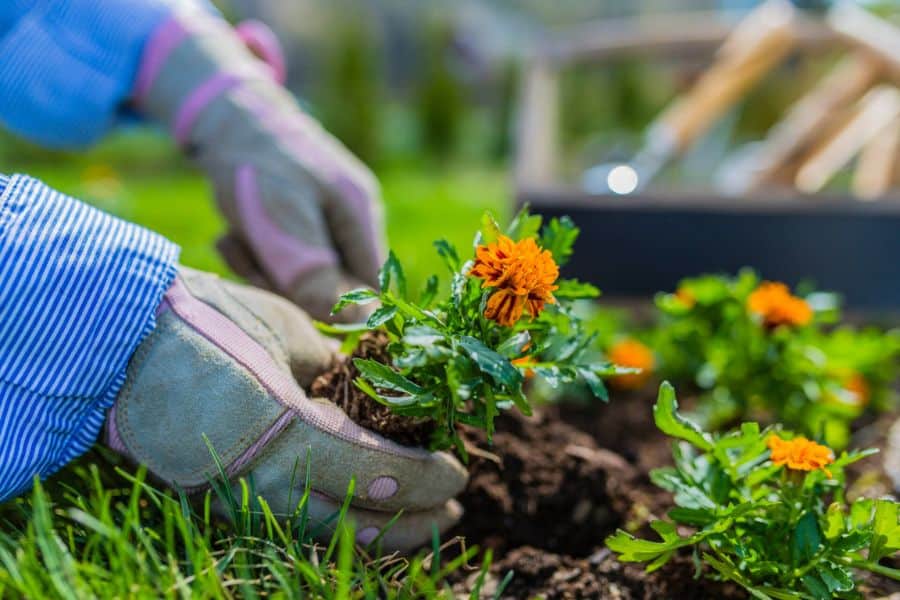
Right, get them in the ground. Dig over the patch, pull out the obvious weeds, and water everything in their pots before you plant, because a dry root ball is a sulky root ball. I learned this the hard way after losing 3 lavender plants in a single summer to my own impatience, but that’s another story.
Place your plants in their pots first, then shuffle them around until the arrangement looks right to you. Tall things like foxgloves at the back, mid-height things like bee balm and coneflower in the middle, low spreaders like catmint and lavender at the front.
Repeat plants in odd numbers, 3s and 5s, rather than dotting one of everything about.
When you’re happy, dig the holes a touch wider than the pot, pop the plants in at the same depth they were in their containers, firm the soil gently around them, and water properly. Not a quick splash, a proper soak.
Then mulch with a thin layer of compost or bark, keeping it off the actual stems. That’s your Saturday done. Go and have a glass of wine.
Sunday Morning: Add Water, Shelter, and a Sunny Spot to Bask
Flowers feed pollinators, but they need other things too. Bees need to drink, butterflies need somewhere to warm up, and a lot of solitary bees need somewhere to nest. None of this is complicated, and you can sort it all in a morning.
For water, a shallow dish with a few pebbles or marbles in it, topped up with fresh water, works beautifully. The stones give bees something to land on so they don’t drown. I use an old terracotta saucer from a broken pot, tucked at the edge of the patch where I’ll remember to refill it.
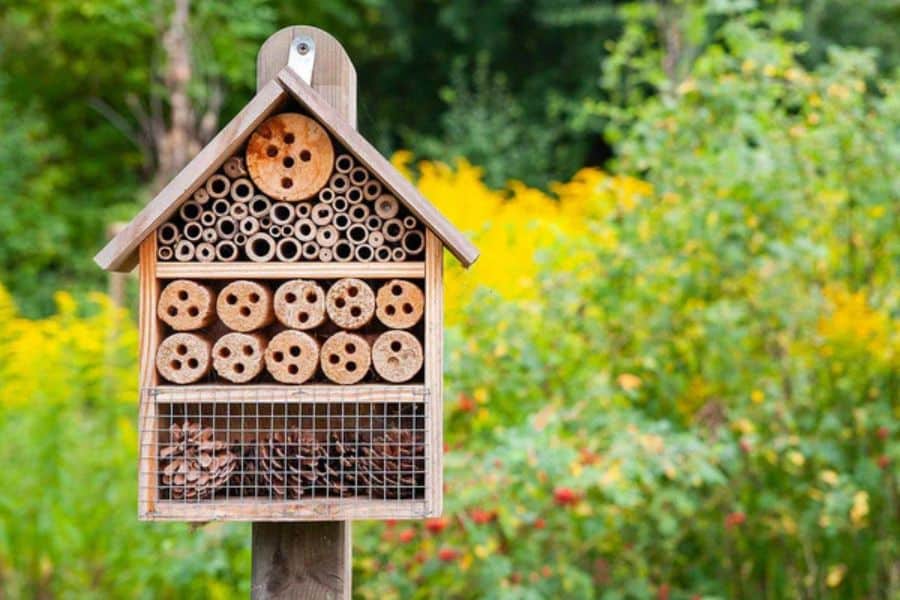
For shelter, leave a corner messy. I mean it. A small pile of twigs, a few stones stacked into a loose cairn, a patch of bare soil for ground-nesting bees, maybe a bundle of hollow stems tied together and propped somewhere dry.
You can buy fancy bee hotels if you want to, but a bundle of bamboo canes cut to about 6 inches long and wedged into a tin can does exactly the same job. For butterflies, a flat stone in a sunny spot is all they need to spread their wings and warm up in the morning.
Sunday Afternoon: The Things You Should NOT Do
The first one is reaching for the bug spray the moment you see a caterpillar. Caterpillars turn into butterflies. I know we all know this in theory, but in practice, it’s very easy to forget when something is munching holes in your kale.
Put it down. A few chewed leaves are the price of admission. If something is really getting hammered, pick the caterpillars off by hand and move them somewhere else, but skip the chemicals altogether if you can. A pollinator patch and a spray bottle don’t share a yard happily.
The second thing is over-tidying in the fall. I used to cut everything back to the ground in October, sweep up every leaf, and feel very pleased with myself. Turns out a lot of native bees overwinter in hollow plant stems, and butterflies and moths shelter under leaf litter, so all that tidiness was politely showing them the door.
Now I leave the seed heads of the coneflowers and yarrow standing through winter, pile fallen leaves into the back corners of the borders, and only cut things back properly in March when the ground starts to warm up.
The third thing, and this is the one nobody likes hearing, is the lawn. If you have one, consider letting a patch of it grow long, or replacing a strip of it with more flowers. A short, immaculate lawn is a desert to pollinators.
Even a little corner of clover and dandelions left to flower will do more for the bees than another bag of lawn feed ever will.
What Happens Next
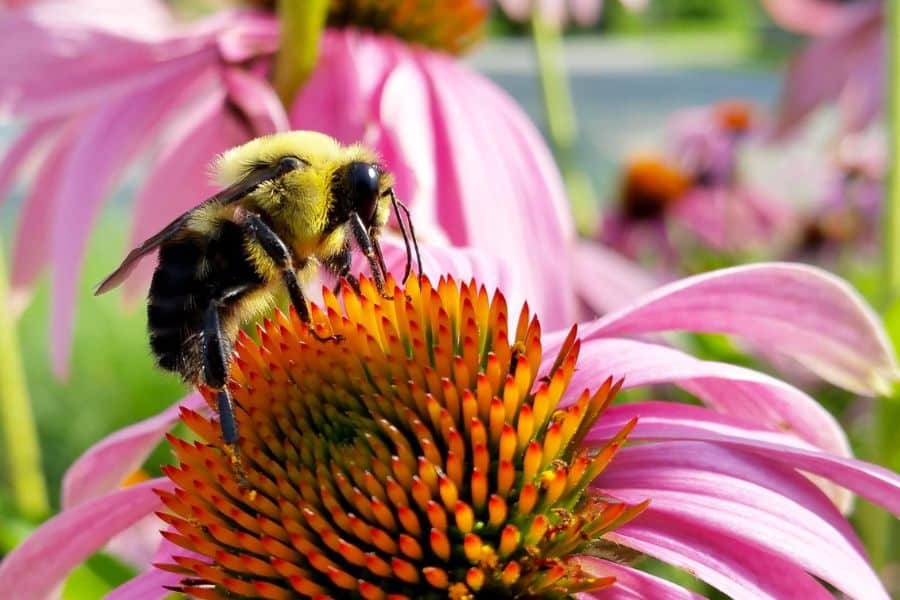
By the end of your weekend, you’ll have a small patch that looks, if I’m honest, a little sparse. New plants always do. Give it a season, and by the following summer, the lavender will be a proper mound, the catmint will be flopping over the edges, and the bee balm will be sending up its first red firework flowers, and the whole thing will be loud with bees on a sunny afternoon.
Water the new plants deeply once or twice a week through their first summer, especially if you get a stretch of hot, dry weather. After that, they should mostly fend for themselves.
Deadhead the spent flowers if you can, because it encourages more blooms, but don’t lose sleep over it. The yarrow and coneflowers will keep going regardless.
Disclaimer: This article is for general information only and is not professional advice. It may contain affiliate links. Please see our full Editorial Policy for details.

Kylie Lang is a nationally syndicated travel journalist with bylines on the Associated Press Wire & more, a lifestyle writer, and the founder and editor of Your Lifestyle Library (yourlifestylelibrary.com). She holds a BA (Honours) in History from the University of Kent and is a member of the British Guild of Travel Writers.