
I’m obsessed with my tomato plants at the moment as we’re in the middle of a ridiculous heatwave, considering it’s only May. So I rigged up a DIY irrigation system for their roots at the weekend with plastic bottles and mulched them to keep the moisture in. Anyway, when I was out there one evening filling up their bottles, I was absolutely plagued by mosquitoes.
I was fuming when I came in because my evening watering, which I love as it’s my zone-out time, was ruined by these pesky creatures. As I stormed around the house, my main thought was, “How the hell can I get rid of them once and for all?” Surely there must be a way. So I asked my new best mate, ChatGPT, and he referred me to the mosquito bucket.
Apparently, people are swearing by it, or some of them are, others are calling them complete crap, and don’t buy them because they’re rubbish. Who do you believe? Well, as with most of these things, the only way to get the answer is to try it for yourself. So that’s what I did.
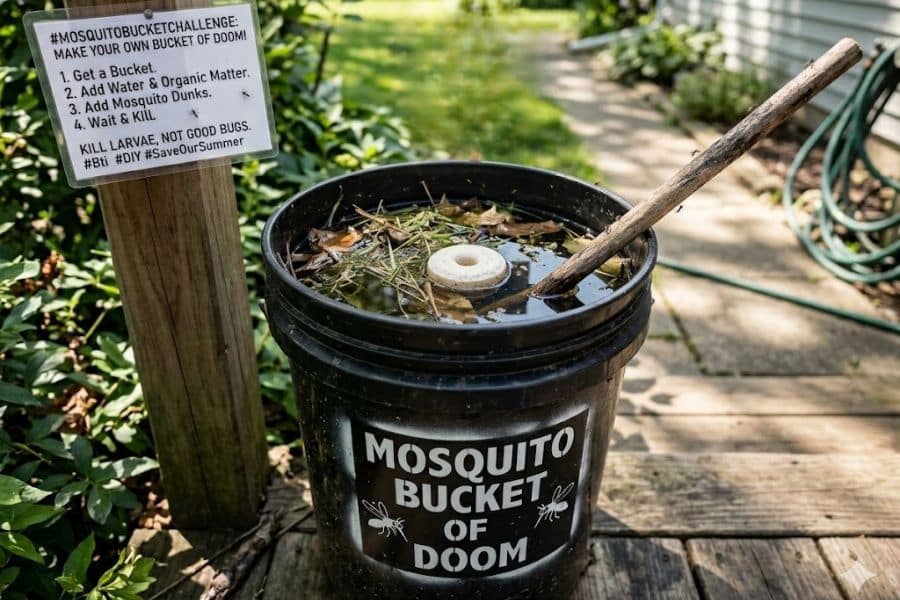
What Is the Mosquito Bucket That Has Everyone Talking?
The basic idea is simple. You take a five-gallon bucket, fill it with water, throw in something organic that’ll rot a bit (grass clippings, straw, hay, a handful of leaves), and then drop in a Mosquito Dunk or a Bit of Mosquito Bits. That’s it. You leave it sitting in a corner of the yard and let it do its thing.
The reason it’s supposed to work comes down to two parts working together. The smell of the water, which is exactly the kind of stagnant puddle mosquitoes love to lay eggs in, so females are drawn to it instead of the cleaner water elsewhere.
Then the dunk or bits release a bacteria called Bti, short for Bacillus thuringiensis israelensis, which mosquito larvae eat and die from. Adults lay eggs; larvae hatch, feed, and don’t make it to adulthood.
It’s gone viral on TikTok over the last couple of summers, so, of course, everyone is talking about it. The reason for the virality is that one bucket can supposedly take out a huge chunk of the local mosquito population because each female that lays in your bucket would have otherwise produced hundreds of biting adults. That’s the theory, anyway.
Does It Actually Work? What the Evidence Says
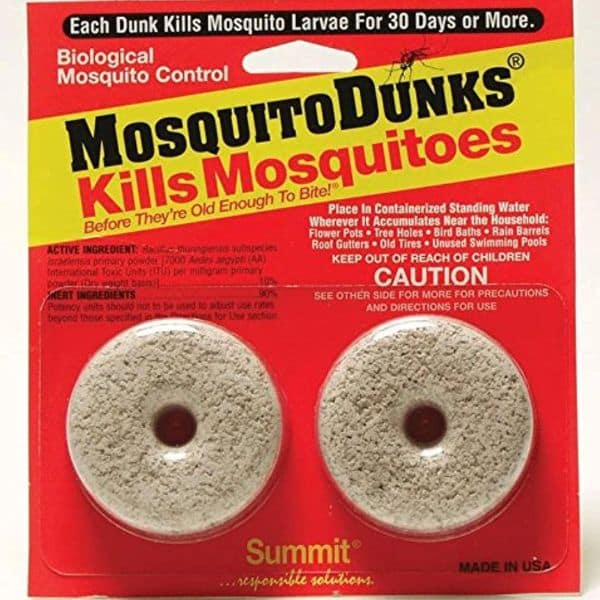
The Bti part is the part with real science behind it. Bti has been used in municipal mosquito control for decades, and it’s the active ingredient in those familiar little donut-shaped dunks you see at the hardware store.
A long-running study on Bti use in wetlands showed it knocks out mosquito and black fly larvae without hurting bees, fish, pets, birds, or the gardener wielding it. The EPA classifies it as safe for use around drinking water, which tells you most of what you need to know.
The bucket part is where things get fuzzier. There isn’t, as far as I can tell, a peer-reviewed study on the specific viral bucket method with grass clippings and a dunk. What we do know is that gravid female mosquitoes (the ones ready to lay eggs) are strongly attracted to water that’s been sitting with organic matter in it.
Researchers use stinky grass-infused water as bait in mosquito traps all the time. So the attractant logic checks out.
What the bucket won’t do is clear your yard overnight, and it won’t help much if you’ve still got twelve other places mosquitoes are breeding. In my own yard, I noticed a real drop in bites after about 10 days, but only around my tomatoes because that’s where I had the bucket. So the bucket is a tool, not a magic wand.
As it has worked, I do want to try doing something around where we sit on the patio, but I don’t want to attract other horrible type insects at the same time. It’s not a pleasant thing to look at, and if your garden is large, like mine, it will need quite a few buckets to really get rid of them.
How to Make One That Actually Works
If you want to try it, here’s what I’d suggest based on what worked for me and what the more reliable sources agree on.
Start with a dark-colored bucket if you can. Black or dark green because mosquitoes prefer dark, shaded water for laying eggs, and a white bucket reflects too much light.
Fill it about three-quarters full with water, ideally rainwater or water that’s been sitting out for a day so the chlorine dissipates.
Then add your organic matter and your Bti.
- A big handful of fresh grass clippings, hay, or straw. Whatever you’ve got. I used grass clippings the first time, and they worked fine, though they made the water look like pond scum within three days, but I guess that’s the point.
- One Mosquito Dunk, or about a tablespoon of Mosquito Bits sprinkled on top. Bits work faster because they’re crumbled and release the Bti right away. Dunks last longer, around 30 days. I use both. Bits for the first week, then a dunk for the rest of the month.
- Place the bucket in a shaded spot, ideally near where you’ve been getting bitten the most. Under a deck, beside a fence, in a corner of the garden. Not in full sun, because the water evaporates too fast and the smell gets rather unpleasant in the heat.
- Top up the water as needed and refresh the whole thing every three to four weeks.
- Cover the top with chicken wire or hardware cloth if you have pets, kids, or curious wildlife.
Where People Go Wrong With It
The number one mistake I see in the comments under those viral videos is people skipping the Bti entirely. They fill a bucket with grass water and call it done. What they’ve made is a mosquito nursery. The whole point of the dunk is to kill the larvae before they hatch. Without it, you’ve just built the world’s most efficient mosquito breeding station and parked it next to your patio.
The second mistake is expecting one bucket to handle a half-acre yard. The general guidance is roughly one bucket per quarter-acre, and more if you’ve got a lot of shade and moisture.
The third mistake is putting it somewhere visible and then being annoyed when it looks gross. It will look gross. That’s how you know it’s working. Stick it behind a shrub or in a spot you don’t walk past every day.
What Else You Should Do Alongside It
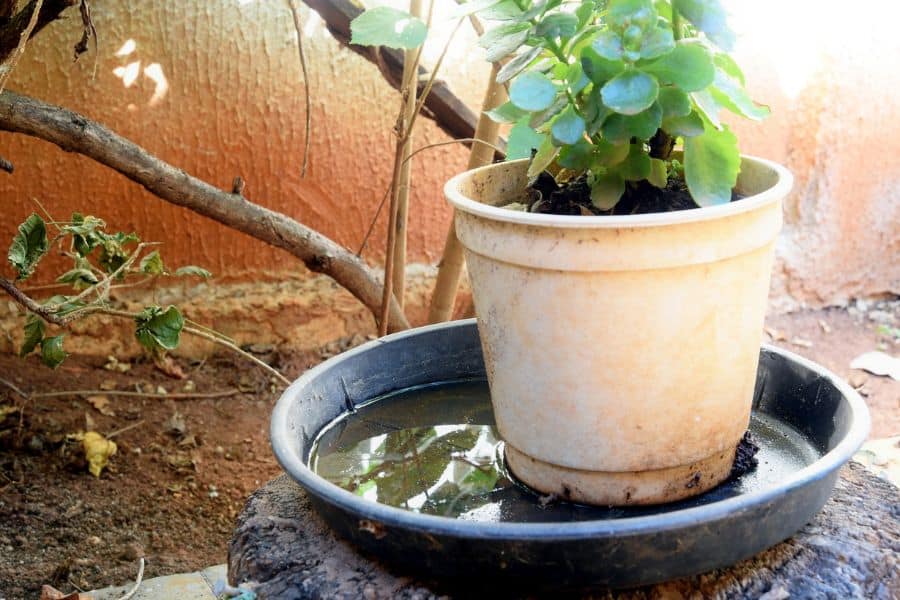
A bucket on its own won’t do much if your yard is offering mosquitoes fifty other places to breed. The single biggest thing you can do, and it costs nothing, is a five-minute walk around your property looking for standing water.
The usual suspects: plant saucers, clogged gutters, kids’ toys left out in the rain, tarps with sagging spots, recycling bins, birdbaths that haven’t been refreshed in a while, the bottom of the wheelie bin, old tires, watering cans, and that one corner of the patio that doesn’t drain. Mosquitoes can breed in a bottle cap’s worth of water, so it’s worth finding where you have standing water.
A few other things that help:
- Refresh birdbaths and pet water bowls every two to three days. Mosquito larvae need about a week of still water to mature, so frequent dumping breaks the cycle. I
- Add Bti dunks or bits to any water feature you can’t drain. Rain barrels, ornamental ponds without fish, and the bottom of downspouts. Same logic as the bucket, just applied to water that’s already there.
- Plant things mosquitoes don’t love being around. Lemon balm, basil, marigolds, citronella-scented geraniums, and rosemary all have some repellent effect, though it’s modest.
- Run a fan on the patio. This sounds silly, but it’s one of the most effective things you can do for an evening outside. Mosquitoes are weak fliers, and a basic oscillating fan keeps them off you completely.
- Wear long sleeves at dusk if you’re doing yard work. The window from about an hour before sunset to an hour after is when the biting really kicks off.
I’m still not convinced the mosquito bucket is the silver bullet some of the viral videos make it out to be. But it’s cheap, it’s safe, and it gives you something useful to do with grass clippings if you’ve already added enough to your compost.