
Getting older isn’t fun. Ever since I hit 50, I’ve noticed small declines in a few areas. Nothing huge, just bits here and there, such as my energy levels and getting up easily from the floor.
I’m pretty fit; I walk the dog most days, and when I say walk, it’s pretty much power walking as we go at a decent trot. I also do yoga and line dancing once a week to help with flexibility and coordination. And all of that’s good, don’t get me wrong.
However, one exercise you can start doing daily now will help keep you independent as you get older and prevent muscle loss. My mom is 89 next week, and she’s still living at home without carers, and she’s been doing this for years.
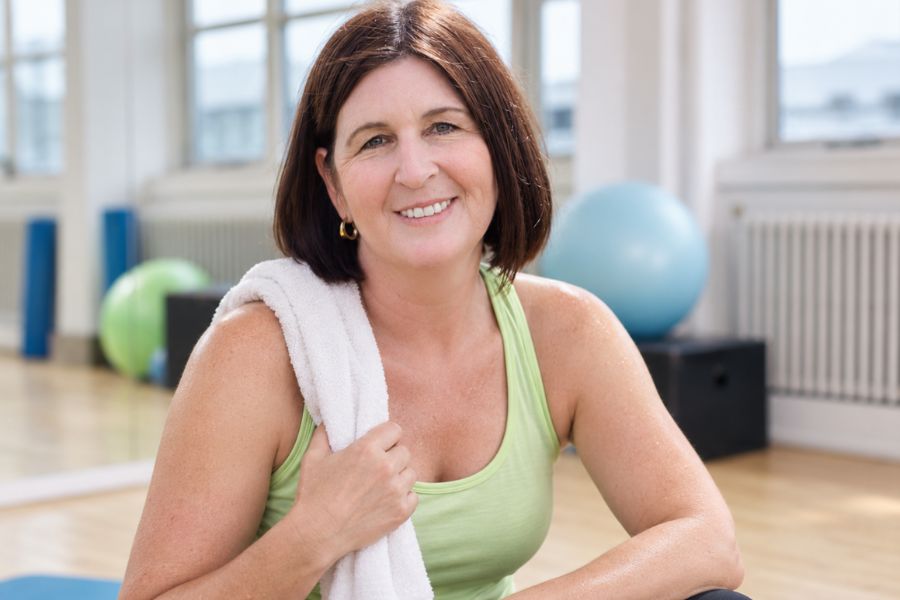
Why Walking Alone Isn’t Enough After 50
We’ve been told for years that walking is the answer. Get your steps in, keep your heart happy, live longer. And walking does plenty of good, so I’m not arguing with that.
But the muscles that fail us as we get older aren’t the ones walking uses. They’re the ones that fire when you catch yourself on a wet floor, hoist yourself off a low sofa, or get off the toilet without needing to grab the sink.
Around age 30, we start losing muscle mass, and the loss speeds up after 50. The medical term is sarcopenia.
The fibers that go first are the fast-twitch ones, the fibers responsible for power and quick reactions. They’re the ones that react when you trip over the edge of a rug, and your leg shoots out to catch you.
Walking runs almost entirely on slow-twitch fibers, so no matter how many miles you rack up, the fast ones stay unused and keep shrinking.
Walking also helps maintain the bone you already have, but it rarely builds new bone. For that, you need axial loading, which means putting weight down through your spine and hips vertically.
The Power of the Sit-to-Stand Squat for Preventing Muscle Loss
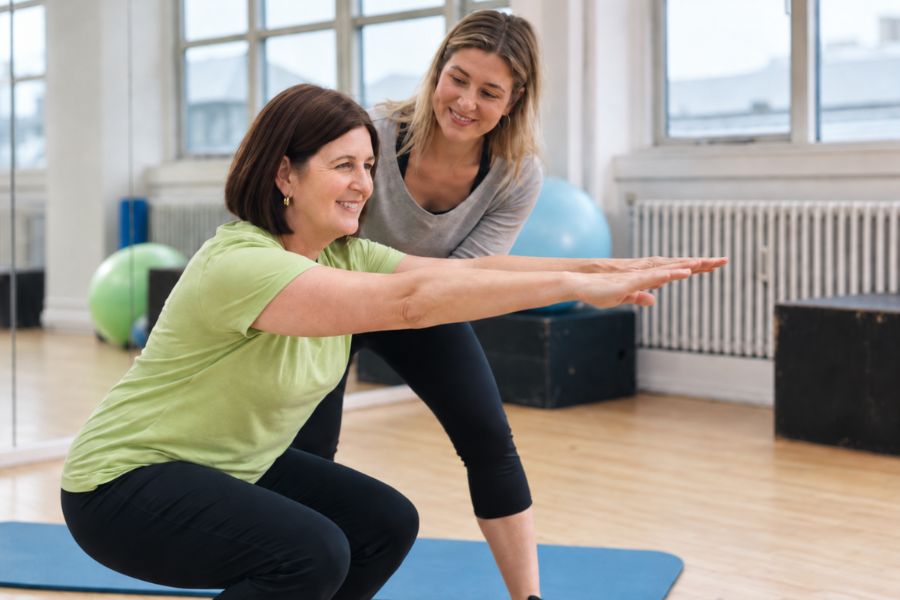
One of the most important parts of the body for continued independence and fall prevention is the legs. Specifically, whether you can lower yourself down onto something the height of a toilet seat, around 17 inches from the floor, and get back up again without using your hands.
As you get older, it can be the difference between managing on your own and needing someone in the bathroom with you.
The squat trains your quads and glutes, which are the muscles that catch you when you stumble. Think of them as your body’s braking system. Weak legs mean a trip becomes a fall, and a fall at 70 is a very different event from a fall at 40.
Strong legs mean you wobble, recover, and carry on with your day.
Squats also recruit the largest muscles in your body all at once, which triggers a hormonal response you don’t get from small isolation moves like bicep curls.
You get a release of testosterone and human growth hormone, both of which do useful work keeping you feeling and moving younger than you are. And the sit-to-stand squat is one of the most useful exercises you can do.
The ability to get up off the floor without using your hands is closely linked to longevity, and it’s a fair proxy for the sort of overall strength and mobility that keeps people alive and mobile into their 80s and 90s.
How to Do the Squat Safely at Home
The key is to make it part of your daily routine, so it feels less like a chore. Forget barbells and gym mirrors. Maybe you do it after you’ve brushed your teeth in the morning.
I practice my balance while I’m brushing, standing on alternate legs and holding it for 30 seconds; the squats come after, and it’s just become part of what I do first thing in the morning.
If you’ve never done squats before, try breaking it down into three levels:
Level 1: the chair squat. Sit on a sturdy chair, cross your arms over your chest so you can’t cheat by pushing off your knees. Stand up fully, then lower yourself back down slowly, taking about 3 seconds on the way down. The slow descent is where you build a lot of strength, so try not to collapse in a heap on the floor.
Level 2: the counter-assisted squat. Stand facing your kitchen counter or a heavy piece of furniture. Rest your fingertips on it for balance only, no leaning. Push your hips back as if you’re aiming for an invisible chair behind you, and lower down as far as feels controlled. Come back up.
Level 3: the goblet squat. Hold a filled water bottle, a small dumbbell, or even a bag of sugar against your chest with both hands. Perform the squat. The added weight starts to build bone density rather than only maintain it.
A short safety checklist for all three levels.
- Keep your chest lifted and your eyes looking forward, not down at your feet.
- Push your knees out slightly in the direction of your toes; never let them collapse inward.
- Keep your heels planted on the floor throughout. If your heels want to lift, that’s usually tight calves or ankles and something to work on separately.
For best results, tie the squats to something you already do many times a day, such as going to the bathroom. Every time you go, do 5 to 10 squats before you wash your hands. If you drink enough water, you’ll clock up 50 squats a day.
7 More Moves That Help With Muscle Loss

The squat is the anchor, but life requires more than getting up easily. You need to twist, reach overhead, pull, push, balance on one foot, and get up from the floor. The 9 moves below fill in the gaps:
Standing calf raises
Stand behind a chair with your hands on the back for balance, or on the stairs holding onto the banister, and rise onto the balls of your feet, hold for a second at the top, then lower slowly. Do 15 to 20.
Calf strength pushes you off each step, and it drops off sharply after 60. Weak calves shorten your stride, slow your walking pace, and make stairs harder than they need to be.
Resistance band rows
Most of us spend our days facing forward, driving, cooking, on a phone or laptop, and our shoulders end up rounded and our upper back weak.
Loop a resistance band around a sturdy doorknob or bedpost, hold a handle in each hand, and pull your elbows back toward your ribs, squeezing your shoulder blades together as if there’s a walnut between them. Aim for 12 to 15 slow reps.
Improving posture like this shifts your center of gravity back where it belongs and reduces the risk of falling forward.
The single-leg stand
This is the one I do while I’m brushing my teeth with the basin for support. Lift one foot an inch or two off the floor, and hold for 10 to 15 seconds. Switch sides.
Being unable to stand on one leg for 10 seconds in your 60s or 70s is linked to a higher risk of dying in the following decade.
Balance is a skill you keep only if you practice it. Pick a spot on the wall and stare at it to stabilize. Don’t close your eyes until you’re rock-solid with them open.
Wall push-ups
I find floor push-ups hard, but the wall version gives you the same upper-body work.
Stand about an arm’s length from a solid wall, place your hands flat at shoulder height, keep your body in a straight line from head to heels, and lower yourself in until your nose almost touches the wall. Push back firmly. Aim for 10 to 15 reps.
Glute bridges
The gluteus maximus is the largest muscle in your body, and years of sitting, especially if you have an office job, have put most of ours to sleep.
Lie on your back with knees bent and feet flat on the floor. Squeeze your glutes and lift your hips toward the ceiling until your body forms a straight line from knees to shoulders. Pause a second at the top, lower down with control. Do 10 to 15.
Weak glutes force your lower back to do work it isn’t designed for, which is where a lot of chronic back pain in your 50s and 60s comes from.
Step-ups
Find a sturdy step; the bottom stair works well. Step up with your right foot, bring your left up to meet it, step back down leading with the right, then repeat leading with the left. Do 10 per side.
This trains each leg independently, which matters because most of us have a stronger side and a weaker side, and the weaker side is the one that lets us down.
Farmer’s carries
Pick up something heavy in each hand, a full grocery bag, or a dumbbell if you have one, and walk 30 to 40 steps with your shoulders back and your core engaged.
This trains grip strength (a surprisingly strong predictor of overall health as you age), core stability, and posture, all in a movement your body actually uses in daily life.
Disclaimer: The content in this article is for informational purposes only and is not intended to replace professional medical advice, diagnosis, or treatment. Always consult your doctor, physical therapist, or healthcare provider before starting a new exercise program, particularly if you have existing joint, cardiovascular, or balance conditions.
Disclaimer: This article is for general information only and is not professional advice. It may contain affiliate links. Please see our full Editorial Policy for details.
Kylie Lang is a nationally syndicated travel journalist with bylines on the Associated Press Wire & more, a lifestyle writer, and the founder and editor of Your Lifestyle Library (yourlifestylelibrary.com). She holds a BA (Honours) in History from the University of Kent and is a member of the British Guild of Travel Writers.