
Your morning routine is either working for you or against you. And once you hit 50, the margin for error gets a lot smaller. The likelihood is that not only are your morning rituals destroying your metabolism, but they’re making you feel groggy for the rest of the day.
The habits you’ve had for years that never seemed to matter much? They start to matter a lot more as your hormones shift, your muscle mass begins to drop, and your metabolism becomes a little more sensitive to disruption.
The good news is that most of these are easy fixes once you know what’s actually going on inside your body.

7 Morning Habits Destroying Your Metabolism
This article highlights what you shouldn’t do if you want to support your metabolism, and offers alternatives instead.
Hitting the Snooze Button
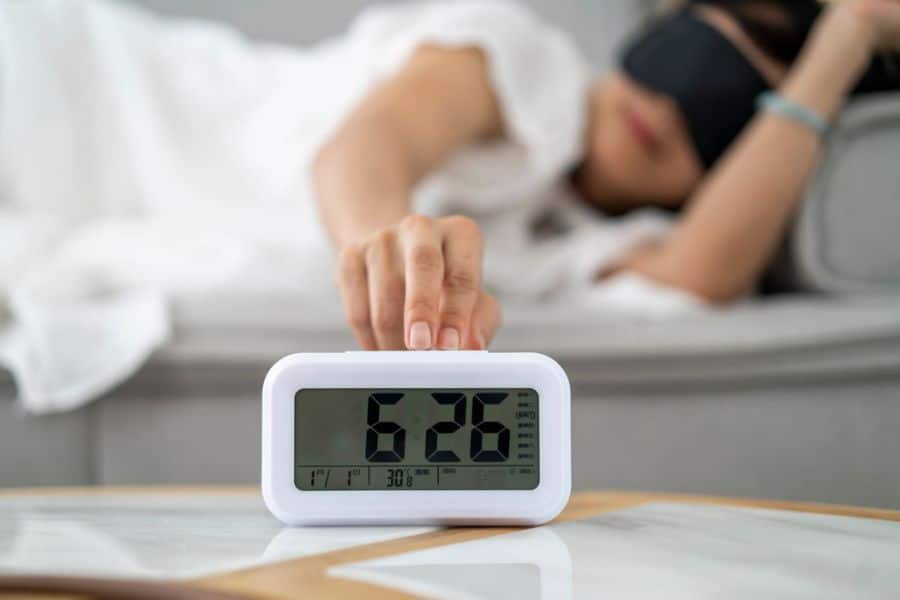
It feels like such a small, harmless thing, doesn’t it? Just ten more minutes. But those extra minutes are actually creating a hormonal problem that ripples through your whole day.
Here’s what’s happening. Your body runs on a 24-hour internal clock called the circadian rhythm. In the final stages of sleep, cortisol begins rising naturally, peaking right around the time you wake up. This morning cortisol surge kick-starts your metabolism, sharpens your focus, and gives you the energy to actually function.
When you hit snooze, you interrupt that process. Your brain drops back into non-REM sleep, where cortisol and testosterone both fall. When the alarm goes off again a few minutes later, you’re pulled out mid-cycle in a groggier, more depleted state. This is called sleep inertia, and it can affect your mental function and energy for hours afterward.
Over time, repeatedly fragmenting that natural cortisol rise contributes to higher cortisol in the afternoon and evening, the opposite of what you want, and that pattern is linked to impaired insulin sensitivity and increased fat storage.
The solution is simple. Set your alarm for the time you need to get up instead of fifteen minutes earlier, and then get up when it goes off.
Not Drinking Water

You’ve been asleep for seven or eight hours, and your body hasn’t had a drop of water. You are, by definition, mildly dehydrated when you wake up. And yet most people’s first instinct is to reach for coffee rather than water.
That matters more than you might think.
A review published in PMC found that dehydration significantly elevated cortisol levels, with a standard mean difference of over one. Cortisol is already at its morning peak when you wake up. Adding dehydration on top of that pushes it higher, which signals your body to hold onto fat, particularly around the middle.
Dehydration also slows every single metabolic process in your body. Every enzymatic reaction that burns fat and converts food into energy happens in water. When cells are underhydrated, those reactions slow down.
One more thing. Your body often confuses thirst with hunger. So if you skip that morning water and head straight for food or coffee, you may end up eating more than you actually need.
Keep a glass of water on your nightstand and drink it before you do anything else in the morning. Aim for at least 500ml within the first 30 minutes of waking.
Eating a Sugary Breakfast

Cereal, toast with jam, pastries, flavored yogurt, and sweetened granola are all culprits here.
When you eat a high-sugar breakfast, blood glucose spikes sharply. Your pancreas responds by pumping out insulin to bring it back down. Insulin is effective, but it works so well that blood sugar often crashes an hour or two later, leaving you tired, craving more sugar, and hungry again long before lunch.
A review in PMC confirms that elevated insulin levels drive fat storage, increase lipogenesis (the conversion of carbohydrates into body fat), and contribute to a metabolic dysfunction pattern that includes type 2 diabetes, hypertension, and cardiovascular disease. The same review notes that this relationship has been known for over 50 years.
After 50, insulin sensitivity naturally decreases due to hormonal changes. Starting your day with a sugar hit makes that worse, not better.
The fix is to swap the sugar for protein. Eggs, Greek yogurt with no added sugar, smoked salmon, cottage cheese, or a protein smoothie without fruit juice. A high-protein breakfast keeps blood glucose stable, suppresses the hunger hormone ghrelin for longer, and creates a much steadier energy curve through the morning.
Not Eating Breakfast at All

A study found that habitual breakfast skippers had significantly higher circulating cortisol levels from waking until mid-afternoon than breakfast eaters. They also had elevated blood pressure. Crucially, this wasn’t explained by stress levels, which were the same in both groups. The cortisol difference was driven by the missed meal itself.
When you eat breakfast, cortisol naturally starts to drop. That meal signals to your body that the fasting period is over, the threat has passed, and it can relax into its normal metabolic rhythm. Skip that meal, and cortisol stays elevated for longer. Over time, chronically elevated cortisol promotes fat storage around the abdomen, increases the breakdown of muscle tissue, and worsens insulin sensitivity.
A separate study found that a breakfast-skipping pattern increased body weight and decreased muscle mass in animal models, and delayed the circadian oscillations of genes governing fat metabolism in the liver and muscle.
After 50, when you’re already at risk of losing muscle and gaining abdominal fat due to hormonal changes, skipping breakfast consistently makes both more likely.
Even something small within 60 to 90 minutes of waking, particularly something with protein, is enough to reset that cortisol pattern and keep your metabolism moving in the right direction.
Drinking Coffee on an Empty Stomach

I have definitely been guilty of this one, but I’ve started to get better.
Caffeine stimulates the production of cortisol. That’s part of why it makes you feel awake. The problem is that cortisol is already peaking in the morning, typically between 7 and 9 a.m.
When you drink coffee on an empty stomach, that cortisol spike hits harder and faster because there’s nothing to slow its absorption. Cortisol at high levels signals your body to store fat, break down muscle for energy, and raise blood pressure. It can also cause your blood sugar to spike, even without food, because cortisol triggers the liver to release stored glucose.
Coffee on an empty stomach also stimulates gastric acid production. Without food to buffer it, that acid can irritate the stomach lining, trigger acid reflux, and cause digestive discomfort that persists through the morning.
Eat something before your first cup, even if it’s just a handful of nuts or a boiled egg. Ideally, try to push your first coffee to mid-morning, around 90 minutes to two hours after waking, when that natural cortisol peak has already started to decline. Your caffeine will hit more effectively, last longer, and cause fewer hormonal disruptions.
Scrolling on Your Phone

The first thing so many of us do is pick up our phones and start scrolling. News, social media, emails. It’s become automatic. It’s also doing real damage to your stress hormones, and by extension, your metabolism.
Your phone screen emits blue light, which is short-wavelength light that directly influences your hormonal system. A study found that blue light exposure in the morning, during the post-awakening phase, caused a measurable increase in salivary cortisol compared to dim or red light conditions. Your adrenal glands literally respond to the light coming off your screen.
But it’s not just the light. It’s the content. Checking emails first thing creates an immediate task-based stress response. Scrolling social media triggers comparison, anxiety, and low-level emotional activation. All of that happens while cortisol is already elevated, which amplifies the effect.
The result is a sustained stress state that carries through the morning and directly suppresses your metabolism’s ability to function well.
The fix is to give yourself a 30-minute phone-free window after waking. Drink your water, eat something, do a short walk, or do some gentle movement. Let your cortisol rise and fall naturally before you introduce the chaos of your inbox.
Exercising on an Empty Stomach

Fasted cardio has been popular for years, and there is some evidence that it increases fat oxidation during the workout itself. But for women over 50, the downstream hormonal costs often outweigh the short-term benefits.
Exercising in the morning already raises cortisol, because exercise is a physical stressor and your body responds accordingly. When you layer that on top of an already-high morning cortisol baseline and an empty stomach, cortisol goes higher still.
After 50, when you’re already losing muscle faster than you can build it, routinely breaking it down for fuel is the last thing you want to be doing. Muscle is metabolically expensive. The more you have, the higher your resting metabolic rate. Lose muscle, and your metabolism slows. It’s that direct.
A small protein-based snack, 15 to 25 grams, eaten 30 minutes before exercise is enough to protect your muscle tissue, keep cortisol from going too high, and still allow your body to burn fat efficiently during the session. A boiled egg, some Greek yogurt, or a small portion of cottage cheese does the job.
This article is for informational purposes only and is not intended to replace professional medical advice. Always consult your healthcare provider before making changes to your diet, exercise routine, or health management plan. The information in this article is correct at the time of publishing.