
You sit down for a relaxed lunch with friends. The server is lovely. The food is wonderful. Then the check arrives, and you do a small double-take.
How did it get to that much?
You’re not imagining it. Restaurants spend serious money hiring menu consultants, designers, and behavior experts whose only job is to nudge you toward spending more than you planned.
9 Tricks Restaurants Use To Get You To Spend More
Let’s pull back the curtain on what’s really going on when you dine out. Forewarned is forearmed. No more nasty check surprises after you’ve had a lovely meal out.
The Specials That Come With a Mystery Price
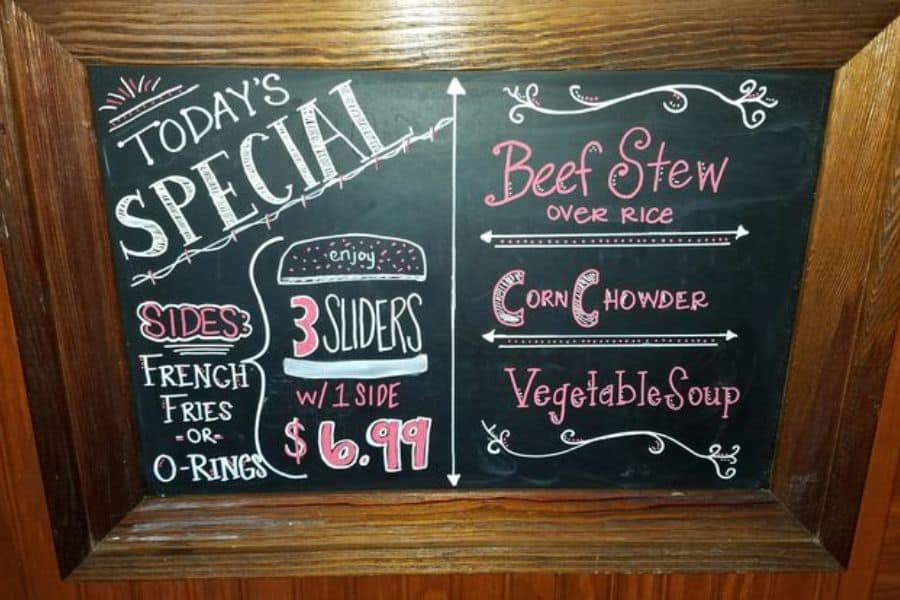
Your server arrives, smiles warmly, and rattles off three beautiful specials. Pan-seared sea bass. A wagyu cheeseburger. Lobster ravioli in a saffron cream.
Sound delicious? Of course. Did they mention the price?
Almost never.
This is one of the oldest tricks in the book, and it still works. When prices aren’t said out loud, most people feel awkward asking. That sea bass might be $32, or it might be $58. The “market price” tag on seafood is the same trick in writing. By the time the check arrives, it’s too late.
The fix is simple, and you don’t need to feel rude doing it. Just smile and ask, “That sounds wonderful. What’s the price on that one?” Servers are used to the question. Anyone who makes you feel funny for asking is the one being rude.
The Missing Dollar Signs
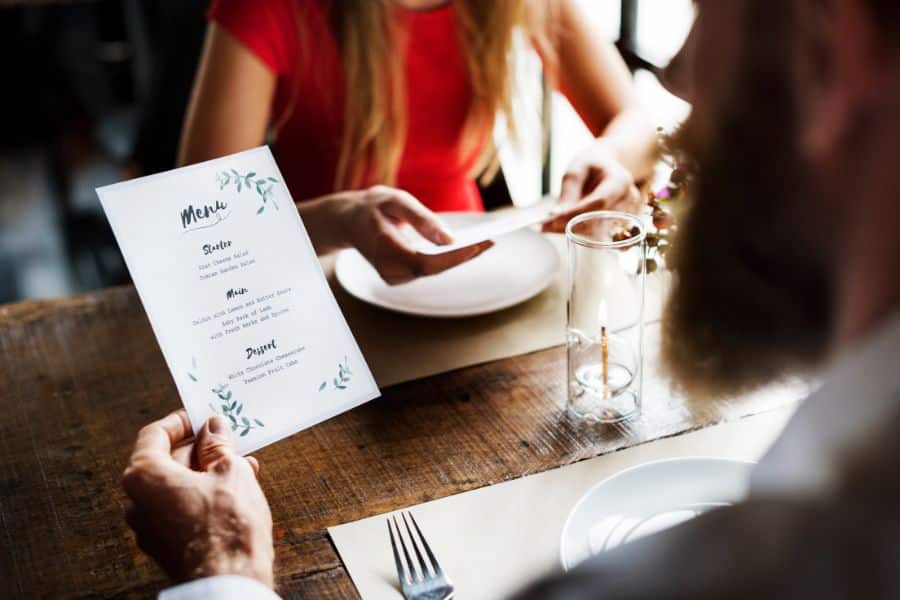
Have you ever noticed that fancier restaurants list their prices as just “32” instead of “$32.00”?
It’s pricing psychology.
A Cornell University study found that diners spent about 8% more when dollar signs were removed from menus. The theory is that the dollar sign triggers what researchers call the “pain of paying.” Take it away, and your brain stops thinking about money. It just thinks about food.
Eight percent might sound small. On a $90 dinner, that’s an extra $7 you didn’t notice slipping out of your pocket. Multiply that across a year of meals out, and it adds up.
The Decoy at the Top of the Menu
Glance at the entrée section, and you’ll often spot one item that costs noticeably more than everything else. A $95 ribeye. An $80 lobster tail. Something that makes you raise your eyebrows.
Most people aren’t going to order it. That’s the point.
It’s called an anchor, and it’s there to make the $42 chicken dish underneath look perfectly reasonable. Without the $95 steak, $42 might feel steep. Next to it, $42 sounds like a steal.
You walked in thinking $28 was a fair price for dinner. Now you’re cheerfully paying $42 and feeling smart about it. The decoy did its job.
Once you see this pattern, you can’t unsee it. Mentally hide the most expensive item on the menu and look at the prices again. Do they still feel reasonable?
The Second-Cheapest Wine
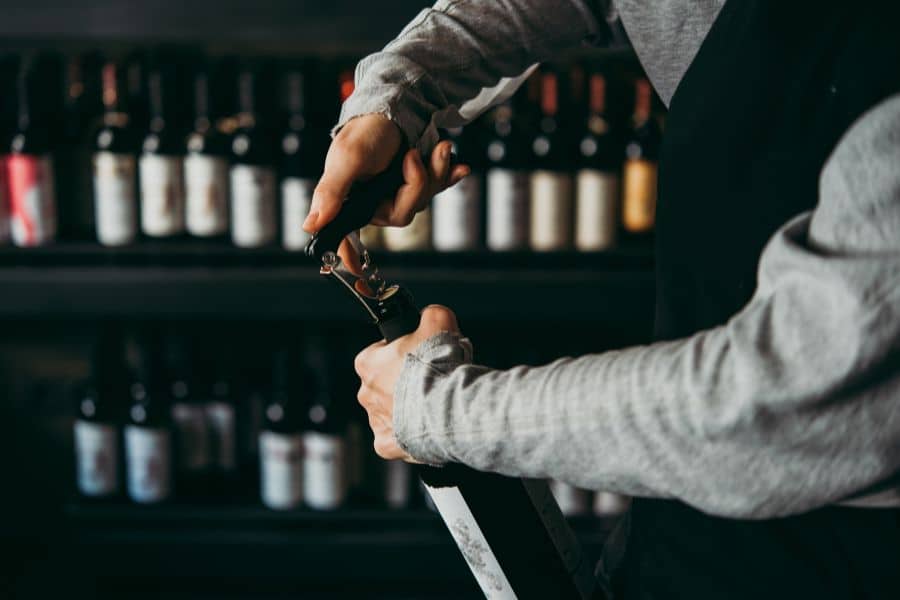
This one is a classic, and it’s almost universal.
When you scan a wine list, where do your eyes go? Most people skip the cheapest bottle because they don’t want to look stingy in front of friends. They also skip the priciest because, well, who needs a $140 cabernet on a Tuesday?
So they land on the second-cheapest option.
Restaurants know this. The second-cheapest wine almost always carries the highest markup on the list. You’re paying a premium to avoid looking cheap.
Want to outsmart it? Order the cheapest bottle if you trust the restaurant, or go a little further down the list to a mid-priced wine where the markup tends to be fairer. Or skip the bottle and order by the glass.
The “Free” Extras That Aren’t
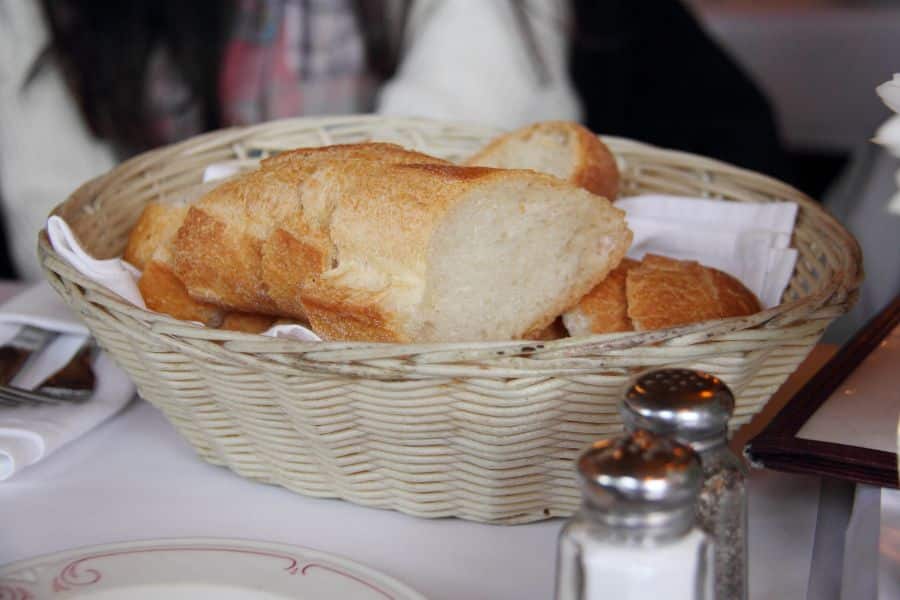
The server sets down a basket of warm, crusty bread. Then, “Still or sparkling water for the table?” Then, “Would you like some olives to start?”
It all sounds like hospitality. Sometimes it is. Sometimes it isn’t.
In many restaurants, that bread is $6. The sparkling water is $9 for a bottle the size of a coffee cup. The olives are $8.
Nothing wrong with ordering any of it. But it should be your choice, made with the price in mind.
A simple question works wonders here. “Is the bread complimentary?” “Is tap water fine for the table?” Luckily, in France, where I live, bread is always complimentary.
The Friendly Upsell Cascade
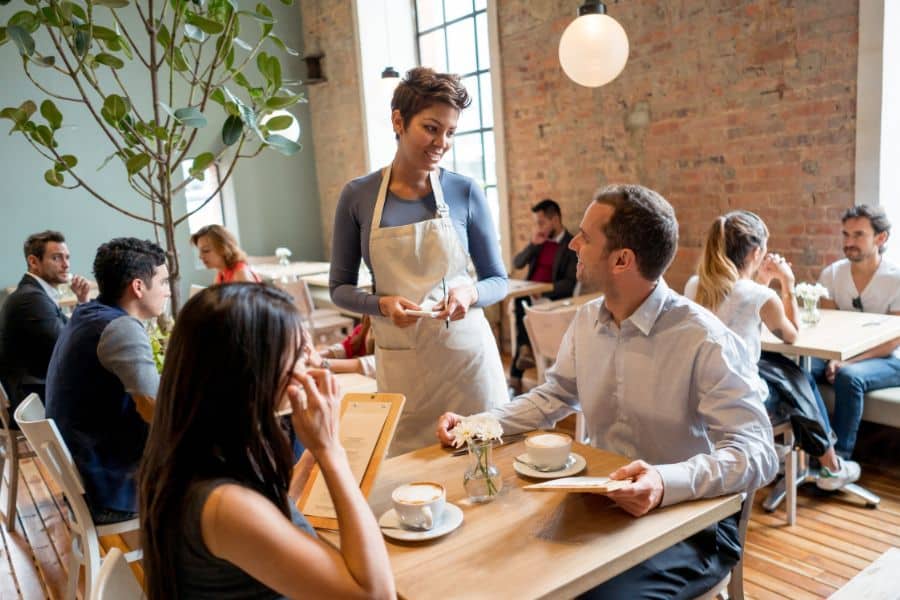
Watch what happens when you order an entrée.
“Would you like to add shrimp to that for $9?” “Soup or salad with your main?” (The soup is $6 extra.) “Premium sides instead of fries?” “Save room for our dessert flight?”
Each one sounds small. Each one is delivered with a warm smile. And each one is part of the server’s training.
A typical upsell can grow a check by 10 to 15%. On a $60 meal, that’s $6 to $9 you weren’t planning to spend.
There’s nothing wrong with saying yes if you really want the shrimp. But pause for a second before you do. Did you want it before the server suggested it? If not, a polite “I’ll stick with what I ordered, thanks” is all you need.
The Service Charges That Sneak Onto the Bill
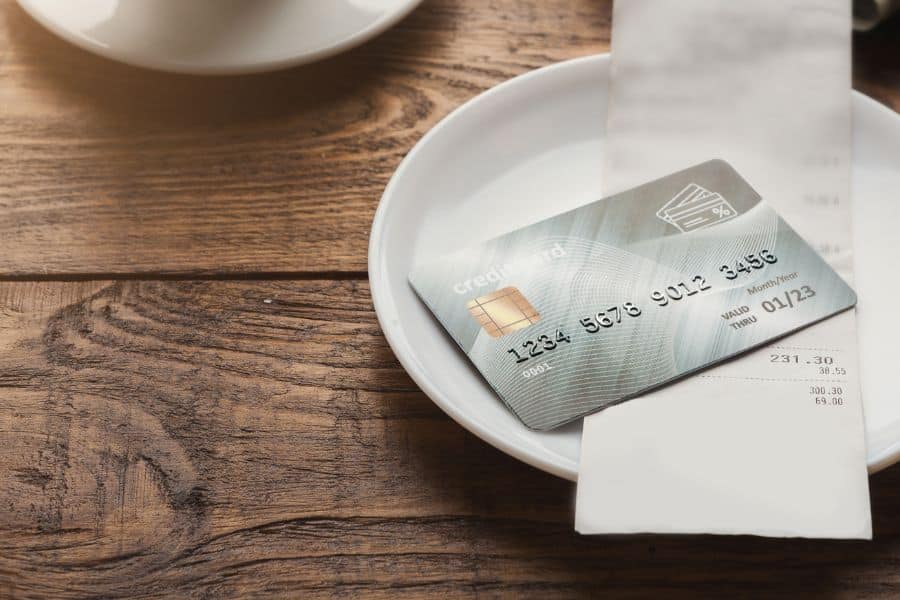
This one catches people off guard more than any other trick on this list.
You scan the bill. Subtotal looks right. Tax looks right. Then there’s a line you don’t recognize. “Service fee.” “Kitchen appreciation.” “Wellness charge.” “Employee health surcharge.” Sometimes 3%, sometimes 20%.
A new Florida law is set to require restaurants to disclose automatic fees before customers order, and California’s Honest Pricing law already requires fees to be built into menu prices. But these protections vary by state, and plenty of restaurants still tack on charges that customers never agreed to.
The bigger trap? Most people then tip on top of the service charge, often calculating 20% on the total at the bottom of the bill, which already includes that fee. You end up tipping on the tip.
Always read every line of the check. If you see a service fee, ask what it covers and whether it goes to the server. Then calculate your tip on the pre-fee subtotal.
The Music and Lighting That Loosens Your Wallet
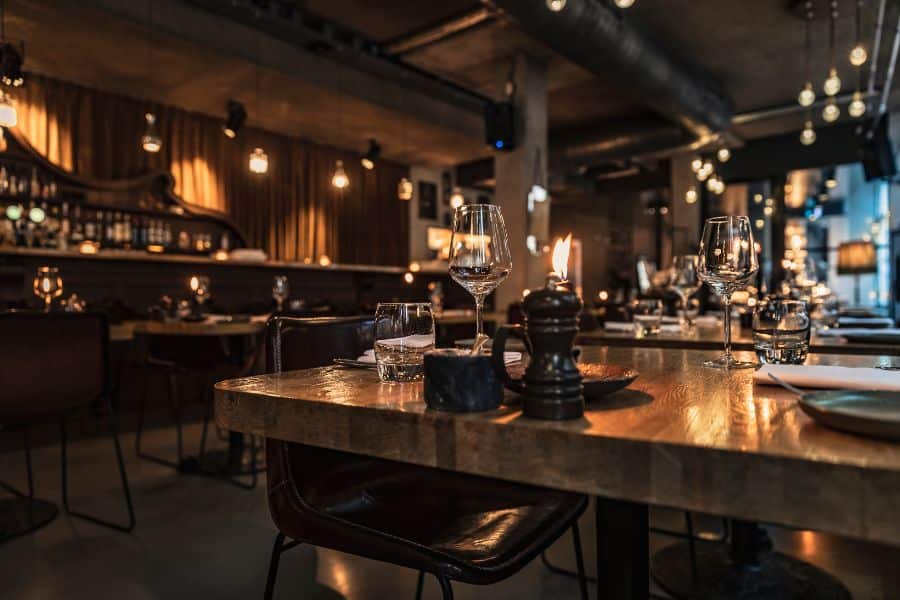
A University of Leicester study found that when restaurants played classical music, diners spent more per head than when pop music or no music was playing. The researchers concluded that classical music makes people feel more affluent, leading them to spend like it.
Dim lighting plays a similar role. It slows you down, makes you linger, and makes another glass of wine feel like a lovely idea. Soft, slow background music has the same effect on your pace. The longer you sit, the more you order.
The Menu Design That Hides the Real Cost
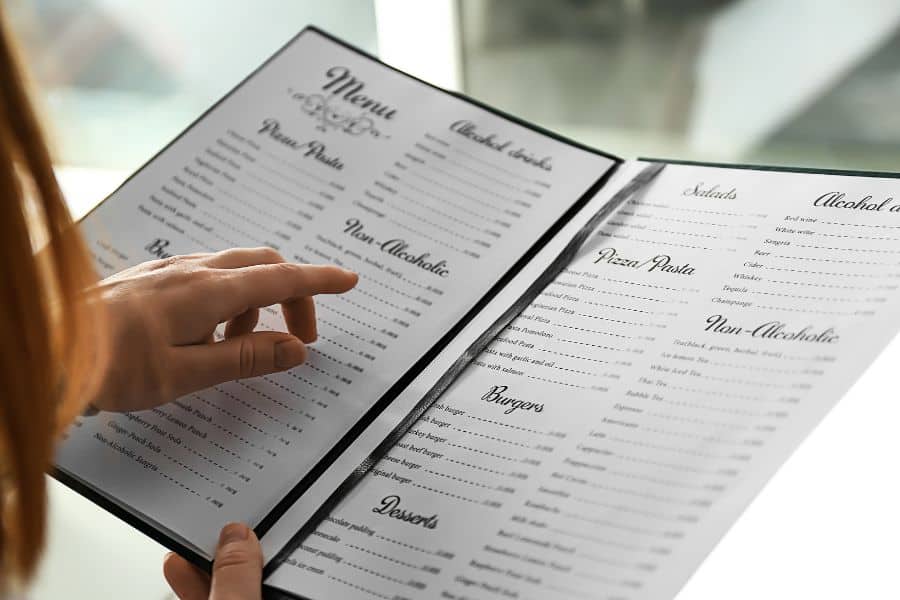
Pick up a well-designed restaurant menu and look closely.
You probably won’t see a neat column of prices on the right. Instead, the price sits right after the dish description, in the same size font, almost blending in. That’s called nested pricing, and it’s deliberate. It stops you from scanning down the prices and picking the cheapest option.
Notice the decorative boxes? The “Chef’s Selections” panel with the gold border? Your eye goes there first. That’s where the highest-margin items live, the ones the restaurant most wants you to order.
And those flowery descriptions? “Slow-braised, hand-cut, locally sourced, finished with a drizzle of…” Research shows that descriptive language can boost sales of a dish by up to 27%. The same chicken with the word “grilled” in front of it sells less.
None of this means the food isn’t good. It just means you’re being guided. Once you know that, you can read the menu the way you want, not the way it was built to be read.
A few quick habits make all the difference. Ask the price of every special. Read the bill line by line before you tip. Pick your dish before you let the descriptions or the server’s suggestions reshape your choice. And remember, asking a polite question about money in a restaurant is not rude. It’s smart.
Disclaimer: This article is for informational purposes only and is not intended as financial advice. Always consider your own circumstances and consult a qualified professional before making financial decisions.