
A few summers back, I bought the most gorgeous hydrangea, all big mophead blooms in that stunning dusky blue. I happily planted it proudly in the sunniest spot in the garden because, well, sun is good for plants, isn’t it?
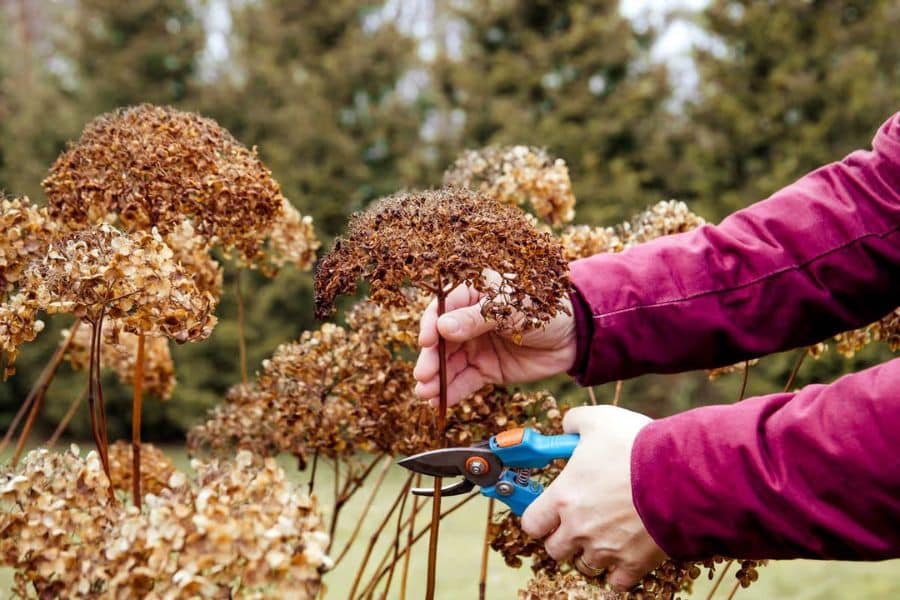
By the middle of August, it looked like something I’d raked out of the bottom of the barbecue. Crisp, dry, and brown. I was heartbroken and felt like a murderer as I looked at my sorry excuse for a hydrangea.
If you’ve ever done the same, and I’d wager most of us have, you’ll know that exact sinking feeling. You spent a fair whack, you had such high hopes, and now your beautiful new plant is doing its very best impression of a dried flower arrangement. And the question is always the same. Is it actually dead, or is it just sulking?
You’ll be surprised to hear that more often than you’d think, there’s still a flicker of life in there. Sadly, that was the case for my hydrangea; it had well and truly gone to God.

First, is it actually dead?
Before you start grieving and chuck the poor thing on the compost heap, let’s find out whether it’s truly gone or just having a strop.
Plants are wildly dramatic. They’ll drop every leaf, go limp, turn the color of a teabag, and generally look like they’ve packed it in entirely, and then perk right back up the moment you sort out whatever was upsetting them. So don’t write yours off too soon.
Here’s the test I swear by. It’s called the scratch test, and it takes about three seconds.
- Find a stem or a small branch near the base.
- Scratch a little of the outer bark away with your fingernail or a knife.
- If it’s green and slightly moist underneath, you’re in business. The plant is still alive.
- If it’s brown, dry, and snaps clean off, that bit’s a goner.
Work your way down from the tips toward the soil. Plants tend to die from the top down, so even if the top is all crispy twigs, the lower stem and the roots might be absolutely fine.
If you find green anywhere, there’s hope. If the whole thing is brown and brittle right down to the roots, well, I’m sorry, but it’s time for the compost heap and a quiet word with yourself.

Now, what did you actually do?
To fix the plant, you have to be honest about what you did to it in the first place. And nine times out of ten, it’s one of four things: you drowned it, you parched it, you put it in the wrong spot, or you gave it soil it can’t stand. Let’s take them one at a time.
You drowned it
This is the most common one, the cardinal sin usually committed by an overzealous gardener. We see a droopy plant, panic, and water it. Then it droops more, because a waterlogged plant looks almost identical to a thirsty one, so we water it again. And round we go.
The giveaways are yellowing lower leaves, a slightly sour smell from the soil, and roots that have gone brown and mushy instead of firm and pale. That’s root rot, and it’s serious, but not always fatal.
Here’s what to do:
- Stop watering. Obvious, I know, but you’d be amazed.
- Get it out of the wet. If it’s in a pot, lift it out and have a look at the roots. Snip off anything brown, slimy, or smelly with clean scissors. Keep the firm, healthy roots.
- Repot into fresh, dry, well-draining soil. Make sure the pot has drainage holes. A pot sitting in a saucer of water is a plant slowly drowning.
- Then leave it alone. Let the top inch of soil dry out completely before you so much as look at the watering can again.
A drowning plant doesn’t need more love. It needs you to step away with your watering can.
You left it in the desert
The opposite problem is, of course, that you didn’t water it enough. Plants are far more forgiving of a missed drink than a constant soaking. The leaves go crispy at the edges, curl inward, and feel papery, and the whole thing looks deflated.
If the roots are still alive, which the scratch test will tell you, you can often bring them back in a day or two.
For a pot, the trick is a proper soak rather than a quick splash. Dry soil can go so hard that water just runs straight off the top and out the bottom without wetting the roots at all. So sit the whole pot in a basin of water and leave it for half an hour until the soil’s drawn the water up and gone properly dark and damp. Then let it drain.
For a plant in the ground, water slowly and deeply at the base, not a light sprinkle over the leaves. You want the water reaching down to where the roots actually are. It’s not a human that needs a shower.
Then give it a few days. Snip off the truly dead foliage, but leave anything with a hint of green. You’ll be amazed at how quickly a thirsty plant bounces back once it’s had a proper drink.
You put it in the wrong spot
Ah. My hydrangea. This was my crime.
Some plants want to bake all day, and others want dappled shade, and getting it wrong can scorch a plant just as surely as forgetting to water it.
Leaves that have gone brown and brittle on the side facing the sun usually mean too much heat. Leggy, stretched-out, pale growth that’s all leaning toward the window or the light usually means not enough.
The fix here is the simplest of the lot, and the one we resist the most because we’ve already dug the hole. You move it.
Dig it up carefully on a cool, overcast day, ideally in spring or autumn rather than at the height of summer, keeping as much of the root ball intact as possible. Replant it somewhere that suits its actual temperament, give it a good watering, and let it settle.
Plants want to live. Give them half a chance and most of them will take it.

You gave it the wrong soil
The sneaky one, because everything can look fine for weeks before it slowly goes downhill. Some plants want acidic soil, some want it chalky, some want it rich, and some want it poor and gritty.
Lavender, for instance, will rot in the heavy clay we have in parts of the Charente if you don’t open it up with grit first.
The signs are a slow, sad decline with no obvious cause. Leaves going yellow between the veins is a classic one and often points to soil that’s the wrong pH for that particular plant.
The easiest fix is to dig it up and start again with the right stuff.
For pots, that’s easy enough. For the ground, work in whatever your plant actually wants: compost, ericaceous soil for the acid lovers, grit for the Mediterranean crowd, before you replant.
A cheap soil pH testing kit from the garden center will save you a world of guesswork. I wish I’d owned one years ago.
When to admit defeat
I’m all for hope, but sometimes the plant has gone, and no amount of fussing will bring it back, a bit like my poor hydrangea. If the scratch test shows nothing but brown all the way to the roots, if the roots themselves are dry and crumbling or one big rotten mess, it’s done.
And that’s all right. Even the most green-fingered among us lose plants. My neighbor Stephane, who could grow a tomato out of a paving slab, loses things every year and just shrugs. C’est la vie. Pull it out, learn the lesson, and pop something else in.
Disclaimer: This article is for general information only and is not professional advice. It may contain affiliate links. Please see our full Editorial Policy for details.

Kylie Lang is a nationally syndicated travel journalist with bylines on the Associated Press Wire & more, a lifestyle writer, and the founder and editor of Your Lifestyle Library (yourlifestylelibrary.com). She holds a BA (Honours) in History from the University of Kent and is a member of the British Guild of Travel Writers.