
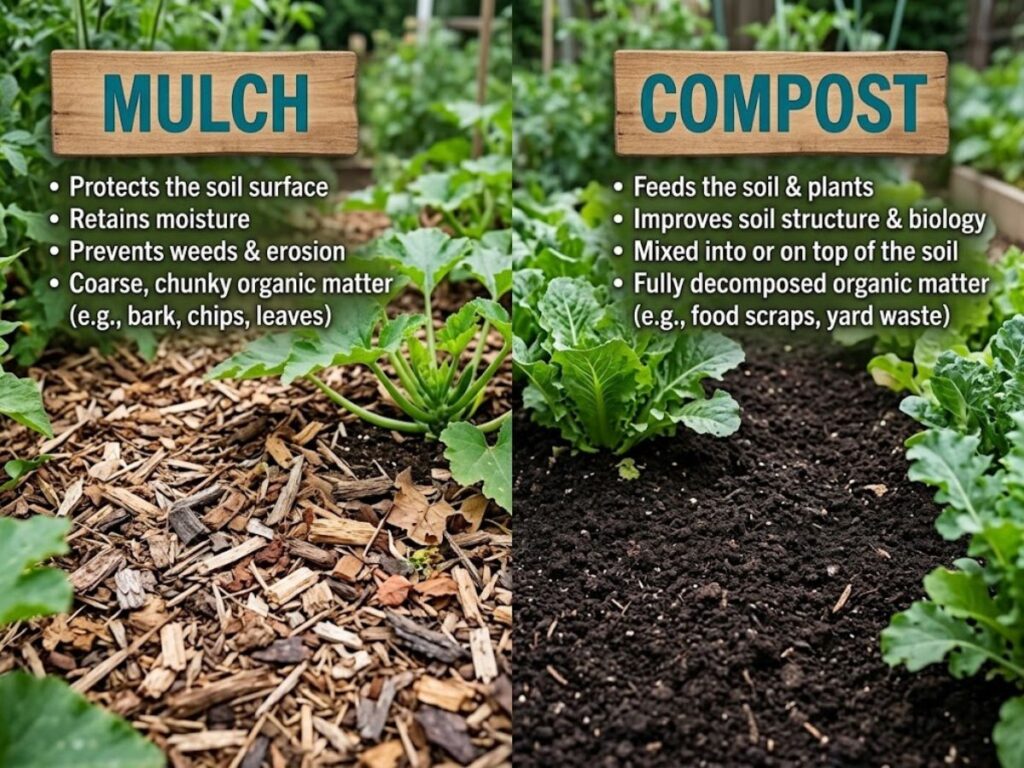
The easiest way to think of this is not one vs. the other, but what each one does. Compost feeds the soil and gives it nutrients, whereas the job of mulch is to protect it. You use compost when you put your plants in, but you use mulch afterward to lock in moisture, hopefully keep weeds out, and protect plants from varying temperatures.
Both are brown, both look a bit like dirt, and both end up in the same beds, but they do different jobs at different times of year.
So if you’re wondering which one is best, mulch vs. compost, you probably need some of both, just not at the same time and not for the same reason. One goes in, one goes on.
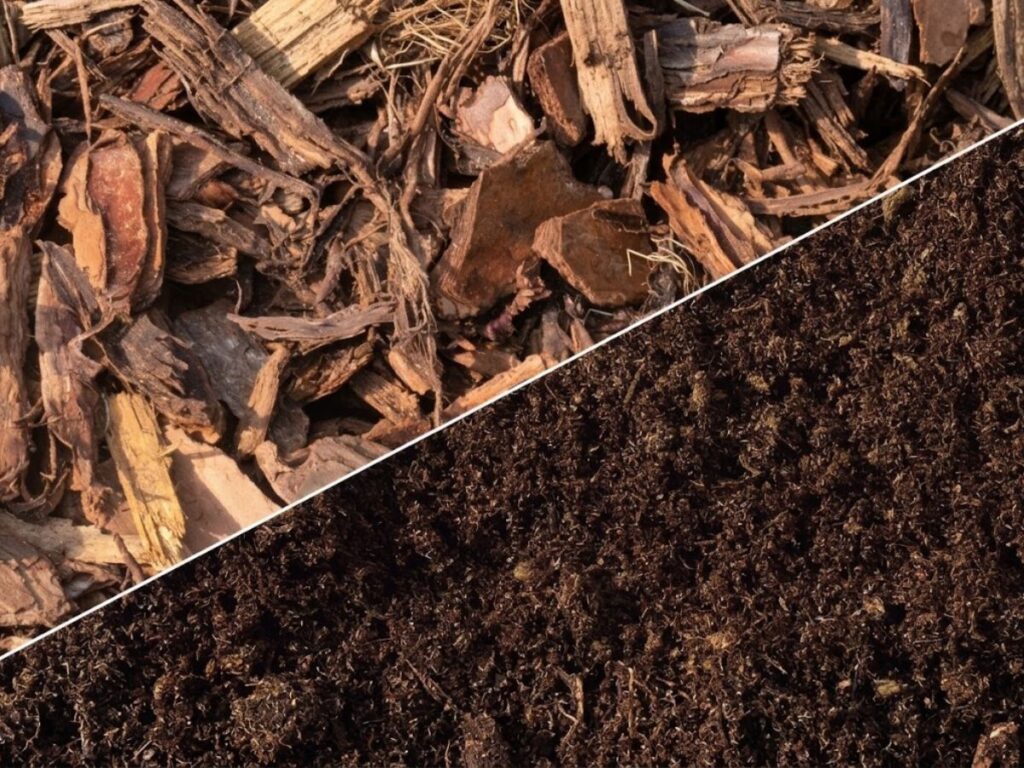
What’s the Difference Between Mulch and Compost?
Compost is decomposed organic matter: kitchen scraps, grass clippings, old leaves, coffee grounds, and all the other stuff you’d normally throw in the trash, broken down by bacteria and worms into a dark, crumbly material that smells like a forest floor.
It’s packed with nutrients and beneficial microbes, and when you work it into the soil, it feeds your plants and improves the structure of whatever you’re growing in, whether that’s heavy clay or sandy dirt that won’t hold water.
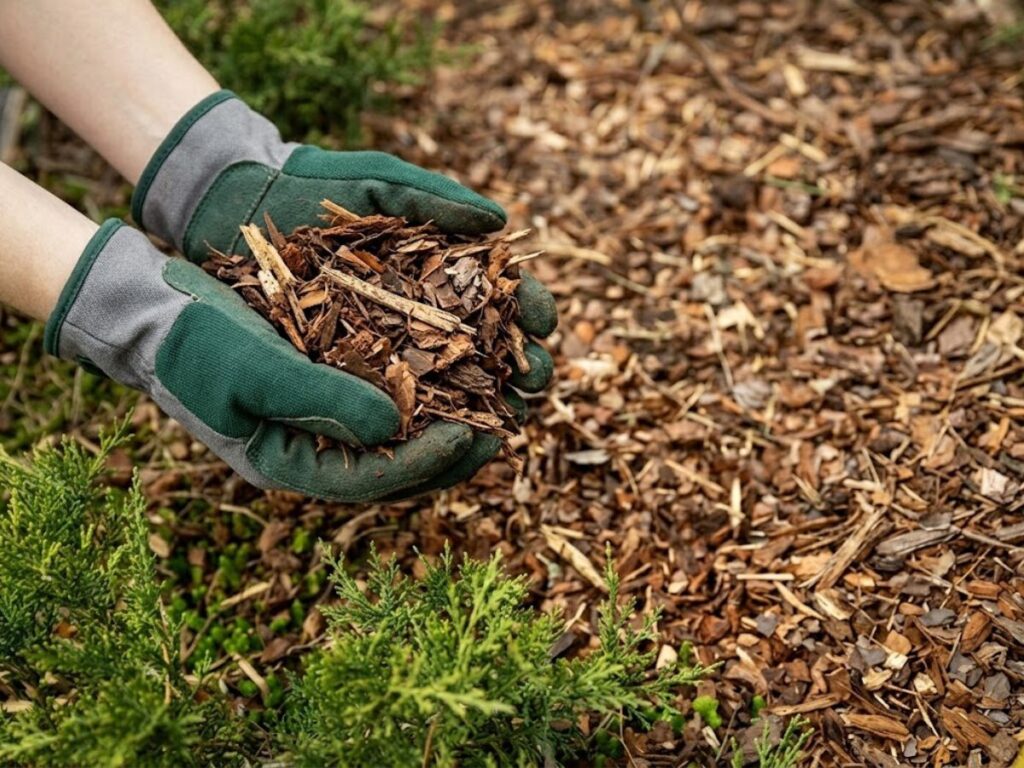
Mulch is any material you spread on top of the soil as a protective layer. It can be organic (wood chips, bark, straw, shredded leaves, pine needles) or inorganic (gravel, rubber chips, landscape fabric).
Its job is to cover the ground around your plants so moisture stays in, weeds have a harder time coming up, and the soil temperature doesn’t swing wildly between hot days and cold nights.
The simplest way to remember it: compost goes IN the soil, mulch goes ON the soil.
When to Use Compost
The main time to use compost is in spring before you plant, and again in fall after everything has died back. In spring, you spread an inch or two over your beds and fork it into the top 6 inches of soil, which gives your seedlings and transplants a big boost of nutrients to get them going.
In fall, you can do the same thing or just leave a layer on top and let the worms pull it down over winter.
You can also side-dress with compost during the growing season. That means pulling back any existing mulch, sprinkling a half-inch layer of compost around the base of hungry plants like tomatoes, squash, or roses, watering it in, then putting the mulch back.
Do this every 4 to 6 weeks during the growing season for anything that’s a heavy feeder.
For containers, mix compost into your potting soil at about one part compost to three parts potting mix.
Top Tip: If your compost still has recognizable chunks of eggshell or orange peel in it, it isn’t finished. Give it another month or two in the pile. Half-rotted compost can actually pull nitrogen OUT of the soil as it finishes breaking down, which is the opposite of what you want.
Found this useful? Get more like it in your inbox as a Lifestyle Library Insider.
When to Use Mulch
Mulch goes down after your plants are in the ground and growing. The best time to lay fresh mulch is late spring, once the soil has warmed up and your seedlings or transplants are settled.
If you mulch too early, you trap the cold in and slow everything down; wait until the soil is at least 60°F.
A second mulching in fall is worth doing for perennials, shrubs, and anything you’re trying to overwinter. Fall mulch acts like a quilt, keeping the soil temperature steady so plants don’t heave out of the ground during freeze-thaw cycles. For most beds, 2 to 3 inches of mulch is the sweet spot. Too little and weeds come through; too much and you can smother the roots or create a damp layer that invites rot.
Keep mulch pulled back a couple of inches from the base of every plant, especially trees and shrubs. Mulch piled against a trunk (the dreaded “mulch volcano”) traps moisture against the bark and invites rot, pests, and disease. A flat ring with a little gap at the center is what you’re after.
For vegetable gardens, straw and shredded leaves are hard to beat because they break down over the season and feed the soil as they go.
Can You Use Compost as Mulch?
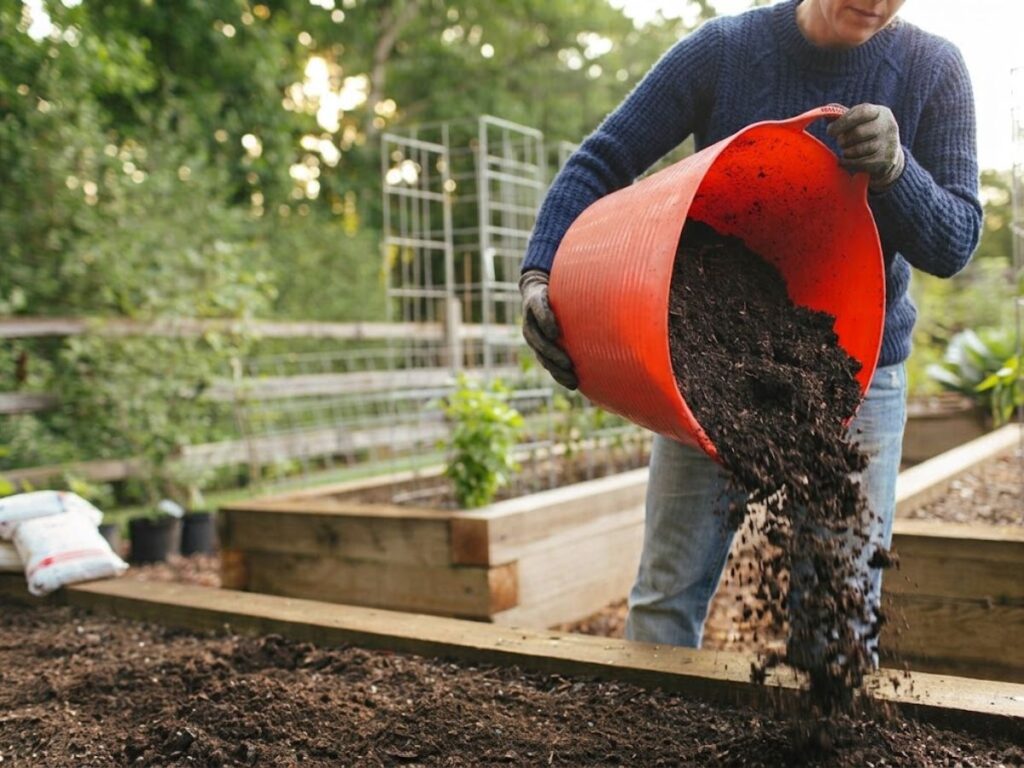
Yes, you can, and plenty of gardeners do, but with a couple of caveats. A 1- 2-inch layer of well-rotted compost spread on top of the soil works as a light mulch and feeds the soil at the same time. It’s especially good for vegetable gardens and annual flower beds where you’re replanting every year.
The trouble is that compost on its own does a mediocre job of the things proper mulch does well. It doesn’t suppress weeds as effectively because weed seeds love landing in it and growing like mad; it breaks down fast, so you need to top it up more often; and it doesn’t insulate the soil as well as a chunky mulch like bark or wood chips.
I usually use a layered approach: compost first (half an inch to an inch, worked in or spread), then a proper mulch on top (2 to 3 inches of bark, straw, or shredded leaves).
Compost or Mulch for a Vegetable Garden?
For vegetables, you need both. In early spring, dig 2 to 3 inches of compost into your beds before you plant anything. Vegetables are hungry, and most of them (tomatoes, squash, corn, brassicas) will burn through nutrients fast once they get going.
Once the plants are in the ground and the weather has warmed up, lay down 2 to 3 inches of straw, shredded leaves, or grass clippings as mulch. Straw is the classic choice for vegetable gardens because it’s cheap, easy to pull back when you need to plant or harvest, and breaks down into lovely soil by the end of the season.
For really hungry crops, add some compost every month or so during the growing season. Pull back the straw, sprinkle a thin layer of compost around the plant base, water it in, and put the straw back.
Tomatoes in particular respond well with more fruit and healthier foliage.
Here’s a quick comparison for the beds I plant most years:
| Crop | Compost at planting | Side-dress with compost? | Mulch |
|---|---|---|---|
| Tomatoes | 2 inches, dug in | Every 4 weeks | 2-3 inches straw |
| Lettuce and greens | 1 inch, dug in | No, they’re quick crops | 1-2 inches shredded leaves |
| Peppers | 2 inches, dug in | Every 6 weeks | 2-3 inches straw |
| Squash and zucchini | 2-3 inches, dug in | Every 4 weeks | 3 inches straw |
| Beans and peas | 1 inch, dug in | No, they make their own nitrogen | 2 inches straw |
| Garlic and onions | 1-2 inches, dug in | No | 2 inches straw |
Common Mistakes With Mulch and Compost
The biggest mulching mistake is using fresh wood chips around vegetables or young plants. Only wood chips mixed into the soil can cause a nitrogen deficiency.
Let wood chips age for at least 6 months before using them around anything delicate, or stick to using them on paths and around established trees and shrubs where it doesn’t matter as much.
Using unfinished compost is another common one. Spreading half-done compost on your beds pulls nitrogen from the soil while it finishes breaking down, and you’ll see your plants go yellow.
Adding too much mulch is another common mistake, especially around trees. Anything more than 3 inches starts to smother the roots and can create a hidden damp layer that invites fungal problems.
And lastly, using landscape fabric under mulch for weed control, but after a season or two, the mulch breaks down on top of the fabric and weeds start growing in that layer anyway.
FAQs About Mulch and Compost
What’s the difference between mulch and compost?
The difference between mulch and compost comes down to where they go and what they do: compost is decomposed organic matter worked into the soil to feed plants and improve its structure, while mulch is a protective layer spread on top of the soil to lock in moisture, suppress weeds, and even out temperature swings.
When should I use compost in the garden?
Use compost in the garden in spring before you plant and again in fall after everything has died back, forking an inch or two into the top 6 inches of soil. You can also side-dress hungry plants like tomatoes and squash with a half-inch layer every 4 to 6 weeks during the growing season.
When should I lay fresh mulch?
The best time to lay fresh mulch is late spring, once the soil has warmed to at least 60°F and your transplants are settled. A second mulching in fall is worth doing for perennials and shrubs, since it keeps the soil temperature steady through freeze-thaw cycles.
What’s the biggest mistake people make with mulch?
The biggest mistake people make with mulch is piling fresh wood chips against young plants or straight up the trunk of a tree, which traps moisture against the bark and invites rot, pests, and disease. Keep mulch pulled back a couple of inches from the base of every plant, and never go deeper than 3 inches.
How do I know when my compost is ready to use?
You know your compost is ready to use when it is dark, crumbly, and smells like a forest floor, with no recognizable chunks of eggshell, orange peel, or vegetable scraps left in it. If you can still spot what went in, give the pile another month or two before you spread it.
Disclaimer: This article is for general information only and is not professional advice. It may contain affiliate links. Please see our full Editorial Policy for details.
Become a Lifestyle Library Insider
Health tips, money know-how, travel deals and garden ideas for life after 50, straight to your inbox.

Kylie Lang is a nationally syndicated travel journalist with bylines on the Associated Press Wire & more, a lifestyle writer, and the founder and editor of Your Lifestyle Library (yourlifestylelibrary.com). She holds a BA (Honours) in History from the University of Kent and is a member of the British Guild of Travel Writers.