
Years ago, when we first moved to our house in southwest France, I bought three lavender plants from the market in town, dragged them home in the trunk of the car, and tucked them into a shady bed at the side of the house because that’s where I happened to have space.
They were beautiful for about six weeks. Then they sulked, went leggy, stopped flowering, and gave up entirely. I felt like the world’s worst gardener, because everyone knows lavender is easy, right?
Well, lavender is easy. In the right spot. Which, as it turns out, is not a damp shady bed against a north-facing wall, no matter how nicely it might fit the design I had in my head.
I’ve made this mistake more times than I’d like to admit, and I see other people make it constantly, because the plant labels at the garden center say things like “full sun” and “partial shade”.
So let’s talk about what those words actually mean when you’re standing in your own backyard trying to work out where the rosemary should go.
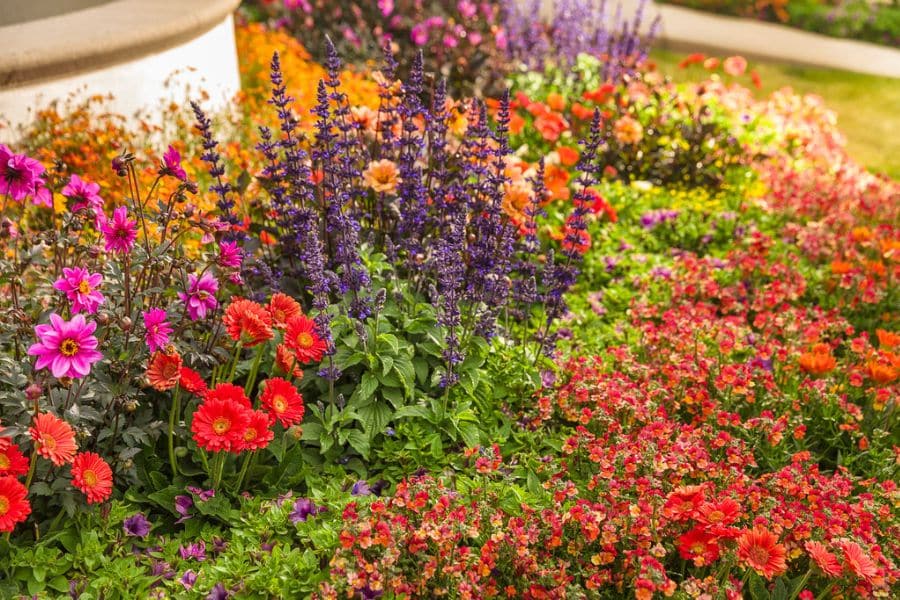
What “Full Sun” Actually Means When You’re Standing in Your Yard
Full sun, on a plant label, means six or more hours of direct sunlight a day. That’s the rule of thumb every nursery uses. Simple enough, right?
Yes, until you try to apply it to a real spot in a real yard with a real fence and a real apple tree casting a real shadow that moves around all day.
I used to think the sunny corner of our garden was full sun because it looked bright and cheerful when I walked past it with my coffee in the morning. Turns out it gets blazing sun from about 8 am until 11, then the big walnut tree next door shades it for the rest of the afternoon, which is roughly three hours of direct light. Not full sun. Not even close.
The trick is to actually watch a spot over the course of a day before you plant anything in it. Pick a sunny day, set a reminder on your phone, and go look at the bed every couple of hours. Morning, midday, mid-afternoon, early evening.
Note what’s in the sun and what’s in the shade each time. You’ll learn more in one day of watching than you will from any plant label.
And remember, not all sun is equal. Morning sun is gentler; afternoon sun, especially from around 1 pm to 5 pm in summer, is the hot, intense stuff that scorches leaves and bakes soil.
A plant that wants “full sun” generally wants some of that afternoon punch, not just a soft hour at breakfast time. So a bed that gets bright morning light and then shade from noon onwards isn’t really full sun, even if it ticks the six-hour box on paper.
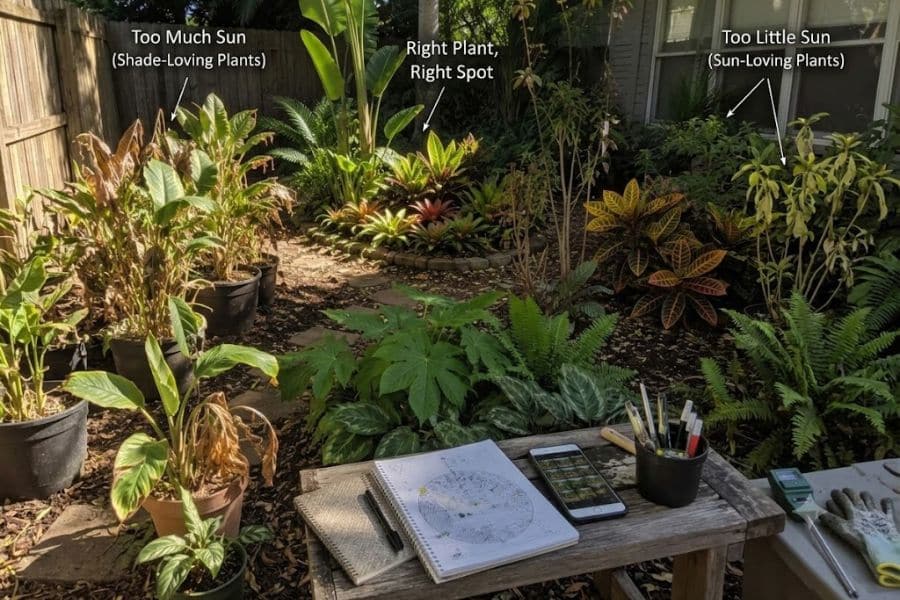
The Many Flavors of Shade (Because They’re Not All the Same)
Shade, believe it or not, comes in about four different flavors, and the plant that thrives in one will sulk in another. Dappled shade is the loveliest kind, the sort you get under a tree with smallish leaves where sun filters through in patches all day. Ferns and Foxgloves love it, and most woodland plants love it.
My grandma’s secret garden was mostly dappled shade, and you could basically throw seeds at it, and they’d grow.
Then there’s partial shade, which usually means a spot that gets three or four hours of direct sun and shade the rest of the time. This is where most of the “part sun, part shade” plants want to live, and it’s also where you have the most flexibility, because loads of plants tolerate it. Hostas, hellebores, hardy geraniums, astilbe, and even some roses if the few hours of sun are good ones.
Deep shade is the tricky one. That’s the north side of the house where the sun basically never hits, or under a dense evergreen, or that corner between the shed and the fence. Very few flowering plants will be happy there, and the ones that are tend to be the workhorses: ivy, certain ferns, some hostas, sweet woodruff, and pulmonaria.
And then there’s dry shade, which is deep shade plus tree roots sucking all the moisture out of the soil, and it’s the hardest spot in any yard. If you have it, lower your expectations and reach for epimedium or hardy ferns. I’ve buried too many hopeful little plants in dry shade to pretend otherwise.
The Lavender, the Fern, and What Finally Clicked
Back to my dead lavender. The problem wasn’t that I’d bought bad plants or that I’d watered them wrong or any of the things I initially blamed myself for.
The problem was that lavender comes from the hills of the Mediterranean, where it grows in stony, dry, sun-baked soil with no shade at all, and I’d planted it in damp shade against a cold wall. I might as well have planted a cactus in a pond.
The plant was telling me, in the only way it knew how, that it was in completely the wrong place, and instead of moving it, I just kept watering it and hoping.
Meanwhile, in a different bed, I’d been trying to grow roses for two years. The roses kept getting black spot and looking miserable, because that bed sat in shade for most of the afternoon and never properly dried out.
On a whim one spring, I dug up the saddest rose and stuck a fern in its place. That fern is still there 5 years later, twice the size it was when it started, throwing out new fronds every spring. The roses, once I moved them to a sunny spot near the front gate, perked up and started flowering properly within a season.
Plants have evolved to live in specific conditions, and when you put them somewhere their conditions don’t exist, they do their best for a while, and then they pack it in. It’s nothing personal. They simply can’t photosynthesize properly, or their roots are rotting, or the sun is frying them, and no amount of fertilizer or pep talks will fix it.
Move them, or replace them with something that wants what that spot is offering.
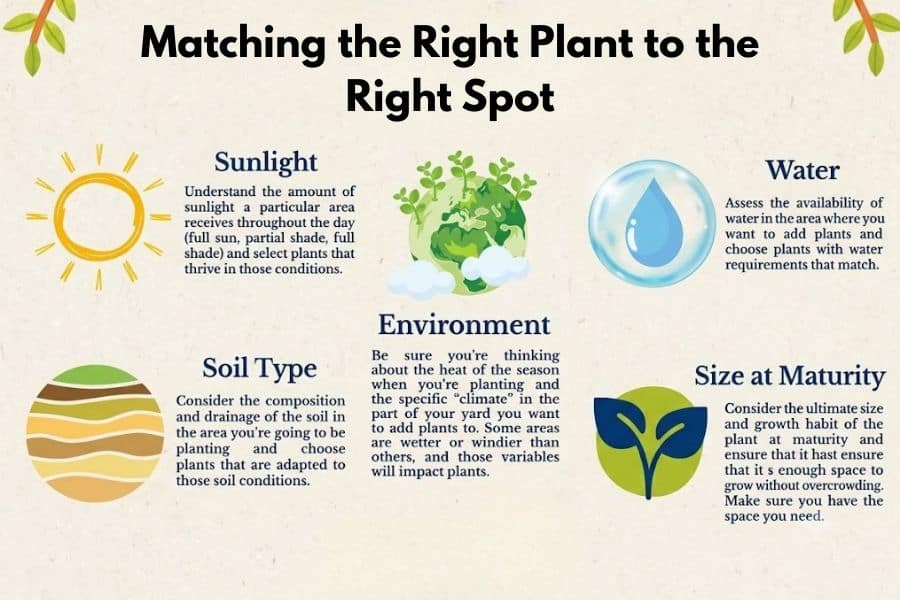
How to Read Your Yard Before You Buy Another Plant
These days, before I bring anything home from the garden center, I’ll stand there with my coffee, look at where the shadows fall, think about what’s overhead, what’s nearby, whether the soil is dry or boggy, and whether the wind hits that corner.
It takes 5 minutes and saves me from so many bad purchases. If I’m honest, half my gardening successes now come from just not buying the wrong plant in the first place.
The other thing I do is think about the spot across the seasons, not just the day I’m looking at it. A bed under a deciduous tree is full sun in March before the leaves come out, dappled shade by May, and proper shade by July. That’s why spring bulbs do so well under trees; they get their burst of sunlight before the canopy fills in.
If you plant something there that wants full sun all summer, it’ll have a great April and a miserable August.
Here are the things I now check before anything goes in the ground:
- How many hours of direct sun does the spot actually get, and at what time of day. Morning sun and afternoon sun behave very differently, and I’d rather have a plant in three hours of good afternoon sun than six hours of weak morning light if it’s something heat-loving like a tomato or a salvia.
- What’s the soil doing? Does water sit there after rain, or does it drain away fast? I learned to dig a small hole, pour in a jug of water, and see how long it takes to vanish. If it’s still sitting there 20 minutes later, you’ve got drainage problems, and Mediterranean herbs will hate it.
- What’s overhead and around? A bed near a wall behaves differently from one with an open border because the wall reflects heat and provides shelter from wind. A spot under a tree is competing for water and nutrients with roots you can’t see. None of this shows up on a plant label, but it’s everything to how a plant will actually grow.
- What direction the spot faces. South-facing is the hot, sunny side in the Northern Hemisphere. North-facing is the shady, cool one. East gets morning sun and afternoon shade. West gets the afternoon scorch. I keep this in my head now whenever I’m picking a plant, and it’s saved me a lot of money.
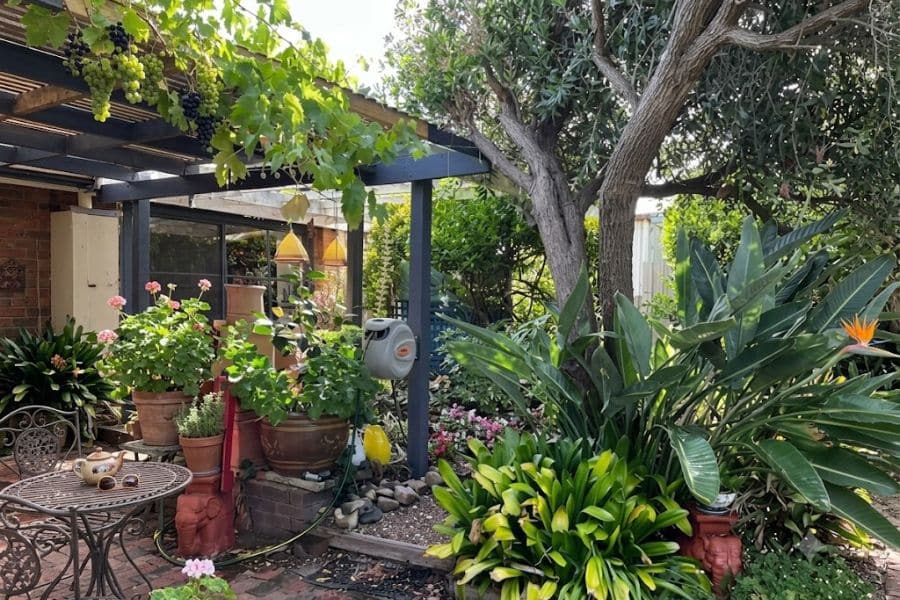
When You’ve Already Got It Wrong (Which You Will, Sometimes)
Even with all the watching and checking, I still get it wrong sometimes, because gardens change. A tree grows bigger, and suddenly the sunny bed isn’t sunny anymore. A neighbor takes down a fence, and the sheltered corner becomes a wind tunnel.
A plant that was fine for three years quite suddenly isn’t. So part of this whole business is accepting that you’ll plant things in the wrong spot, notice they’re unhappy, and need to move them. That’s a normal part of gardening, not a failure.
The signs a plant is in the wrong light are usually pretty obvious once you know what to look for. Too much sun shows up as scorched, brown, crispy leaf edges, flowers that fade fast, wilting even when the soil is wet, or pale, washed-out foliage.
Too little sun shows up as leggy, stretched-out growth where the plant reaches toward whatever light it can find, fewer flowers or none at all, yellowing lower leaves, and a general air of giving up.
If you see those signs, the plant is telling you something, and you can either move it in the fall or early spring when it’s dormant, or replace it with something better suited.
I’ve moved plants three or four times before finding the right home for them, and they’ve forgiven me every time. Roses, in particular, are tougher than people think and will tolerate being shifted around if you do it when they’re not actively flowering.
Perennials generally bounce back from a move within a season. Even shrubs can be relocated if you’re careful with the root ball and water them well afterward.
So if you’re standing in front of a sad plant right now, wondering whether to give up on it, the answer is probably to dig it up and put it somewhere else before you write it off entirely.
The fern that took over from my failed roses is still throwing out new fronds every June, and the roses, three beds over, are covered in flowers as I write this. Both of them just needed the right spot.