
Cinnamon isn’t the first spice that comes to mind when you’re looking at lowering cholesterol, but it’s the one dietitians recommend.
But they’re quick to say that while it helps, it’s not a replacement for medication or bigger diet changes in your daily routine. So they’re covering all bases here.
What is interesting is that it’s less about whether it works and more about how much you need, which kind to buy, and the easiest ways to add it to food you already eat.
Is Cinnamon Good for Lowering Cholesterol?
The best evidence comes from studies that pool lots of smaller trials together. A 2020 meta-analysis of 16 trials covering just over 1,000 people with type 2 diabetes found cinnamon lowered total cholesterol by about 14 mg/dL, LDL (“bad”) cholesterol by about 6 mg/dL, and triglycerides by about 26 mg/dL. HDL, the “good” one, didn’t budge.
It’s also worth knowing these were people with diabetes, mostly taking cinnamon as a supplement, not someone sprinkling a bit on their oatmeal.
So how does it work? Nobody’s completely sure. Cinnamon contains compounds called cinnamaldehyde and cinnamic acid, plus antioxidants like catechins and procyanidins, and they seem to affect how the body handles blood sugar.
High blood sugar and high cholesterol tend to go together, so when one improves, the other often follows.
In that meta-analysis, the shorter trials, the ones under two months, actually showed bigger drops than the longer ones. So don’t assume more time automatically means more benefit.
How Much Cinnamon to Lower Cholesterol?
Most of the trials used somewhere between 1 and 6 grams a day, often in capsules. In supplements, that’s 1.5 to 4 grams, which is roughly ¾ to 2 teaspoons.
For everyday cooking, a quarter to one teaspoon of ground cinnamon a day is considered safe for most people.
This is where the type of cinnamon you buy matters. Most supermarket cinnamon is cassia, which is darker, stronger, and cheaper.
Ceylon, often called “true” cinnamon, comes mainly from Sri Lanka and is paler, more delicate, and pricier. The big difference is coumarin.
Cassia has a lot more of it, and the NIH’s National Center for Complementary and Integrative Health links coumarin to liver problems. The amount in everyday cooking usually doesn’t cause trouble, but if you plan to use cinnamon daily, Ceylon is the safer bet.
| Form | Realistic daily amount | Notes |
| Ground cassia cinnamon | ¼ to 1 teaspoon | Common supermarket type; higher in coumarin |
| Ground Ceylon cinnamon | ¼ to 1 teaspoon | Lower in coumarin; better for daily use |
| Cinnamon capsules or extracts | Only with a doctor’s okay | Easy to overdo; interactions possible |
Found this useful? Get more like it in your inbox as a Lifestyle Library Insider.
Why Dietitians Still Recommend Cinnamon
If the effect is so small, why do dietitians keep naming it? Partly because high cholesterol and high blood sugar so often go hand in hand, and cinnamon has been shown to help lower blood sugar in people with diabetes. And partly because it’s an easy swap.
Swapping cinnamon for some of the sugar, salt, or fat in a recipe is a small change that adds up over time.
What it won’t do is replace a statin or make up for the rest of your diet.
Registered dietitian nutritionist Renee Korczak says: “It’s difficult to say that certain spices lower cholesterol levels completely, as the research is a bit inconsistent due to different study designs, populations studied, and amount or form of spice.”
Simple Ways to Add Cinnamon to Meals You Already Cook
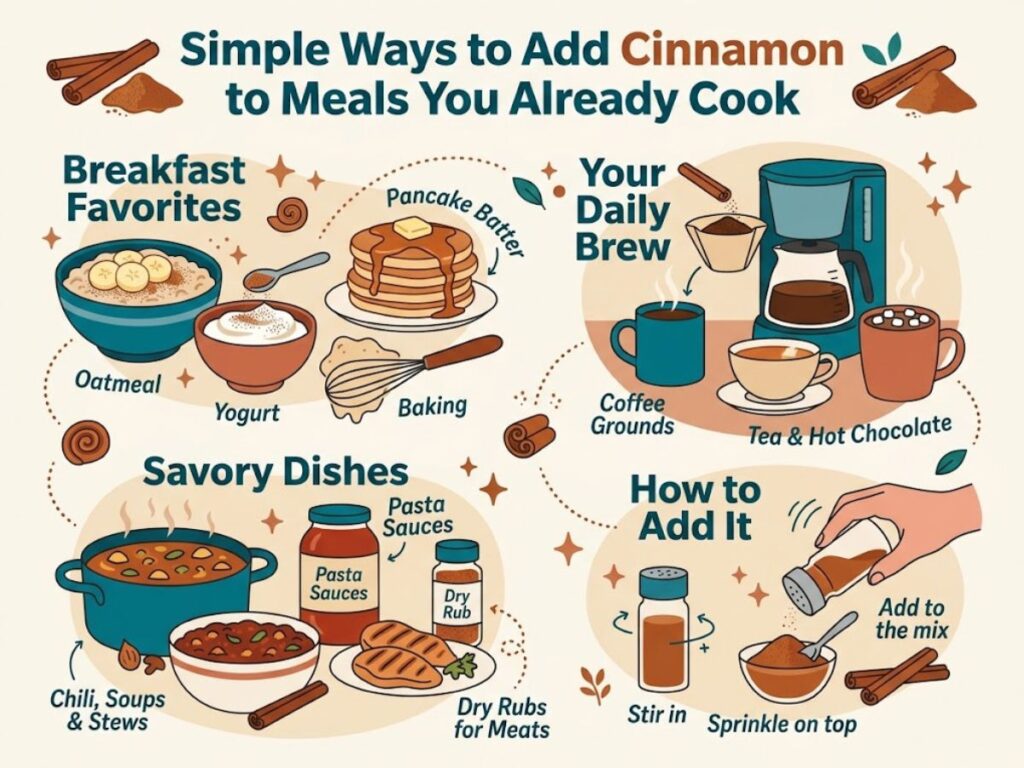
Registered dietitian Jordan Hill suggests you “add cinnamon when baking, to coffee grounds before brewing, in pancake batter or sprinkled in Greek yogurt.”
Oatmeal is another easy way to add it. Simply stir the cinnamon in while the oats cook. Oats are full of soluble fiber, which is one of the things that really does help lower LDL, so you’re doubling up.
And don’t forget savory food. Cinnamon adds an earthy depth to chili, soups, stews, and pasta sauces, and it takes the edge off spicy heat. It works in a dry rub for pork, beef, or chicken too.
Prefer a drink? A pinch in tea or hot chocolate does the trick, or go for chai, which already has cinnamon in it.
Who Should Be Careful With Cinnamon?
For most people, cinnamon in normal food amounts is safe. Things change if you start taking more, especially as a supplement. Cinnamon can lower blood sugar, so if you take diabetes medication or medication for cholesterol, talk to your doctor first.
The NCCIH also advises anyone on any medication to check with their healthcare provider before using cinnamon or other herbal products, because some herbs and medicines don’t mix.
Then there’s coumarin. According to the NCCIH, long-term use of cassia could be a problem for sensitive people, such as those with liver disease. If that’s you, or you’re planning to have cinnamon every day, stick to Ceylon.
If you’re pregnant, stick to food amounts, as larger amounts of Ceylon aren’t considered safe during pregnancy.
The Whole Diet Beats Any Single Spice
Individually, most things don’t move the needle, but as part of an overall diet plan, you can make the biggest difference.
Oats, barley, beans, lentils, apples, pears, and psyllium husk all contain fiber that binds cholesterol in the gut and removes it from circulation. Twenty-five to 30 grams of total fiber a day, with a good chunk of it soluble, moves LDL in the right direction.
The Mediterranean diet, with lots of plants, olive oil, fish, less red meat, and less ultra-processed food, still has the best track record for cardiovascular numbers.
Movement and weight are the other two big levers. Thirty minutes of brisk walking most days, plus some strength work twice a week, does more for your cholesterol than any spice will.
So yes, use cinnamon. Think of it as a helpful extra rather than a super spice that will change your life, and choose Ceylon if you plan to make it a daily habit.
Frequently Asked Questions
Does Turmeric Lower Cholesterol?
Turmeric can help to lower cholesterol a little. Its active compound, curcumin, has been linked to lower cholesterol in people at risk of heart disease, according to Cleveland Clinic, though more research is needed on how much and what type works.
How Much Garlic Do You Need to Lower Cholesterol?
The amount of garlic you need to lower cholesterol is around half a clove to one clove a day. However, a 2013 analysis of 39 trials of garlic preparations found the effect only showed up in people with raised cholesterol who took garlic for more than two months. In that group, total cholesterol fell by about 17 mg/dL and LDL by about 9 mg/dL. Cooking with fresh garlic most days is an easy way to get some in.
What Foods Lower Cholesterol Fast?
The foods that lower cholesterol fastest are oats and barley, beans and lentils, nuts like almonds and walnuts, oily fish like salmon and sardines, avocados, and olive oil. None of them work overnight, though.
About this article: Our health articles are based on published studies and advice from experts such as physiotherapists and dietitians, and the sources are linked in the article.
Disclaimer: The content in this article is for informational purposes only and is not intended to replace professional medical advice, diagnosis, or treatment. Always consult your doctor or healthcare provider before making changes to your diet, supplements, medication, or health routine. This article may contain affiliate links.
Become a Lifestyle Library Insider
Health tips, money know-how, travel deals and garden ideas for life after 50, straight to your inbox.

Kylie Lang is a nationally syndicated travel journalist with bylines on the Associated Press Wire & more, a lifestyle writer, and the founder and editor of Your Lifestyle Library (yourlifestylelibrary.com). She holds a BA (Honours) in History from the University of Kent and is a member of the British Guild of Travel Writers.