
I’ve often wondered how people in my parents’ generation manage to live well into their late 80s. For context, my mom is 89, so she grew up during the war and the rationing. There were no fast food chains, sugar and sweets were hard to get, and food in general was scarce.
Add to this the fact that nobody went to the gym or had extensive knowledge of health and fitness; it makes you wonder if they knew something we didn’t. My mom’s approach to life has been this: “a little of everything does you good” and “don’t overindulge in any one thing”.
So how then is this age group living so long? I can tell you now: it’s not obsessing over the latest fitness fad; it’s far simpler, and it comes down to Mediterranean foods and something called the Blue Zone.

The Blue Zones and Mediterranean Foods
Now my mom doesn’t live in a Blue Zone, but she follows a similar diet. The term Blue Zone came from demographer Michel Poulain and physician Gianni Pes, who first mapped the mountain villages of Sardinia where men were reaching 100 at rates nobody could explain.
Journalist Dan Buettner picked up the work and extended it to four more regions: two in the Mediterranean and three further afield.
The Mediterranean pair, Ikaria and Sardinia’s Ogliastra, share a consistent way of eating, even though the islands are hundreds of miles apart.
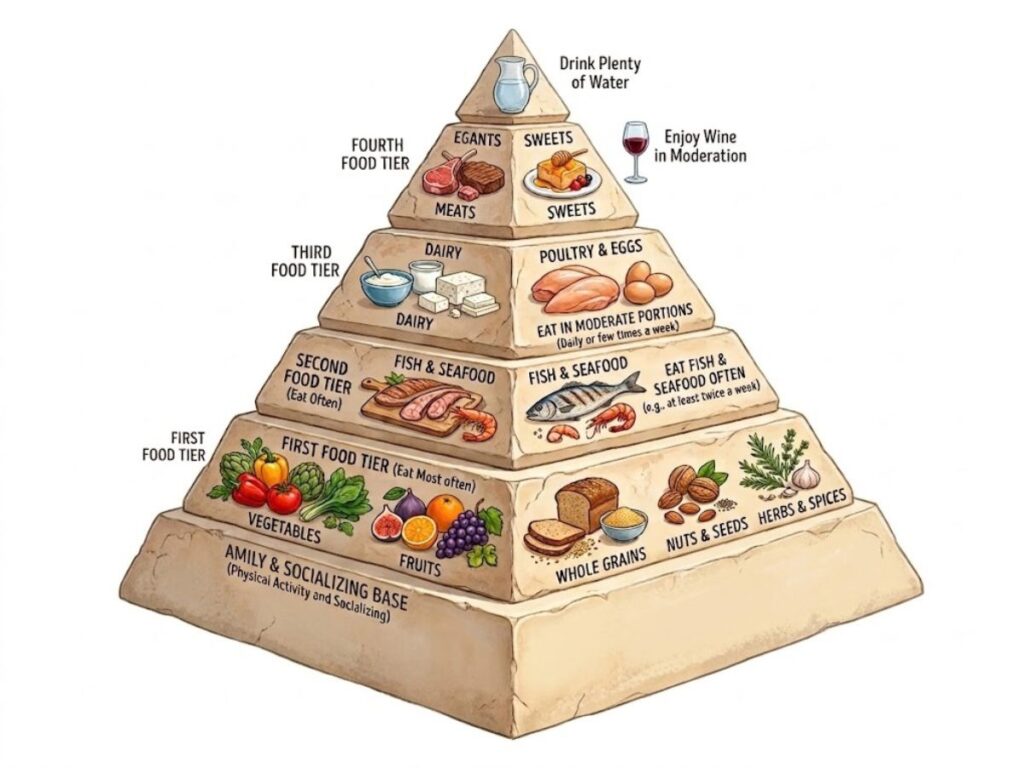
Both diets lean heavily on beans, greens, whole grains, olive oil, herbs, a little cheese, a little wine and very little meat. Fish appears a few times a week in Ikaria and less often in the Sardinian highlands, where the shepherds were traditionally further from the coast.
Meat is a Sunday food or a festival food, not a daily one.
What you don’t see much of is ultra-processed anything. No packaged snacks, no soda, no refined seed oils, no supermarket bread with a two-week shelf life.
The Mediterranean Foods Pyramid
Found this useful? Get more like it in your inbox as a Lifestyle Library Insider.
Beans, the Superfood for Longevity
If there’s one food that appears in every Blue Zone, Mediterranean or otherwise, it’s beans. In Sardinia it’s fava beans and chickpeas. In Ikaria it’s black-eyed peas, lentils and garbanzos.
A cup a day, cooked into soups, stews, and simple sides with olive oil, garlic, and whatever greens are around.
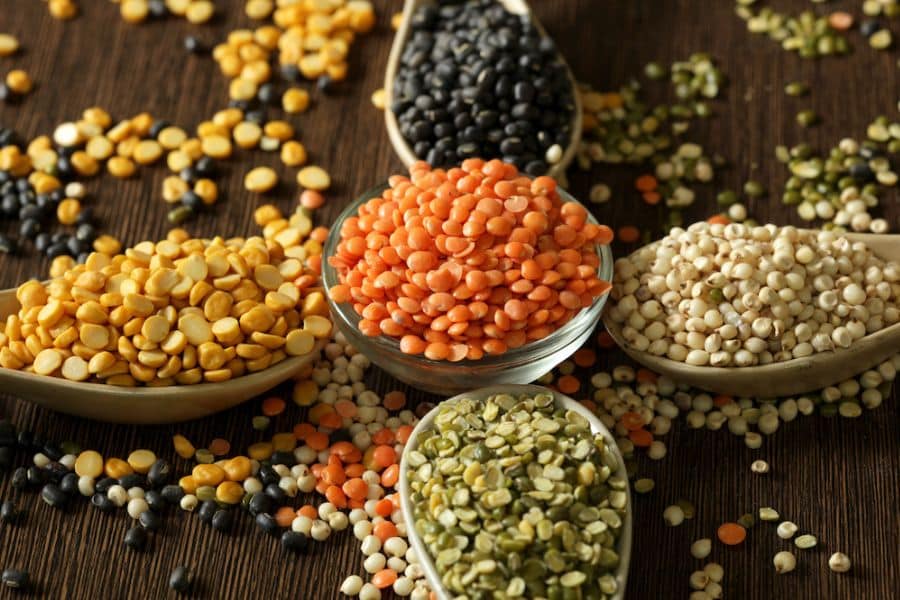
Beans are one of the cheapest sources of protein and fiber on the planet, and they come packaged with folate, magnesium, iron and potassium. The soluble fiber in beans feeds your gut bacteria and helps steady blood sugar.
Olive Oil, Greens and Herbs
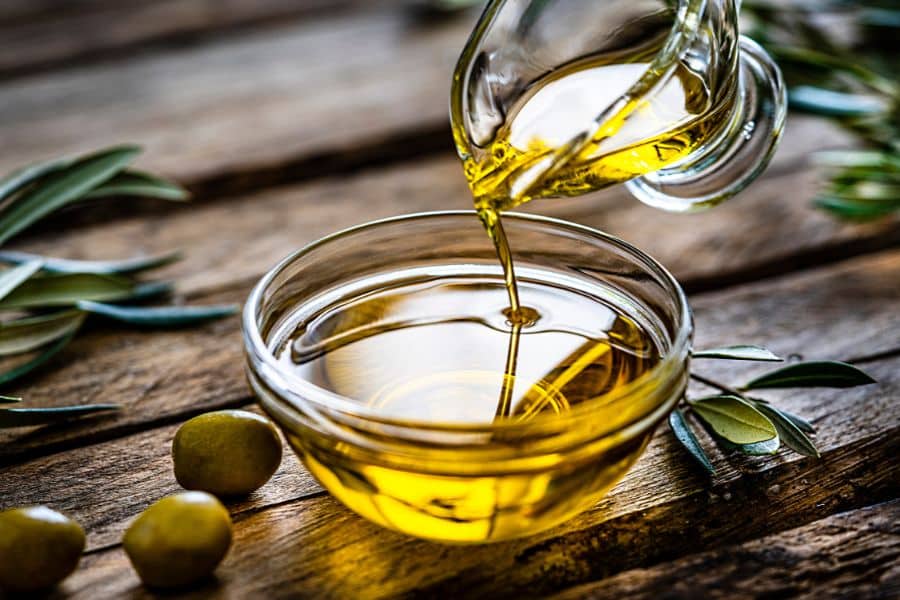
Extra virgin olive oil is the fat of choice across both Mediterranean Blue Zones. It’s the cooking oil, the salad dressing, the finishing oil, and it’s not used sparingly.
The polyphenols in good extra virgin olive oil, particularly oleocanthal, reduce inflammation in a way that has been compared to a low dose of ibuprofen in a study on oleocanthal.
Alongside the oil come the greens. Islanders forage more than 150 varieties of wild greens, called horta, that grow on the hillsides. Dandelion, purslane, wild fennel, chicory, amaranth, mustard greens.
They’re boiled or sautéed with olive oil and lemon and eaten as a side with almost every meal.
Most of us aren’t going to forage wild greens off a hillside, and that’s fine. Kale, chard, spinach, arugula, watercress and beet greens all belong to the same family and do the same job.
Cook a big pan of greens in olive oil and garlic twice a week. The oil and the greens help you absorb the fat-soluble vitamins the greens carry.
Rosemary, sage, oregano, mint, thyme, and wild fennel go into almost everything cooked in these regions. Rosemary and sage carry rosmarinic and carnosic acids, and Ikarians drink herbal teas made from wild sage and marjoram daily, which have a mild blood-pressure-lowering effect.
Whole Grains, Sourdough and Real Bread
Bread in Sardinia isn’t the fluffy white supermarket loaf. Traditional Sardinian bread includes carasau, a paper-thin flatbread made from durum wheat, and moddizzosu, a dense sourdough that keeps for days.
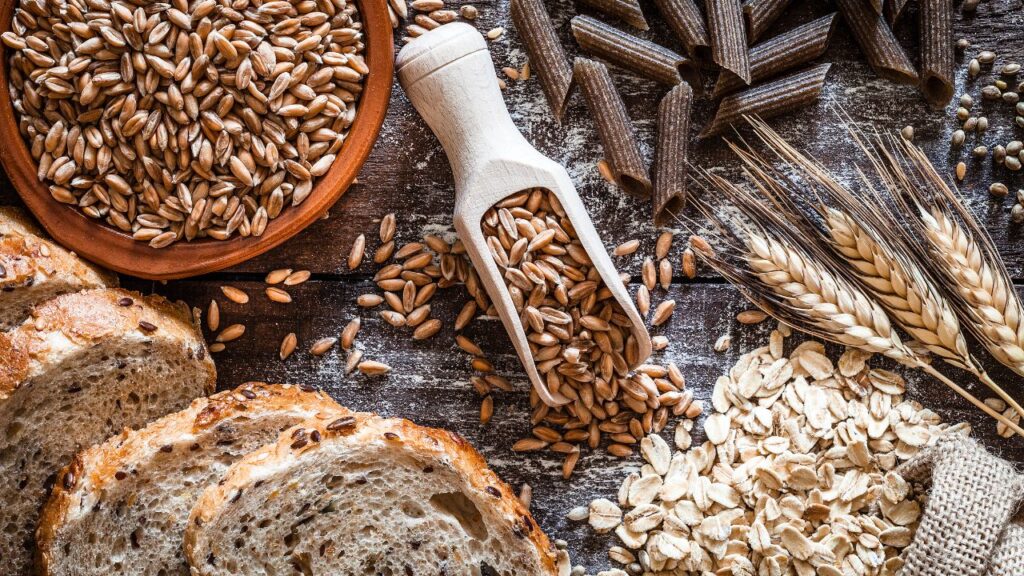
Ikarian bread is also typically sourdough, made from whole-grain wheat, barley, or rye and fermented slowly. Sourdough breaks down some of the gluten and phytates in the flour, which makes the minerals more available and the bread easier on your digestion.
It also lowers the glycemic response compared with commercial bread, so you don’t get the blood sugar spike and crash that comes with a slice of soft white sandwich loaf.
Barley is another unsung hero in the Sardinian diet, and you’ll find it in soups and porridges. It’s rich in beta-glucan, the same soluble fiber found in oats that helps lower cholesterol and slow glucose absorption.
Nuts, Fish and a Very Small Amount of Cheese
A small handful of nuts a day is part of the Mediterranean diet, typically almonds and walnuts, eaten as a snack or tossed into salads and stews.
In a Harvard study following more than 100,000 people over 30 years, those eating nuts seven or more times a week had a 20% lower death rate than those who never ate them.
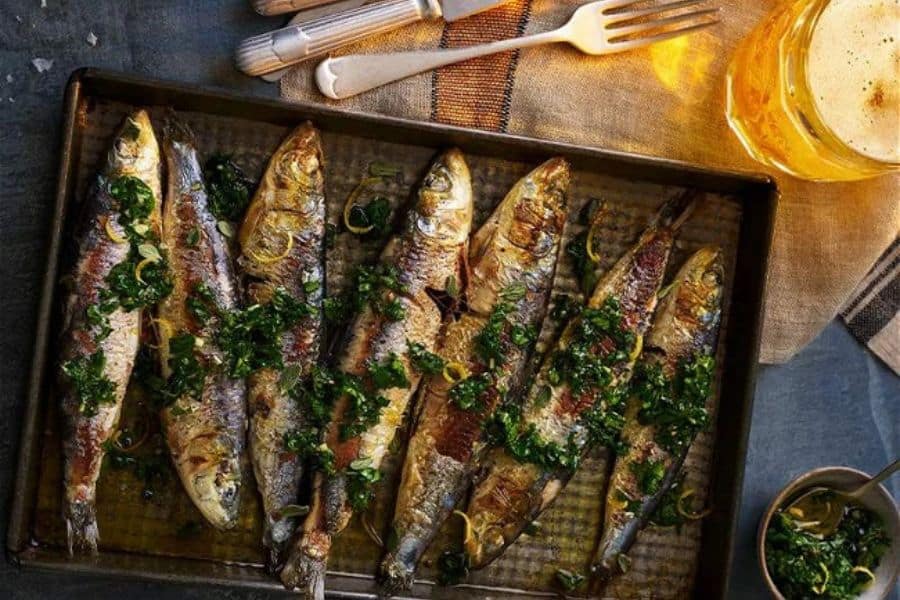
Fish appears a few times a week in Ikaria, mostly small oily fish like sardines, anchovies and mackerel. These sit at the bottom of the food chain, so they carry less mercury than tuna or swordfish, and they’re loaded with omega-3s, vitamin D and B12.
A tin of sardines on sourdough toast with a squeeze of lemon and a slick of olive oil is about as Blue Zone as a lunch gets, and it’s really tasty, too.
This is the bit where I struggle as I have cheese for lunch nearly every day, and although they do eat cheese, it’s only in modest amounts. Sardinian shepherds eat pecorino made from grass-fed sheep’s milk, which has more omega-3 fatty acids than cheese made from grain-fed cows.
A shaving over pasta or beans, not a whole wedge on a crusty French baguette as I have.
Wine, Coffee and What They Drink With Meals
Sardinian men drink one to three small glasses of Cannonau wine most days, usually with meals and with company. Cannonau is the local name for grenache, and the grape has an unusually high concentration of polyphenols, two to three times that of most other red wines.
The polyphenols are plant compounds that reduce inflammation and help protect blood vessels.
The key word here is small, not a great big glass that holds almost half a bottle.
A Sardinian glass is nothing like a generous American pour, and the wine is always drunk with food and never alone at the end of a hard day.
Ikarians drink herbal teas throughout the day, made from whatever’s growing nearby: wild sage, rosemary, oregano, mint, dandelion. Coffee is taken Greek-style, small and strong, and often at a café with a friend. Water is drunk between meals rather than during them, and soda barely exists.
Disclaimer: This article is for general information only and is not professional advice. It may contain affiliate links. Please see our full Editorial Policy for details.
Become a Lifestyle Library Insider
Health tips, money know-how, travel deals and garden ideas for life after 50, straight to your inbox.

Kylie Lang is a nationally syndicated travel journalist with bylines on the Associated Press Wire & more, a lifestyle writer, and the founder and editor of Your Lifestyle Library (yourlifestylelibrary.com). She holds a BA (Honours) in History from the University of Kent and is a member of the British Guild of Travel Writers.