
So many people start gardening with buckets of enthusiasm, only to lose interest before their first tomato has had a chance to appear. I get it. I’ve had a few false gardening starts myself, and yes, the appeal wore off pretty fast because I had no instant, or nearly instant gratification to keep me going.
Plus, I was traveling a lot back then, so most of my plants and vegetables gave up the will to live and died an early death. Luckily, I wasn’t permanently deterred on my gardening journey, and I learned that not every vegetable demands a daily commitment.
In fact, there are plenty that need little care once you’ve got them in the ground and planted them properly. I have to say, these are my kind of plants. Although I do now spend quite a lot of time in the garden, there’s only one of me. My husband flatly refuses to garden.
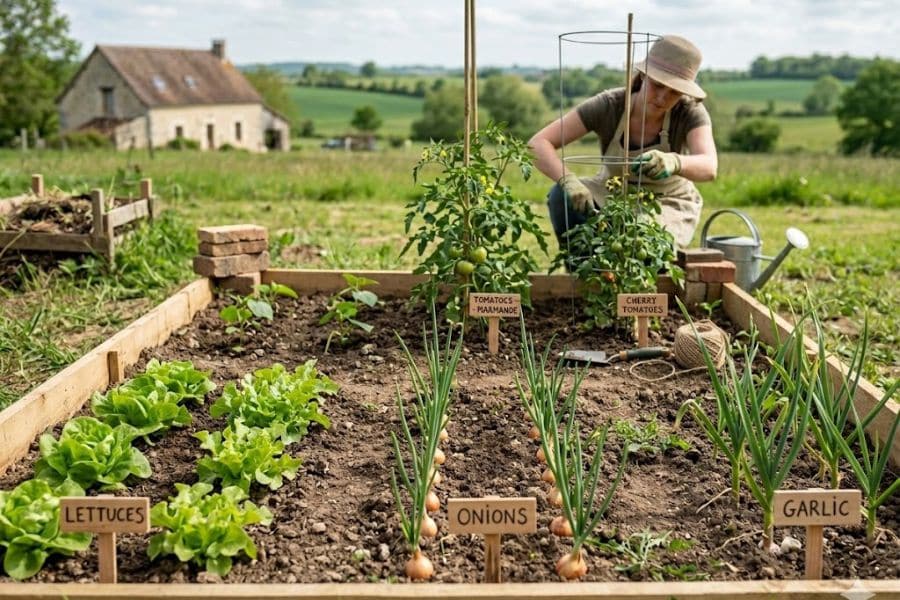
The Best Vegetables for Lazy or New Gardeners
Let’s get one thing straight. I’m not giving you a cheat’s version to gardening or promising you a market garden by August. What I am promising is that these ten vegetables will give you something to harvest without needing you to hover over them with a watering can every evening. Some of them you literally can almost plant and walk away. Others need a small bit of attention now and then, but nothing that’s going to eat into your weekend.
Most of them grow happily in raised beds, pots on a patio, or straight into the ground if you’ve got the space. So even if you don’t have a garden as such, you’ve got options.
1. Radishes
If you need a quick win, radishes are your best friend. You can go from seed to salad in about four weeks, which is pretty close to instant gratification in the gardening world.
They don’t need much in the way of anything, really. A bit of loose soil, some sun, and water if it’s been dry for ages. You scatter the seeds, thin them out a little, and that’s basically the job done.
And if you’ve ever thought how tasteless radishes are when you get them from the grocery store, harvesting your own will change your mind. That peppery taste is to die for and so different from anything shop-bought.
2. Green Beans
Bush beans or pole beans, take your pick. Both are ridiculously easy to grow once the soil warms up, and they keep producing for weeks if you keep picking them. That’s the trick with beans: the more you harvest, the more they make. So even lazy gardeners get rewarded.
Pole beans need something to climb, which sounds like effort, but I just stick a few bamboo canes in the ground in a teepee shape and let them get on with it. Bush beans don’t even need that.
They’re also one of those plants that actually feed the soil as they grow, fixing nitrogen as they go. So you’re sort of gardening and improving the ground at the same time.
3. Zucchini
Or courgettes, if you’re on my side of the Atlantic. One or two plants will give you more zucchini than you know what to do with. It’s not unusual here in France to come home and find a basket of courgettes on your doorstep because the plants just keep cranking them out all summer.
They want sun, decent soil, and a good drink of water when it’s hot. That’s about it. You’ll get yellow flowers, then little zucchini, then suddenly you’re peeling one the size of a baseball bat because you didn’t check the plant for three days.
4. Lettuce
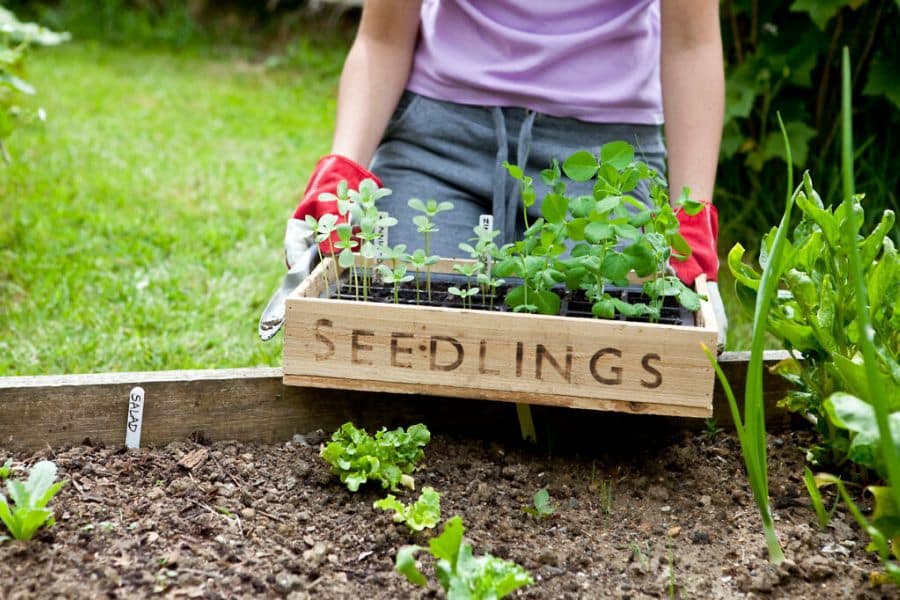
Cut-and-come-again lettuce is the dream for any salad lover. You sow a row of mixed leaves, wait a few weeks, and start snipping off what you need with scissors. The plant just keeps growing back.
Lettuce likes cooler weather, so spring and autumn are the sweet spots. In high summer, it doesn’t tend to do so well and can turn bitter. Annoying, but not the end of the world. You just sow another batch when it cools down.
I keep a long planter of mixed leaves right outside the kitchen door, and it’s saved me a fortune on those little bags of supermarket salad that go slimy after two days. Not to mention how much tastier and healthier it is.
5. Potatoes
They’re hidden in the ground for months, you forget about them entirely, and then you go out with a fork and pull up dinner. I pulled up my first potato on my Grandad’s allotment years ago and never forgot the wonder of pulling it out the ground.
You can grow them in big bags or containers if you don’t have space, which is what loads of people do now. You just need a sunny spot, some compost, and the seed potatoes themselves. You plant them, hill up soil around the stems as they grow, and that’s most of the work done.
6. Cherry Tomatoes
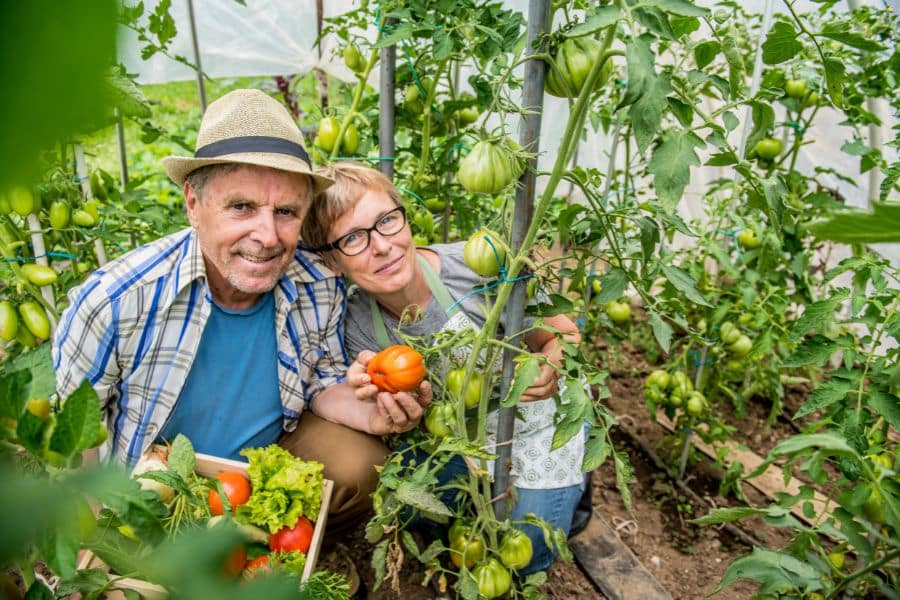
Full-sized tomatoes can be a bit of a diva to grow. Cherry tomatoes are much more forgiving, especially varieties like Sungold or Sweet Million. They’re happy in a pot on a sunny patio, they don’t sulk if you forget to water them once or twice, and they produce loads of fruit over a long season.
You’ll need to give them a stake or a cage to lean on, and a sunny spot is non-negotiable. Other than that, they more or less look after themselves. Pinch out the side shoots if you remember; don’t worry too much if you don’t.
I eat half of them straight off the plant before they ever make it to the kitchen, and I know I’ve already gone on about taste, but seriously, homegrown cherry tomatoes are out of this world.
7. Garlic
Being in France, garlic is non-negotiable as it’s in pretty much every meal apart from breakfast. Stick the cloves in the ground around October or November, point up, and walk away. By the following summer, you’re harvesting fat heads of garlic.
It doesn’t need much watering, doesn’t get bothered by many pests, and doesn’t ask for anything of you over winter. The leaves come up in spring, then the bulbs swell, then you pull them up when the tops start to brown.
Home-grown garlic has a punch to it that supermarket garlic just doesn’t. I now plant a whole bed of it every autumn without fail.
8. Spinach
Spinach is one of those crops that grows fast. Like lettuce, you can pick it as a cut-and-come-again, taking the outer leaves and letting the middle keep growing.
It prefers cooler weather, so spring and autumn sowings work best. In hot weather, it can taste a bit metallic, so I just don’t bother trying to grow it in the middle of summer.
Baby spinach leaves are great in salads, and the bigger leaves wilt down into pasta or a quick sauté with garlic and olive oil. Very versatile, very lazy-friendly.
9. Swiss Chard
Swiss chard is the opposite of lettuce and spinach, as it keeps going through pretty much anything. Heat, cold, neglect, it doesn’t really care. You plant it once, and it’ll feed you for months, sometimes right through to the next year if the winter is mild.
The leaves are similar to spinach in how you cook them, but the stems are thick and colorful, pink, yellow, red, and white, depending on the variety. So it actually looks really pretty in the garden too, which is a bonus.
You harvest the outer stems, and the plant just keeps sending up new ones. It’s one of the most generous things you can grow, in my experience. Not to mention a very healthy item to add to your weekly menu.
10. Onions
Onions from sets, which are basically tiny baby onions you push into the soil, are about as low-effort as it gets. You plant them in spring, ignore them apart from the odd weed, and dig them up in late summer when the tops flop over.
They don’t need much water, they don’t get too many pests, and they store for months once you’ve dried them out properly. So one planting session in spring gives you onions to use through autumn and winter.
I always grow red onions and a regular yellow variety together. The red ones are great sliced raw in a salad, and the yellow ones do everything else.