
There is no disputing the fact that Paris is gorgeous. The food is fabulous, the architecture stops you in your tracks, and Notre Dame is every bit as breathtaking as you’ve been told.
But it comes at a price. A serious one.
The average daily cost per person in Paris sits around $295. That’s accommodation, food, and getting around. For a week, you’re looking at close to $2,000 per person before you’ve bought a single souvenir or museum ticket.
The good news is that Paris isn’t the only city with all of the above. Europe is packed with capital cities that are just as rich in history, just as loaded with world-class art and culture, and significantly kinder to your bank account. Some of them actually outshine Paris in terms of history.
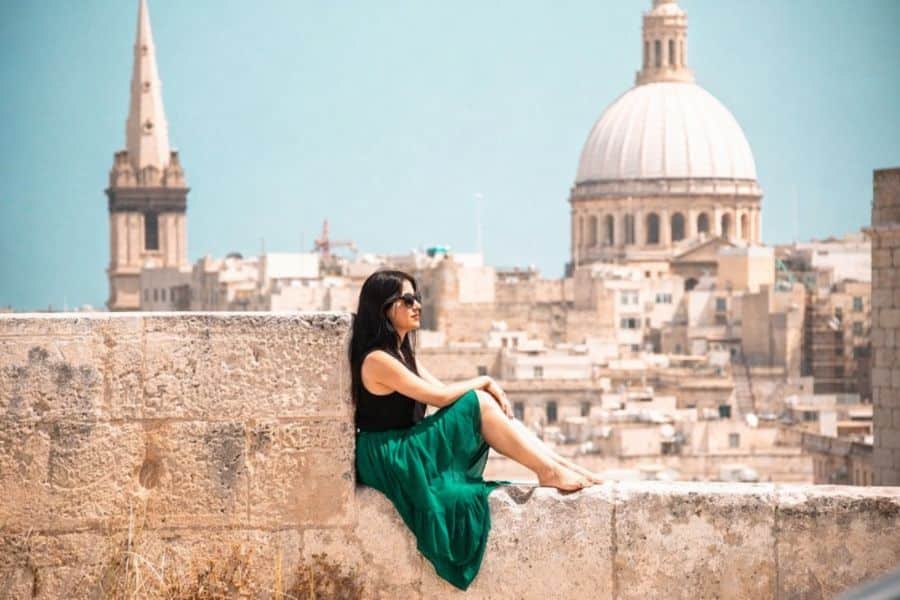
9 European Capital Cities More Affordable Than Paris
So if Paris has been on your bucket list but the cost keeps getting in the way, consider this your permission slip to rethink the plan. These nine cities are waiting. And we’re counting back from nine, so let’s see if you can guess which one comes in at #1.
No. 9 Vilnius, Lithuania

Daily costs in Vilnius are roughly 60% lower than in Paris. A good sit-down dinner with drinks costs around €15-€20 per person. Accommodation in the heart of the Old Town can be found for a fraction of what a Paris hotel would set you back.
But most Americans haven’t heard of Vilnius, Lithuania’s capital, which is such a shame, as it packs a serious punch on all levels. It sits in northeastern Europe, largely overlooked by the crowds of tourists who flood Prague and Krakow. Its Old Town is a UNESCO World Heritage Site, one of the largest and best-preserved medieval old towns in Northern Europe.
Vilnius was founded in the early 14th century, when Grand Duke Gediminas, according to legend, dreamed of an iron wolf howling on a hilltop and took it as a sign to build his capital. For the next two centuries, the Grand Duchy of Lithuania was one of the largest states in Europe, stretching from the Baltic to the Black Sea.
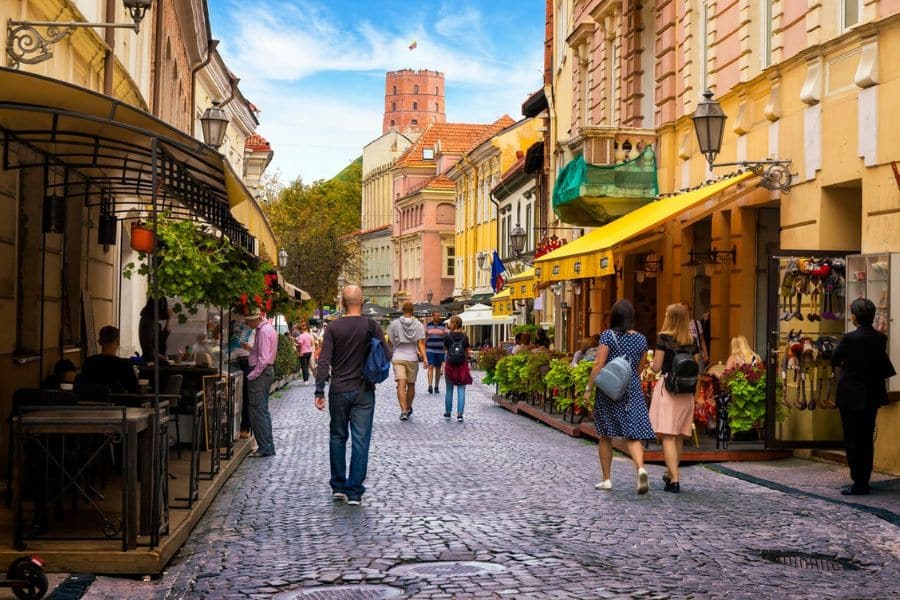
The city grew rich, attracting scholars, craftsmen, and traders from across the continent. Jewish scholars gave Vilnius the nickname “the Jerusalem of Lithuania” long before the 20th-century tragedies that devastated that community.
Napoleon passed through on his way to Moscow in 1812, and when his catastrophic retreat brought him back through months later, he reportedly wept at the suffering he saw. The 20th century brought Soviet occupation, Nazi occupation, and then Soviet occupation again, all of which left their marks on the city’s architecture, culture, and collective memory.
Top things to see and do:
- Vilnius Old Town, a tangle of medieval lanes, Baroque churches, and hidden courtyards
- Gediminas Tower, the surviving section of the Upper Castle, with panoramic views over the entire city and the rivers below
- The Gate of Dawn, a 16th-century city gate housing a revered icon of the Virgin Mary
- Trakai Island Castle, just 30 minutes from the city by train, is a red-brick medieval castle built on an island in a lake
- The KGB Museum (also called the Museum of Occupations and Freedom Fights), housed in the actual KGB building, where Lithuanians were imprisoned and executed
No. 8 Sofia, Bulgaria
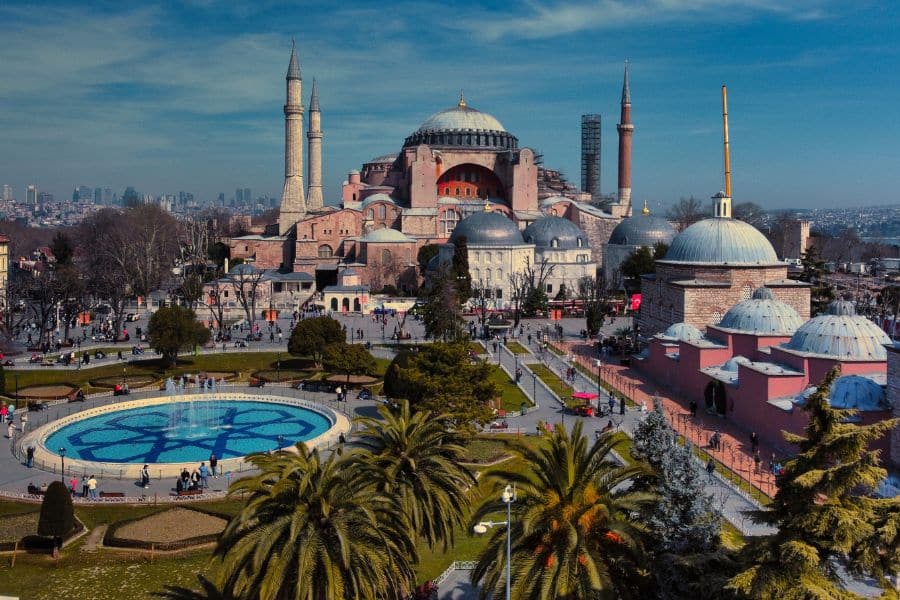
Sofia is genuinely one of the most affordable capitals in Europe. Museum entry rarely tops €5. A metro ride costs under €1. A full restaurant meal with drinks runs around €10 to €12. Paris costs roughly five times as much for the same day out.
Sofia has layer after layer of history, Roman, Byzantine, Ottoman, and Soviet. Bulgaria is one of Europe’s oldest nations, and its capital has been settled for more than 7,000 years. The Romans built the city of Serdica here in the 1st century AD, and it became one of the most important cities in the Roman Empire.
Emperor Constantine the Great was so fond of it that he apparently said, “Serdica is my Rome.” The Bulgarians established one of medieval Europe’s great empires here, and Bulgarian culture, including the Cyrillic alphabet, spread across the Slavic world from this city.
The Ottoman Empire held Sofia for nearly 500 years, from 1382 to 1878. What followed was the Bulgarian revival, the Russian liberation, the monarchy, Nazi occupation, decades of Soviet communism, and then the modern democratic capital you find today. All of that history is visible in the streets, the architecture, and the remarkable range of museums.
Top things to see and do:
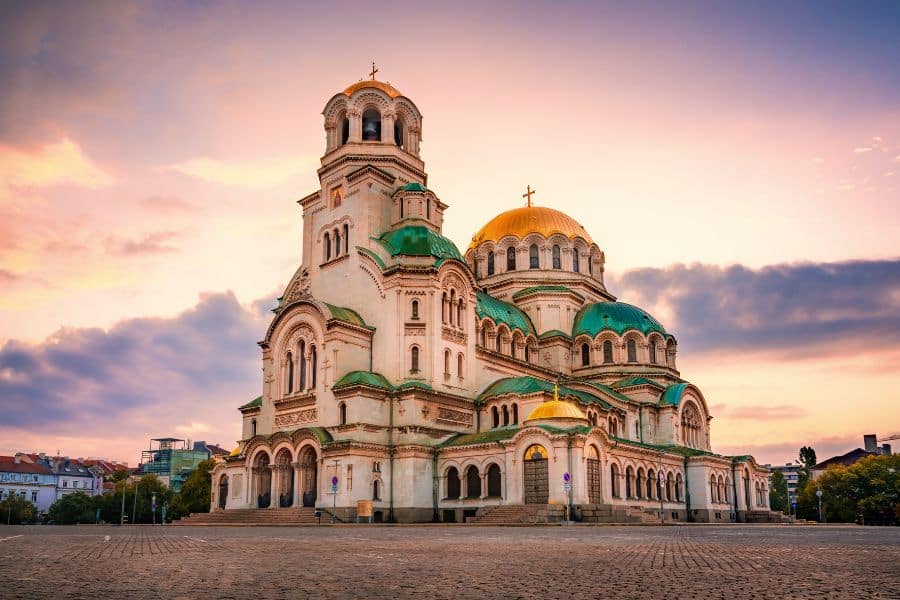
- Alexander Nevsky Cathedral, one of the largest Eastern Orthodox cathedrals in the world, with a free crypt gallery housing some of Bulgaria’s finest medieval icon paintings
- The National History Museum, holding over 650,000 artifacts, including astonishing Thracian gold and silver treasures that date back thousands of years
- Boyana Church, a UNESCO World Heritage Site on the outskirts of the city, with 13th-century frescoes considered among the finest examples of medieval Bulgarian art
- The Museum of Socialist Art, with an outdoor sculpture garden full of Communist-era monuments that are as photogenic as they are thought-provoking
- The Roman ruins of Serdica, visible in and around the metro stations and pedestrian streets right in the city center, are largely free to view
No. 7 Ljubljana, Slovenia
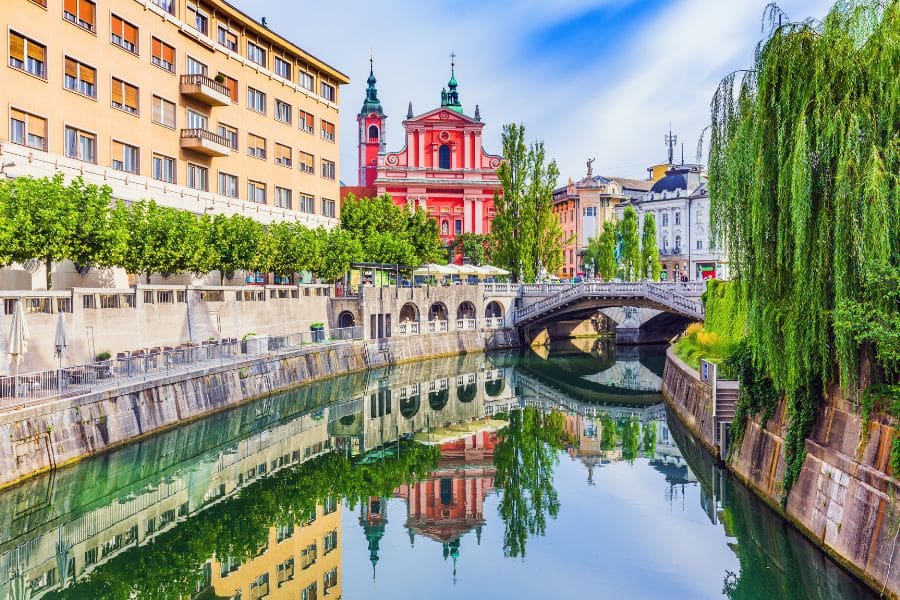
Ljubljana averages considerably cheaper than Paris, with many travelers managing a comfortable day on €50 to €60, including accommodation, food, and activities. Slovenia joined the EU and adopted the euro, so the currency is straightforward, but prices remain well below Western European levels.
Slovenia’s capital is tiny, home to around 300,000 people, which means it has the culture and history of a European capital without the overwhelming crowds and infrastructure that usually come with one. It’s walkable, gorgeous, and sits along a river that winds through the old town beautifully.
The city’s roots go back to Roman times, when a settlement called Emona stood here as an important military and trading post. The medieval city that grew up afterward was shaped by the Habsburg Empire, which controlled the region for centuries and left behind the Baroque and Art Nouveau architecture that gives the center its distinctive look. Slovenia was part of Yugoslavia from 1918, and Ljubljana served as the capital of a Yugoslav republic until independence in 1991, one of the smoothest exits from the Soviet bloc in European history.
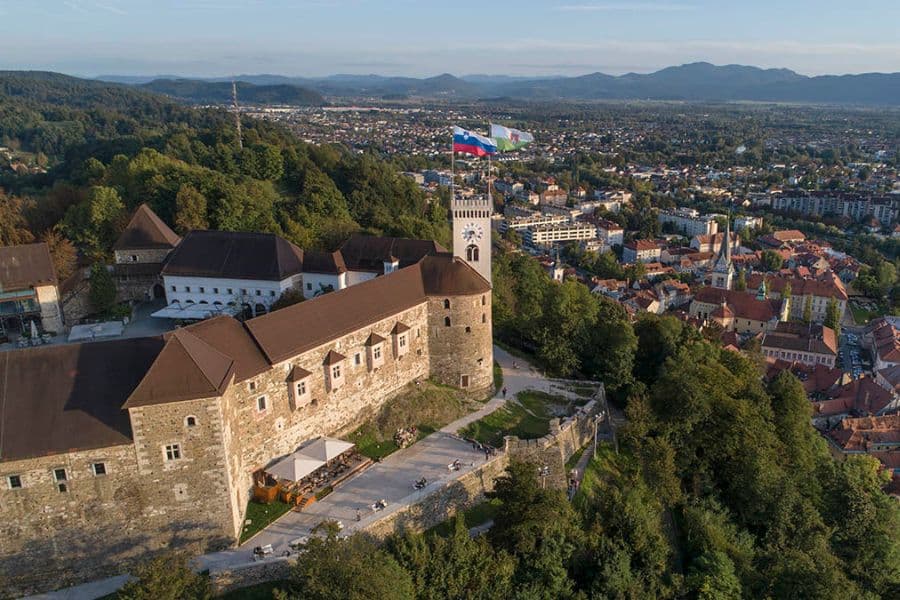
Architect Joze Plecnik, who studied under Otto Wagner in Vienna and worked with Tomás Masaryk in Prague, returned to Ljubljana in the 1920s and spent decades redesigning the city. He built the Triple Bridge, the covered market, the National and University Library, and dozens of other structures, essentially turning the city into one man’s extraordinary architectural project.
Top things to see and do:
- Ljubljana Castle, perched on a hill above the old town, with free walking access and a funicular if you’d rather not climb (castle museum entry around €10)
- The Triple Bridge and the covered market along the Ljubljanica River, both Plecnik masterpieces, and the heart of daily city life
- The National Museum of Slovenia, covering the country’s history from prehistoric times through the present, with entry around €6
- Dragon Bridge, the beautiful Art Nouveau bridge guarded by four bronze dragons that have become the symbol of the city
- Metelkova, Ljubljana’s alternative arts district, built in a converted military barracks, with galleries, clubs, and street art
No. 6 Valletta, Malta

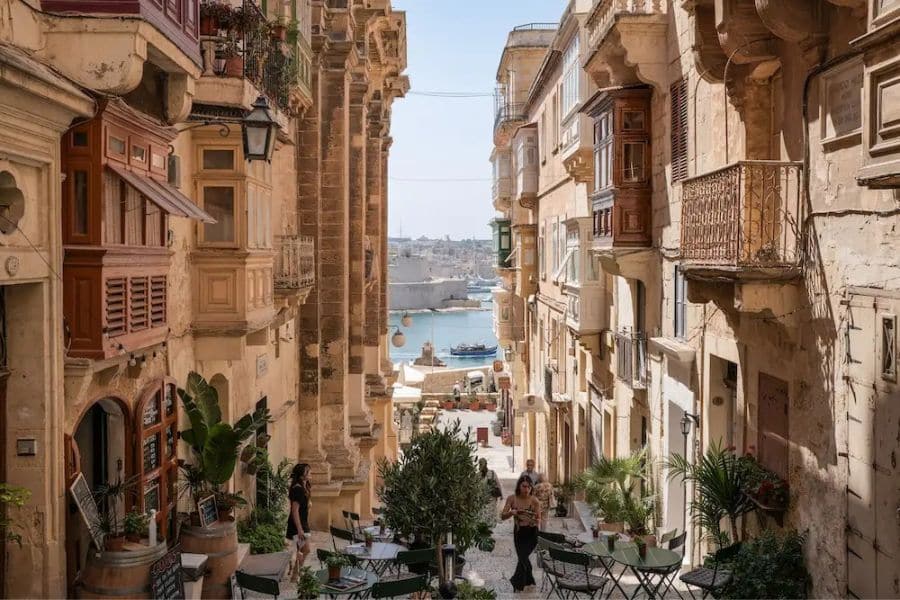
The average daily cost in Valletta runs around €140 per person, compared to €265 in Paris. Valletta works beautifully as a two or three-day city break, after which the rest of the island opens up around you.
Valletta is one of Europe’s smallest capitals, just one kilometer long and 600 meters wide, and yet it is also, inch for inch, one of the most historically dense places on the planet. The entire city is a UNESCO World Heritage Site.
The Knights of St. John built Valletta from scratch after the Great Siege of Malta in 1565, when a small Christian force held the island against the full might of the Ottoman Empire for four months. Grand Master Jean Parisot de Vallette, the man who led that defense and gave the city his name, died before it was completed, but what the Knights built became one of the mightiest fortresses in Europe. Every street, every building, every fortification tells part of that story.
Malta’s history runs far deeper than the Knights, though. The megalithic temples scattered across the island predate Stonehenge and the pyramids of Giza. Phoenicians, Romans, Arabs, Normans, Spanish, and the French under Napoleon all left their mark before the British arrived and stayed for 150 years. Princess Elizabeth, the future Queen, lived on Malta in the early 1950s and later said those were among the happiest years of her life.
Italian Baroque painter Caravaggio spent time in Malta in 1607 after fleeing Rome following a killing, and produced some of his finest work here, including “The Beheading of Saint John the Baptist,” which still hangs in St. John’s Co-Cathedral.
Top things to see and do:
- St. John’s Co-Cathedral, one of the most opulent Baroque interiors in Europe, and home to two Caravaggio masterpieces (entry around €15)
- The Grand Master’s Palace and its State Rooms, covered in enormous frescoes depicting the Great Siege of 1565
- The National Museum of Archaeology, housing the “Sleeping Lady” figurine and other treasures from Malta’s prehistoric temples
- The Lascaris War Rooms, the actual underground tunnels used to coordinate Allied operations during WWII
- Fort St. Elmo, the star-shaped fortress at the tip of Valletta’s peninsula, which bore the brunt of the Ottoman siege and now houses the National War Museum
No. 5 Vienna, Austria

The coffee house culture alone is worth the trip. Viennese coffee houses, many of which have been operating for 150 years or more, are places where you can sit for hours over a single coffee and a newspaper without anyone asking you to leave.
The Habsburg palaces are enormous, the coffee houses are wood-paneled and grand, and the opera house is one of the most famous in the world. And yet Vienna consistently comes in at around €87 per day, less than Paris on average. For a week, that’s a saving of over $600 per person.
Vienna was the capital of the Habsburg Empire for centuries, one of the most powerful dynasties in European history. At its peak, the Habsburgs ruled over much of Europe, and the wealth they accumulated in Vienna shows in every direction you look. The Ringstrasse boulevard alone, commissioned by Emperor Franz Joseph in the 19th century, is lined with world-class museums, opera houses, and government buildings that would be the headline attraction in any other city.
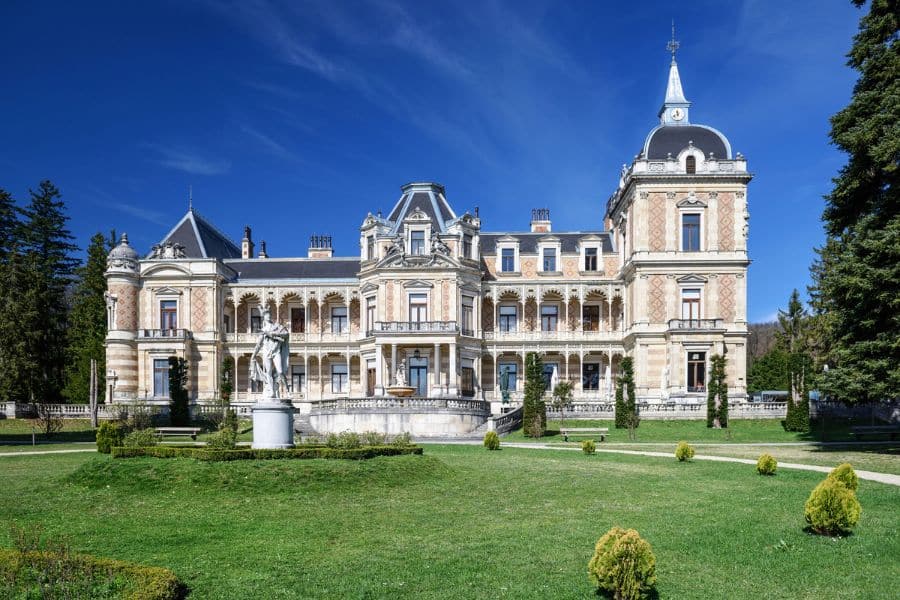
The city attracted the greatest composers in history. Beethoven lived here for most of his adult life. Mozart performed here as a child prodigy and returned repeatedly. Haydn spent his most productive years here. Schubert was born and died in Vienna. Brahms and Mahler lived and worked here.
Sigmund Freud developed psychoanalysis in his Vienna consulting room. Philosophers Wittgenstein and Popper were Viennese. So was Adolf Hitler, though that’s a very different kind of historical footnote.
Top things to see and do:
- Schonbrunn Palace, the Habsburg summer residence with 1,441 rooms, stunning formal gardens, and a hilltop viewpoint over the entire city
- The Kunsthistorisches Museum, one of the great art museums of the world, with works by Vermeer, Raphael, Bruegel, and Caravaggio in a palace-like setting
- The Vienna State Opera, where standing room tickets can be purchased for around €5 to €10 on performance nights
- The Naschmarkt, Vienna’s famous open-air market stretching for nearly a kilometer
- The Belvedere Palace and its art collection, which includes Gustav Klimt’s “The Kiss,” arguably the most famous painting in Austria
No. 4 Warsaw, Poland
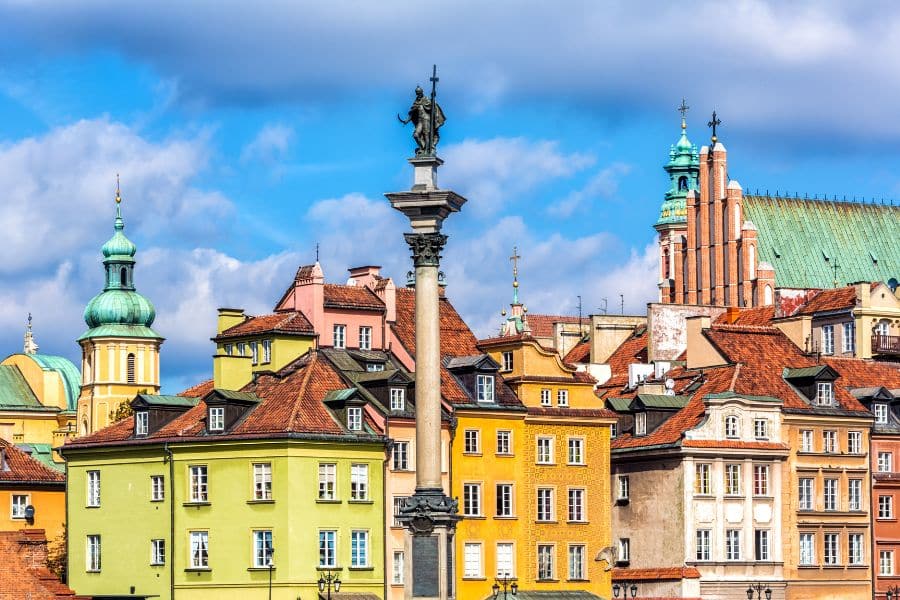
Warsaw costs 50-60% less than Paris. A budget traveler can spend a comfortable day here on €35. Even mid-range dining and good hotels cost half as much as in Paris. But by rights, Warsaw should not exist at all.
By the end of World War II, 90% of the city had been deliberately destroyed by the retreating German forces. Ninety percent. And yet there it stands, rebuilt stone by stone, street by street, from old photographs and maps and the memory of the people who survived.
Warsaw became the capital of the Kingdom of Poland in 1596 when King Sigismund III Vasa moved his court here from Krakow. For the next four centuries, it grew into a major European capital with a magnificent old town, grand palaces, and a rich intellectual life.
Then came the Nazi invasion of 1939, followed by the Warsaw Ghetto, the Warsaw Uprising of 1944, in which resistance fighters held out for 63 extraordinary days, and finally the systematic destruction of everything that remained. Hitler had ordered the city erased from the map. His forces came close.

Frederic Chopin was born just outside Warsaw and spent his formative years in the city. His heart is literally preserved in a pillar inside the Holy Cross Church. Marie Curie, the only person ever to win Nobel Prizes in two different sciences, was born and raised here.
Top things to see and do:
- The Warsaw Uprising Museum, one of the most powerful and immersive war museums in Europe, with a replica WWII bomber hanging from the ceiling and a recreation of the sewer tunnels resistance fighters used to move through the city
- POLIN Museum of the History of Polish Jews, winner of the European Museum of the Year award in 2016, covering 1,000 years of Jewish life in Poland, with remarkable multimedia exhibitions
- The reconstructed Old Town and Royal Castle, a UNESCO World Heritage Site rebuilt using Canaletto’s 18th-century paintings of Warsaw as blueprints
- Lazienki Park, the vast royal park with a neoclassical palace on an island in a lake, and free open-air Chopin piano concerts every Sunday afternoon in summer
- The Palace of Culture and Science, the enormous Stalinist skyscraper that dominates the skyline and offers panoramic city views from its observation deck
No. 3 Athens, Greece
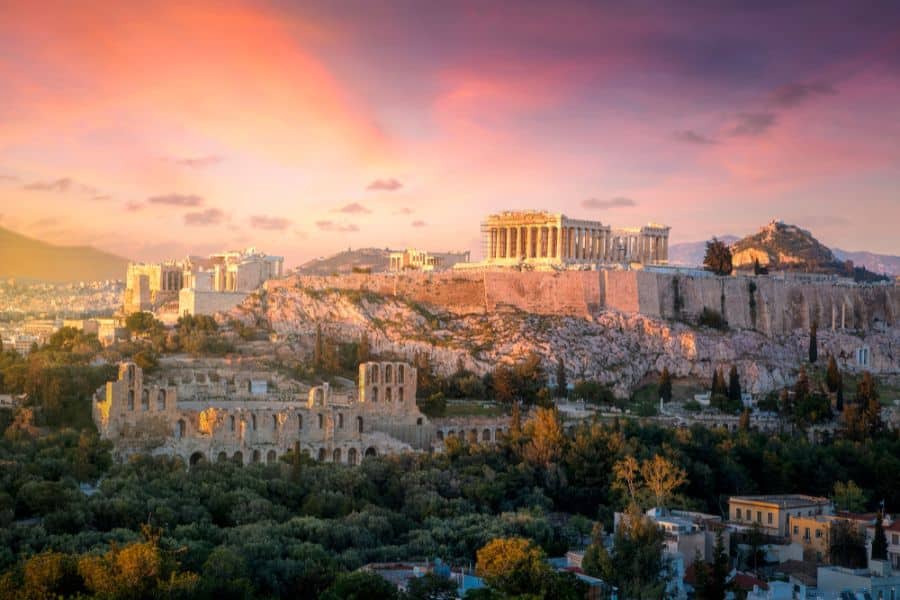
Athens sits comfortably below Paris for almost all travel costs. A full dinner at a traditional taverna costs €12-€18 per person. A gyro from a street stand runs €3 to €4. Visit between November and March, and most archaeological sites drop to half price.
While the Louvre is impressive, the Parthenon was standing 2,000 years before anyone laid the foundation of the Eiffel Tower. Athens is where Western civilization actually started, and walking its streets feels like moving through a history that belongs to all of us.
The city has been continuously inhabited for at least 3,000 years, which makes it one of the oldest cities in the world. It was the birthplace of democracy, the place where Socrates walked and questioned everything, where Plato wrote his dialogues, and where Aristotle taught a young Alexander the Great.
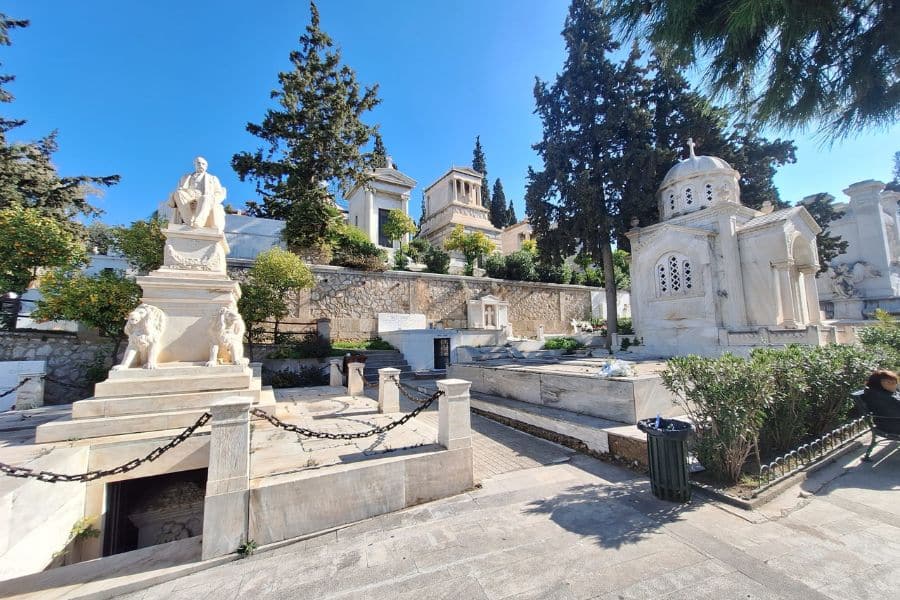
The Acropolis, the rocky outcrop that dominates the city, has been the heart of Athens since the Bronze Age. The Parthenon was completed in 432 BC. It has stood through earthquakes, wars, an explosion, and centuries of indifference, and it still stops people cold.
In the 19th century, Athens became the capital of the newly independent Greek state after 400 years of Ottoman rule. English Romantic poet Lord Byron became so devoted to the Greek independence cause that he traveled to Greece to support it directly, dying there in 1824 and becoming a national hero in a country he had adopted as his own.
Top things to see and do:
- The Acropolis and Parthenon, accessible via a combined ticket covering seven ancient sites
- The Acropolis Museum, a stunning modern building at the foot of the hill, houses the treasures found on site, including original sections of the Parthenon frieze and the breathtaking Caryatid figures
- The National Archaeological Museum, housing the golden Mask of Agamemnon, the Antikythera Mechanism (the world’s oldest known analog computer), and the largest collection of ancient Greek artifacts anywhere
- The Plaka neighborhood, the ancient district at the base of the Acropolis, with streets that follow their original ancient routes through tavernas, shops, and Byzantine churches
No. 2 Budapest, Hungary

A mid-range restaurant dinner for two with wine costs around €30 to €40 in Budapest, compared to €80 to €100 in Paris. Museum entry is a fraction of Western European prices. And the ruin bars of the Jewish Quarter, those atmospheric bars built inside crumbling courtyards and former factories, are something Paris simply cannot offer.
They call Budapest the Paris of the East. The Hungarian capital sits on the Danube River, split between hilly, historic Buda on the west bank and the grand boulevard-lined Pest on the east, connected by a series of beautiful bridges that offer stunning views at every crossing.
The Romans built Aquincum here in 89 AD, and it grew into a city of 40,000 at a time when Paris was still a modest settlement. The Magyars arrived in the 9th century and founded the Hungarian state. The Ottomans held the city for 150 years from 1541, leaving behind their love of thermal baths.

The Habsburgs then rebuilt and expanded Budapest into the grand imperial capital you see today, filling it with neo-Gothic, Baroque, and Art Nouveau architecture that ranks among the finest in Europe.
Composer Franz Liszt lived in Budapest and founded the Royal Academy of Music here. War photographer Robert Capa, who documented the Spanish Civil War and D-Day and is considered one of the greatest photojournalists in history, grew up on these streets. Nobel Prize-winning biochemist Albert Szent-Gyorgyi, who first isolated vitamin C, was born and trained here.
Top things to see and do:
- The Hungarian Parliament Building, one of the most spectacular parliament buildings on Earth, with guided interior tours from around €8 for non-EU visitors
- Buda Castle and the Castle District, home to the Budapest History Museum and the Hungarian National Gallery, are housed in the former royal palace with views across the Danube
- The Great Synagogue on Dohany Street, the largest synagogue in Europe and one of the most moving buildings in the city, with a memorial garden behind it
- Szechenyi Thermal Baths, one of the oldest and largest bath complexes in Europe, where you can spend the whole day soaking in mineral-rich thermal water
- The House of Terror, a haunting and brilliantly executed museum in the actual building used by both the Nazi and Communist secret police, with the original prison cells in the basement
No. 1 Lisbon, Portugal
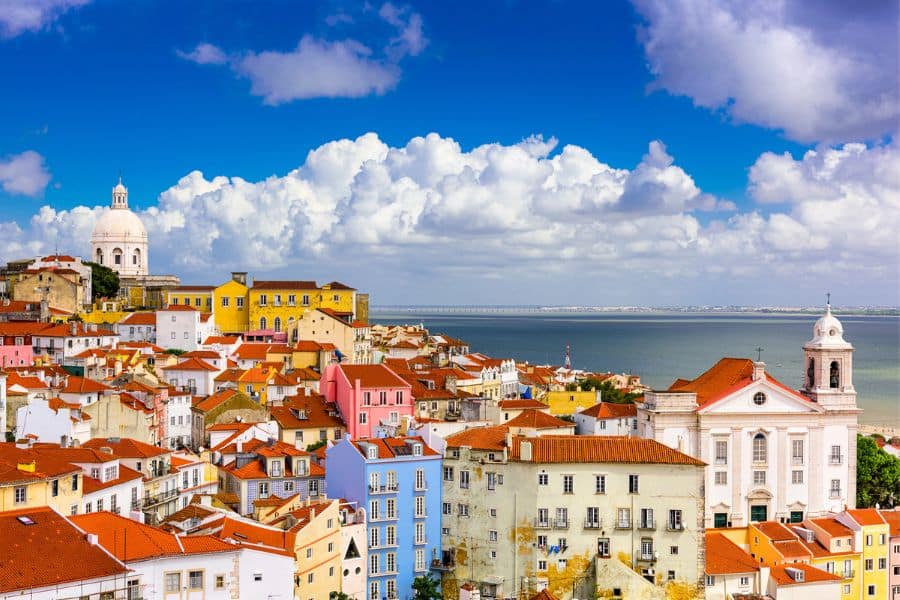
Lisbon runs around 37% cheaper than Paris overall. A dinner that would cost you €40 in Paris costs €20 here. A hotel in a great location costs half as much as one in Paris. And the Atlantic beaches are a 20-minute train ride away.
Here’s the one that surprises people every time. Lisbon is one of the oldest cities in Europe, predating London, Paris, and Madrid as a major settlement, and it’s consistently ranked as the most budget-friendly Western European capital for tourists.
The Phoenicians traded here, the Romans built roads through it, and the Moors ruled for several centuries before Alfonso Henriques took the city in 1147 and declared it the capital of the newly formed Kingdom of Portugal. By the 15th century, Lisbon was the launch point for an Age of Discovery that gave the world Vasco da Gama’s route to India, Pedro Cabral’s arrival in Brazil, and a Portuguese trading empire stretching from South America to Japan.

Then, on the morning of November 1, 1755, one of history’s most catastrophic earthquakes struck. Fires burned for days. Tsunamis rolled in from the Atlantic. Somewhere between 30,000 and 40,000 people died. What you see in the lower city today is the elegant Enlightenment grid, rebuilt from the rubble, while the old Moorish neighborhood of Alfama, unchanged for centuries, survives on its steep hillside above.
Literary giant Fernando Pessoa spent nearly his entire life in Lisbon, haunting its cafes and writing the work that would make him Portugal’s greatest poet. Fado music, that melancholic, oceanic sound unlike anything else in the world, was born in the city’s backstreets and is still performed live in intimate restaurants throughout Alfama most evenings.
Top things to see and do:
- The Belem Tower and Jeronimos Monastery, both UNESCO World Heritage Sites and icons of the Age of Discovery
- The National Tile Museum, where 7,000 years of Portuguese azulejo tile art tell the country’s history in ways that genuinely stop you mid-gallery (entry around €5)
- Alfama, the ancient Moorish quarter, where you can wander for hours through streets that haven’t changed in centuries
- The city’s miradouros, the hilltop viewpoints with views across terracotta rooftops and the vast river below
- A ride on the historic yellow Tram 28 through the oldest neighborhoods of the city, a €3 journey that doubles as a slow-motion tour of centuries of history
Disclaimer: This article is for general information only and is not professional advice. It may contain affiliate links. Please see our full Editorial Policy for details.

Kylie Lang is a nationally syndicated travel journalist with bylines on the Associated Press Wire & more, a lifestyle writer, and the founder and editor of Your Lifestyle Library (yourlifestylelibrary.com). She holds a BA (Honours) in History from the University of Kent and is a member of the British Guild of Travel Writers.