
Europe is full of stunning villages that make you feel as though you’ve stepped into a picture postcard. You’ve seen the stunning images on social media and can’t wait to visit. Unfortunately, many of them are heaving with tourists, making it hard to see the beauty of each place. And you can forget getting a seat in a cafe or restaurant.
However, there are plenty of equally beautiful places, hidden away from the masses. They remain a secret known only to those who live locally, often a little off the beaten track, but so worth the detour.

7 Stunning Villages in Europe You’ll Love
So, although you may not have heard of them, these seven stunning villages in Europe are worth adding to your travel plans in 2026. They are hidden in plain sight, so discover them before the rest of the world does.
Lavenham, Essex, England
Lavenham is only 30 minutes from my mom’s house, so I’ve been a few times, and it never gets old. It’s in the Suffolk countryside, about two hours from London, yet it feels like stepping into another century. Once one of England’s wealthiest wool towns, it was built on the profits of medieval cloth trading, which explains why the timber-framed houses tilt and lean with such character. Each one tells a story from a time when color and craftsmanship were symbols of success.
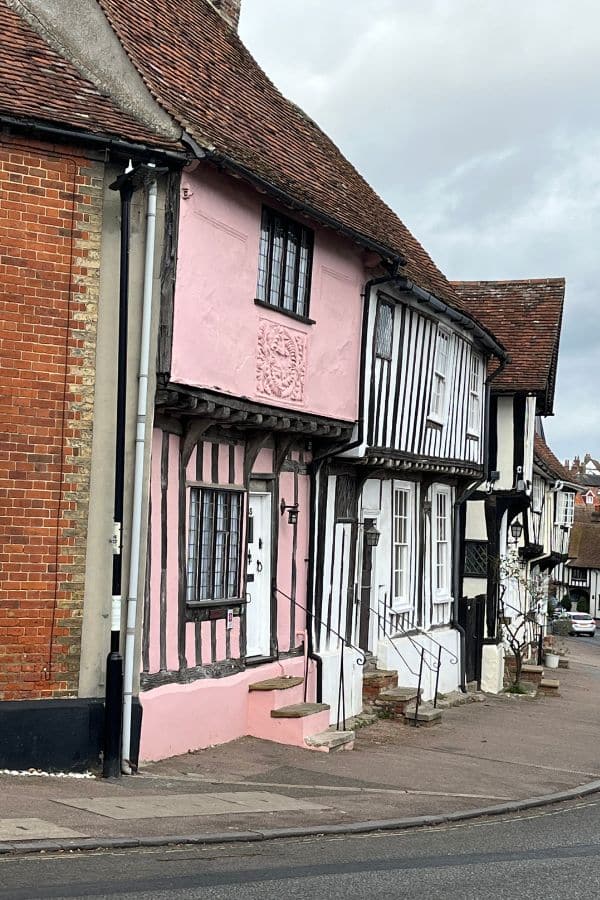
What makes Lavenham special is how well its history has been preserved. The village has more than 300 listed buildings, including the striking Guildhall on the market square, now part of the National Trust. St. Peter and St. Paul’s Church rises proudly above the rooftops, a reminder of the town’s prosperity during the 15th century.
The crooked houses make it a photographer’s dream, especially around the High Street and Lady Street. Lavenham also appeared in Harry Potter and the Deathly Hallows: Part 1, where it served as Godric’s Hollow, adding a touch of movie magic to its medieval beauty.

Don’t miss afternoon tea at one of the old inns, like The Swan, which dates back to the 1400s. The Guildhall Museum is worth a visit for a glimpse into local life centuries ago.
Alpbach, Tyrol, Austria
I went to Alpbach years ago with a friend of mine in my 20s when I was traveling Europe, and fell in love almost immediately. I can completely understand why it was voted Austria’s most beautiful village, and honestly, it deserves the title.
It’s tucked into the Tyrolean Alps, about 45 minutes from Innsbruck, surrounded by mountains that make it feel like the edge of the world. Every building follows the same wooden chalet style, thanks to a rule introduced in the 1950s that required new houses to match the old. The result is a village that looks completely timeless.

Alpbach has been around since at least the 13th century, but its real story started in the 1400s when copper and silver mining brought wealth to the area. For centuries, it remained isolated, only connected to the outside world by road in the 1920s. That delay kept it from modern overdevelopment, and today it feels authentic in a way few alpine destinations do.
Every summer, the European Forum Alpbach attracts global leaders and academics to discuss politics, science, and philosophy. Then winter arrives, and the same village transforms into a base for the Ski Juwel resort, with more than 140 kilometers of runs.
Walk through the village and you’ll notice carved balconies, window boxes spilling with geraniums, and mountain air that feels impossibly fresh. Stop by St. Oswald’s Church, dating from the 15th century, or ride the lift up the Wiedersberger Horn for sweeping views over the valley.
Don’t miss lunch on a sunny terrace with a plate of Tiroler Gröstl, a hearty mix of potatoes, onions, and bacon. And if you stay overnight, watch as the lights glow across the wooden chalets after sunset. It’s the kind of mountain calm that makes you forget you ever owned a phone.
Eguisheim, Alsace, France
As I live in France, I was always going to choose a French village; the question was which one, as there are too many to count. I settled on Eguisheim because it is simply stunning and took my breath away when I visited Alsace for Christmas one year.
It’s just a short drive from Colmar, surrounded by vineyards and rolling hills. The village was built in concentric circles around its old castle, so wandering its cobbled lanes feels like walking through a perfectly preserved medieval maze.
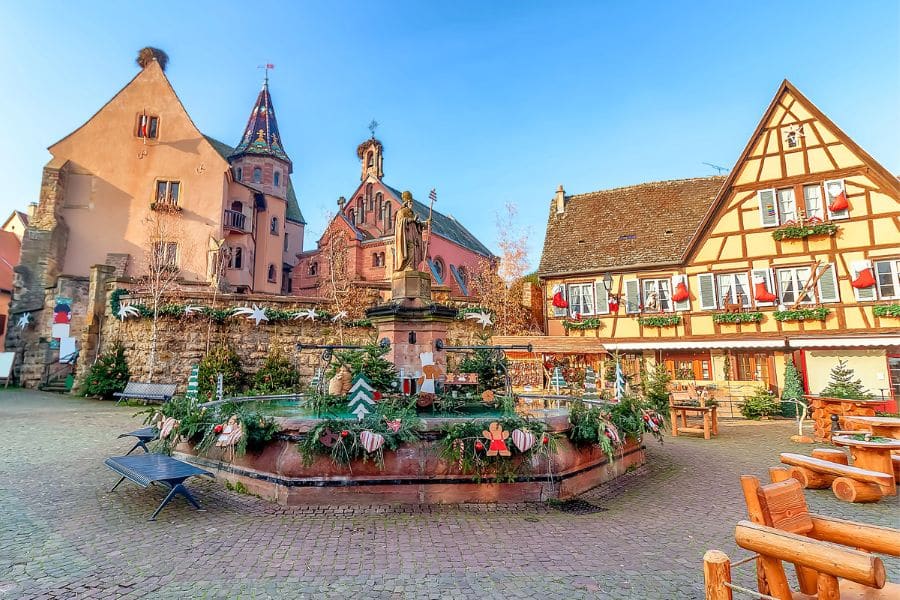
Its history goes back to the 8th century, and it’s famously the birthplace of Pope Leo IX. The colorful, half-timbered houses date back to the 16th and 17th centuries, each one lovingly restored with flowers spilling from every window box. This blend of French and German influence runs deep here, from the architecture to the wine.
Eguisheim also has a fun pop-culture twist. It’s said to have inspired Belle’s village in Disney’s Beauty and the Beast. Once you’ve wandered its circular streets, it’s easy to see why the pastel houses, cobblestone paths, and flower-filled balconies look straight out of an animated scene.
The village is part of the Alsace Wine Route, and you’ll pass dozens of family-run wineries offering tastings of Riesling, Gewürztraminer, and Pinot Gris. You can spend hours moving between cellars, chatting with winemakers, and learning how each vineyard has its own story.
Don’t miss a walk around the outer ring of the village. The main square, Place du Château Saint-Léon, is home to a small fountain and a chapel dedicated to Pope Leo IX. Stop at a winstub for a glass of Crémant d’Alsace with tarte flambée, a local favorite.
Eguisheim may not be as famous as nearby Colmar, but that’s part of its magic; it’s the real-life version of a fairytale you’ve probably loved since childhood.
Schiltach, Black Forest, Germany
Schiltach looks like the kind of village a painter would dream up, only it’s very real. It’s in Germany’s Black Forest, where the Kinzig and Schiltach rivers meet, and it’s one of those rare places that still looks almost exactly as it did centuries ago. Half-timbered houses line the cobbled streets, their colorful façades reflected in the water that runs right through the village center.
Schiltach dates back to the 11th century and grew prosperous through trade and timber rafting along the Kinzig River. Its layout still follows its medieval plan, with steep lanes leading up to the old market square. Many of the houses date from the 1500s and 1600s, and each one seems perfectly placed as if time simply forgot to move on.

The village once sat at the heart of the Black Forest’s woodworking and tanning industries, and you can still visit the Schüttesäge Museum to see how traditional sawmills and rafting shaped local life. The Museum am Markt, in a former town hall, offers a glimpse into the history of Schiltach’s craftsmen and traders.
Walking through the village is like stepping through a storybook, but it’s not just for show. Locals live and work in these buildings, and the small cafés feel genuinely local rather than designed for tourists. Sit by the river with a slice of Black Forest cake and you’ll get why people fall in love with this region.
Don’t miss the hike up to the ruins of Schiltach Castle, where you’ll find views over the tiled rooftops and forested hills. If you have time, follow the Kinzig Valley Trail, one of the prettiest routes in the Black Forest. Schiltach may not shout for attention, but that’s exactly why it’s unforgettable.
Kinsale, County Cork, Ireland
Ireland’s southern coast is beautiful and soulful. I first discovered it when I read a collection of books by Santa Montefiore about a fictitious family called the Deverills. It was love at first word. Kinsale is the kind of seaside town that instantly wins you over. It’s in County Cork, where the River Bandon meets the Atlantic. What began as a medieval fishing port has evolved into one of Ireland’s most vibrant and food-loving destinations, yet it has never lost its small-town charm.
Its history runs deep. The Battle of Kinsale in 1601 marked a turning point in Irish history, as English forces defeated Irish and Spanish troops, effectively ending hopes for Gaelic independence. The town later grew into a bustling trading hub, its narrow streets filled with merchants, sailors, and shipbuilders. Today, those same winding lanes are lined with pastel-painted buildings, art galleries, and some of the best restaurants in the country.

Kinsale is known as Ireland’s “Gourmet Capital,” and it earns that title with flair. You’ll find Michelin-recommended restaurants, seafood fresh off the boats, and traditional pubs that serve chowder good enough to make you stay another night. The annual Kinsale Gourmet Festival, each October, is worth planning a trip around.
Don’t miss a walk up to Charles Fort, one of the best-preserved star-shaped forts in Europe, built in the late 17th century to guard the harbor. The views across the water are stunning, especially at sunset. In town, wander around the harbor, visit Desmond Castle with its International Wine Museum, and pop into the quirky shops that you can lose a couple of hours in.
Metaxades, Evros, Greece
Most people are drawn to Santorini and those gorgeous buildings with the blue roofs, but they’re missing out. Metaxades is one of those places few travelers have heard of, yet it captures a side of Greece most people never see.
It’s hidden away in the Evros region of northern Greece, near the borders with Bulgaria and Turkey. The village is situated in the Rhodope mountain foothills, surrounded by forests and stone-built houses that lend it a timeless appearance.

Its story stretches back centuries, shaped by Thracian roots and Ottoman influence. The name Metaxades originates from the Greek word for “silk,” a nod to the area’s historic silk production, which once made it a thriving trade center. Walking through the village, you can still see remnants of that wealth in the old mansions and courtyards built from local stone.
Metaxades has managed to keep its character while much of the world has changed around it. The architecture follows traditional Thracian design, with slate roofs, wood-framed windows, and narrow lanes that twist between homes. The locals take pride in preserving the heritage, and it’s common to see restoration work that respects the original style.
What makes it worth visiting is the sense of authenticity. You won’t find crowds or tourist shops; instead, you’ll find small tavernas serving homemade dishes, such as grilled lamb and local cheese. The village square is a natural gathering spot, especially in summer when everyone sits outside until late into the night.
Don’t miss the nearby Dadia-Lefkimi-Soufli Forest National Park, one of Europe’s best places for birdwatching. The park is home to rare species, including the black vulture and the griffon vulture.
Valderrobres, Teruel, Spain
Valderrobres is located in the province of Teruel, part of the Aragon region in eastern Spain, and is surrounded by hills, olive groves, and winding rivers. Built along the Matarraña River, its honey-colored stone buildings rise toward a medieval castle that seems to watch over everything below.
The village dates back to the Middle Ages and was once a fortified stronghold under the Crown of Aragon. You enter across a 14th-century Gothic bridge that leads through the Porta de San Roque, the old stone gate that still marks the entrance to the historic center. From there, narrow cobbled streets climb uphill toward the castle and the church of Santa María la Mayor, two of the best-preserved Gothic landmarks in Aragon.

Valderrobres has a wonderfully lived-in feel. Locals sit in shaded squares chatting over coffee while cats nap on warm doorsteps. The old houses, some built right into the rock, give the village a natural, layered look. There’s history in every turn, which I loved.
Don’t miss the castle and the adjoining church, which together form one of Spain’s most striking medieval silhouettes. The views from the top stretch across the Matarraña valley, especially beautiful at sunset. Stroll down to the Plaza de España, where the stone arcades and town hall create a perfect setting for a late-afternoon drink.
If you visit in autumn, the surrounding countryside turns golden, and the nearby Beceite Mountains offer hiking trails with views that seem to go on forever. Valderrobres may not be as well-known as Spain’s coastal towns, but it has all the beauty and history without the crowds.
Disclaimer: This article is for general information only and is not professional advice. It may contain affiliate links. Please see our full Editorial Policy for details.

Kylie Lang is a nationally syndicated travel journalist with bylines on the Associated Press Wire & more, a lifestyle writer, and the founder and editor of Your Lifestyle Library (yourlifestylelibrary.com). She holds a BA (Honours) in History from the University of Kent and is a member of the British Guild of Travel Writers.