
I’ll never forget the first time I went to Paris with my husband. We’d come over on the ferry as we were passing through Paris and onto the Pyrenees. Driving in Paris, and then onto Versailles was one of the most nerve-racking drives of my life. So now, anywhere I can go that doesn’t involve driving is fine by me. Plus, you see more when you take the train.
You see so much more of a city when you explore on foot. You stumble into hidden courtyards, follow your curiosity down narrow lanes that lead to the best local cafe or a stunning viewpoint nobody told you about. That’s exactly what you can do in these twelve cities.
I’ve walked each and every one of these and was so glad I ditched the car and went by train. All of them have very accessible train stations and plenty of pedestrianized areas to explore and discover hidden gems.
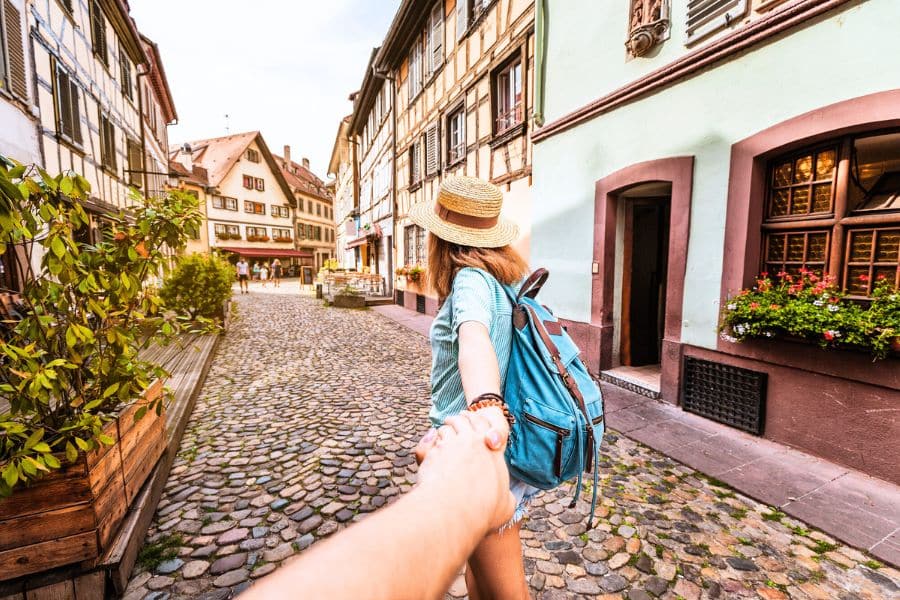
12 of the Most Walkable Cities in Europe
When you visit these cities on foot, you’ll cover more ground, spend less money, and actually experience these places instead of just checking them off a list. Ready to lace up your walking shoes?
Barcelona, Spain
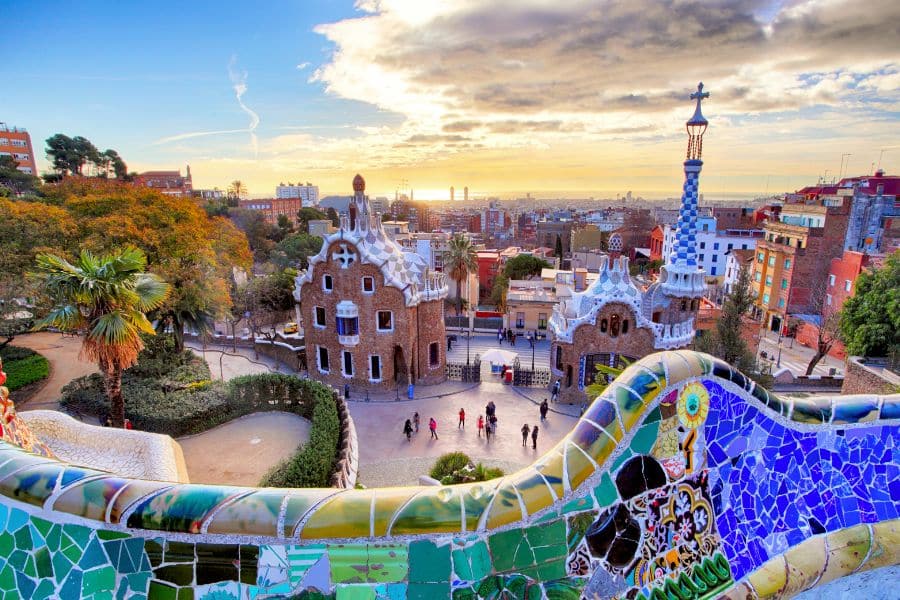
Barcelona’s Gothic Quarter is a walker’s dream, and you can ditch your car the moment you arrive if the thought of training it doesn’t appeal. The maze of pedestrian streets sprawls across the old Roman city center, where narrow medieval lanes twist between centuries-old buildings, hidden plazas, and atmospheric cafes. You can walk from Gaudí’s Sagrada Familia to the beach in under 30 minutes, hitting the Gothic Quarter, La Rambla, and El Born along the way.
Founded as the Roman colony of Barcino over 2,000 years ago, Barcelona’s Gothic Quarter still follows the original Roman grid plan. You’ll walk past the Barcelona Cathedral with its Gothic spires, Plaça del Rei, where Columbus met King Ferdinand and Queen Isabella in 1493, and stumble into hidden squares like Plaça Sant Felip Neri.
The area’s narrow lanes once housed one of Europe’s oldest Jewish communities, and remnants of Roman walls appear in the most unexpected spots, tucked between medieval buildings and trendy tapas bars.
Where to Stay in Barcelona:
Base yourself in the Gothic Quarter or El Born to be within walking distance of everything. The Eixample district puts you near Gaudí’s masterpieces. Find hotels in Barcelona
Edinburgh, UK
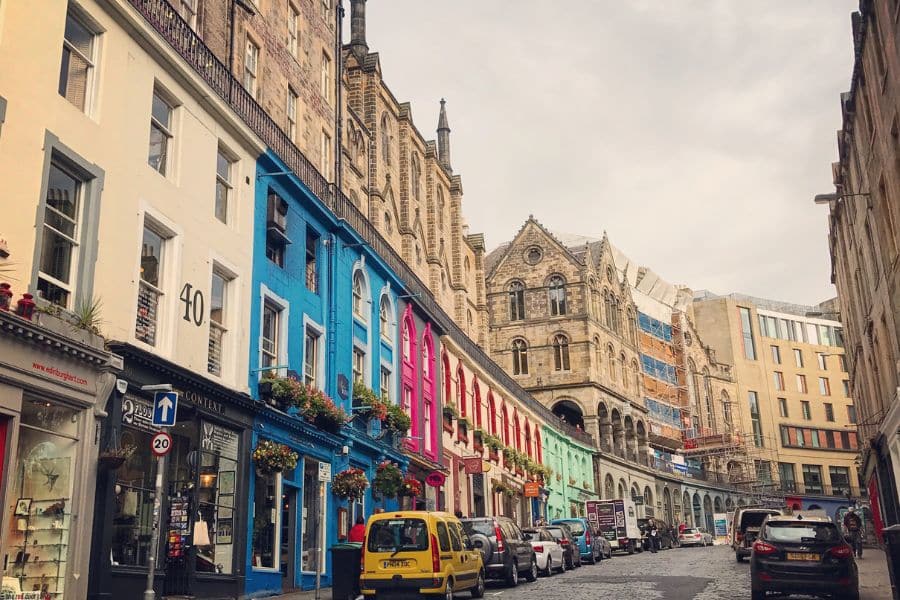
Edinburgh’s Old Town is built for walkers. The Royal Mile stretches just over a mile from Edinburgh Castle, perched on its volcanic rock, down to the Palace of Holyroodhouse, and the entire route is lined with cobblestones, hidden closes (alleyways), and centuries of history. The compact city center means you can explore the major sights in a single day on foot, though you’ll want longer to duck into the atmospheric side streets.
Edinburgh’s Old Town dates back over 900 years, and its medieval street plan remains largely intact. You’ll walk past St Giles’ Cathedral, founded in 1130 and home to reformer John Knox, the Writers’ Museum celebrating Robert Burns and Robert Louis Stevenson, and Greyfriars Kirkyard, where the loyal terrier Bobby kept vigil over his master’s grave.
The narrow wynds and closes that branch off the Royal Mile reveal layers of the city’s past, from Roman foundations to underground vaults. The Palace of Holyroodhouse at the bottom of the Mile was home to Mary Queen of Scots, where her secretary was murdered in 1566. And, of course, you can’t forget the Harry Potter connection.
Where to Stay in Edinburgh:
The Old Town places you right on the Royal Mile, while the New Town offers elegant Georgian streets just a short walk away. Find hotels in Edinburgh
Bordeaux, France

Bordeaux transformed itself into a pedestrian paradise, and now over 80% of the historic center is car-free. I live not far from the city and go regularly. It’s like a smaller, cheaper version of Paris. The city’s flat riverside location along the Garonne makes walking enjoyable, and its elegant 18th-century limestone architecture glows golden in the evening light. You can stroll from the waterfront Place de la Bourse with its famous water mirror to the medieval Saint-Pierre district in about 15 minutes.
This UNESCO World Heritage city grew wealthy on the wine trade from the Roman era onwards, reaching its architectural peak in the 18th century when grand boulevards and classical buildings transformed the medieval core.
Walk the pedestrianized Rue Sainte-Catherine, Europe’s longest shopping street, visit the Gothic Cathedral of Saint-André, where Eleanor of Aquitaine married the future Louis VII in 1137, and explore the medieval lanes of Saint-Pierre where restaurants spill onto cobblestone squares. The Cité du Vin wine museum sits on the riverfront, though the real history unfolds in the stone streets of the old quarter.
Where to Stay in Bordeaux:
Stay in the Saint-Pierre district for medieval atmosphere or near Place de la Bourse for riverside elegance. Both are in the pedestrian zone. Find hotels in Bordeaux
Salzburg, Austria
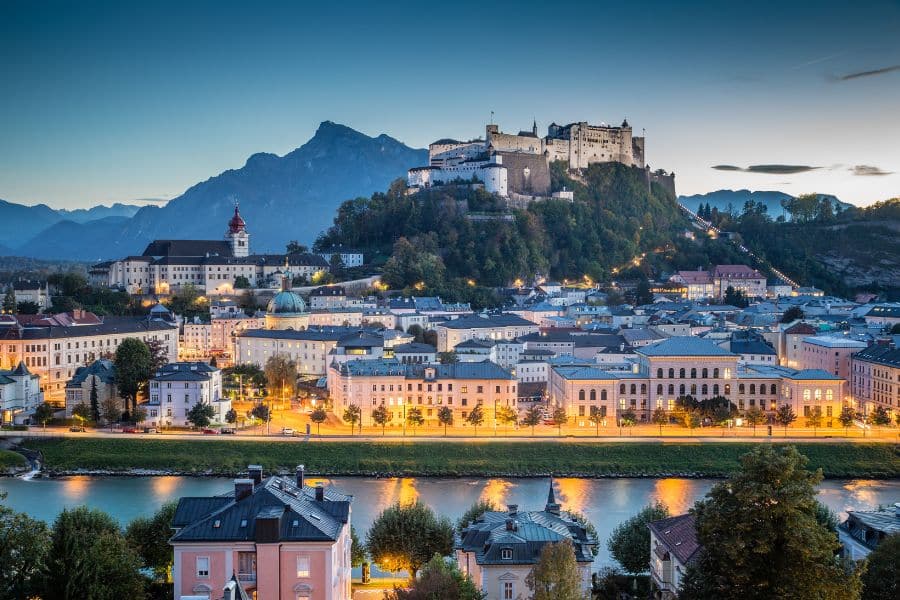
I loved Salzburg when I went. Maybe that’s because I love The Sound of Music and did the full movie tour, but it really is a beautiful city. It sits compact and car-free in its historic Altstadt (Old Town), squeezed between the Salzach River and fortress-topped Mönchsberg mountain. You can walk across the entire old center in 20 minutes, though you’ll want hours to explore the baroque churches, Mozart’s birthplace, and winding shopping streets. The pedestrian zone covers virtually all the major sights.
Prince-archbishops ruled Salzburg for centuries, leaving behind a baroque masterpiece of a city. The Old Town dates to medieval times, but most of what you see today was rebuilt in the 17th and 18th centuries in Italian Baroque style.
Climb to Hohensalzburg Fortress, one of Europe’s largest medieval castles, visit Mozart’s yellow birthplace house on Getreidegasse, and wander through the Residenzplatz where the prince-archbishops held court. The Salzburg Cathedral dominates the old center, and the Mirabell Palace gardens offer postcard views back to the fortress.
Where to stay in Salzburg:
The Altstadt (Old Town) puts you in the heart of baroque Salzburg, though across the river is quieter and equally walkable. Find hotels in Salzburg
York, UK

York might be England’s most walkable historic city, and I was lucky enough to live an hour away a few years ago. The medieval city walls encircle the compact center, and you can walk the entire 2.5-mile circuit on top of the walls themselves. Inside, narrow medieval lanes called “gates” and “snickelways” wind between timber-framed buildings, with York Minster’s towers visible from almost anywhere. The pedestrianized Shambles looks like it hasn’t changed since the 1400s.
Founded by the Romans in 71 AD as Eboracum, York became a Viking capital called Jorvik before the Norman conquest in 1066. The Romans built the original walls, the Vikings left street names (any street ending in “gate” comes from the Norse “gata”), and medieval merchants built the Shambles’ overhanging timber buildings.
York Minster, one of northern Europe’s greatest Gothic cathedrals, took 250 years to build and still dominates the skyline. Walk the walls, explore the medieval Shambles with its leaning buildings, visit the Viking center at Coppergate, and discover layers of 2,000 years beneath your feet. Don’t forget to visit the York Dungeons; they have characters in costume and some fun things might happen throughout, such as witch trials.
Where to stay in York:
Inside the city walls is ideal, especially near the Minster or along the riverside. Everything is a short walk from anywhere within the walls. Find hotels in York
Amsterdam, The Netherlands

I went to Amsterdam for the first time when I was about eight and was fascinated by all the shops selling clogs. A few years later, it was the red light district and cafes that caught my naive teenage eye.
The canal ring (Grachtengordel) forms a UNESCO-listed semicircle of waterways around the medieval core, and pedestrian-friendly streets and bridges make walking the best way to explore. The flat city center covers just a few square miles, so you can walk from Centraal Station to the museum quarter in about 30 minutes.
Amsterdam’s Golden Age in the 1600s created the canal ring you see today, when wealthy merchants built narrow gabled houses along tree-lined waterways. The medieval core around Dam Square predates the canals, where the Royal Palace sits on 13,659 wooden piles driven into boggy ground.
Walk the canals, visit Anne Frank House, where the Jewish teenager hid during World War II, explore the Jordaan’s narrow lanes once inhabited by working-class artisans, and discover the Begijnhof, a 14th-century courtyard hidden behind an unassuming doorway. Where to stay in Amsterdam:
The Canal Ring offers quintessential Amsterdam, while Jordaan provides a more local feel. Both are supremely walkable. Find hotels in Amsterdam
Munich, Germany

Munich’s Altstadt is entirely walkable, centered on Marienplatz, where the Glockenspiel chimes three times daily. The compact historic center puts beer halls, baroque churches, and royal palaces within a 15-minute walk of each other, and pedestrian zones cover most of the old town. You can walk from Marienplatz to the English Garden park in about 20 minutes through car-free streets.
Founded by monks in 1158 (München means “monks” in German), Munich became the seat of Bavarian dukes and later kings. The Residenz palace complex, where Bavarian rulers lived for centuries, sprawls across the northern Altstadt, while the Frauenkirche cathedral’s twin onion-domed towers (built 1468-1488) define the skyline.
Walk through Marienplatz to see the neo-Gothic New Town Hall, visit the Viktualienmarkt, which has operated since 1807, and explore the Residenz’s opulent royal rooms. The nearby Hofbräuhaus beer hall has been serving since 1589, and the English Garden offers 910 acres of parkland right in the city center, larger than New York’s Central Park.
Where to stay in Munich:
Being near Marienplatz puts you in the center of everything. The area around Viktualienmarkt offers easy access to beer halls and markets. Find hotels in Munich
Valletta, Malta

Valletta packs 7,000 years of history into 0.55 square kilometers, making it Europe’s smallest capital and possibly its most concentrated. The entire UNESCO-listed city is built on a grid plan on a narrow peninsula, and you can walk from one end to the other in about 15 minutes. Every street is walkable, and many are stepped, making cars nearly useless anyway.
Built by the Knights of St. John starting in 1566 after they survived the Great Siege of Malta, Valletta is named for Grand Master Jean de Valette, who led the defense. The military order built baroque palaces, eight auberges (inns) for knights from different regions, and the magnificent St. John’s Co-Cathedral, home to Caravaggio’s masterpiece.
Walk down Republic Street, the main pedestrian thoroughfare lined with baroque buildings, visit the Grand Master’s Palace where knights once ruled, and explore the Upper Barrakka Gardens overlooking the Grand Harbour. The honey-colored limestone glows in Mediterranean light, and every corner reveals another baroque doorway or harbor view.
Where to stay in Valletta:
Anywhere in Valletta itself is perfect since you can walk end to end in 15 minutes. Sliema across the harbor offers more hotel options with ferry access. Find hotels in Valletta
Dubrovnik, Croatia
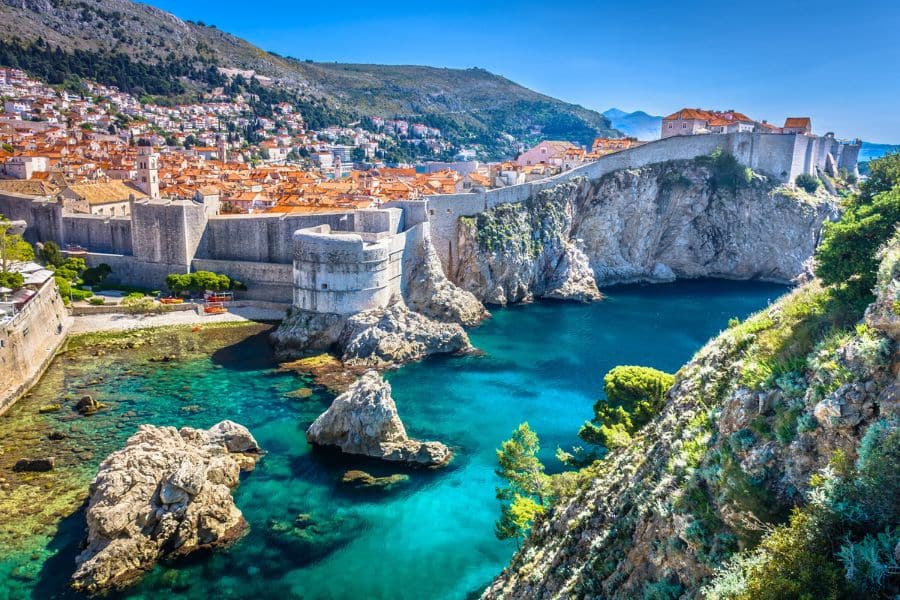
Dubrovnik’s Old Town is entirely car-free, enclosed within medieval walls, and you can walk around it for stunning Adriatic views. The compact marble-paved center measures just 400 meters wide, so you can explore the entire UNESCO site on foot in a few hours. The limestone Stradun (main street) runs straight through from Pile Gate to the old harbor.
The independent Republic of Ragusa (Dubrovnik’s medieval name) rivaled Venice from the 14th to 16th centuries, growing wealthy on maritime trade. Massive stone walls built between the 12th and 17th centuries protected the city-state, which maintained independence through diplomacy and strategic alliances until Napoleon abolished the republic in 1808.
Walk the 1.2-mile circuit atop the walls for rooftop views, explore the Rector’s Palace where the elected leader lived, visit the Franciscan Monastery with Europe’s third-oldest pharmacy (1317), and stroll the Stradun where limestone has been polished smooth by centuries of footsteps. The 1667 earthquake destroyed much of the original Gothic city, so most buildings showcase baroque reconstruction. Game of Thrones filmed scenes in King’s Landing here, but the real history surpasses fiction.
Where to stay in Dubrovnik:
Inside the Old Town walls is magical but pricey. Just outside Pile Gate or in Lapad Bay offers good value with short walks to the center. Find hotels in Dubrovnik
Copenhagen, Denmark
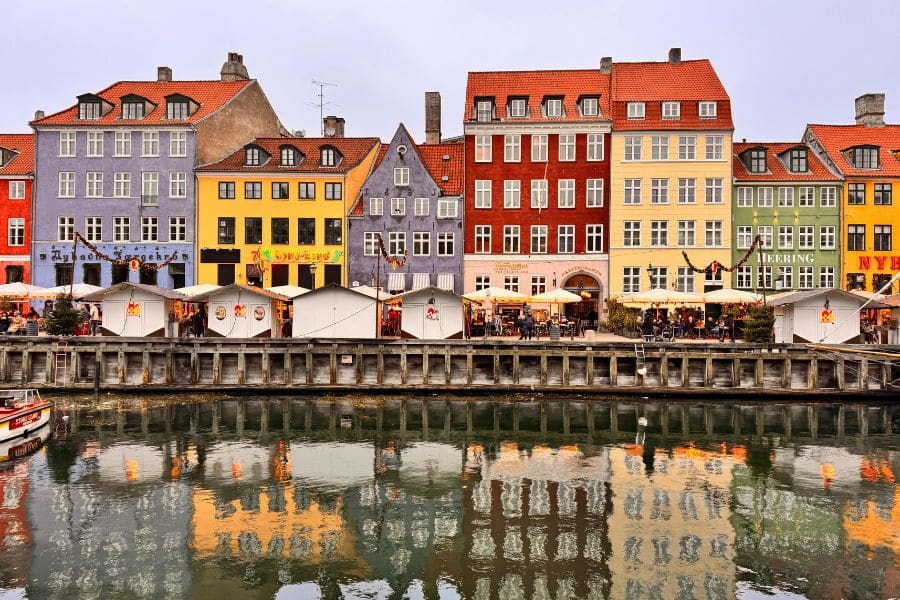
Copenhagen’s compact city center has plenty of pedestrian streets, and the entire historic core is easily navigable on foot. The flat landscape and interconnected pedestrian zones mean you can walk from the Little Mermaid statue to Tivoli Gardens in about 30 minutes, passing canals, palaces, and cobbled squares.
Copenhagen started as a Viking fishing village, became Denmark’s capital in 1443, and was rebuilt in Dutch Renaissance style after devastating fires. Christian IV, who ruled for 60 years from 1588, shaped much of what you see today, including the iconic colored houses along Nyhavn Canal, where Hans Christian Andersen lived.
Walk down Strøget, one of Europe’s longest pedestrian shopping streets, explore Nyhavn’s 17th-century waterfront, visit Rosenborg Castle, where crown jewels are displayed, and discover Christiansborg Palace, built on the ruins of the original 12th-century castle. The Round Tower (1642) offers spiral walkway views, and Amalienborg Palace, where the current royal family lives, remains part of the compact walkable center.
Where to stay in Copenhagen:
Being near Nyhavn or around City Hall Square puts you in the walkable heart. The Latin Quarter offers charm and a central location. Find hotels in Copenhagen
Warsaw, Poland
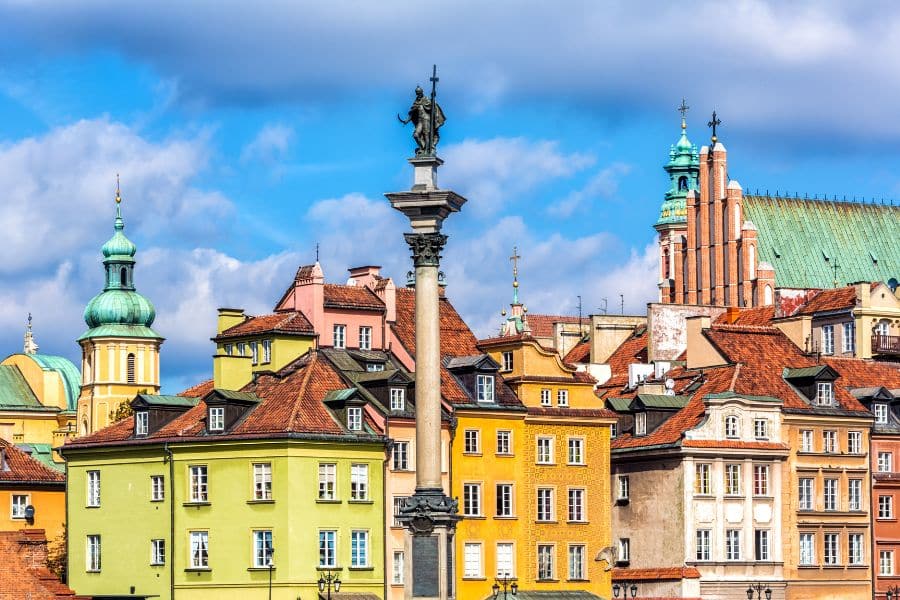
Warsaw’s Old Town (Stare Miasto) is a pedestrian masterpiece, completely rebuilt after World War II destroyed 85% of the city. The compact medieval-style quarter covers just 35 hectares, and you can walk across it in ten minutes, though the colorful buildings, market square, and riverside boulevards deserve longer. UNESCO listed it as a World Heritage site for its authentic recreation.
Founded around 1300, Warsaw became Poland’s capital in 1596. The Old Town you see today was reconstructed from paintings, photographs, and residents’ memories, rebuilt stone by stone in the exact original style. Walk through the Old Town Market Square, surrounded by colorful burgher houses.
Visit the Royal Castle, rebuilt from the ruins, and housing recovered artworks, and explore the Barbican fortress with its medieval walls. St. John’s Cathedral, originally Gothic from the 1400s, was meticulously reconstructed from rubble. The UNESCO citation recognizes this “outstanding example of a near-total reconstruction of a span of history covering the 13th to 20th century.”
Where to stay in Warsaw:
The Old Town or the nearby New Town areas are ideal. Staying near the Royal Route gives easy walking access to major sights. Find hotels in Warsaw
Strasbourg, France

Strasbourg is one of the most gorgeous cities to visit, especially at Christmas. It’s Grande Île (Big Island) is a UNESCO-listed pedestrian zone where the entire historic center sits on an island formed by the Ill River. You can walk across the compact old town in 15 minutes, passing half-timbered houses, canal-side walkways, and the soaring pink sandstone cathedral. The car-free zone encompasses virtually all major sights.
Strasbourg has been French, German, and French again, creating a unique blend of both cultures. The Romans founded Argentoratum here in 12 BC, but the medieval city you see developed in the 1200s-1500s. Strasbourg Cathedral, completed in 1439, held the title of the world’s tallest building for 227 years, and its astronomical clock, installed in 1842, still draws crowds.
Walk through Petite France, the tanners’ quarter with leaning half-timbered houses overlooking canals, explore Place Kléber, the main square, and discover covered bridges and medieval towers. The Gothic cathedral dominates the skyline, while winstubs (traditional Alsatian taverns) fill narrow lanes. The European Parliament meets here, but the half-timbered medieval quarter remains the real draw.
Where to stay in Strasbourg:
Grande Île (the island) is perfect, especially near the cathedral or in Petite France for canal views and half-timbered charm. Find hotels in Strasbourg
Disclaimer: This article is for general information only and is not professional advice. It may contain affiliate links. Please see our full Editorial Policy for details.

Kylie Lang is a nationally syndicated travel journalist with bylines on the Associated Press Wire & more, a lifestyle writer, and the founder and editor of Your Lifestyle Library (yourlifestylelibrary.com). She holds a BA (Honours) in History from the University of Kent and is a member of the British Guild of Travel Writers.