
If you’ve ever lost an entire row of lettuces to slugs, you’ll know my pain when this happened to me a few weeks ago. I was devastated. All that hard work and now nothing.
As I stood there looking at the shredded stumps of what had been perfectly good little butterheads the night before, I was determined to get rid of the little buggers once and for all.
So, to make myself feel better, I muttered something unrepeatable, went back inside, opened my laptop, and typed “slug remedies” into the search bar.
What came up was a whole load of videos telling me to pour salt on the blighters. Now, as much as I wanted to annihilate my slugs, and I did, the problem with salt is what it does to everything else, not just the slugs. So the big question is: does salt kill slugs and should I use it?
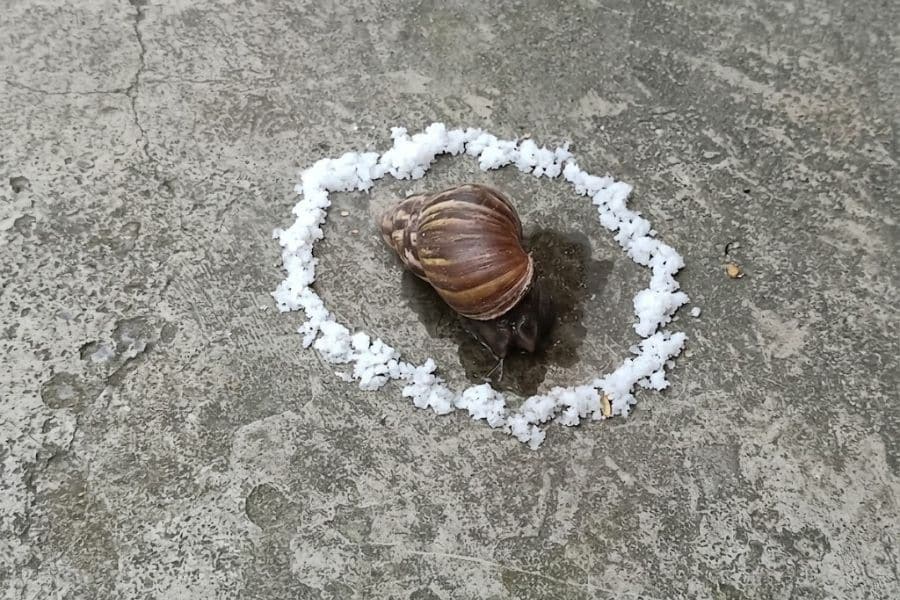
Does Salt Kill Slugs and Should You Use It?
Salt kills slugs by drawing the water out of them, which is as unpleasant as it sounds and takes a while. That’s the bit the videos show. What they don’t show is what happens to the patch of soil where the salt lands, and the patch next to that, and the roots of the plant growing three inches away.
Salt in soil is a real headache. Sodium builds up; it messes with how plants take up water and sticks around. You can’t rinse it out of a bed the way you’d rinse a countertop.
If you keep sprinkling it around your hostas because there’s a slug on the leaf, you’re slowly turning that bit of ground into somewhere very little wants to grow.
And if you’re gardening in raised beds or pots, where the soil volume is smaller, the effect shows up faster.
Then there’s the wider issue. Slugs are food for hedgehogs, frogs, toads, ground beetles, and a lot of birds. A slug that’s been salted isn’t safe for any of them to eat, and a garden without those creatures ends up with more slugs, not fewer.
So even setting the soil damage aside, salt on slugs is a short-term win that makes your long-term problem worse.
Why You’ve Got So Many Slugs in the First Place
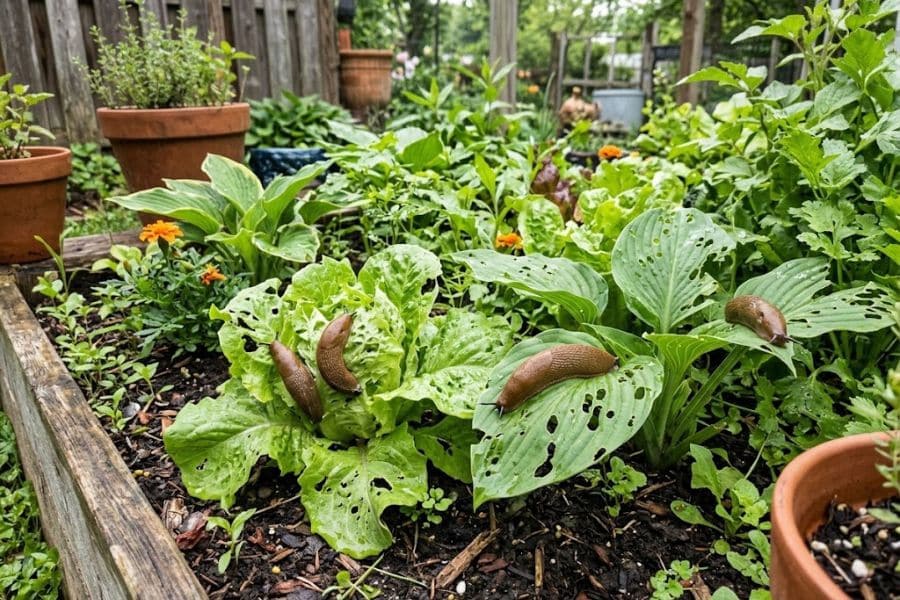
Slugs love damp, dark, sheltered spots, and most gardens have plenty of those without meaning to. The gap under a plant pot, the underside of a piece of untreated wood, a pile of leaves you meant to move in April and didn’t, the thick mulch right up against a soft-leaved plant. That’s slug real estate.
They also love the plants we love. Hostas, dahlias, delphiniums, marigolds, young lettuce, basil seedlings, strawberries just as they start to blush. Anything soft, anything young, anything with a bit of moisture in it.
Watering habits play a part too. Watering in the evening leaves the soil surface wet all night, which is exactly the condition slugs come out in. Switching to a morning watering, when it’s going to dry off in the sun, cuts down on the overnight party quite a bit.
The Physical Barriers That Stop Slugs in Their Tracks
The most reliable slug defense is to put something in the way. Slugs have soft undersides, and they don’t like crossing anything sharp, dry, or scratchy. So you make the ground around the plants they love unpleasant to travel across.
A few things that work:
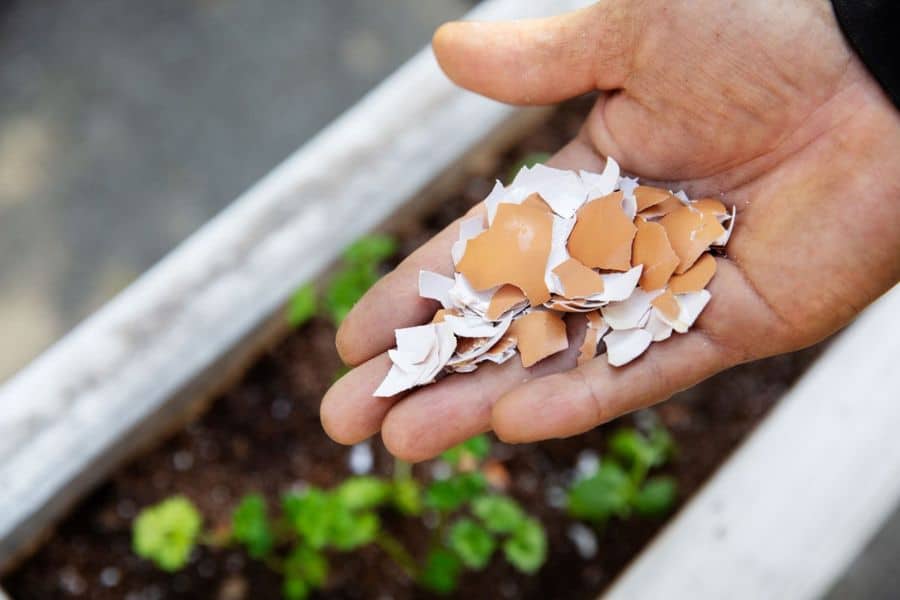
- Crushed eggshells, rinsed and left to dry so they’re brittle, then broken up and scattered in a ring around vulnerable plants. You need quite a thick ring of them for it to work, and you’ll need to top it up after heavy rain.
- Sharp horticultural grit or coarse sand. This is the one I trust most for hostas in pots: a thick layer on the surface of the compost. Slugs really don’t want to slide over it.
- Copper tape around the rim of pots. Buy the wider tape; the thin stuff isn’t enough.
- Wool pellets scattered around the base of plants. They swell up when they get wet and turn into a scratchy, matted layer slugs won’t cross. Bonus, they break down into the soil and add a bit of nitrogen. My favorite of the lot for veg beds.
The thing about barriers is you have to actually maintain them. A ring of eggshells that’s been rained on for two weeks and has soil kicked over it isn’t doing anything.
Beer Traps and Slug Patrol
If you want to cut slug numbers rather than just fence them out, you need to actually catch some.
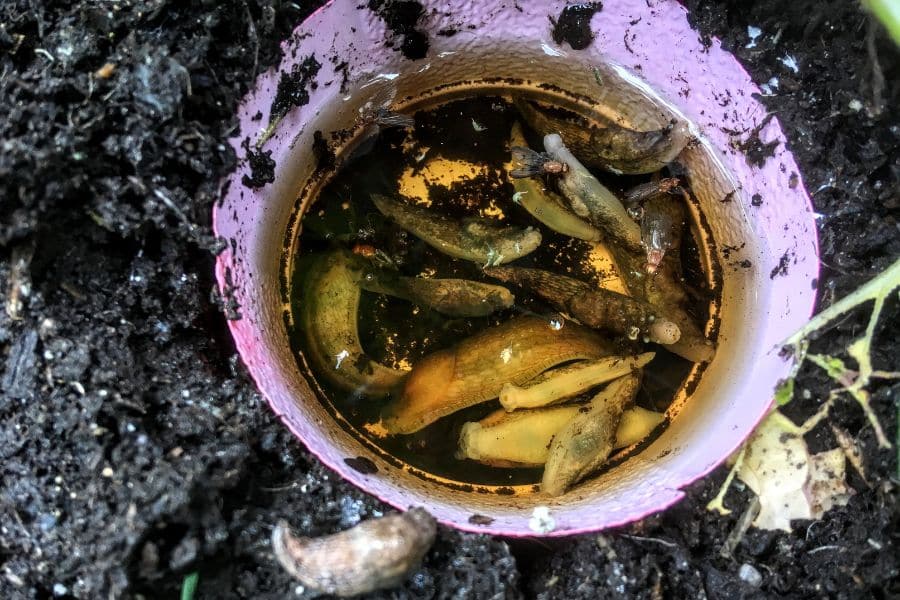
Beer traps are the classic. A shallow container, sunk into the soil so the rim is level with the ground, filled about halfway with cheap beer.
Slugs are drawn to the yeast, fall in, and don’t get out. The trick is to sink it flush, because if the rim sticks up, they’ll just crawl past. Empty and refill every couple of days, more often after rain. Yes, it smells, but it works.
A flashlight patrol after dark is the other one. Go out an hour after sunset with a torch and a container of soapy water. Pick the slugs off your plants and drop them in.
Iron phosphate slug pellets work as well, and they’re the kind sold as safe around pets and wildlife (check the label, and check twice if you have a dog that eats things it shouldn’t).
Slugs eat them, stop feeding, and die off elsewhere. They’re not as instant as the old blue metaldehyde pellets, which have been phased out in many places for good reason, but they work for a week or two and don’t poison the food chain the way the old ones did.
Plants Slugs Tend to Leave Alone
If you’ve fought the same battle in the same bed three summers running, sometimes the answer is to plant something else. There’s a whole list of plants slugs mostly walk past, and if you build your borders around those and keep the slug candy in pots you can defend, life gets a lot easier.
A few reliable ones from my own beds:
- Hardy geraniums (the perennial ones, not the pelargoniums on the porch). Tough leaves, unfussy, they spread and fill space, and slugs barely touch them.
- Lady’s mantle, with its soft frilly leaves that hold raindrops like little jewels. Slugs ignore it and it self-seeds.
- Ferns. Almost all of them. If you have a shady damp corner that’s slug central, ferns are the answer.
- Euphorbias, though wear gloves because the sap is an irritant. Slugs give them a wide berth.
- Herbs with strong oils. Rosemary, sage, thyme, lavender. Slugs are not interested, and you get to cook with them.
- Astilbes and heucheras for shade, alliums and salvias for sun. All of them get a pass from the slugs in my beds, year after year.
This doesn’t mean you have to give up on hostas. It means you grow the hostas in pots on a table, with copper tape and grit, and you fill the borders with things that can look after themselves. That’s a garden you can actually enjoy in July instead of policing it every night with a torch.
The Long Game: Building a Garden That Handles Its Own Slugs
The single best slug control I’ve ever had wasn’t a product; it was a hedgehog. We had one show up a couple of summers running, snuffling around at dusk, and the slug numbers were noticeably lower those years.
You can’t order a hedgehog, but you can make your yard the kind of place one might turn up. A gap under the fence they can squeeze through, a corner of leaves and twigs left rough rather than tidied to within an inch of its life, a shallow dish of water in a hot spell.
However, the flip side is that the hedgehog can wreak havoc of its own, as it loves to burrow and dig. If they can get to the plants they’ll dig underneath, and as a result, your plants wither and die.
Ground beetles are the unsung heroes. Little black shiny things that scuttle when you lift a stone. They eat slug eggs, which is the level of the food chain where the real difference gets made.
To keep them around, you need to avoid covering everything with slug pellets (even the safer ones, in moderation) and leave some mulch and leaf litter for them to live in.
Disclaimer: This article is for general information only and is not professional advice. It may contain affiliate links. Please see our full Editorial Policy for details.

Kylie Lang is a nationally syndicated travel journalist with bylines on the Associated Press Wire & more, a lifestyle writer, and the founder and editor of Your Lifestyle Library (yourlifestylelibrary.com). She holds a BA (Honours) in History from the University of Kent and is a member of the British Guild of Travel Writers.