
You’ve worked hard for this. Decades of early mornings, long meetings, and convincing yourself you’ll travel more “when you retire.” Well, that time is here. And as it turns out, more Americans than ever are looking beyond US borders for their next chapter.
A Monmouth University poll found that the number of Americans retiring abroad has tripled over the last 30 years, with over 700,000 retirees now receiving Social Security payments outside the US. Europe, in particular, has become a serious contender. The quality of life, the healthcare, the culture, the food. It adds up to something most people can’t quite find at home.
Here’s a look at some of the European hotspots attracting American retirees right now.

9 Retiree Hotspots in Europe
Europe is a big place, and not every country makes the cut for Americans to retire there. Some are easier to access, some are more affordable, and some are just so beautiful they’ve earned a permanent spot on the retirement radar. Here are the destinations worth putting on yours.
France

Maybe I’m a bit biased here, as I live in France and moved here about ten years ago. It ranks among the most popular choices for American retirees in Europe, and it’s not hard to see why. Close to 62,000 US expats currently live there, drawn by world-class food, a slower pace of life, and a healthcare system the World Health Organization has consistently ranked among the very best in the world.
The good news on costs is that your dollars stretch further than you might expect. Rent in the US is roughly 100% higher than in France. A one-bedroom apartment in central Paris runs around $1,400 per month, compared to around $4,000 in New York City. Move beyond Paris into places like Dordogne, Brittany, or Provence, and costs drop further still.
France doesn’t have a dedicated retirement visa for Americans, but the Long-Stay Visitor Visa (VLS-TS) is the standard route. You’ll need to show proof of income equivalent to France’s minimum wage, currently around €1,767 per month, along with proof of accommodation and health insurance. The visa is renewable annually, and after five years of continuous legal residence, you can apply for permanent residency.
One thing worth knowing: the US and France have a bilateral tax treaty that prevents double taxation, which is good news for retirees living off pensions and Social Security. Many expats also take out supplementary private insurance to cover the portion not reimbursed by the public system, which typically costs between €50 and €150 per month.
Italy
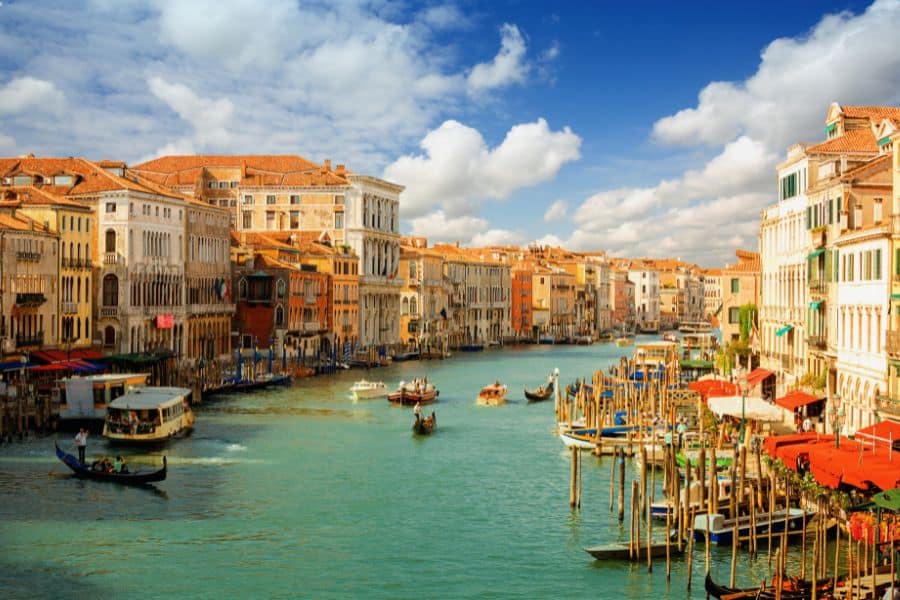
There’s a reason people have been dreaming about retiring in Italy for decades. The food, the history, the unhurried approach to daily life. And now there are some appealing financial incentives that make it even more attractive for Americans.
Italy offers a 7% flat tax on foreign pension income for retirees who move to qualifying southern towns, including parts of Sicily, Calabria, and Sardinia. If you’ve been looking for a reason to base yourself somewhere other than Florence or Rome, that’s a pretty compelling one.
To stay long-term, most Americans apply for the Elective Residence Visa, designed specifically for financially independent individuals who want to live in Italy without working. You’ll need to demonstrate a passive income of at least €31,000 per year as a single applicant, or €38,000 as a couple. The visa is issued for one year and can be renewed. After five years, you’re eligible to apply for permanent residency.
The average cost of living in Italy runs around $1,945 per month for a single person, though this varies significantly by region. Northern cities like Milan sit at the higher end, while smaller towns in the south offer affordable living.
Italy’s public healthcare system is ranked second in the world by the WHO. Once you’re a legal resident, you can register with the national system and access care at a very low cost. Some expats choose to add private cover for faster access to specialists, and annual plans typically range from $1,445 to $2,560.
Greece

Greece has become one of the smartest retirement moves in Europe, and once you look at the numbers, it’s hard to argue otherwise.
The country offers a 7% flat tax rate on foreign-sourced income for retirees who become Greek tax residents, and this rate applies for up to 15 years. To qualify, you must not have been a Greek tax resident for five of the last six years. For American retirees living off pensions, Social Security, or investment income, this is a significant benefit.
The cost of living is one of the lowest in Western Europe. A retired couple can live comfortably on around €1,500 to €2,500 per month, depending on location, and the average cost of living in Greece is estimated to be around 26% lower than in the US. Rent, in particular, is a major area of savings.
To gain residency, American retirees can apply for the Financially Independent Person (FIP) visa. You’ll need to show a minimum monthly income of €3,500, along with proof of private health insurance and accommodation. The visa is valid for three years and is renewable.
Alternatively, Greece’s Golden Visa program allows residency through property investment starting from €250,000 in certain zones, with higher thresholds in prime areas.
Greece ranks in the top 15 globally for healthcare quality, with strong hospitals in Athens, Thessaloniki, and Heraklion. Private insurance is recommended for most expats, with plans running from €60 to €250 per month depending on age and coverage.
Over 250 days of sunshine per year, a Mediterranean diet that’s good for you, and a pace of life that encourages long lunches and afternoon naps. Could this be your retirement home?
Iceland

Iceland isn’t the obvious choice for retirement. It’s cold, it’s remote, and it’s expensive. But for the right person, it’s also one of the most extraordinary places on the planet to live.
The Global Peace Index ranks Iceland as the safest country in the world, a title it has held consistently for many years. It also ranks among the top three happiest nations globally, with one of the highest life expectancies in Europe. If a long, healthy, peaceful retirement sounds good, Iceland is worth serious consideration.
The landscape is unlike anywhere else. Hot springs, geysers, the Northern Lights, black sand beaches, and vast volcanic highlands. This is a country where the outdoors is a fundamental part of daily life, and where retirees who love nature and adventure find endless year-round activities.
The healthcare system ranks 8th globally and is built on a universal public model. English is widely spoken throughout the country, which makes the transition considerably easier for Americans.
The significant caveat is cost. Iceland is the most expensive country in the Nordic region by some margin, and the cost of living is noticeably higher than in the US. Retirees who choose Iceland generally do so for the lifestyle and safety, not the budget. You’ll need a solid retirement income to make it work comfortably.
Americans can apply for a long-stay residence permit through Icelandic immigration authorities, and the country’s small size and close-knit communities make it surprisingly easy to feel at home.
Norway

Norway consistently ranks at the top of global retirement indices. A world-class healthcare system, one of the highest standards of living anywhere in the world, and scenery that stops you in your tracks.
The Norwegian fjords, the midnight sun, the fishing villages clinging to cliffsides, the sheer scale of the landscape. Norway is a place where you can spend an entire retirement exploring and still feel like you’ve only scratched the surface.
The country ranks highly for English proficiency, which is great news for Americans who aren’t ready to tackle Norwegian. The culture is open, safety levels are exceptional, and political stability is among the best in Europe.
Norway is an expensive country. A comfortable retirement in Oslo requires a monthly budget of around $2,800 to $3,800, depending on lifestyle, and public transit is well-developed, with a monthly pass running around $100. Outside Oslo, costs are lower, and the quality of life in smaller coastal towns and rural communities is exceptional.
Healthcare is publicly funded for residents, with annual out-of-pocket fees capped at around $250. Private insurance for non-residents runs between $150 and $250 per month.
Norway is not an EU member, but it is part of the Schengen Area. Americans planning a long-term stay will need to apply through Norwegian immigration for a residence permit, typically based on proof of self-sufficiency and passive income. The process is straightforward for retirees with solid financial foundations.
Scotland

Scotland is the country of dramatic landscapes and history around every corner. And unlike many European retirement destinations, you arrive already speaking the language, which makes the whole thing feel more achievable.
Edinburgh is Scotland’s most popular base for American expats, offering world-class museums, incredible architecture, and a thriving food scene. St Andrews, the Highlands, and the coastal towns offer a quieter, more rural experience for those who want to escape city life.
The NHS provides free healthcare for legal residents, which is a significant draw for Americans used to navigating complicated and expensive insurance systems. Some expats add private cover for faster specialist access, but most find the NHS more than adequate for everyday needs.
A comfortable retirement in a Scottish village or small town typically runs between £1,500 and £2,200 per month, covering housing, food, transport, and leisure. It’s worth noting that Scotland’s cost of living is around 5% lower than the US average.
The visa situation requires planning. The UK closed its dedicated retirement visa program in 2022, so Americans need to find the right route for their situation. Those with a UK-born grandparent can apply for the UK Ancestry Visa, which is valid for five years and leads to permanent residency. Others may use the Standard Visitor Visa for stays up to six months while exploring longer-term options.
As of January 2025, US citizens also need an Electronic Travel Authorization (ETA) to visit, which costs £10, is valid for two years, and can be completed online within a few days.
Luxembourg
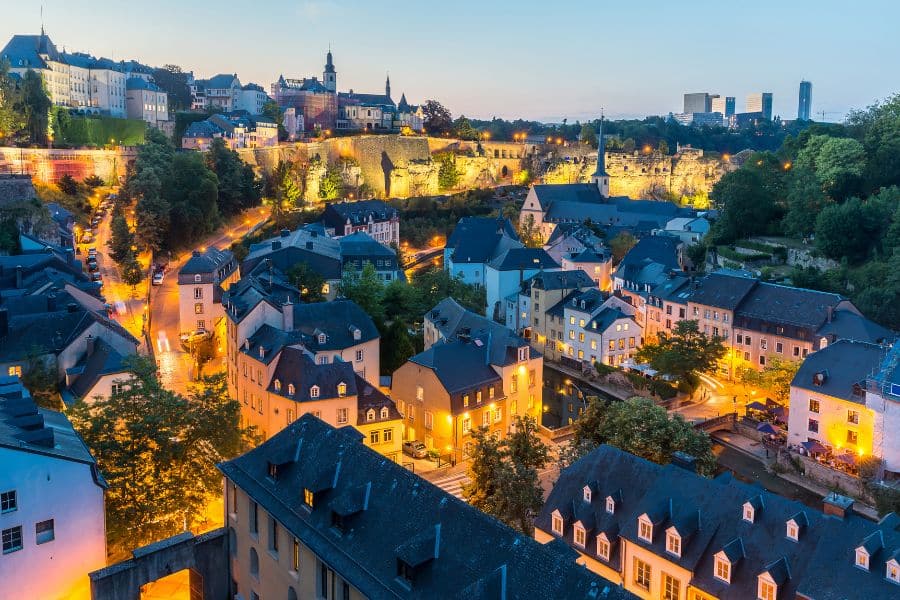
This tiny country, smaller than Rhode Island, sits right at the heart of Europe, surrounded by France, Germany, and Belgium, and it offers a lifestyle that is safe, stable, cultured, and extremely well-connected.
Luxembourg ranks among the top five retirement destinations globally for quality of life and is consistently placed in the top ten for safety and political stability. The country has three official languages: Luxembourgish, French, and German, and most residents speak all three plus English, so communication is rarely a problem.
The location is perfect for retirees who want to travel. From Luxembourg City, you can be in Paris in two hours by train, Brussels in three, and Frankfurt in under two. Weekend trips across Europe are very accessible.
The country is mostly rural outside the capital, offering a peaceful pace of life. At the same time, Luxembourg City itself has a rich cultural scene, excellent restaurants, and world-class museums, so there’s no shortage of things to do when you want them.
The cost of living is higher than the European average, with monthly costs for a single person running around $2,757. For retirees with a high income, the trade-off is a very high standard of living, excellent public infrastructure, and one of the most stable and secure environments in Europe.
Wealthy retirees can obtain a Luxembourg residence permit by demonstrating passive income, with investment-based pathways also available.
Denmark
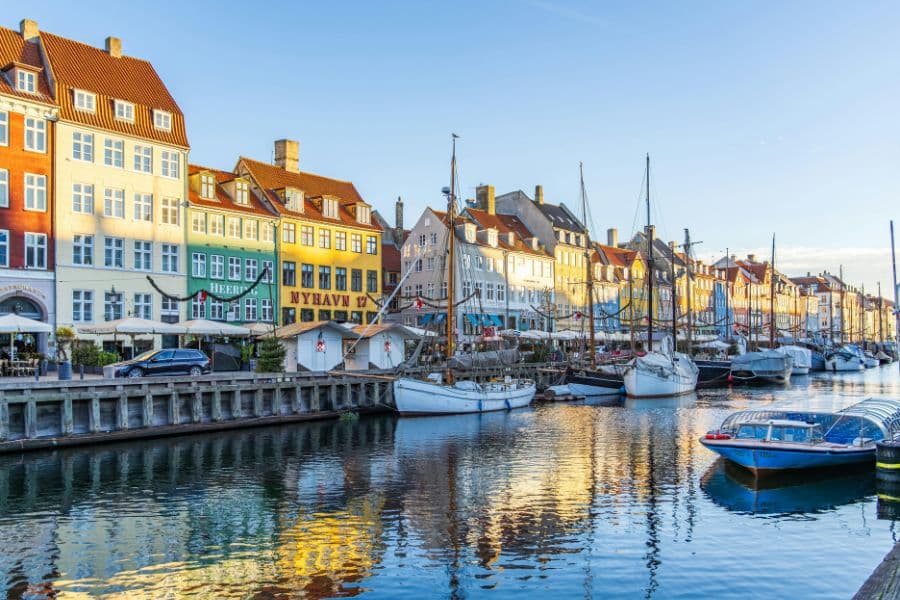
Denmark consistently ranks among the happiest countries in the world, taking second place globally in the most recent Happiness Index. The cities are beautiful, the people are friendly, cycling is a way of life, and there’s a calm, well-organized quality to daily existence that many Americans find deeply appealing.
Copenhagen is the natural starting point for most retirees, offering outstanding healthcare, incredible food, easy transit, and a strong expat community. Aarhus, Denmark’s second city, is smaller and more affordable while offering a similar quality of life.
Denmark ranked 10th in the 2024 Environmental Performance Index for cleanliness and sustainability, a significant step ahead of the US. The healthcare system is primarily tax-funded, comprehensive, and regarded as one of the best in Europe. For non-residents, private insurance typically runs between $150 and $250 per month until you’re enrolled in the public system.
Renting a one-bedroom apartment in central Copenhagen averages around $1,700 per month, and a comfortable lifestyle in the city generally requires a monthly budget between $2,800 and $4,000, depending on your preferences. Outside the capital, costs drop meaningfully.
English proficiency in Denmark is exceptional, ranking among the highest in Europe, making daily life far easier for Americans. The Danes are welcoming, particularly in cosmopolitan areas, and expat networks in Copenhagen and Aarhus are well-established.
Americans planning a long stay will need a residence permit from the Danish immigration authorities. The process requires proof of income, accommodation, and health insurance. After five years of legal residence, permanent residency becomes available.
Netherlands
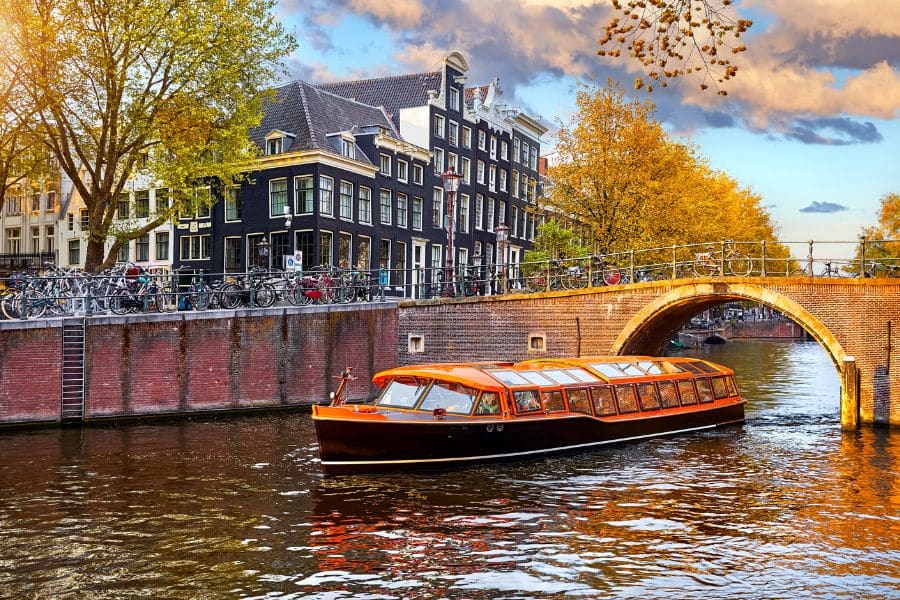
The Netherlands ranks second globally for quality of life and sits in the top ten for happiness, safety, and healthcare quality.
Amsterdam is the obvious draw, but cities like Delft, Leiden, and Haarlem offer a slower pace with equally beautiful canals, architecture, and access to everything the country has to offer. The infrastructure across the Netherlands is exceptional, and the Dutch love of cycling means daily life is active.
English proficiency here is among the highest in Europe. Most Dutch people are multilingual, and navigating daily life as an English speaker is easier in the Netherlands than almost anywhere else on the continent.
The healthcare system ranked fourth on the 2024 World Index of Healthcare Innovation. Once you’re a resident, you’ll have access to a high-quality system, though it does operate on a mandatory insurance model rather than a purely public one.
The cost of living is around 5% higher than the US average, even before factoring in rent. A one-bedroom apartment in Amsterdam averages around €1,200-€1,500 per month, depending on location. Monthly budgets for a comfortable retirement typically range from €2,000 to €3,000, depending on lifestyle.
To gain residency, Americans need to apply through the Dutch Immigration and Naturalization Service, providing proof of income above approximately €1,572 per month and a clear reason for being in the country.
After five years of legal residence, Dutch citizenship becomes available. The Netherlands is also exceptionally well-placed for travel, sitting within easy reach of Belgium, Germany, France, and the UK, making it a brilliant base for exploring the rest of Europe throughout your retirement years.
Disclaimer: This article is for general information only and is not professional advice. It may contain affiliate links. Please see our full Editorial Policy for details.

Kylie Lang is a nationally syndicated travel journalist with bylines on the Associated Press Wire & more, a lifestyle writer, and the founder and editor of Your Lifestyle Library (yourlifestylelibrary.com). She holds a BA (Honours) in History from the University of Kent and is a member of the British Guild of Travel Writers.