
We’ve had the most intense and longest heatwave in France since moving here. Even my neighbor, Claude, who is 86 and has lived here all his life, has been shaking his head with frustration as his veggies wilt before his eyes.
It’s been brutal. Literally everything, and I mean everything, in my garden looks dead and burnt to a crisp. It makes me want to weep when I think about how much work went into it in the spring.
Everything in me wants to grab the hose and water like my life depends on it. But, according to one of my French friends in the next village, Madame Dubois, that is the worst thing I could do.
And she knows a thing or two, as her veggie patch is huge and bountiful. It’s like the gift that keeps on giving throughout the year.
So what should you do after six heatwaves? What advice did Madame Dubois give me to bring my garden back to life again? And how do you resist the call of the hosepipe?
Madame Dubois’ Best Piece of Advice
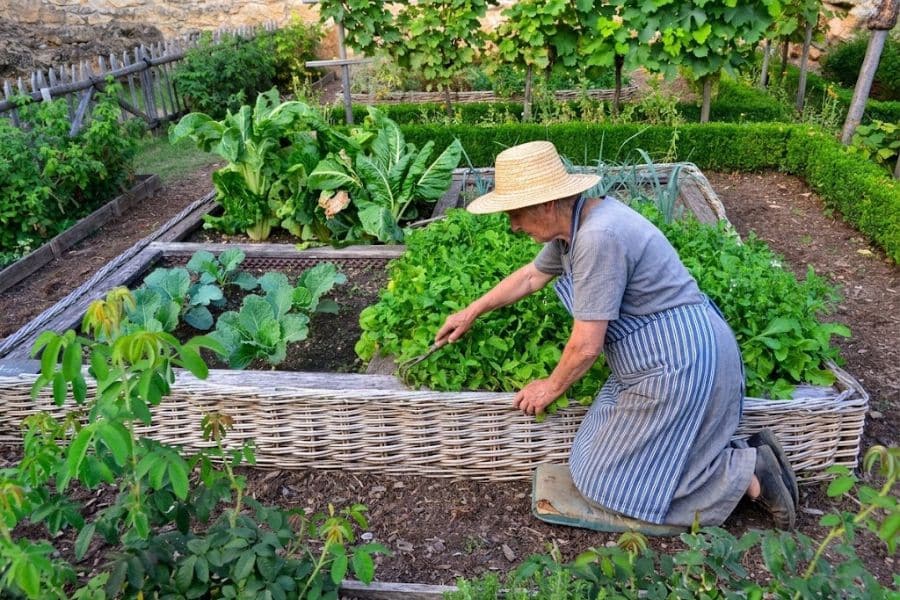
Stop being so precious over your garden, or words to that effect in French. She basically told me to get over it. I’m not in England anymore, so I have to deal with the heat and prepare my garden accordingly.
The heat comes every year, so be prepared and do what you need to help your plants survive, and stop crying over strawlike grass. It will come back; it just won’t look good for a couple of months of the year.
Madame Dubois never minces her words, and I love her for it.
Check the Soil Before You Do Anything Else
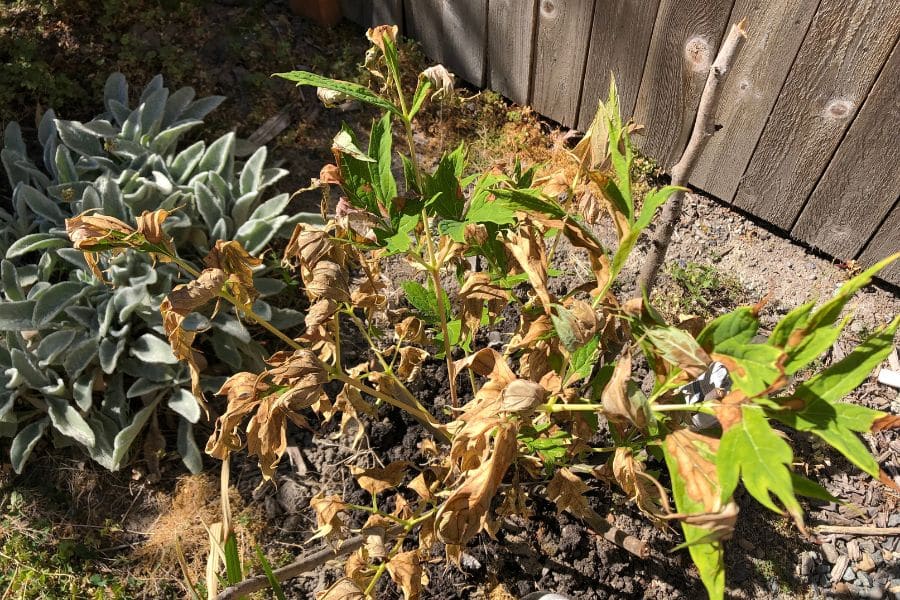
Nature is a wonderful thing and has a way of looking after itself, and when there’s a heatwave, that’s exactly what it does.
When the sun’s beating down and the temperature’s hovering somewhere around 90, plants curl their leaves inward or let their blooms droop to shrink the surface area the sun can hit. It’s the plant version of pulling a hat down over your eyes. Clever isn’t it?
The soil around the roots might still be perfectly damp, and pouring more water on top will just leave the roots sitting in a soggy mess, which is a whole other kind of trouble.
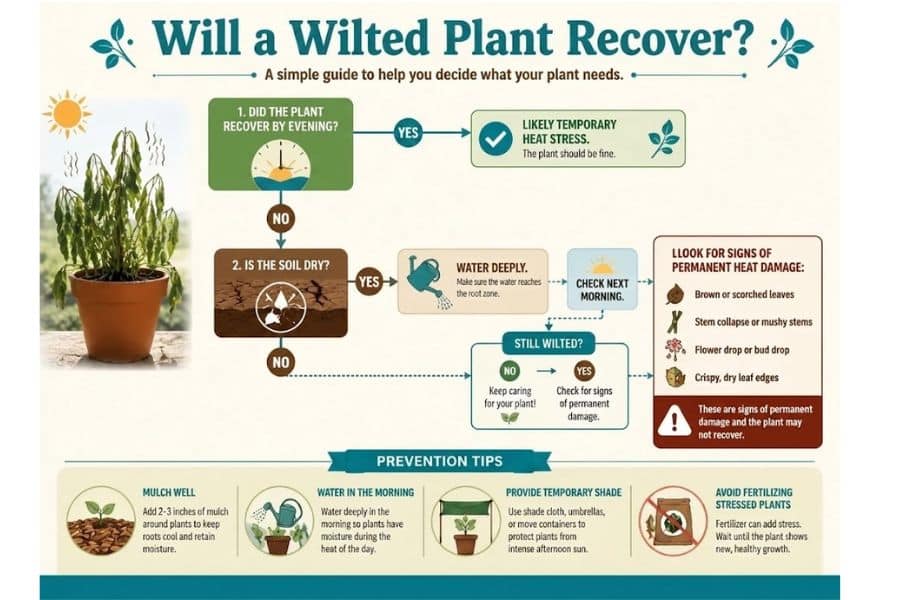
So before you reach for the watering can, stick a finger a couple of inches into the soil. If it comes out cool and damp, your plant doesn’t want a drink; it wants shade and a bit of time.
If it comes out bone dry and dusty, then yes, water is the answer. A cheap soil moisture meter takes the guesswork out of it if you’d rather not do the finger test.
When you do need to water, do it first thing in the morning before the day heats up, and aim the water at the base of the plant, not the leaves. Water droplets sitting on foliage in bright sun act like tiny magnifying glasses and can scorch the leaves.
Give it a good, long soak at ground level rather than a light sprinkle on top, so the water actually reaches the roots where it’s useful. A soaker hose or a drip line makes that whole job easier if you’ve got a lot to cover, but a watering can pointed at the soil works just as well.
Make Mulch Your New Best Friend

Mulch has been my unsung hero during this incredibly hot summer. A decent layer of it over your beds and around the base of pots slows down evaporation, keeps the soil temperature steadier, and stops the top inch from baking into a crust that water just runs off.
When the forecast’s promising another week of heat, pile it on a bit deeper than you normally would. Two or three inches, not a pathetic sprinkle. Now is not the time to be sparse.
You don’t need to spend a fortune. Bagged bark or brown mulch from the garden center does the job, but so do leaves you’ve collected, grass clippings once they’ve dried out a bit, or straw if you can get hold of it.
I’ve used all sorts over the years, and the plants don’t care as it’s survival of the mulching, not a garden fashion parade. All they want is to keep the soil underneath cool and damp for longer. If you’ve got a tree or two, one of those mulch mat rings around the base saves you fiddling about with a pile that keeps sliding off.
One small thing: keep the mulch an inch or so back from the stems of your plants. Piled right up against the stem, it can trap moisture where you don’t want it and invite rot, which rather defeats the purpose. (Another gem from Madame Dubois)
Give the Worst Sufferers Some Shade

Some plants will keep struggling no matter how well you water and mulch, because they’re simply getting cooked. Afternoon sun in a heatwave is punishing, and even sun-lovers can hit a wall.
If a plant is in a pot, the easiest thing in the world is to shuffle it round to a shadier spot for a few days, or tuck it under a bench, or park it on the shady side of the house until the worst passes.
In-ground plants take a bit more improvising. A garden umbrella wedged into the border works. A couple of lawn chairs with an old sheet draped over them looks daft but does the job perfectly. The point isn’t to blot out the light entirely; it’s to soften that fierce afternoon glare so the leaves stop scorching and the soil stops drying out at speed.
A few hours of dappled shade in the hottest part of the day can be the difference between a plant that bounces back and one that turns crispy.
If you find yourself dealing with this every summer, like me, it might be worth investing in a proper shade cloth, the kind that blocks about half the light. You can drape it over stakes or a frame and leave it up for the duration of a hot spell.
Put the Pruners Away for Now
When a plant looks scorched, the itch to tidy it up is strong. I’ve tried to scratch that itch a few times. Resist.
A heat-stressed plant is already running on fumes, and cutting into it now asks it to heal a wound while it’s still trying to survive the weather. It’s like being asked to redecorate the kitchen while you’ve got the flu. And we all know how that ends up.
Leaves that look tired but still have some green in them are doing useful work. They’re still photosynthesizing, still feeding the plant, and once the weather breaks, a lot of them will perk up more than you’d expect.
The only bits worth removing right now are the ones that are fully brown, fully dead, or clearly diseased, and even then, use clean, sharp pruners and don’t get carried away. Save the proper tidy-up for a cooler week when the plant’s had a chance to catch its breath.
The same goes for fertilizer, which is the other thing people reach for when a plant looks unwell. It feels like feeding a sick friend a nice bowl of soup. It isn’t. Fertilizer pushes a plant to grow, and a stressed plant hasn’t got the energy to grow; it’s barely got the energy to stay alive.
Pushing it to sprout new leaves right now diverts resources it can’t spare, and on top of that, fertilizer salts in dry soil can actually burn the roots.
Wait until temperatures have dropped, the plant looks like it’s turned a corner, and you can see fresh growth appearing. Then you can feed.
Think About Next Summer While You’re At It
Once the immediate rescue mission’s done and things have calmed down, it’s worth having a little think about the parts of the garden that suffered the most. If the same plants collapse in the same spots every August, that’s the garden telling you something.
Some plants just aren’t built for the kind of summers we’re getting now, and forcing them to keep struggling is more work for you and a sadder-looking bed for your trouble.
Swapping out a few of the divas for plants that shrug off heat and drought can save you an enormous amount of watering and worry. Lavender, sedum, salvia, yarrow, echinacea, rosemary, and Russian sage all pretty much look after themselves once they’re established, and there are plenty of others depending on where you are.
I’m not saying rip everything out. I’m saying that if there’s a spot that scorches every year, the plant in it might not be the right plant, and replacing it with something tougher is the easier and sensible option.
And for the plants you do want to keep, small changes make a big difference next year. Bigger pots hold moisture longer than small ones. Grouping pots together creates a microclimate where they shade each other’s soil.
A layer of mulch put down in spring, not July, gets you ahead of the weather instead of chasing it. Your garden will thank you for it, and you’ll be in a much better position to ride it out without you standing over it with a hose at 6 am every morning.
Disclaimer: This article is for general information only and is not professional advice. It may contain affiliate links. Please see our full Editorial Policy for details.

Kylie Lang is a nationally syndicated travel journalist with bylines on the Associated Press Wire & more, a lifestyle writer, and the founder and editor of Your Lifestyle Library (yourlifestylelibrary.com). She holds a BA (Honours) in History from the University of Kent and is a member of the British Guild of Travel Writers.