
My Dad died of a heart attack in 2022, and I wish I’d noticed the signs because some of them were definitely there. The heartburn, tiredness, and sleepless nights were all put down to Dad getting older. None of us, including him, joined the dots.
The thing that still nags at me, 4 years on, is the question of whether his body was trying to tell him. Whether all those small, easily-explained-away complaints in the month before were actually a warning. I’ve spent a long time reading about this, partly to understand, partly because I have a brother, a husband, and friends who shrug off the same kinds of things every week.
It turns out that for a sizeable chunk of people who have heart attacks, there are warning signs days or weeks beforehand. They’re called prodromal symptoms, and they’re the everyday things we write off as stress, age, a bad week, too much coffee, not enough sleep.

Why a Heart Attack is Often a Quiet Killer
My Dad was right as rain the day he died. He had a doctor’s appointment for a blood test in the morning, kissed my mom goodbye, and said he’d be back in about half an hour, only he never came back. He got to the doctors, had the appointment, and went out to his car to drive home, but he never left the car park.
My mom, getting worried after he hadn’t returned within an hour, rang the doctor’s surgery and they confirmed he’d come for his appointment. A nurse went out to the car park and found him sitting at the steering wheel with the car keys in his hand. He’d suffered a heart attack and died almost instantly.
When reading through different studies and research on heart attacks, I found that 95% of those who had suffered from them reported new or different symptoms more than a month before the event. Unusual fatigue was the most common, followed by sleep disturbance and shortness of breath. Only about a third had any chest discomfort in that lead-up period at all.
The numbers for prodromal symptoms in general sit somewhere between 4 in 10 and 6 in 10 of all heart attack patients, depending on how you count and who’s being asked. That’s a lot of people whose bodies sent up a flare and got ignored, including by doctors. My Dad saw his GP twice in the month before he died, once about the fatigue and once about the indigestion. Neither visit ended with anyone checking his heart.
The Symptoms That Get Missed
The reason these signals get missed is that they’re identical to the stuff we all complain about anyway.
- Unusual tiredness. The kind where you sit down to put your shoes on and feel like you need a rest afterward. Not the end-of-a-long-week tired, more the why-am-I-this-wiped-out-from-folding-laundry tired. For me, this would be the one I’d most want to take seriously in someone I love, because it’s the one my Dad mentioned most.
- Continual sleepless nights. Waking at 3 a.m. with your heart going, or just not being able to drop off when you used to sleep fine. If it shows up alongside other changes, it’s worth a second look.
- Shortness of breath. Doing things that didn’t used to make you breathless. Climbing the stairs in your own home, walking from the car to the grocery store. Anything you have always found easy but suddenly find hard.
- Indigestion or heartburn. This one is a little harder because so many of us actually do have reflux, and the symptoms are identical. The clue is when it’s new, or when it doesn’t respond to the things that usually fix it. For me, I take a Rennies tablet, and it fixes it pretty much instantly, but if that suddenly stopped, I’d be more concerned.
- A dull ache or pressure. One that drifts into the jaw, the upper back between the shoulder blades, the inside of an arm, the throat.
- Light-headedness or a cold sweat for no reason. The cold sweat is the symptom I’d take most seriously, especially when paired with anything else on this list.
Why Men and Women Don’t Always Get the Same Warning
Heart attacks present differently in men and women. Men are more likely to get the chest pain version, the pressure or squeezing in the center of the chest that radiates down the left arm. They still get the subtler signs too, the fatigue and the indigestion and the breathlessness, but the chest pain shows up more reliably.
Women are more likely to skip the chest pain entirely, or to have it as a minor part of a much bigger picture. The fatigue, the sleep disruption, the nausea, the jaw or back pain, the breathlessness, those show up more often.
A study in circulation on young adults found that women under 55 were more likely than men to present without chest pain, and more likely to have their symptoms attributed to something non-cardiac when they did get to a hospital.

The Things That Make a Symptom Worth Taking Seriously
None of this is useful if it just leaves us anxious about every twinge. I’ve been there too, ever since Dad died, I’ve had moments of catastrophizing about my own heartburn. That’s not what I’m going for here. The point is to know when a cluster of small things deserves a phone call rather than a shrug.
There are a few things that bump a symptom from nothing to worry about to needing a phone call:
- It’s new. You haven’t had this before, or you haven’t had it like this. The body’s changing behavior, especially in your 50s, 60s, and 70s, is worth paying attention to, even when the change seems minor.
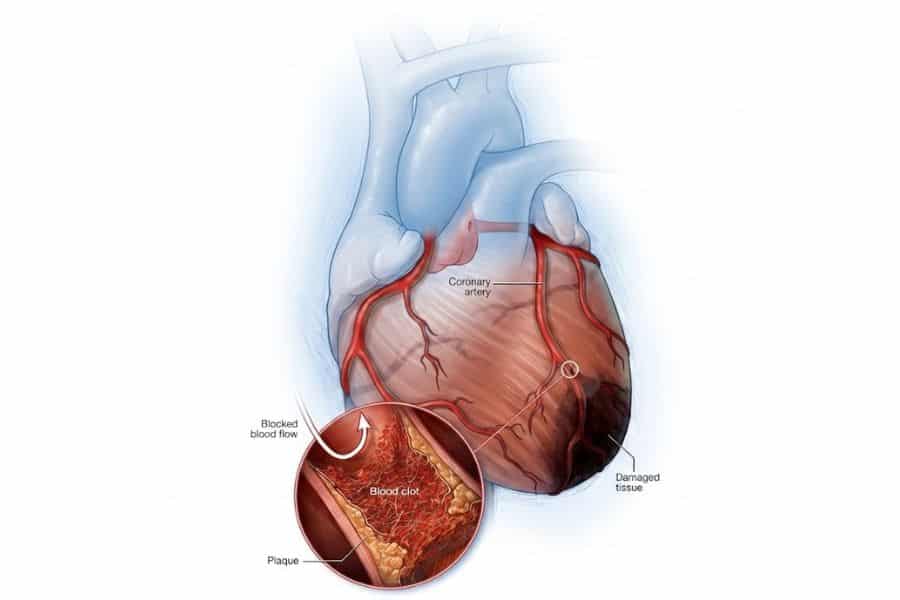
- It comes with effort and eases with rest. Breathlessness or a heavy feeling that turns up when you’re walking uphill, carrying groceries, or going up stairs, and goes away when you stop, is the classic pattern of a heart that isn’t getting enough blood supply.
- It’s clustering. One symptom on its own is almost always nothing. Three or four together, fatigue and broken sleep and breathlessness and an odd ache in the jaw, could be something.
- It’s persistent. A day of feeling off is a day of feeling off. Two weeks of feeling off, when nothing else in your life has changed to explain it, is a pattern.
How to Bring It Up Without Sounding Like a Hypochondriac
There’s an unspoken rule, or there was in our house growing up, that you only go to the doctors when you really need to. We don’t want to waste their time with every little ache, pain, or cough. Men are the worst at putting off going and will do everything they can to brush off whatever’s ailing them. This is a habit we need to break when it comes to heart attacks.
There are many reasons why we put off making an appointment, some of it’s fear, some because we don’t want to be seen as time-wasters, and others because we can’t necessarily articulate what the problem is. Here are a few things that might help:
- Write down the symptoms before the appointment, with rough dates, so it doesn’t come across as a ramble. Use the word new, because it’s the word a doctor will listen for.
- Mention any family history of heart disease straight away, because it changes how the appointment runs. And specifically ask whether the symptoms could be cardiac.
- If you’re worried about someone else and they won’t go, frame it as ruling things out, rather than as something being wrong. People will go to be told they’re fine more readily than they’ll go to be told they’re ill.
- And if it ever crosses the line into something acute, sudden, severe chest pressure, breathlessness that won’t pass, a cold sweat, pain shooting into the jaw or arm, confusion, fainting, call 911.
- Chew a regular aspirin if there’s one to hand and you’re not allergic, and get help on its way.
I think about my Dad’s last month a lot. I don’t know that anything we noticed would have changed the outcome, and I’ve made my peace with that. What I do know is that I pay attention now in a way I didn’t before.
Disclaimer: This article is for general information and isn’t a substitute for medical advice. If you’re worried about any symptoms in yourself or someone else, please speak to a doctor. If symptoms are severe or sudden, call 911.
Disclaimer: The content in this article is for informational purposes only and is not intended to replace professional medical advice, diagnosis, or treatment. Always consult your doctor, physical therapist, or healthcare provider before starting a new exercise program, particularly if you have existing joint, cardiovascular, or balance conditions.

Kylie Lang is a nationally syndicated travel journalist with bylines on the Associated Press Wire & more, a lifestyle writer, and the founder and editor of Your Lifestyle Library (yourlifestylelibrary.com). She holds a BA (Honours) in History from the University of Kent and is a member of the British Guild of Travel Writers.