
Jar lids feel tighter than they used to, grocery bags feel heavier on the walk from the car, and getting up from a low chair takes a little more effort than it did ten years ago. I’ve watched my mom start noticing a few of these things as she edges closer to sixty.
What’s happening is a slow loss of muscle called sarcopenia, and it starts creeping in earlier than most of us realize. The good news is that food is a huge part of the fix, and the two things your muscles need most are protein and calcium.
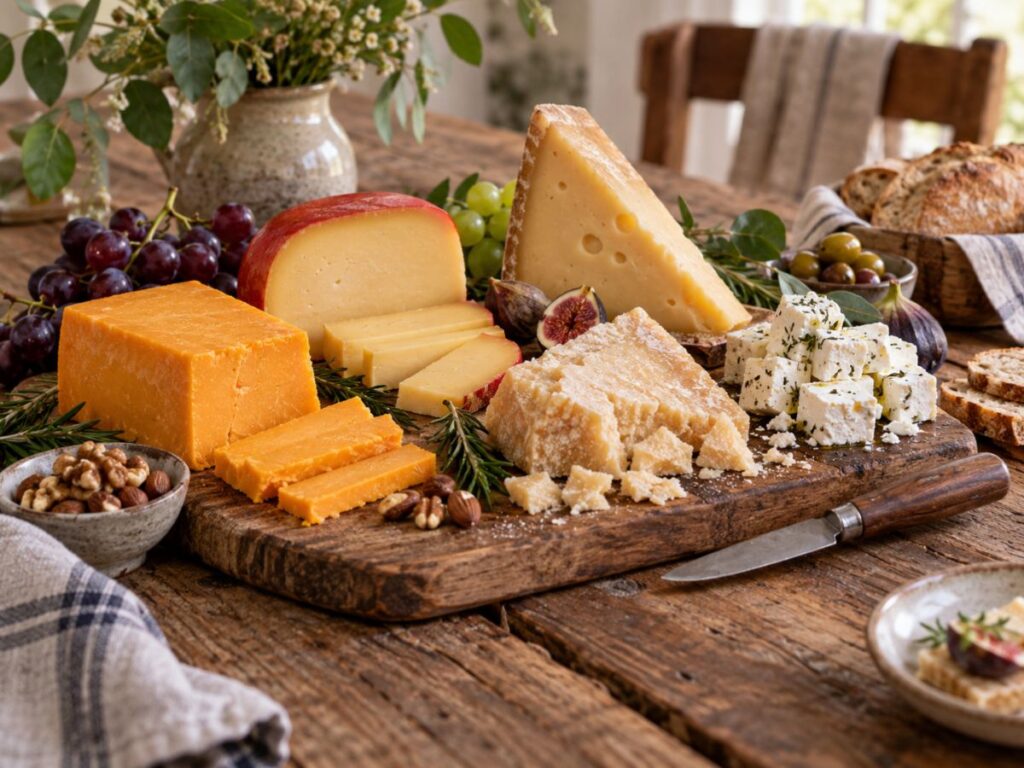
Which brings me to cheese. Now, as my mom lives in France, cheese is already a big part of her life. However, not all cheeses are created equal when it comes to rebuilding muscle. But before we get into that, it’s important to understand what’s happening to our muscles as we get older.
What Happens to Our Aging Muscles
From about age 30, we start losing a small percentage of muscle mass every decade, and after 60, that loss speeds up. This is sarcopenia.
Two things slow it down: resistance movement and protein. The movement side is walking with purpose, carrying your own groceries, lifting light weights, gardening, anything that asks your muscles to do work.
Based on my research, protein intake and physical activity are the two main factors that trigger your body to build muscle. The recommendation to prevent muscle loss is 1.0 to 1.2 grams of protein per kilogram of body weight per day, spread across your meals, or roughly 25 to 30 grams of quality protein at each meal.
The Cheeses That Help to Rebuild Muscles
Cheese is made from the two milk proteins, casein and whey, and it counts as a complete protein because it contains all nine amino acids your body can’t produce on its own.
Depending on the variety, a serving delivers 5 to 14 grams of protein.
I’d also say don’t get too hung up on the fat content. The old advice about avoiding full-fat dairy is no longer the advice being published, and for someone in their 60s trying to keep muscle on their frame, the fat in real cheese isn’t the enemy.
1. Cheddar
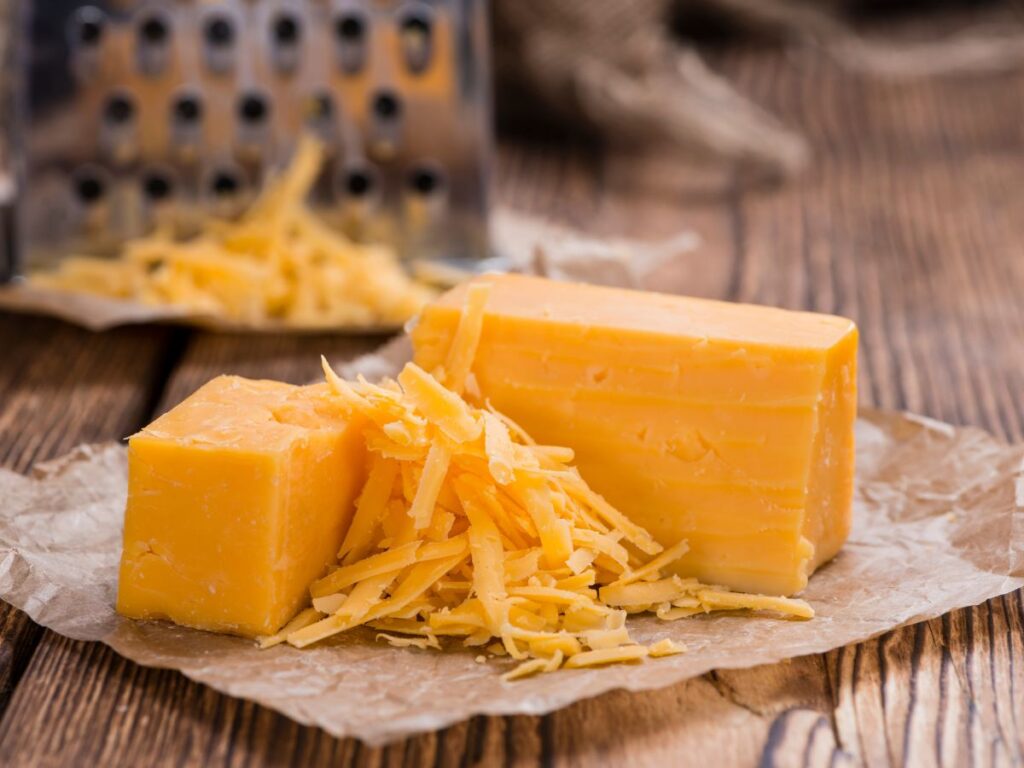
Being a Brit, I’m always going to cheer on the mighty Cheddar. Not only is it tasty, but it provides around 23 grams of protein per 100 grams, so a standard 1.5-ounce serving delivers close to 10 grams of complete protein in a piece the size of two dice.
Calcium helps your muscles contract properly, and phosphorus is a building block your body uses to repair and rebuild muscle tissue after any kind of activity.
Top tip: Buy the real aged stuff rather than the pre-shredded bags. The flavor is stronger, and it’s not processed within an inch of its life.
2. Parmesan
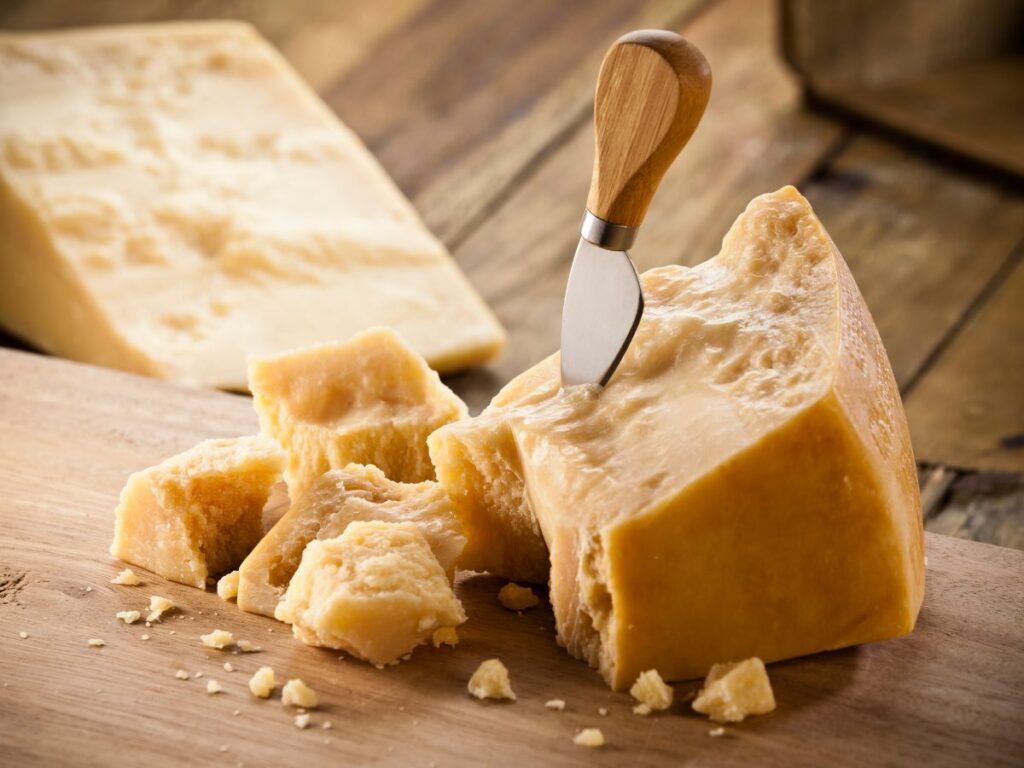
A 2-ounce (about 50-gram) portion of properly aged Parmigiano-Reggiano provides about 19 grams of protein.
What makes it work is the aging. The long maturation breaks long-chain milk proteins into free amino acids your body absorbs quickly, which is exactly what older muscles need.
A 100-gram portion of Parmigiano-Reggiano digests in about 45 minutes, compared with the three to four hours a similar portion of meat takes. Because of its exceptionally high calcium content, it’s often recommended to older adults with osteoporosis.
Top tip: Buy the real thing with the rind stamped, keep it wrapped properly in the fridge, and grate it fresh.
Found this useful? Get more like it in your inbox as a Lifestyle Library Insider.
3. Cottage Cheese
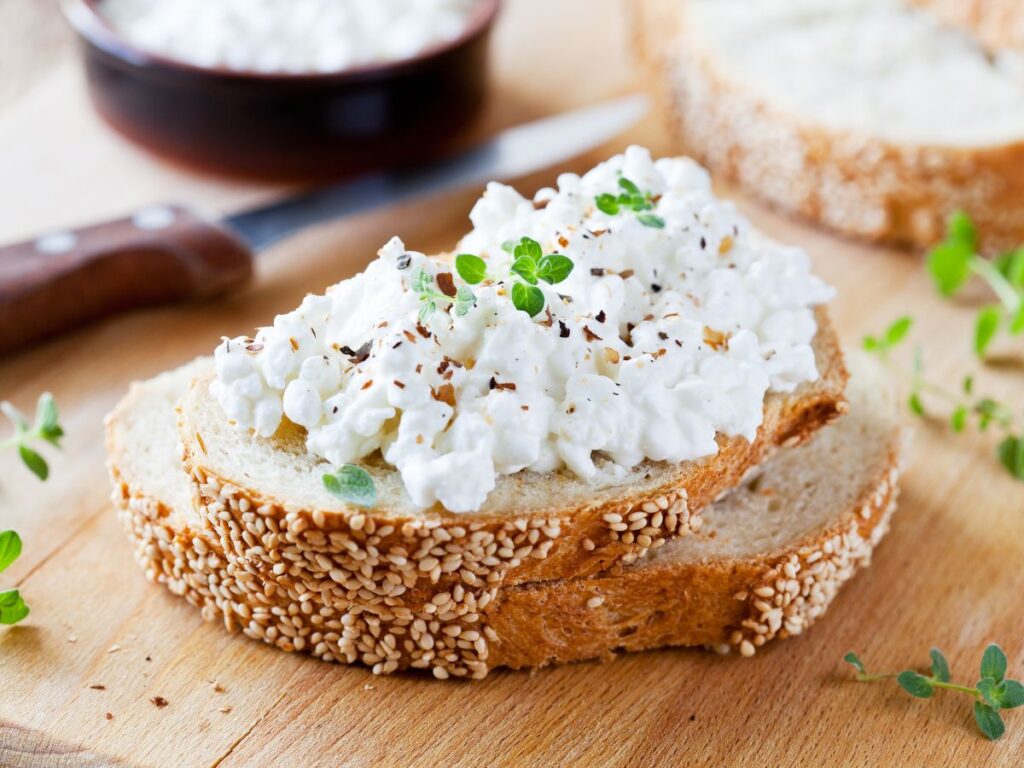
A single cup of low-fat cottage cheese delivers roughly 25 grams of protein, making it ideal for a full muscle-building response in older adults. I’m a big fan and often use it for a healthy mid-afternoon snack with a handful of nuts.
It works because of the mix of slow-digesting casein and fast-digesting whey. A randomized trial in older men found that 40 grams of casein taken before sleep raised overnight muscle protein synthesis rates by around a third compared with a placebo.
Top tip: Choose a lower-sodium version if blood pressure is a concern.
4. Gruyère
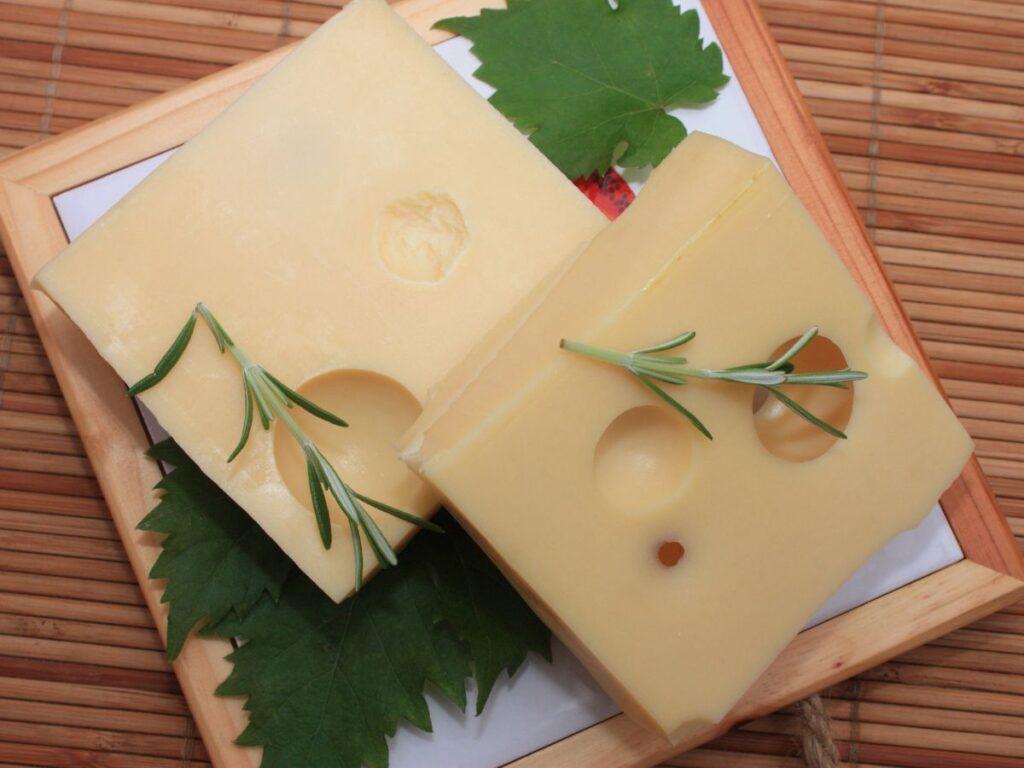
Gruyère is naturally rich in protein at 27%, so a slice or two at lunch gets you a real way toward your protein target for that meal, from a single ingredient.
The combination of that protein density with an especially high level of branched-chain amino acids, around 7 grams per 100 grams, including leucine, acts as the on-switch for muscle protein synthesis.
Because it’s aged for at least five months, Gruyère is also naturally lactose-free and easier to digest, which helps if dairy has started to disagree with you as you’ve gotten older.
Top tip: Many people give up cheese thinking they can’t tolerate it, when aged varieties like this one cause them no trouble at all.
5. Gouda
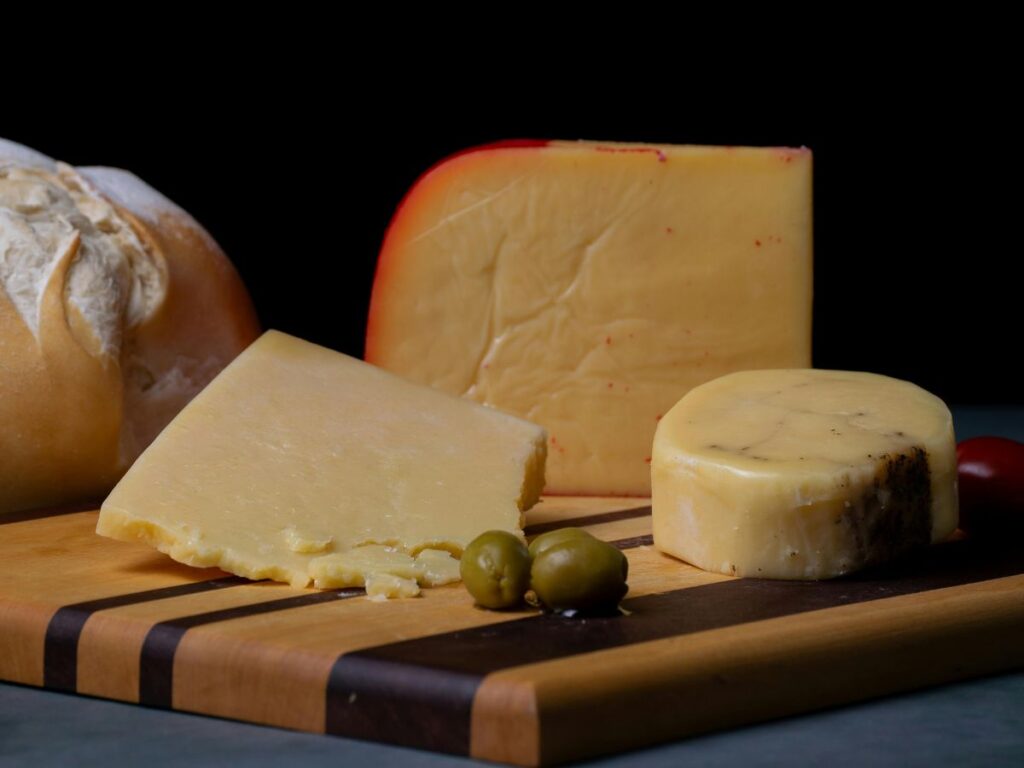
A 1-ounce serving of Gouda gives you around 7 grams of complete protein, and a 100-gram portion supplies about 54% of the daily value for calcium.
Aged Gouda contains menaquinones, the K2 forms of vitamin K, which help your body direct calcium into your bones rather than letting it settle in your arteries. Muscle and bone work as a team, and a cheese that supports both at once is doing double duty.
Top tip: A small piece with a handful of almonds is a healthy mid-afternoon snack
6. Feta

A 1-ounce serving of feta gives you around 4 grams of complete protein for roughly 79 calories, which is a solid protein-to-calorie ratio for something you’re crumbling on top of other food.
It works for older muscles partly because of what it does to the meal around it. Most of us think salads are the healthy option, but often they don’t deliver enough protein to trigger muscle building, and a handful of feta fixes that in one step.
Top tip: feta is high in sodium, so if you’re watching your salt, rinse it briefly under cold water before crumbling.
7. Ricotta
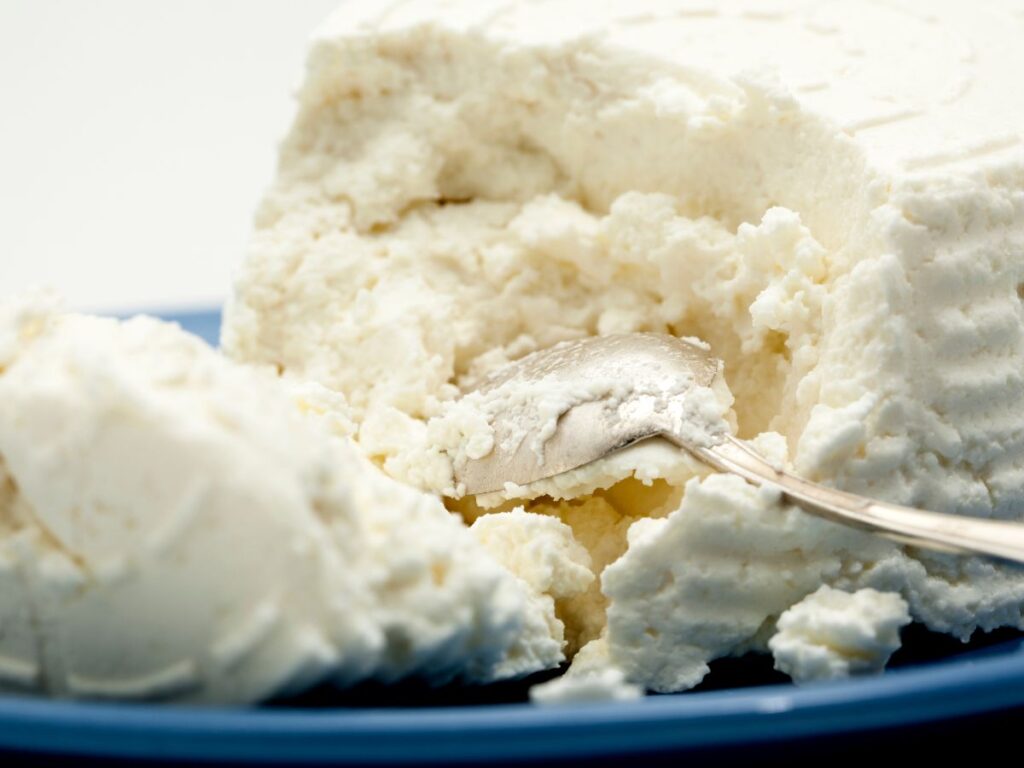
Ricotta is made from the whey left over when other cheeses are produced, and whey is the fastest-acting muscle-building protein there is.
It works for older muscles because of leucine, the specific amino acid that switches on muscle protein synthesis. Older muscles are less responsive to protein in general and need a bigger leucine hit to get the same building response a younger body would.
Top tip: Buy the whole-milk version rather than the low-fat one as it’s less processed and provides more value.
8. Quark
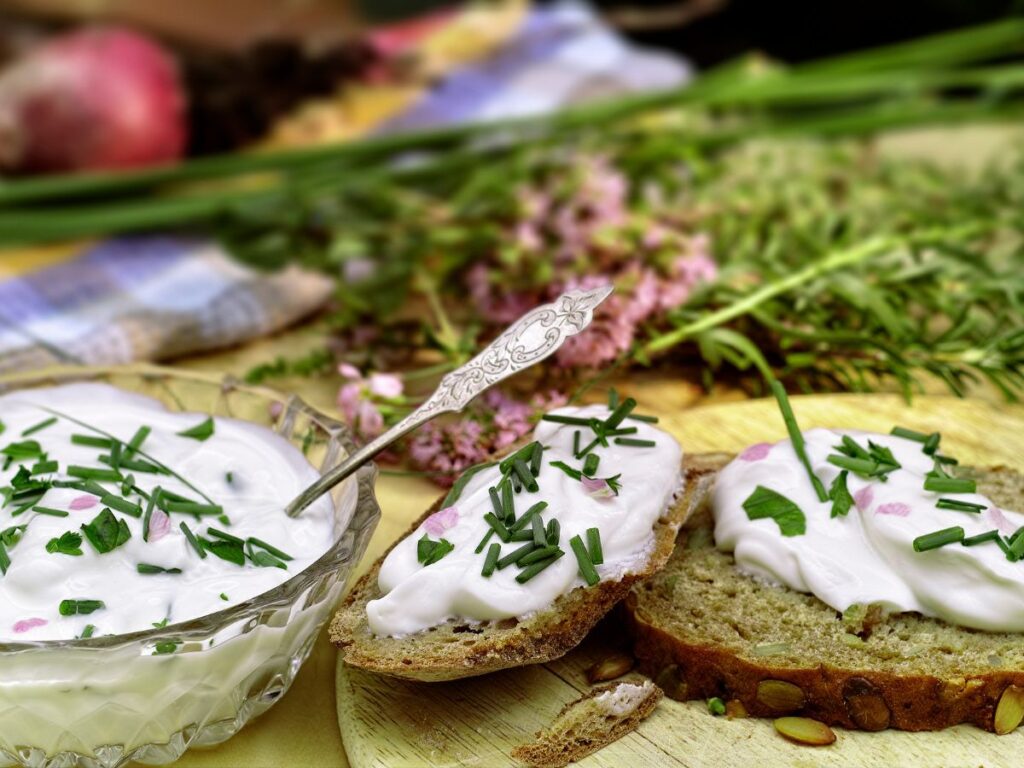
A 100-gram serving of quark provides 14.6 grams of protein for only 75 calories, which is one of the best protein-to-calorie ratios you’ll find in any food.
It works for older muscles because of the type of protein and how easy it is to eat a lot of it.
Top tip: A cup in the evening with a spoon of honey and some walnuts is a good way to get 20 or more grams of slow-release protein into you before bed.
Disclaimer: The content in this article is for informational purposes only and is not intended to replace professional medical advice, diagnosis, or treatment. Always consult your doctor, physical therapist, or healthcare provider before starting a new exercise program, particularly if you have existing joint, cardiovascular, or balance conditions.
Become a Lifestyle Library Insider
Health tips, money know-how, travel deals and garden ideas for life after 50, straight to your inbox.

Summer Williams is a lifestyle writer and social media manager and a writer and editor of Your Lifestyle Library (yourlifestylelibrary.com). She holds a BA (Honours) in Journalism from Sheffield Hallam University. She also creates content under her brand Summer Elizabeth Creative.