
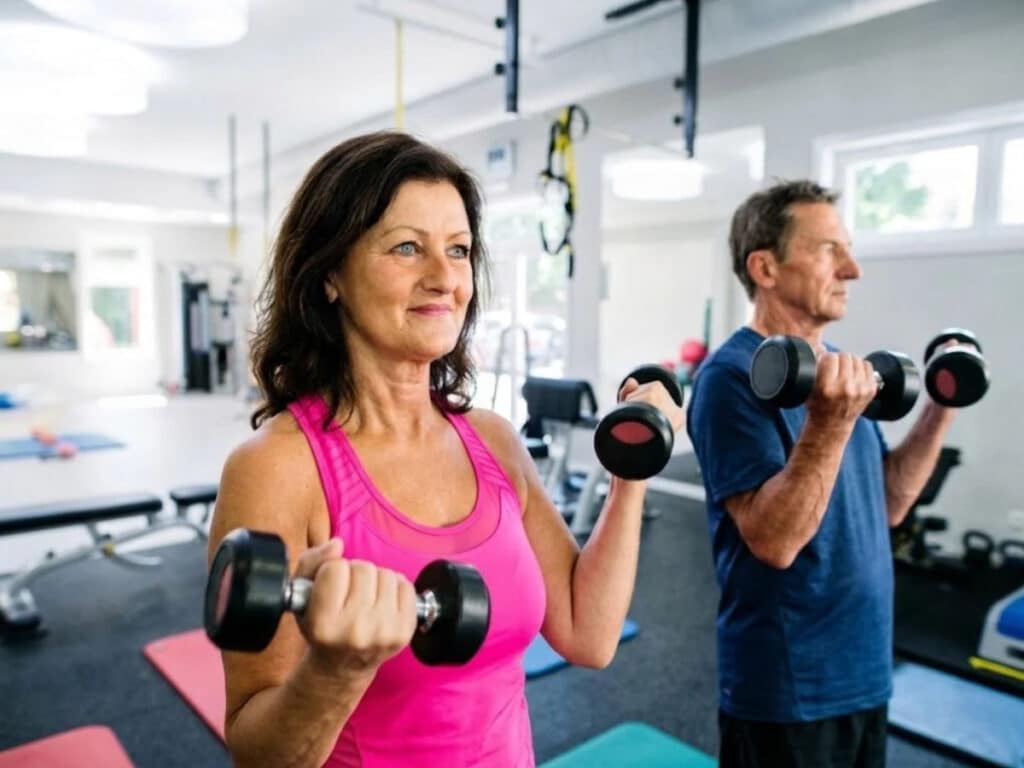
When you think about lifting weights, I bet your breathing is the last thing that comes to mind. But a new study from Brazil found that people lifting weights after 60 for 12 weeks ended up with stronger breathing muscles, the ones that pull air into your lungs and push it back out again. They had less inflammation in their blood too, which is never a bad thing as we get older.
The muscles under your ribs hardly ever get a mention, yet they work every minute of the day and weaken as you get older, just like your thighs and arms do.
You’ll notice it on the stairs first, or on a brisk walk when you can’t keep a conversation going without stopping for breath. Those muscles respond to training at any age.
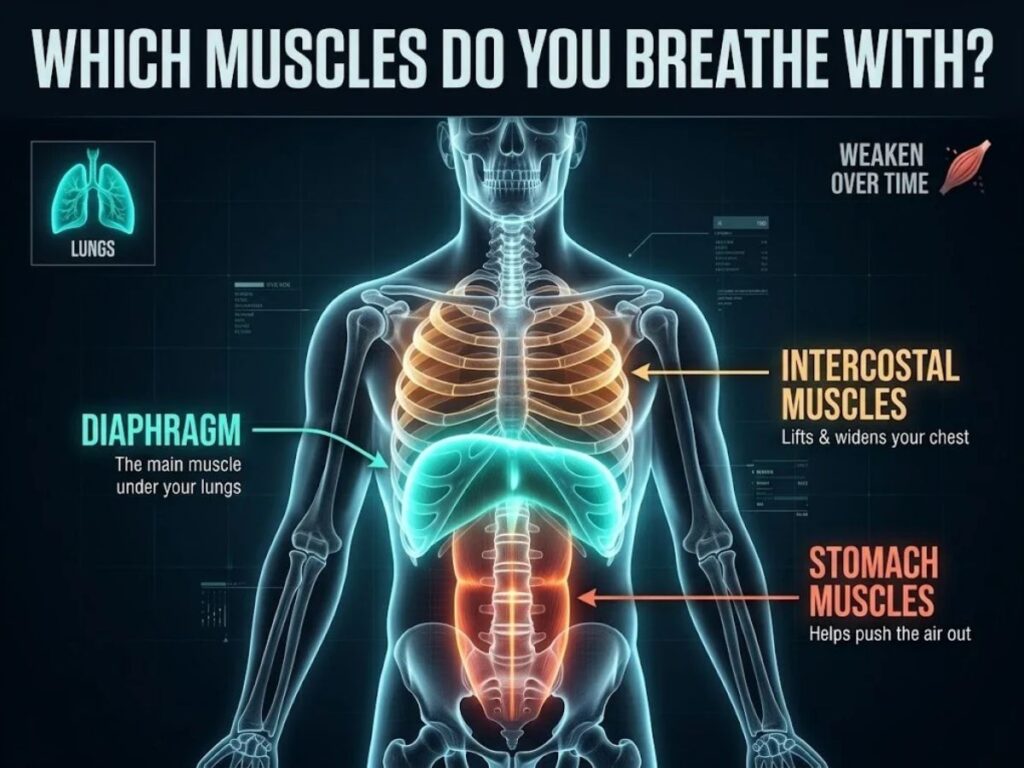
Which Muscles Do You Breathe With?
Your diaphragm, a dome-shaped muscle that sits under your lungs, does most of the work every time you breathe in. The intercostal muscles between your ribs lift and widen your chest, and your stomach muscles help push the air back out when you’re working hard.
Like every other muscle in your body, they weaken over time. Weaker breathing muscles are one reason you might start to struggle going uphill or climbing the stairs, even when your lungs are in perfectly good shape.
The Trial Results On Lifting Weights After 60
The trial took place at the Laboratory of Pulmonary and Exercise Immunology at the Evangelical University of Goiás in Anápolis, Brazil. The researchers recruited 60 adults aged 60 to 75 who lived independently and split them into 2 groups of 30.
One group continued their normal lives, and the other went to the gym 3 times a week for 12 weeks.
By the end, the lifters could breathe in and out with more force. Researchers measured this as maximal inspiratory and expiratory pressure, which shows how hard your breathing muscles can pull air in and push it out. The group that didn’t train showed no improvement.
Their blood changed too. IL-6, an inflammation marker, went down, while IL-10, which helps calm inflammation, went up. Alpha-Klotho, a protein scientists link to slower aging, also rose.
Weight, body fat, and muscle size barely changed over the 12 weeks. The authors describe resistance training as a drug-free way to support healthy aging, from the inside out.
The trial was small and only ran for 3 months, so it can’t tell us whether these changes help people live longer or stay healthier years down the line.
Found this useful? Get more like it in your inbox as a Lifestyle Library Insider.
What Workout Did They Do?
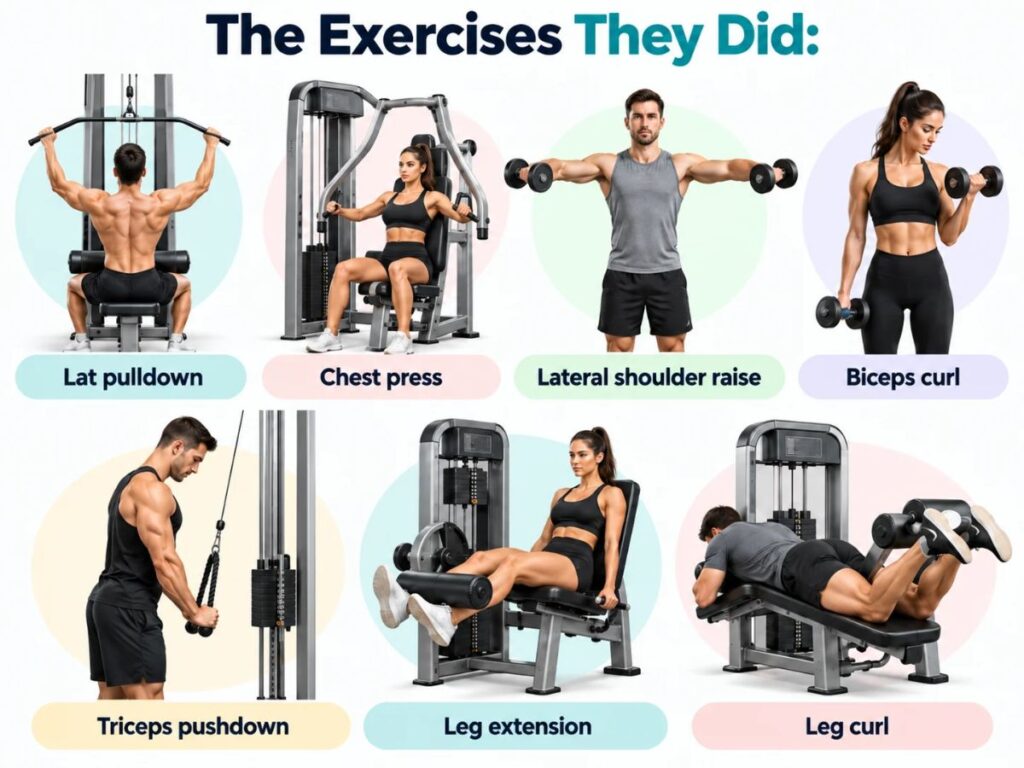
Each session lasted about an hour, with a trainer overseeing every 5 people, and the first week focused on learning how to use the machines. After that, everyone worked through the same 7 exercises:
- Lat pulldown
- Chest press
- Lateral shoulder raise
- Biceps curl
- Triceps pushdown
- Leg extension
- Leg curl
They did 4 sets of 8 to 15 reps for each, with 1 to 2 minutes of rest between sets. They started at about 65% of the heaviest load each person could lift once and increased the weight whenever they hit their target reps 2 sessions in a row, working toward roughly 80%.
Is It Too Late to Start Lifting Weights After 60?
No, it’s never too late to start lifting weights, and some of the best evidence comes from people far older than 60. In a 1994 trial led by Dr. Maria Fiatarone, frail nursing home residents with an average age of 87 did strength training for 10 weeks.
Those who trained more than doubled their muscle strength, up 113% on average, and walked faster and climbed stairs more easily too.
The CDC recommends that adults 65 and over do muscle-strengthening activities at least 2 days a week, along with 150 minutes of moderate activity, such as brisk walking.
How to Start Lifting Weights After 60
Three supervised sessions a week can be a lot if you’ve never set foot in a gym. Two sessions a week is a sensible start, and if a gym isn’t your thing, you can do simple exercises at home. If you’re using the gym:
- Start on machines. They guide the movement and support your body, so it’s easier to learn good form.
- Pick a weight you can lift 10 to 15 times with good form, and only add more once the last few reps feel easy.
- Work your whole body, upper and lower, the way the trial did. Strong legs help with balance as much as with stairs, and a strong core helps you breathe out hard.
- Book a session or 2 with a trainer who works with older adults, so someone checks your form before bad habits set in.
Every session works your arms and legs, and the muscles you breathe with get stronger at the same time.
FAQs
Does lifting weights help your breathing?
Yes, lifting weights helps your breathing by strengthening the muscles that move air in and out of your lungs. In the 2026 Brazilian trial, adults aged 60 to 75 who lifted weights 3 times a week for 12 weeks could breathe in and out with more force, while the group that didn’t train saw no change.
How often should you lift weights after 60?
You should lift weights at least 2 days a week after 60, which is what the CDC recommends for adults 65 and over. Each session should work all your major muscle groups, with a day’s rest in between so your muscles can recover.
Is it safe to lift weights after 60?
Yes, it’s safe for most people to lift weights after 60, as long as you start with a light weight and build up slowly. Get someone to show you the ropes first, ideally a trainer, so you learn to do each move properly. And if you’ve got a heart or lung problem, high blood pressure or osteoporosis, or you’ve hurt yourself recently, have a chat with your doctor before you start.
How long does it take to see results from lifting weights after 60?
It takes around 10 to 12 weeks of regular sessions to see clear results from lifting weights after 60. That’s how long both the 2026 Brazilian trial and the 1994 nursing home trial ran, and both found real gains in strength by the end.
About this article: Our health articles are based on published studies and advice from experts such as physiotherapists and dietitians, and the sources are linked in the article.
Disclaimer: The content in this article is for informational purposes only and is not intended to replace professional medical advice, diagnosis, or treatment. Always consult your doctor, physical therapist, or healthcare provider before starting a new exercise program, particularly if you have existing joint, cardiovascular, or balance conditions. This article may contain affiliate links.
Become a Lifestyle Library Insider
Health tips, money know-how, travel deals and garden ideas for life after 50, straight to your inbox.

Summer Williams is a lifestyle writer and social media manager and a writer and editor of Your Lifestyle Library (yourlifestylelibrary.com). She holds a BA (Honours) in Journalism from Sheffield Hallam University. She is also a qualified fitness instructor, holding the NCFE Level 2 Certificate in Fitness Instructing. She also creates content under her brand Summer Elizabeth Creative.