
The first time I did chop and drop, I didn’t realize that’s what I was doing. I’d been deadheading a raggedy patch of alchemilla one afternoon in July; the air was thick, an 80-degree forecast was hanging over the week, and honestly I couldn’t be bothered to walk the trimmings all the way to the compost pile at the bottom of the yard.
So I dropped them where I stood. Right there, under the plant, in a loose, messy pile. I told myself I’d come back for them later. I didn’t.
A few weeks on, that patch of soil looked better than the beds I’d been dutifully clearing. Damper underneath, softer to the touch, and the alchemilla was thriving. Turns out the lazy option was doing something useful, and it’s been one of the most beneficial things you can do for your garden during a heatwave.
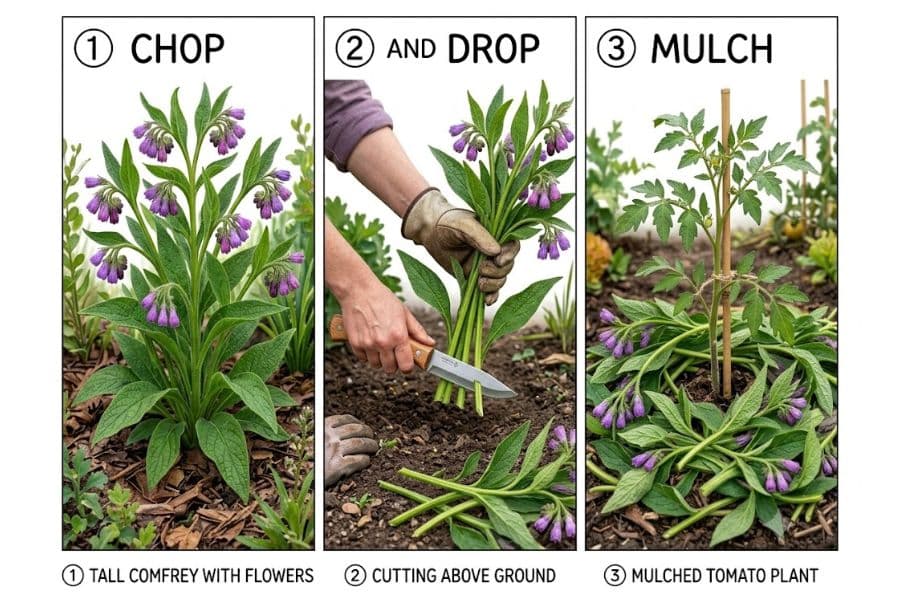
What Chop and Drop Mulching Actually Is
Chop-and-drop is exactly as it sounds. You chop a bit of plant material and drop it onto the soil. That’s it. No compost bin, no shredder, no hauling barrows of bark mulch from the garden center in the trunk of the car.
Whatever you’ve just trimmed, pruned, or deadheaded goes straight onto the bed underneath as a rough layer of mulch, and you leave it there to break down in place.
It originally comes from permaculture, where the whole point is to keep nutrients on-site instead of carting them off and then buying replacements.
The stuff you drop rots over weeks and months, feeding worms and soil microbes along the way, and while it’s rotting, it covers the soil like a blanket. That blanket stops the sun from baking the ground into concrete, holds moisture in when it does rain, and smothers most of the weed seeds that were planning to come up.
You get three jobs done at once, and you didn’t even have to walk anywhere with a wheelbarrow.

Why It’s Suddenly Everywhere in 2026
The RHS has been pushing chop-and-drop pretty hard this year as part of their emergency drought advice, and you can see why. Water restrictions have been rolling out across a lot of the country, hoses are banned in patches, and the standard advice of ‘just water more‘ isn’t really available to people anymore.
Something has to hold moisture in the soil when you can’t top it up with the faucet, and a layer of mulch is the cheapest, easiest way to do it.
Bought mulch is expensive, and it needs replacing every year or two, and if you’re anything like me, you’ll put off buying it until August and then feel guilty. Chop-and-drop cuts the middleman out entirely.
You’re already generating the raw material every time you tidy up. It’s just a question of where it lands.
How I Actually Do It (And What I’ve Learned Not To)
The method I’ve tried that works is that when I’m out with the pruning shears, I keep a little pile going next to whatever I’m working on. I chop things into rough pieces, maybe 4 to 6 inches long.
I drop the pile under the plant it came from, or in a bare patch nearby that could do with covering. I try to spread it out a bit rather than mound it up against a stem, because a wet pile jammed against a woody trunk can cause rot, and I’ve done that to a lavender and killed it.
Around the base of the plant, not touching it, is the rule I’ve settled on.
A few other things I’ve picked up the hard way, mostly by doing them wrong first:
- Skip anything gone to seed if you don’t want it everywhere.
- Don’t drop diseased leaves. Rust, mildew, blight, black spot, any of that, straight in the trash. Chop-and-drop is not a bin for problems.
- Perennial weeds with roots (bindweed, couch grass, ground elder) do not go on the pile. Ever. They’ll root back in.
- Woody prunings thicker than a pencil take too long to break down and look messy. Chop them small or send them off to be shredded.
The Best Plants To Chop and Drop
Not everything you cut is equal on the ground. Some things melt into the soil in weeks and leave it richer, some sit around like wet cardboard, and some try to grow back at you.
After a few years of doing this fairly consistently across my beds, these are the ones that work for chop and drop mulching:
- Comfrey. The queen of chop-and-drop. The leaves are huge, they wilt down fast, and they’re packed with the stuff plants want.
- Nasturtiums. When they get leggy and sad in late summer, which they always do, I chop the whole lot and drop them where they were. The leaves rot down within a couple of weeks, and the soil underneath is beautiful by fall.
- Alchemilla (lady’s mantle). After it’s flowered and gone tatty, I hack it back to the base and drop the lot around it. It comes back fresh, and the trimmings are gone before you know it.
- Hardy geraniums. Same story. Cut them back hard mid-season when they’ve sprawled everywhere, drop the trimmings, and you get a second flush of flowers plus free mulch.
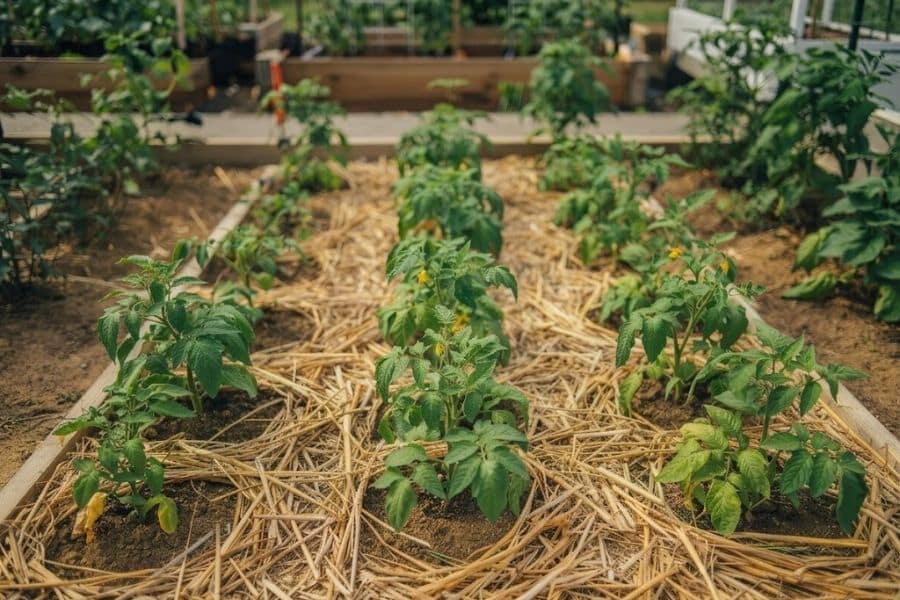
- Green tomato and bean plants at the end of the season. Once they’ve given up, I chop them into shorter lengths and lay them under the row. Not the diseased ones, obviously, but the ones that just petered out naturally.
- Grass clippings, in thin layers only. A thick wet mat of grass turns to slime and smells like a swamp. Thin scatterings, though, work beautifully around vegetables.
What Chop and Drop Won’t Do (And What It Actually Does)
What chop and drop won’t do is turn your yard into the Garden of Eden by Tuesday. It won’t. It’s a slow soil habit, and the results creep in over a couple of seasons, not overnight. If your soil is genuinely awful, dry pale dust with no worms and no give to it, you’ll still want to add some proper compost to get things moving.
What it does do, reliably, is keep moisture in the ground during hot weeks. I can water half as often as I used to in the mulched beds, and in a summer where the faucet is off half the time, that’s a real difference.
It also cuts weeding down a lot, because the covered soil doesn’t get the light most weed seeds need to germinate. And as it breaks down, it feeds the worms and microbes that make soil actually alive, rather than the dusty pale stuff a lot of us are working with.
Disclaimer: This article is for general information only and is not professional advice. It may contain affiliate links. Please see our full Editorial Policy for details.

Kylie Lang is a nationally syndicated travel journalist with bylines on the Associated Press Wire & more, a lifestyle writer, and the founder and editor of Your Lifestyle Library (yourlifestylelibrary.com). She holds a BA (Honours) in History from the University of Kent and is a member of the British Guild of Travel Writers.