
My daughter is 28, and we recently had a conversation about buying a home. For her, it feels completely out of reach and unattainable. Her rent is more than a mortgage would be for the same property, but her expenses are so high that she has no money left to put toward a house deposit.
I don’t think she’s on her own. The US housing market is insane, and getting a foot on the proverbial ladder seems like a pipe dream for so many. For others, keeping up with rent and mortgage payments is also a struggle. But what if you could step off that treadmill for a year and test out a completely different life somewhere else?
No permanent commitment, just a chance to live abroad without paying rent while you figure out if expat life is actually for you or simply decide what you want to do next. It sounds too good to be true. But these programs are real, they are verified, and people are already using them.
1. Ireland
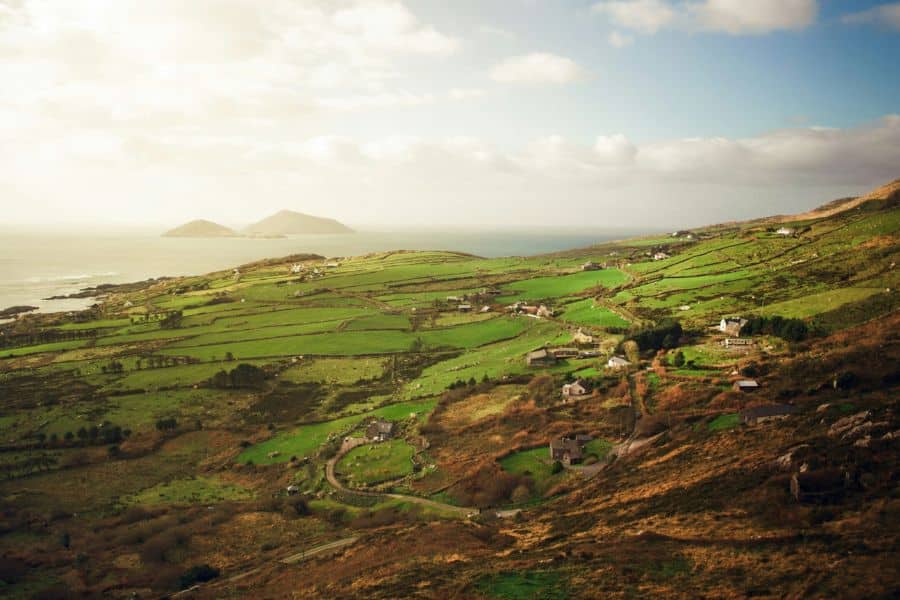
Ireland’s Vacant Property Refurbishment Grant is among the most generous relocation incentives worldwide. The government offers up to €84,000 (around $92,000) to anyone willing to buy and renovate a derelict property on one of approximately 30 inhabited offshore islands off the west coast. For vacant but non-derelict properties, the grant is €60,000 (around $67,000).
The program is active, confirmed through 2026, and part of a broader 10-year initiative called Our Living Islands.
The islands are extraordinary. The Aran Islands, Inishbofin, Clare Island, Bere Island, and Tory Island are among the most culturally rich places in the country. Grant money must go toward renovations, and the property must become your primary residence or a registered long-term rental
The key things to know:
- Up to €84,000 ($92,000) for derelict properties, €60,000 ($67,000) for vacant but non-derelict properties
- The property must become your primary residence or a registered long-term rental
- Americans can purchase property in Ireland freely, but they need Irish residency to claim the grant
- Americans with Irish ancestry through a parent or grandparent may be eligible for Irish citizenship, which is worth exploring seriously before applying.
2. Greece

The island of Antikythera sits in the Aegean Sea between Crete and the Peloponnese, covers less than eight square miles, and currently has somewhere between 24 and 40 year-round residents, depending on the season.
A few decades ago, that number was closer to 300. Community leaders and the Greek Orthodox Church of Kythera created a relocation program to reverse that decline, aimed specifically at families willing to settle permanently and contribute to island life.
The package includes free housing and a monthly stipend of €500 (around $540) per household for three years, totaling roughly $18,000 to $20,000 overall. As of early 2026, housing construction is still underway, and no families have moved in yet due to administrative delays. This is a moment to make contact and get on the radar rather than pack your bags tomorrow.
The key things to know:
- Free housing plus €500 ($540) per month for three years, totaling around $18,000 to $20,000
- Only five families will be selected
- Priority goes to families with at least four children and practical trades like baking, fishing, farming, or construction
- This is not a program for remote workers. The island needs people who can help keep essential services running
- Housing construction is still underway as of early 2026
To inquire, contact the Kythira Department of Tourism directly at +30 273 603 1213, weekdays from 8 am to 12 pm.
3. Italy

The Autonomous Province of Trento in northeast Italy has confirmed €5 million in funding for 2026 and is offering grants of up to €100,000 (around $107,500) to people willing to buy and renovate an abandoned property in one of 33 selected mountain villages.
The grant breaks down as €20,000 toward the purchase and €80,000 toward renovation work, with no repayment required as long as you meet the conditions.
The villages span Trentino’s valleys between Lake Garda and the Dolomites. Places like Mezzano in the Primiero valley and Luserna on the Alpe Cimbra plateau. These are not tourist towns, but tight-knit communities where the arrival of a handful of new households changes daily life.
The key things to know:
- Up to €100,000 ($107,500) total grant, split between purchase and renovation costs
- You must live in the property full-time for at least 10 years, or rent it out at an affordable rate to someone who registers their residence there
- Renovations are capped at €200,000, keeping the focus on restoring real village homes
- The program is primarily aimed at Italian residents and Italians living abroad, but foreign nationals can apply if they are legally able to purchase property in Italy
- Applications are accepted through scheduled windows
Stay up to date and check the current application calendar at provincia.tn.it.
4. South Korea
South Korea’s EPIK program, which stands for English Program in Korea, is one of the most practical and well-established routes on this list. If you hold a bachelor’s degree in any subject and are a native English speaker, you can apply to teach English in Korean public schools on a 12-month contract.
In return, you receive a fully furnished apartment for the entire duration. Rent is zero, airfare is reimbursed, and a settlement allowance is paid when you arrive.
The salary ranges from around ₩2.1 million to ₩3.0 million per month (roughly $1,500 to $2,200) depending on your qualifications. Americans who complete a full contract typically save $12,000 to $15,000 that they would otherwise have spent on rent back home.
EPIK places teachers across all 17 provinces and metropolitan cities, from Seoul to small rural towns, where the experience is far more immersive.
The key things to know:
- Fully furnished apartment provided for the duration of your 12-month contract
- Airfare reimbursed and settlement allowance paid on arrival
- Bachelor’s degree required in any field
- Salary of ₩2.1M to ₩3.0M per month (around $1,500 to $2,200)
- The Fall 2026 application is currently open
5. Japan
Japan’s JET Program places native English speakers in Japanese schools on one-year contracts, with housing either heavily subsidized or completely free, depending on your placement.
It’s a government-backed program that has placed more than 80,000 participants from 82 countries since 1987, with strong support structures in place for teachers once they arrive.
Rural placements are common and open the door to something else worth knowing about: the Akiya market. Akiya are vacant and abandoned homes, and there are estimated to be around 9 million of them across rural Japan. Many are available for very low cost or sometimes free to people willing to live in and maintain them.
The key things to know:
- Housing is heavily subsidized or fully free, depending on placement location
- Bachelor’s degree required; no age limit as long as other criteria are met
- One-year contracts with the option to renew
- Rural placements give access to the Akiya market of abandoned homes available for very little cost
- The 2026 intake has closed, but the 2027 application opens in Fall 2026
6. France
Host families are legally required to provide a private room, all meals, and a weekly stipend of at least €320 per month. You work around 15 to 25 hours per week, typically helping with childcare and light household tasks. Your accommodation is fully covered from day one.
The French au pair system is government-regulated, which means you have real legal protections throughout your stay. What is agreed is what is delivered. The visa is generally available to people aged 18 to 30, so check current eligibility based on your age before applying.
The key things to know:
- Private room and all meals provided by the host family
- Minimum weekly stipend of €320 per month on top of free accommodation
- 15 to 25 hours of work per week, mostly childcare and light household tasks
- Fully government-regulated with legal protections for au pairs
- Generally available to those aged 18 to 30
7. New Zealand
New Zealand is one of the top destinations for WWOOFing, which stands for Worldwide Opportunities on Organic Farms. Americans aged 18 to 30 can apply for a New Zealand Working Holiday Visa and spend time living and working on farms, vineyards, and rural properties across the country.
Your accommodation is fully covered in exchange for around 25 hours of work per week. You might be picking grapes, tending animals, or helping with a seasonal harvest.
The landscape here is extraordinary. And living on a working farm gives you a feel for the country that no hotel stay ever could. The Working Holiday Visa for Americans is valid for 12 months and costs around NZD $770 to apply. You will need to show savings of at least NZD $4,200 to support yourself during your stay.
The key things to know:
- Free accommodation in exchange for around 25 hours of farm work per week
- Working Holiday Visa available to Americans aged 18 to 30
- Visa valid for 12 months, application fee around NZD $770
- Minimum savings of NZD $4,200 required to qualify
- No prior farming experience needed
Find organic farm hosts at wwoof.nz and apply for the Working Holiday Visa at immigration.govt.nz.
8. Australia
Australia has one of the most developed work-exchange cultures in the world, and the range of Workaway opportunities is enormous. You work around 25 hours a week in exchange for free accommodation and often meals.
Options range from coastal hostels to outback stations to urban family homes. Americans aged 18 to 30 can apply for Australia’s Work and Holiday Visa (subclass 462), which allows them to live and work in the country for up to 12 months, with the potential to extend if they complete three months of specified regional work.
Australia also has a strong expat community, which makes finding your footing far less daunting than starting from scratch somewhere you know no one. The minimum wage as of 2026 is AUD $24.95 per hour, so if you take on paid work alongside a Workaway placement, your savings can go further than you might expect.
The key things to know:
- Free accommodation (and often meals) in exchange for around 25 hours of work per week
- Work and Holiday Visa (subclass 462) available to Americans aged 18 to 30
- Visa valid for 12 months with potential extension after three months of regional work
- Thousands of placements available across the country at any given time
- Minimum wage of AUD $24.95 per hour for any paid work taken on
Browse placements at workaway.info and apply for the Work and Holiday Visa at immi.homeaffairs.gov.au.