
Have you ever stood sideways in the mirror, sucked in, let it out, and wondered how the rest of you seems to have gotten the memo but your middle absolutely has not? You’ve been eating better, walking more, maybe you’ve even dusted off a pair of running shoes, and yet the bit around your waistband is doing its own thing entirely.
The fat that settles around your middle isn’t the same as the softer stuff you can pinch on your arms or thighs. It’s called visceral fat, and it wraps itself around your organs and has been linked to heart disease, type 2 diabetes, and cognitive decline.
So when we talk about shifting belly fat, we’re talking about something more useful than fitting into your summer wardrobe, although I want that too.

What You Can Do To Shift Belly Fat
All is not lost, and there are some simple things you can do to get started on shifting stubborn belly fat that doesn’t want to move. This is what’s worked for me, a woman in her mid-50s with a more than stubborn share of belly fat.
No. 1 Short, Sharp Bursts Beat Endless Cardio

If you’ve been slogging along on a treadmill at the same pace for 45 minutes, three times a week, and feeling like your body is refusing to cooperate, there’s a reason for the frustration. Steady-state cardio does plenty of good things, but for belly fat specifically, high-intensity interval training tends to move the needle further and faster.
Here’s what works. You push hard for a short burst, 30 seconds or so, then rest for a minute, then go again. During those hard efforts, your insulin drops, the hormone that tells your body to hang on to fat.
Once it’s low, your body starts pulling from stored fat for energy, including fat stored in the liver. And the useful part carries on after you’ve stopped, because your metabolism stays elevated for hours afterward, known as the afterburn effect.
Aim for 20 to 30 minutes, three or four times a week, at somewhere around 70 to 85 percent of your maximum effort. Sprint intervals, burpees, jumping jacks, or mountain climbers, any of these will do the job as long as you actually enjoy them enough to come back to them.
And if you’re new to it, ease in. Your body needs time to adapt, and doing HIIT every single day is a fast way to burn out or hurt yourself. Two or three sessions a week with rest days in between is plenty.
No. 2 When You Eat Matters Almost as Much as What You Eat

Intermittent fasting has been popular for a while, and done the right way it can help shift belly fat. The idea is that you eat within a set window each day, and outside that window, you don’t eat.
After 12 to 14 hours without food, your body uses up the readily available energy and starts pulling from stored fat instead. That switch is where the results tend to come from.
A 2025 study from the University of Granada examined different fasting schedules among people with obesity. The people who finished eating by 5 pm and didn’t eat again until 9 am the next morning lost more belly fat and had better blood sugar control than those following other timing patterns.
The early cutoff seemed to matter, giving the body longer in fat-burning mode overnight while insulin stayed low.
The most common approach is 16:8, where you fast for 16 hours and eat within an 8-hour window, typically noon to 8 pm. Another option is the 5:2, where you eat normally 5 days a week and drop to 500 to 600 calories on 2 non-consecutive days.
If 16 hours sounds like a lot, start at 12 and gradually stretch the window. One thing worth mentioning: late-night eating tends to work against everything else you’re doing. Your metabolism slows down at night, and eating close to bed messes with sleep, which, as we’ll get to in a minute, has its own knock-on effect on fat around the middle.
No. 3 Fewer Refined Carbs, More Real Food
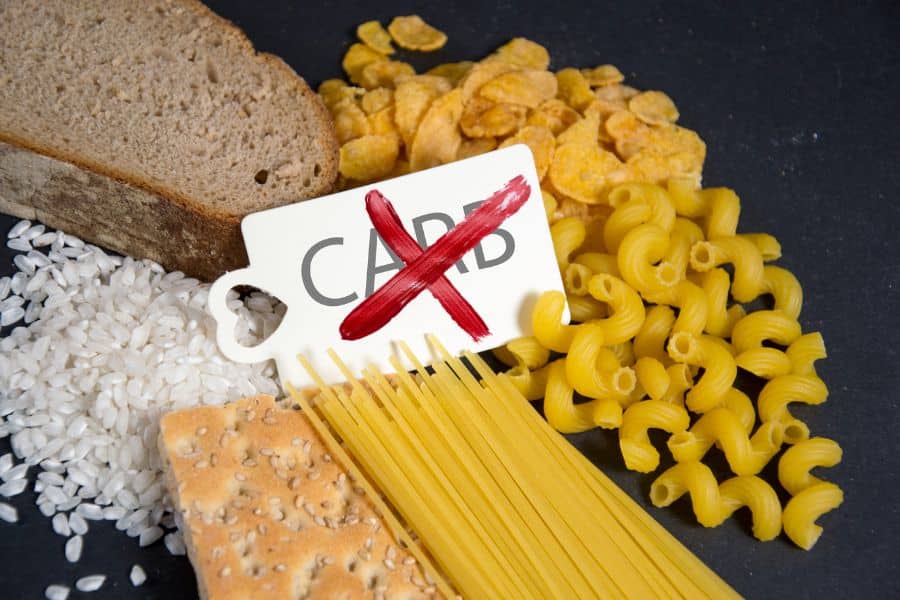
Two approaches keep showing up when it comes to eating for belly fat: lower-carb, and Mediterranean. Both work, and honestly the best one is whichever you can stick with past the 3-week mark, when most new eating plans quietly fall apart.
Researchers at Johns Hopkins compared low-carb and low-fat diets over 6 months, with everyone eating the same number of calories. The low-carb group lost more overall (about 28.9 pounds on average versus 18.7), and what’s more, the weight they lost was mostly fat rather than muscle.
When you cut refined carbs, insulin stays lower, and lower insulin means more fat gets used for fuel rather than stored.
You don’t have to go full keto to see the benefit. Just eating fatty fish like salmon a couple of times a week, plenty of leafy greens, avocado and olive oil, nuts, seeds, whole grains like quinoa or brown rice, and lean protein from chicken, eggs, or beans will help dramatically.
What you’re cutting back on is the stuff most of us already know we could do with less of: white bread, pasta, sugary drinks, processed snacks, fast food, and yes, alcohol, especially beer.
The Mediterranean version of this is even simpler: more vegetables, fish twice a week, olive oil, and less of the processed stuff. Either works. Pick the one that fits your actual life.
No. 4 Sleep Isn’t a Luxury, It’s Part of the Plan

If you’re doing everything else right and still not seeing a change, look at how you’re sleeping. Data from the National Health and Nutrition Examination Survey tracked thousands of Americans and found that people getting less than 7 hours a night had noticeably higher rates of obesity.
Poor sleep has a real, measurable effect on the hormones that decide how much you eat and where your body stores fat.
When you’re short on sleep, your body produces moreced cortisol, the stress hormone, and cortisol tells your body to hold on to fat around the middle. At the same time, leptin (the hormone that tells you you’re full) drops, and ghrelin (the one that makes you hungry) rises.
So you’re hungrier, and specifically hungrier for sugar and fat, because your tired brain is looking for quick energy. It’s a biology problem, not a discipline one.
The fixes are the obvious ones: same bedtime, same wake-up time, cool and dark room, no screens for the hour before bed, no big meals right before you turn in.
Aim for 7 to 9 hours. Your body uses that time to repair itself and rebalance the hormones that are otherwise working against you all day.
No. 5 Stress Really Does Settle Around the Middle

The link between stress and belly fat is real. Cortisol was useful when humans were running from real danger, providing a quick burst of energy when needed. What our bodies weren’t built for is the low-grade, constant stress of work, money, and everything else modern life throws at us, which keeps cortisol elevated day in and day out.
High cortisol makes you crave sugary and fatty food, increases appetite, tells your body to store fat specifically around the abdomen, and interferes with insulin, making the whole fat-loss picture harder.
Belly fat has more cortisol receptors than fat elsewhere on the body, which is why stress lands in your middle before it lands anywhere else. Women who carry more weight around their waist tend to produce more cortisol under stress, meaning their bodies get stuck in a kind of stress loop.
The good news is that cortisol responds to some very simple things. 20 minutes outside brings it down. So does 5 to 10 minutes of meditation or slow breathing. Walking, yoga, tai chi, time with people who make you laugh, all of it counts.
One thing to watch: if you’re already frazzled, piling on daily hard HIIT sessions can push cortisol up rather than down. Balance the harder efforts with easy movement days. Rest is not the opposite of progress here; it’s part of it.
No. 6 Muscle Is a Metabolic Investment

Cardio burns calories while you’re doing it. Muscle burns calories all the time, including while you’re sitting on the sofa reading this. Pound for pound, muscle tissue uses about 3 times more energy at rest than fat tissue does, which means the more of it you carry, the more your body has to feed just to keep the lights on.
Strength training also improves how your body handles blood sugar and insulin, which loops back to everything we’ve been talking about: the lower your insulin, the easier it is to shift fat, particularly around the middle.
And it holds on to the muscle you already have while you’re losing weight, so you don’t end up smaller but softer, which is a common complaint from people who lose weight through cardio and calorie cuts alone.
Two or 3 sessions a week is enough. You don’t need to live in the gym. Compound moves that work several muscles at once (squats, deadlifts, presses, rows) give you the most for your time. If lifting weights isn’t your thing, resistance bands, bodyweight work, or a couple of kettlebells at home will do the same job.
What matters is that you’re asking your muscles to work against real resistance often enough that they have a reason to stick around. Picking 2 or 3 to get consistent with, letting them become boring background habits rather than a project, is what tends to shift things over the months.
Belly fat came on slowly, and it comes off the same way. Each of these habits benefits your heart, blood sugar, and brain at the same time, which is a reasonable return on the effort.
Disclaimer: The content in this article is for informational purposes only and is not intended to replace professional medical advice, diagnosis, or treatment. Always consult your doctor, physical therapist, or healthcare provider before starting a new exercise program, particularly if you have existing joint, cardiovascular, or balance conditions.

Kylie Lang is a nationally syndicated travel journalist with bylines on the Associated Press Wire & more, a lifestyle writer, and the founder and editor of Your Lifestyle Library (yourlifestylelibrary.com). She holds a BA (Honours) in History from the University of Kent and is a member of the British Guild of Travel Writers.