
You hear so much about what you should and shouldn’t eat for breakfast. From porridge oats and bananas to simple cereal and toast that we had when I was growing up in the 80s.
Apparently, according to new research, that old combo I had as a kid is responsible for causing your blood sugar to rise fast. For anyone living with type 2 diabetes, that morning spike is often the biggest one of the whole day.
So it comes down to what you’re putting on your plate first thing in the morning.

Why Your Morning Meal Matters For Type 2 Diabetes
Your body isn’t the same at 8 am as it is at 8 pm. In the morning, you’re actually more sensitive to insulin, which means breakfast is the meal where getting it wrong costs you the most. Eat a pile of fast carbs when you first wake up, and you set the tone for a bumpy blood sugar day.
In one trial of people with type 2 diabetes, average age 64, simply swapping a low-fat breakfast for a low-carb one flattened the day’s single biggest glucose spike and smoothed out the ups and downs. Same people, same everything else. Just a different choice of breakfast ingredients.
And it doesn’t stop at breakfast either. Eat plenty of protein in the morning, and your blood sugar behaves better at lunch, too. Scientists call it the second-meal effect.
Can Type 2 Diabetes Really Be Reversed?
Type 2 diabetes can go into what doctors call remission. That means blood sugar is back in the normal range without diabetes medication. In a large trial that enrolled people in a rigorous weight-loss program, nearly half were in remission a year later.
What drives it is weight loss, especially the fat that builds up around your liver and pancreas. Shift that, and those organs start doing their job again.
People who lost about 10 percent of their body weight had remission rates of around 70 percent.
So no, a bowl of eggs and spinach won’t reverse anything on its own. But a breakfast that keeps you full, kills the mid-morning cravings, and stops the sugar rollercoaster is one of the most sustainable tools you’ve got for eating less without feeling like you’re starving.
The 5 Things Every Diabetes-Friendly Breakfast Needs
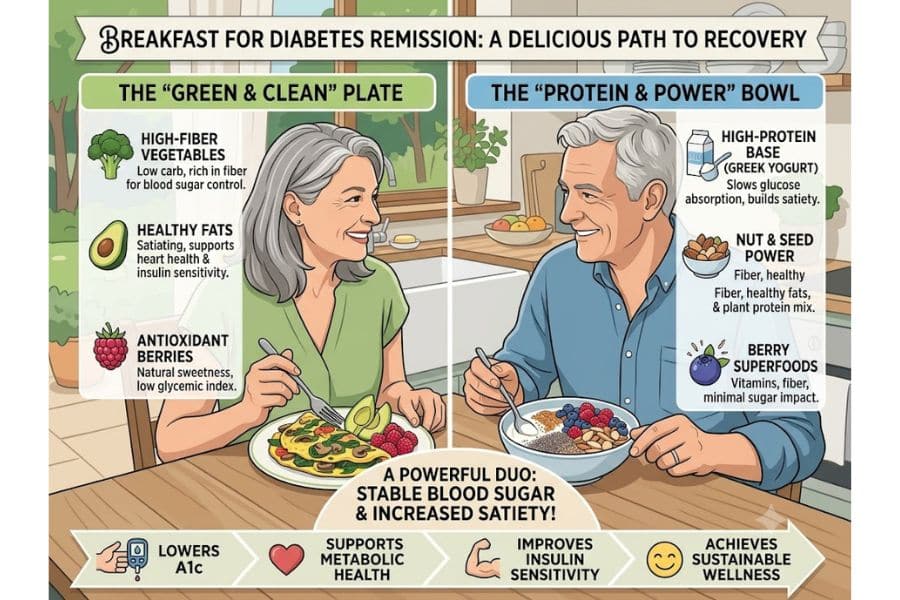
1. Protein
Aim for around 20-25 grams. Protein is slow to digest, so it drips energy into your blood instead of flooding it. Two or three eggs, three-quarters of a cup of Greek yogurt, half a cup of cottage cheese, or a couple of tablespoons of almond butter will all get you there.
2. Fiber-rich vegetables
A cup or two of spinach, peppers, mushrooms, or cherry tomatoes. The fiber acts like a speed bump for your digestion, and you can eat a mountain of the stuff without troubling your blood sugar one bit.
3. Healthy fat
A quarter of an avocado, a drizzle of olive oil, a small handful of nuts, or a spoonful of chia or flax seeds. Fat slows how quickly your stomach empties, which helps you feel full an hour later.
4. A low-glycemic carb, kept small
You still want some carbs for energy, just the slow kind and not a heap of them. Half a cup of berries, a quarter cup of steel-cut oats, or one slice of proper whole-grain bread with real fiber in it. Skip the white pappy stuff or anything with sugar in it.
5. Add Flavor
Herbs, spices, lemon, and a splash of vinegar. These have next to no carbs, and cinnamon has been studied for its potential to help with blood sugar.
Put all five together, and the protein and fat slow the whole meal down, the fiber throws up its barriers, the little bit of slow carb gives you steady fuel, and the flavor stops you from feeling like you’re on a diet.
Your blood sugar rises gently without the crash.
If sugar cravings are your particular downfall, it’s worth looking at what you’re drinking alongside breakfast, too. Those sweetener swaps that won’t wreck your metabolism are a good place to start, because the orange juice is often doing as much damage as the toast.

Seven Breakfasts That Tick All Five Boxes
Right, enough theory. Here are seven that follow the formula, each one ten minutes or less.
- Mediterranean veggie scramble. Two eggs, a cup of spinach, a quarter of an avocado, a handful of cherry tomatoes, and fresh basil. Scramble the lot and top with the avocado.
- Berry protein pot. Three-quarters of a cup of Greek yogurt, half a cup of mixed berries, a spoon of chopped walnuts, and a good shake of cinnamon. Five minutes, no cooking.
- Avocado toast, done properly. One slice of sprouted grain bread, two tablespoons of almond butter, sliced avocado, a squeeze of lemon, and a pinch of salt.
- Green smoothie. Half a cup of cottage cheese, a cup of spinach, a spoon of chia seeds, half a cup of frozen strawberries, and a squeeze of lime. Blend with water.
- Veggie omelet. Three egg whites and one whole egg, diced peppers and onion, a few chopped olives, and herbs. Serve with a small spoon of cooked oats on the side.
- Overnight chia pudding. Two tablespoons of chia seeds soaked overnight in almond milk, then stirred through with a spoon of Greek yogurt, blueberries, and a little almond butter in the morning. Made the night before, which I love.
- Savory breakfast bowl. Half a cup of quinoa, a hard-boiled egg, rocket and cucumber, a quarter avocado with a trickle of olive oil, a little diced apple, and a splash of balsamic.
A quick tip for anyone who is not a natural morning person: prep the night before. Chop your veg, boil half a dozen eggs on a Sunday, keep frozen berries and washed greens on hand. It’s the difference between actually doing this and giving up by Wednesday.
One Good Breakfast Sets Up the Whole Day
When you front-load your day with protein, your body handles the carbs at your next meal more calmly, too. In studies, people who ate a high-protein breakfast had steadier blood sugar not just after breakfast but throughout lunch.
One trial even found that a whey-protein breakfast helped people lose noticeably more weight than a high-carb one over twelve weeks, and their longer-term blood sugar markers improved with it.
Get breakfast right and you’ve done a chunk of the day’s work before you’ve even finished your coffee.
It’s a bit like the way the French eat, actually. Smaller, unhurried meals, not a sugary grab-and-go. There’s a reason the French are outliving Americans, and it isn’t the red wine, whatever anyone tells you.

How to Start Without Turning Your Life Upside Down
The mistake people make is trying to change everything at once. Don’t. Small gradual changes works because you’re more likely to stick with it.
Week one, just be consistent
Pick one breakfast from the list and eat it every day. Yes, the same one. If you can, check your blood sugar before and a couple of hours after, and jot down the numbers. You’re not aiming for perfect, you’re learning how your own body responds.
Week two, fine-tune
If your sugar still rose more than you’d like, cut the carb portion in half. If you were starving again by mid-morning, add a bit more protein or fat, not more carbs. Change one thing at a time so you can actually see what’s working.
Week three, add variety
Bring in a second recipe so you don’t get bored and pack it in. Boredom is the real enemy here, not willpower.
Week four, make it yours
Settle on the two or three you actually enjoy and can throw together on a busy morning. The best breakfast plan in the world is useless if you hate it.
And it’s not only breakfast that counts. What you eat late in the evening affects your morning reading, too, so it’s worth knowing which foods help keep your blood sugar steady overnight.
If you’re the sort who’s tempted to skip breakfast entirely, have a read of what the one-meal-a-day approach really does to your body before you commit, because fasting isn’t the win it’s often made out to be.
When to Talk to Your Doctor First
If you take insulin or blood sugar medication, don’t overhaul your breakfast without a word to your doctor or diabetes nurse first. Cutting your carbs while staying on the same dose can send your blood sugar too low, and a low is more dangerous than a high.
Have a chat with your healthcare team before you start if you take medication, if you have kidney trouble or other complications, or if your readings stay high no matter what you eat.