
We spend a fortune on serums and creams, and all the while, some of the biggest culprits behind an aging face are sitting in the fridge. That’s not to say that the sun doesn’t age you and bring on the wrinkles, because it does.
However, there are some foods that actively work against the aging process, and once you know what they are, you can avoid them easily enough.
Avoiding certain foods is a lot cheaper than buying expensive face creams to get rid of wrinkles. Prevention is always better than cure.
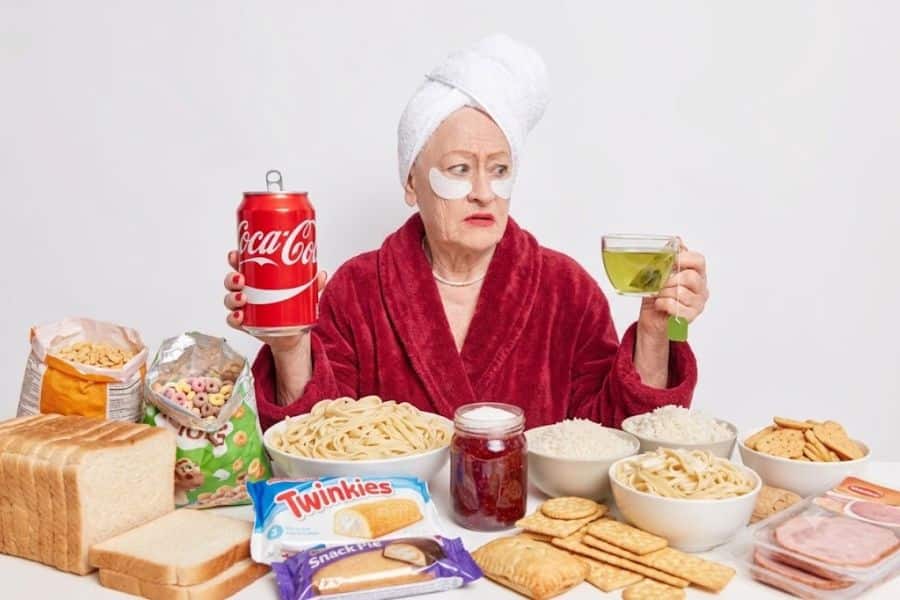
How Certain Foods Age Your Face
When you eat a lot of sugar, some of it latches onto the collagen in your skin. This is a process called glycation, and the sticky by-products it creates are known as AGEs. It’s a fitting name, don’t you think?
These compounds turn collagen from something springy and flexible into something stiff and brittle, and springy collagen is exactly what keeps skin looking smooth and firm.
Your skin is already losing collagen without any help. From your mid-twenties, you make around 1 percent less of it every year. By the time you hit 50, a good quarter of it is gone. You can’t stop that clock, but you can avoid speeding it up, and certain foods speed it up.
There’s a second problem, too: inflammation. Sugary and heavily processed foods keep your body in a low, constant state of inflammation, and that background inflammation wears down collagen faster than your body can replace it.
Add dehydration from too much salt or alcohol on top, and the skin loses its plumpness and starts to look tired.
The Foods That Age Your Skin Fastest
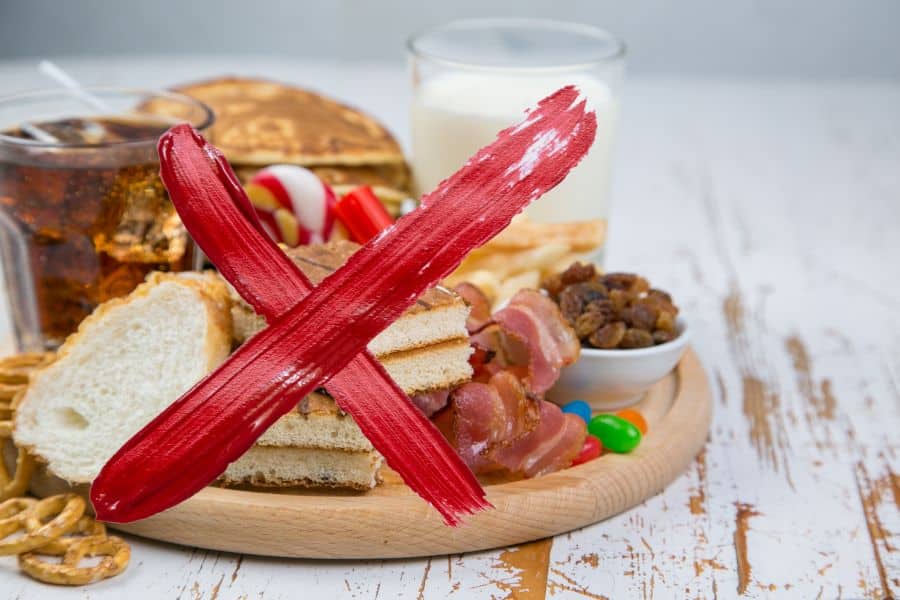
Here are the main offenders. None of them will ruin your face from one meal, so don’t panic. It’s the everyday, five-times-a-week habits that do the damage.
- Sugar and refined carbs. White bread, pastries, sugary cereal, and fizzy drinks all spike your blood sugar and feed glycation. If sweet things are your weakness, these sweetener swaps that won’t spike you are an easier place to start than going cold turkey.
- Charred, fried, and grilled foods. High, dry heat creates far more AGEs than gentler cooking. Those crispy black edges on a barbecued sausage are the aging compounds you’re trying to avoid.
- Processed meats and very salty foods. Bacon, deli meats, and packaged ready meals carry a lot of salt, which pulls water from your skin and leaves you puffy, along with preservatives that stoke inflammation.
- Too much alcohol. Alcohol is a diuretic, so it dries you out from the inside. The odd glass is fine. It’s the nightly habit that shows on your face.
- Ultra-processed foods generally. If the ingredients list reads like a chemistry set, your body treats it as something to fight, and that fight means more inflammation.
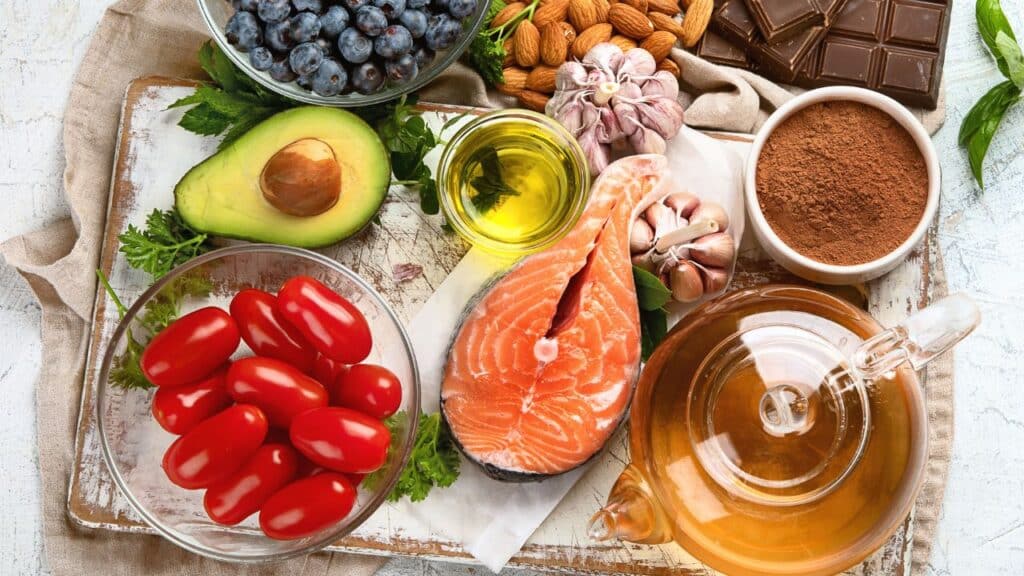
What to Eat Instead
The good news is that the foods that protect your skin are the same ones that are good for the rest of you. So this list shouldn’t be too much of a surprise.
Colorful fruit and vegetables are the backbone of it. Berries, peppers, tomatoes, and dark leafy greens are rich in antioxidants that help shield collagen from damage.
Peppers, citrus, and greens also give you vitamin C, which your body can’t build new collagen without.
Oily fish like salmon, mackerel, and sardines provide omega-3 fats that help calm inflammation and keep skin supple. Green tea is good, thanks to its polyphenols, which help protect skin from damage.
And don’t underrate plain water. Well-hydrated skin simply looks plumper than dry skin, and it costs nothing.
One more thing that matters: protein. Your skin is largely made of it, so a decent amount at each meal gives your body the raw material to repair and rebuild.
The Cooking Change Most People Miss
It’s not only what you cook, but it’s also how you cook it. Because dry, high heat creates those aging AGEs, gentler methods make a real difference. Steaming, poaching, boiling, and slow stewing produce far fewer of them than frying or charring over flames.
You don’t have to give up a roast or a barbecue. Just lean on the gentler methods more often, and trim off the really blackened bits.
There’s a neat trick as well. Marinating meat in an acidic solution, like lemon juice or vinegar, before you cook it has been shown to reduce how many of these compounds form. A squeeze of lemon does double duty as flavor and skin protection. I’ll take that.
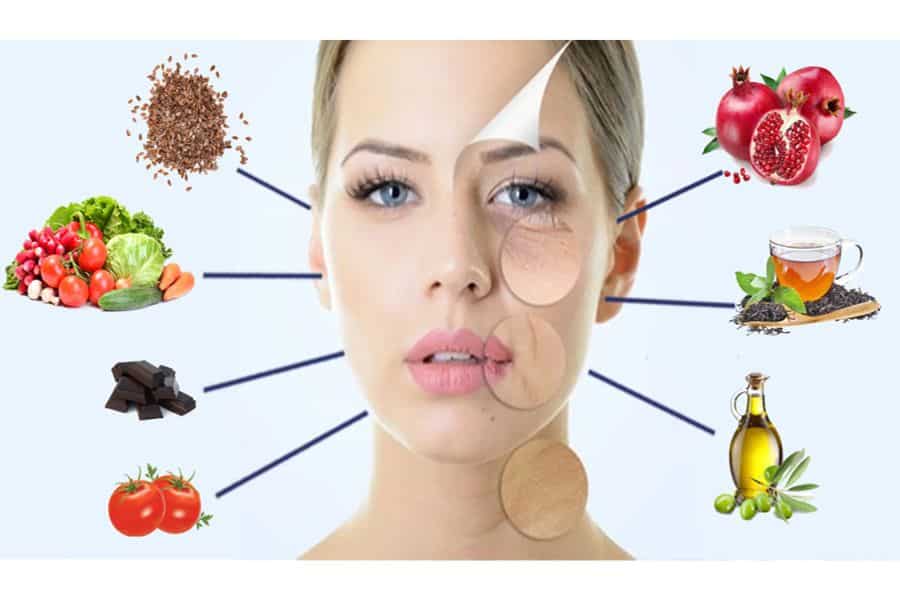
A Realistic 30-Day Approach
You’ll see plenty of dramatic 30-day face-saving challenges online. The honest version is gentler and works better because you’ll actually stick to it.
Don’t overhaul everything at once. Pick one habit a week and swap it. Trade the afternoon fizzy drink for green tea. Swap white toast for something with real fiber. Choose berries over the biscuit tin.
Small changes, one at a time, stack up faster than a crash overhaul you abandon by the weekend.
Be honest with yourself about timing, too. Your skin didn’t age in a month, and it won’t turn around in one either. Most of the difference from diet shows up over a season or two, not a fortnight.
What you’ll often notice first is less puffiness and a bit more brightness, which comes from cutting the salt and the sugar and drinking more water.
And remember, food is only one lever. Sun protection, decent sleep, and not smoking do at least as much for your skin as your dinner does.
It’s worth knowing which everyday habits are secretly aging you after 50, so you’re not undoing your good work elsewhere.
A Bit of Perspective
Most of how your skin ages comes down to factors you can’t control, chiefly your genes, the sun you’ve been exposed to over a lifetime, and time itself. No plate of salmon and blueberries is going to erase a wrinkle, and anyone promising that is having you on.
What food can do is stop you from aging faster than you need to, and keep the skin you have looking its healthiest. That’s the same principle behind why French women over 50 often look younger than their years.
Less faffing with expensive fixes, more looking after the basics day to day. Eat well most of the time, protect your skin from the sun, drink your water, and enjoy the red wine now and then without the guilt.