
Every time I open a health app or scroll through a wellness feed, I see adverts about the anti-inflammation diet. You’re being told to drink turmeric lattes, eat a handful of walnuts at 3 pm, make sure you have Salmon four times a week, and let’s not forget the berries, always berries. But why?
It’s the same problem we get with most diet labels. Somebody slaps a name on a way of eating, a few influencers run with it, and suddenly there are 12 foods you must eat and 9 you must never touch, with zero explanation of what inflammation actually is or why food would have anything to do with it.
So let’s slow down. What’s inflammation in plain English? Why does food affect it at all, and what does a week of anti-inflammatory eating look like when you’re shopping at a regular grocery store and cooking on a Tuesday night?
What Inflammation Actually Is, in Plain Language
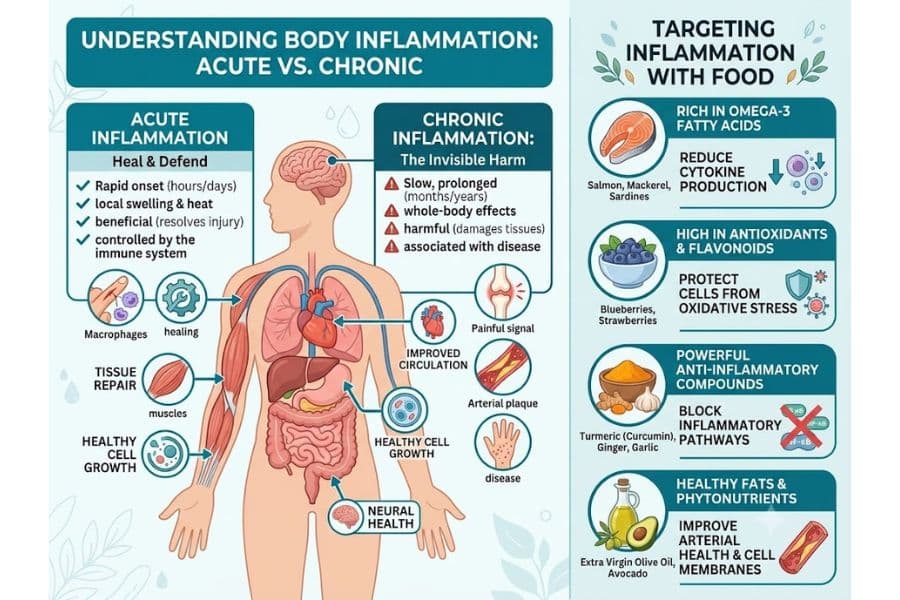
Inflammation is your immune system highlighting a problem. Stub your toe, catch a cold, get a splinter, and your body sends a rush of immune cells and chemical signals to the area to deal with it. That’s the redness, the swelling, the heat, the soreness.
The trouble is the slower kind. Chronic, low-grade inflammation is when that same immune response stays switched on at a low simmer for months or years, without an obvious injury to fix.
It doesn’t hurt the way a sprained ankle hurts. You can’t see it, but it’s linked to much of what eventually goes wrong in our bodies as we age: heart disease, type 2 diabetes, certain cancers, joint problems, and probably a chunk of the brain fog and fatigue people complain about in their forties and beyond.
A review laid out how chronic inflammation feeds into most of the big age-related diseases, and, surprise, surprise, food comes into it because what we eat is one of the things that nudges that immune system up or down.
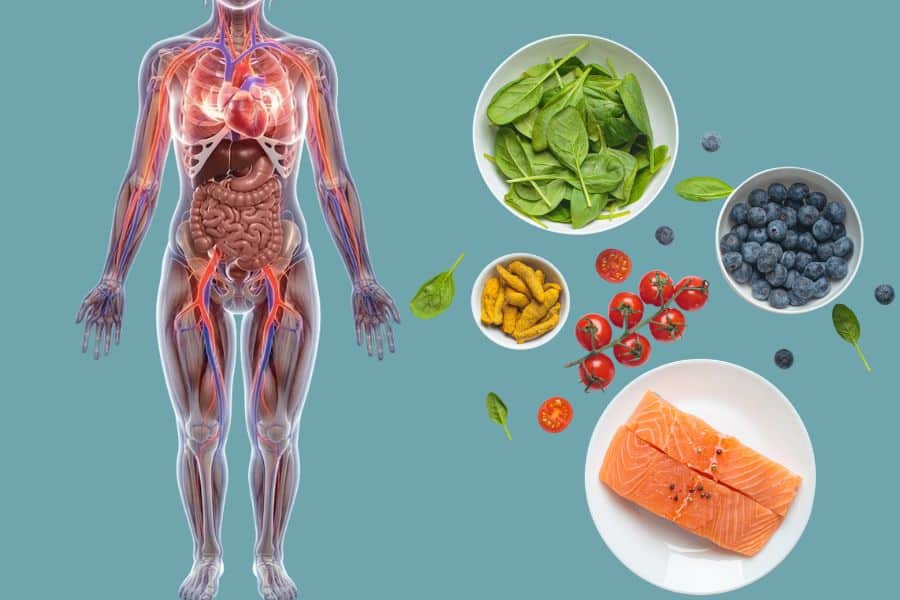
Some foods push the dial toward more inflammation, some toward less.
Why the Label Itself Is Half the Problem
Here’s where it gets messy. There isn’t one official anti-inflammatory diet. There’s a Mediterranean-style way of eating with the most research behind it, showing real cardiovascular benefits.
There’s the DASH diet for blood pressure, which overlaps with it. There’s a broad category nutrition researchers call a dietary inflammatory index, used to score how pro- or anti-inflammatory someone’s overall intake looks. And then there’s the influencer version, which is mostly a list with a variety of photos of them eating said food.
The word diet is misleading, too. It suggests a start date and an end date, six weeks of strict rules, then back to normal. A way of eating that calms chronic inflammation only works if it’s the default, the thing you fall back on when you’re tired and uninspired.
The Italians and Greeks, whose eating habits the research keeps pointing to, don’t weigh blueberries or count walnuts. They eat olive oil because it’s their default oil in the kitchen, fish because the coast is right there, vegetables because they’re cheap and good, and bread and wine because it’s part of their way of life.
The Foods That Do the Heavy Lifting (and Why)
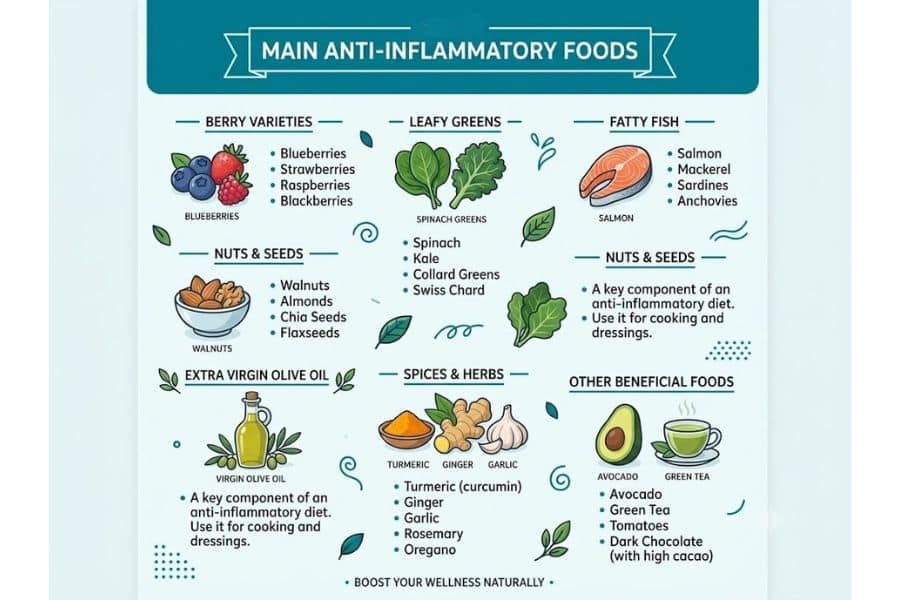
If I had to keep it simple, the foods that consistently come up as anti-inflammatory share a few traits: they’re plants, they’re fatty fish, they’re whole rather than processed, and they provide fiber, omega-3s, or polyphenols.
Polyphenols are the plant compounds that give berries, olive oil, dark leafy greens, herbs, tea, and red wine their color and bite. A review covers how these compounds interact with inflammatory pathways, and the short version is that variety beats any single hero food.
Here are the ones I keep in regular rotation, with a quick note on each:
- Extra virgin olive oil. I use it for everything. Salad, roasting vegetables, drizzling on eggs, and even cooking, despite what the internet says about smoke points. The peppery throat-catch you get from a good bottle is the polyphenols talking.
- Fatty fish like salmon, sardines, mackerel, and anchovies. I aim for two or three meals a week. Canned sardines on toast with lemon is one of the easiest lunches I know.
- Berries, fresh in summer, frozen the rest of the year. Frozen blueberries are about a third the price, and do the same job. They don’t have to be fresh.
- Dark leafy greens, mostly spinach, arugula, and kale, plus whatever’s looking decent in the produce aisle. I throw spinach into pasta sauce for an added boost.
- Nuts and seeds. Walnuts and flaxseed, in particular, are great sources of omega-3s. A small handful, not a bowl.
- Beans and lentils. Cheap, freezer-friendly once cooked, and the fiber feeds the gut bacteria that seem to matter for inflammation, too.
- Herbs and spices. Turmeric is the popular one, and I take it with black cohosh pepper, but garlic, ginger, rosemary, and oregano all give you polyphenols.
- Coffee and green tea. Both are full of polyphenols, although I do struggle with green tea and need to have lemon in it.
The foods that aren’t good for inflammation are the usual culprits you’d expect to find: ultra-processed snack foods, sugary drinks, deli meats and other heavily processed meats, refined seed oils used in deep-fried takeout, and a lot of added sugar. Not because any single cookie will inflame you.
How to Create a Weekly Meal Plan Including Anti-Inflammatory Food Items
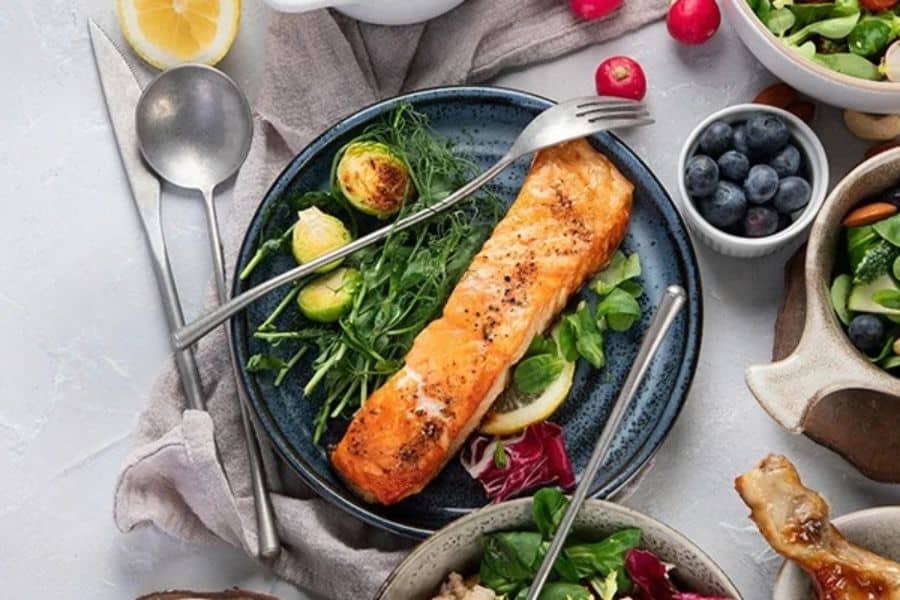
Let me show you what I actually ate last week, because I find theoretical meal plans useless. I’m not a chef, I work from home, and by Thursday, I’m tired, and there’s a load of laundry I’m pretending I can’t see, so I want things that are easy and won’t cause me stress.
Monday
- Breakfast: Greek yogurt with berries, walnuts, and a drizzle of honey
- Lunch: Big pot of lentil soup (make a large batch — you’ll eat it again this week)
- Dinner: Sheet-pan salmon with roasted broccoli and sweet potato
Tuesday
- Breakfast: Same yogurt bowl, or swap to oats if you want a change
- Lunch: Yesterday’s salmon flaked over a green salad with olive oil and lemon
- Dinner: Chickpea and spinach curry (ginger, garlic, turmeric) with brown rice — again, make extra
Wednesday
- Breakfast: Oatmeal with banana, a spoon of almond butter, and chia
- Lunch: Leftover chickpea curry
- Dinner: Chicken or turkey meatballs in tomato sauce over whole-wheat pasta, with a side salad
Thursday
- Breakfast: Eggs scrambled with whatever greens are wilting in the fridge
- Lunch: Leftover meatballs and sauce
- Dinner: Easy night — black bean tacos with avocado and a quick cabbage slaw
Friday
- Breakfast: Smoothie (frozen berries, spinach, yogurt, a little nut butter)
- Lunch: Farro salad with canned tuna or chickpeas, tomatoes, olives
- Dinner: Fun night — homemade pizza on a whole-grain base loaded with veg, or grab sushi
Saturday (more time to cook)
- Breakfast: Veggie frittata, or eggs with smoked salmon and toast
- Lunch: Light — a bowl of the lentil soup if any survived, or leftovers
- Dinner: Roast chicken with olive-oil-roasted vegetables (cook a big one)
Sunday
- Breakfast: Shakshuka, or oat pancakes if you’re feeling it
- Lunch: Leftover roast chicken in wraps or over a grain bowl
- Dinner: Veg-heavy stir-fry with tofu or shrimp, ginger and garlic, brown rice

Snacks to graze on through the week: nuts, fruit, hummus with carrots or peppers, edamame, and yes, a square of dark chocolate counts.
A few things that make it actually doable: the lentil soup, chickpea curry, and roast chicken are your three “cook once, eat several times” anchors, so four of the seven dinners are basically reheating. Friday is deliberately loose, so you’ve got an easy-out night.
The Small Shifts That Matter More Than the Big Rules
If overhauling your whole way of eating is a bit too much right now, here’s what I’d actually start with. These are the swaps that change the overall pattern without any drama:
- Cook with olive oil as the default fat instead of vegetable oil or margarine.
- Eat fish twice a week, and let canned count. Sardines, mackerel, and salmon in cans or pouches are cheap, shelf-stable, and faster than ordering takeout.
- Put a vegetable on the plate at lunch and dinner. Any vegetable. Frozen counts. The point is range and volume across the week, not whether the kale was locally sourced.
- Have fruit instead of dessert most nights, and dessert when you actually want dessert.
- Drink water and unsweetened drinks most of the time. Sugary drinks are the easiest single thing to drop, and the one that probably matters most. I’m not anti-soda, I’m anti-drinking-it-every-day.
- Cook a pot of beans or lentils once a week and eat from it. Soup, salad topping, side dish, mashed onto toast. The fiber adds up fast, and your gut will thank you
- Don’t fear bread, pasta, potatoes, or wine. They’re in the diet that has the most research behind it.
I spent years thinking carbs were the enemy, cutting bread, feeling miserable, because I live in France, where the bread is amazing. A bowl of pasta with vegetables and olive oil, and a glass of red wine, is not the problem. The problem is what we eat for the other 20 meals a week.
Disclaimer: If you have a diagnosed health condition, take medication, or are making real changes to how you eat, talk to your doctor or a registered dietitian first. This is general information from one person sharing what’s worked at her own kitchen table, not medical advice for yours.