
One good thing to come out of the awful COVID period was that people started to grow their own again. And it didn’t matter if they had a large garden, allotment, a balcony, or a windowsill. With nothing else to do, growing vegetables at home became the new Netflix.
Nobody was letting lack of space get in the way of a DIY veggie patch. I was on that journey too, although I do have a sizable garden here in my part of rural France. But this was also when my foray into the world of growing stuff, anything really, began. And it’s safe to say, I fell in love with my garden.
There is something so satisfying about planting something, whether it’s from seed or a tiny plant, and watching it grow, thrive, and then produce. My passion for gardening hasn’t waned since then, and I’ve learned so much from Claude, the farmer next door, who has been full of wonderful words of French wisdom.
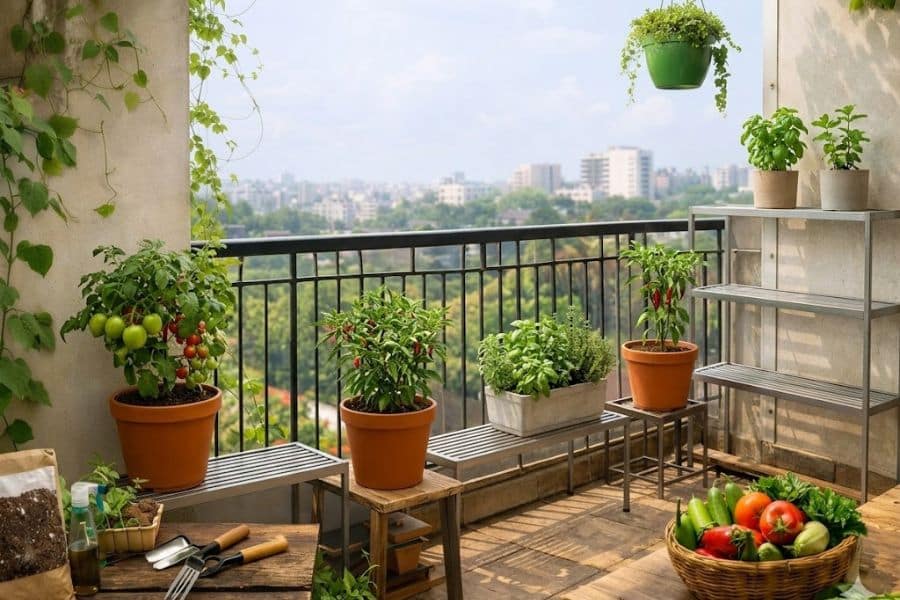
How To Grow Your Own Without a Huge Yard
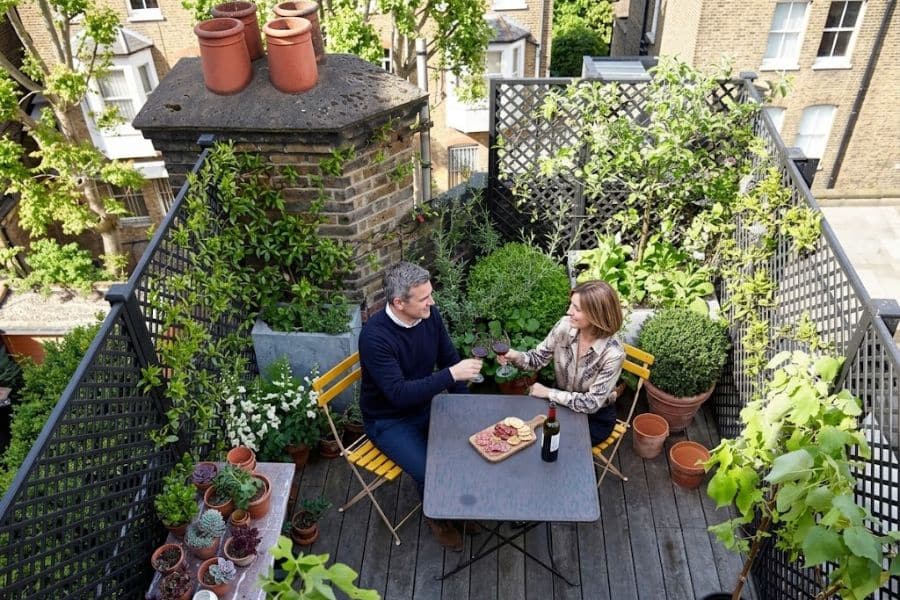
Search traffic right now is full of people looking for ideas on mini gardens, trying to figure out how to grow something, anything, on a balcony or a fire escape or a patio the size of a doormat. So this one’s for you if you don’t have a yard and need to work with what you have.
There are crops that work in a pot on a sill, containers that don’t cost a small fortune, and a few things I’d steer you away from, no matter how nice they look on Pinterest.
So, how small is small? A windowsill 6 inches deep, a balcony with room for a chair, or even a patio outside a ground-floor apartment that’s basically the size of a bath mat. We can work with whatever you’ve got.
The first thing to know is that light matters more than space. A sunny windowsill will outproduce a shady balcony every time, and if you’ve got 6 hours of direct sun, you’re in business for most edible crops.
The second thing is that small-space gardening allows you to see every plant from the couch. You’ll notice the aphids the day they show up, and if the soil is dry before the plant starts begging. It’s one of the reasons tiny gardens often look better cared for than sprawling ones.
The Crops That Will Work in a Mini Garden
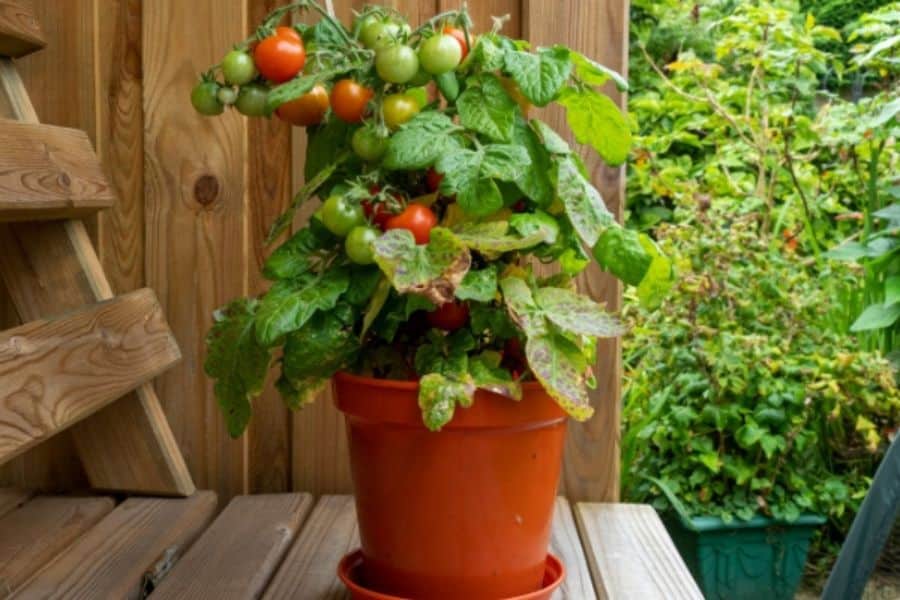
I’ve grown a lot of things in pots, and only some of them paid the rent, so to speak. The ones that consistently produced enough to make the effort worth it were herbs, leafy greens, cherry tomatoes, chili peppers, and scallions. Everything else was either a science experiment or a slow disappointment.
Herbs are the obvious win because you only need a few leaves at a time, and the plant keeps making more. Basil, parsley, chives, mint, thyme, and oregano all do well in a 6 to 8-inch pot. Mint will take over anything you put it in, so give it its own pot and don’t try combining it with anything else.
For the actual vegetables, these are the ones I recommend for a balcony or windowsill:
- Cherry tomatoes, specifically the tumbling or patio varieties bred for containers. A Tumbling Tom or a Tiny Tim will produce in a 10-inch pot on a sunny balcony.
- Salad leaves, cut-and-come-again types. Sow a shallow tray of mixed lettuces, snip the outer leaves, and the plant keeps producing for weeks.
- Scallions. You can literally regrow them from the root ends you’d otherwise throw away. Stick them in a glass of water on the sill, and they’ll regrow in days.
- Chili peppers. They like heat, they like sun, and they look gorgeous on a balcony. One plant will give you more chilies than a normal person can eat. I freeze mine so I have them throughout the winter.
- Radishes. They’re done in about 4 weeks from seed to plate, and they grow in a pot only 4 inches deep. Good for impatient gardeners, which is most of us.
- Strawberries. A hanging basket of strawberries is one of the great small-space pleasures. You’ll get a handful every couple of days at peak.
Notice what isn’t on this list. Zucchini, eggplant, full-sized tomatoes, sweet corn, anything that grows on a vine and wants to take over the world.
They can technically be done in containers, but the containers need to be enormous, the watering is relentless, and the yield rarely justifies the floor space.
Pots, Buckets, and Other Garden Things
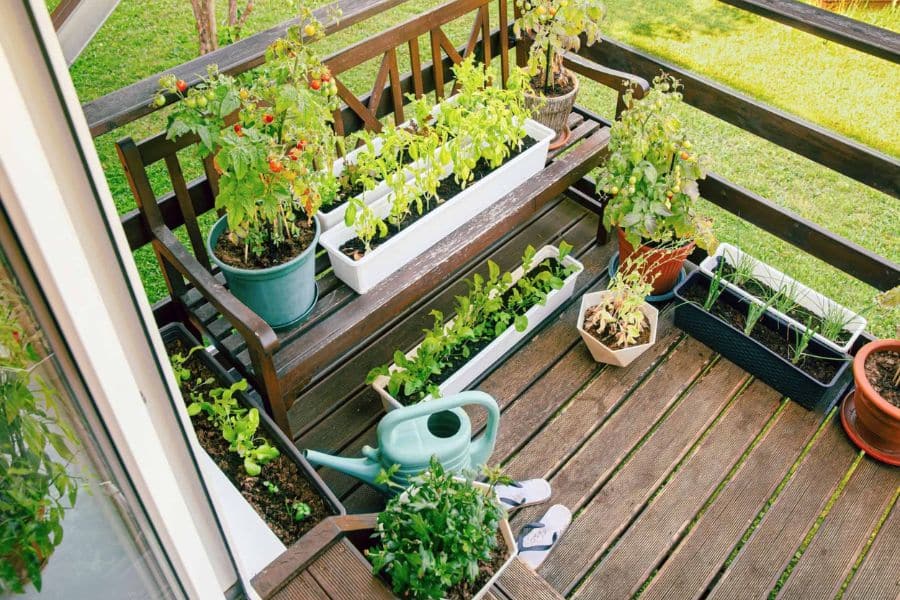
Garden centers will happily sell you a $40 ceramic pot for a single basil plant. You do not need a $40 ceramic pot. I’ve used 5-gallon buckets from the hardware store with drainage holes drilled in the bottom, plastic storage tubs, and old colanders for strawberries (the drainage is built in).
The one thing that matters is drainage. Whatever you grow in has to have holes in the bottom, or your plant’s roots will sit in water and rot. If you’re using something that wasn’t designed as a pot, drill a few holes.
If you’re on a balcony and worried about water dripping onto the neighbors below, put a saucer underneath, but make sure the pot isn’t sitting directly in standing water. A couple of pebbles in the saucer keep the pot raised just enough.
A few things worth spending a little money on:
- Decent potting mix. Not garden soil, not the cheapest bag at the store. A proper container mix holds moisture without compacting, and your plants will be visibly happier. I learned this the hard way after killing two rounds of seedlings in dense, bagged dirt that turned to concrete after one watering.
- A watering can with a long spout, if your pots are on a sill or behind furniture. Reaching is half the battle.
- Self-watering containers if you travel or forget. They have a reservoir at the bottom and a wick that brings water up to the roots. They’re not magic, but they buy you 3 or 4 extra days, which can be the difference between coming home to a tomato plant and coming home to a crispy stick.
And if you have a balcony railing, consider rail planters that hook over the top. They double your growing space without taking up any floor space.
Watering, Sun, and the Things That Will Sabotage Your Efforts
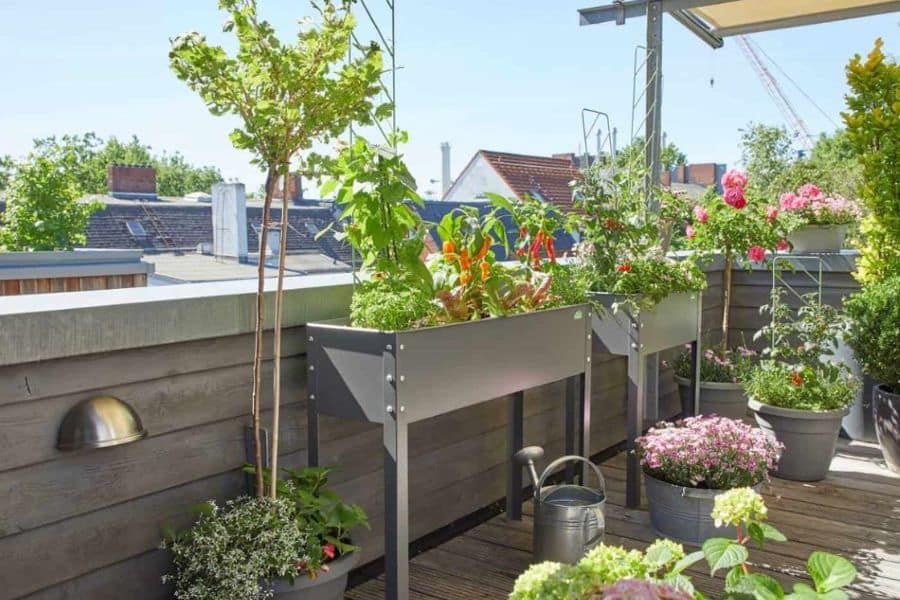
Containers dry out faster than the ground. Much faster. On a hot summer day with full sun, a small pot can go from damp to bone-dry in a few hours, and the smaller the pot, the faster it happens.
This is the single biggest reason small-space gardens fail, and it has nothing to do with skill. You just have to water more often than you think.
In cool weather, every couple of days is usually fine. In an 85-degree heatwave, you might be watering the smallest pots twice a day. Stick a finger an inch into the soil; if it’s dry, water until it runs out the bottom. If it’s damp, leave it alone. Overwatering is the other way to kill a container plant
The other issue is wind. Balconies, especially high up, get more wind than you’d guess from the ground, and wind dries plants out and snaps stems. If you’re up high, choose lower, bushier plants over tall leggy ones, and tuck pots against the wall rather than out at the edge.
A few things I wish someone had told me earlier:
- Group your pots together. They shade each other’s soil, slow evaporation, and create a little microclimate that all the plants benefit from. A row of lonely pots dries out faster than a cluster.
- Mulch the top of the soil with a thin layer of bark, gravel, or even broken-up sticks. It slows water loss significantly, and on a hot balcony, it can be the difference between watering once a day and twice a day.
- Feed your container plants. Soil in a pot runs out of nutrients in about 6 weeks, which is why everything looks brilliant in May and a bit pale by July. A liquid tomato feed every couple of weeks fixes it. Keep a bottle by the watering can so you actually remember.
- Don’t crowd the pot. One tomato plant per 10-inch pot, not three.
What I’d Skip, Even Though It Looks Tempting
Garden magazines, Pinterest, and Instagram will show you cucumbers cascading off a balcony, pumpkins growing up a fire escape, and miniature orchards in 5-gallon pots. Some of it is real, and some of it is AI-generated. Here’s what I’d quietly leave on the shelf if I were starting over with a small space.
- Full-sized tomatoes. They need a huge pot, daily watering during peak summer, staking, and pruning, and they tend to underperform in containers compared to a yard. Stick with cherry or patio varieties, and you’ll get more fruit for less hassle.
- Zucchini. One plant will fill a balcony, produce 2 zucchini, get powdery mildew, and die. Buy them at the farmers’ market instead.
- Corn, pumpkins, watermelon, and anything else that sprawls. They’re space hogs that need pollination help and consistent moisture levels; containers can’t really deliver. They want a field, not a fire escape.
- A full-sized fruit tree. I know dwarf varieties exist, and I know they say they’ll fruit in a pot. They will, eventually, sort of, if you’re very patient and very lucky. If you want fruit in a small space, do strawberries in a hanging basket and a couple of dwarf blueberry bushes in pots, both of which actually do well in containers.
- And the one I’d most want to talk you out of: ambitious herbs you don’t actually cook with. I went through a phase of growing lemon verbena, lovage, and chervil because they sounded exotic, and I used them roughly twice. Grow what you’ll eat this week. Basil, if you make pasta, cilantro if you make tacos, or mint if you drink mojitos. Skip the rest until you’ve got the basics nailed and a bit of extra space to play with.
Starting This Week, With Whatever You’ve Got
You don’t need a trip to a fancy garden center, a Pinterest board, or a plan. You need one pot, some potting mix, and one plant or a packet of seeds. That’s the whole list.
The easiest possible starting point in summer is a pot of basil from the grocery store, repotted into something slightly bigger with fresh potting mix, and put somewhere sunny. Those little supermarket pots are usually about a dozen seedlings crammed together, and if you split them gently into two or three clumps and replant them, you’ll have a bountiful supply.
From there, add a pot of salad leaves from seed (they come up in a week), a tomato plant from the garden center (look for the words patio or tumbling on the label), and a couple of scallions stuck in a glass of water on the sill.
That’s a tiny edible garden, on a budget, on whatever you’ve got. The first time you eat something you grew, even if it’s a single cherry tomato warm from the sun, you’ll understand why people with no yards keep doing this. They taste AMAZING!