
We’ve all had those moments where you stand in the kitchen with the fridge door open, wondering what on earth you came in for. I know from chatting to my friends it’s the same for them. We’re women of a certain age, and the big M (menopause), as I like to refer to it, has played havoc with our minds.
It’s easy to put things like this down to the usual culprits, such as the one above. However, these things aren’t always what you think they are. Now, before you all start running off to Google the other possibilities for our memory slips and brain fog, that’s not what this article is all about. I’m not into scaremongering.
But what I do want to do is give you all the facts. Alzheimer’s starts long before the obvious signs start to appear, and if you know what you’re looking for, there are plenty of things you can do to help prevent it, or at the very least delay it.
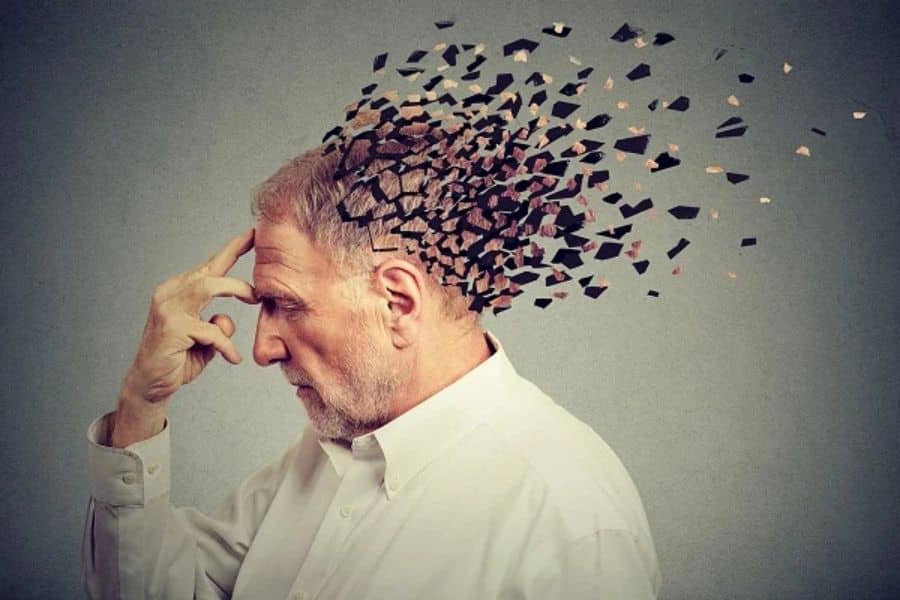
12 Small Brain Shifts in Your 40s You Shouldn’t Brush Off
These signs are ones taken from the Lancet Commission’s 2024 update on dementia, which has reframed how doctors think about the disease. The damage begins 15 to 20 years before anyone notices, in what’s now called the silent decade.
Sadly, my mother-in-law suffers from dementia and is now in a home where she gets great care. It’s been so sad to see the decline, and I wish I’d known more about this stuff to help her earlier.
1. A Fading Sense of Smell
The olfactory bulb, the part of your brain that processes smell, sits right next to the hippocampus, which handles memory. The proteins that cause Alzheimer’s tend to show up in the smell center first, years before anything else falters.
It’s not that you’ve lost your sense of smell exactly, more that you’re no longer able to identify what you’re smelling. You walk into the kitchen, and you know something is cooking, but you can’t tell whether it’s a roast chicken or a chocolate cake in the oven.
Or worse, someone leaves the gas hob on, and you don’t notice while everyone else does.
A Quick and Easy Home Test: grind some coffee, open a jar of peanut butter, peel an orange, and close your eyes. Can you name each one the second it hits your nose? If the smells feel muffled or hard to place, and you haven’t had a cold or a recent bout of Covid, it’s worth mentioning to your doctor.
2. Trouble Telling Things Apart in Low Light
My French neighbor stopped driving at night about 2 years ago. She told me she’d been to the optician 3 times and kept getting stronger glasses, and none of them helped. The issue, it turned out, wasn’t her eyes. It was her brain.
This is called a loss of contrast sensitivity, and it occurs when the visual cortex struggles to separate objects from their backgrounds. You can see perfectly well in good light, but the edges of the stairs blur together, or the road and the shoulder become one dark smudge after sunset.
Most of us blame our eyes first, which makes sense. Glasses are easier to fix than brains. But if your optician keeps telling you your prescription is fine and you’re still struggling in low-contrast situations, the processing power of your eyes is worth a second thought.
3. The Restaurant Problem
If you used to love a noisy Saturday night at the local steakhouse or bistro, but now do everything you can to avoid it because it’s just too hard to hold a conversation, it might be worth looking into. You can hear your friend talking, the volume is fine, but you can’t pull her voice out of the clatter of cutlery and the couple arguing at the next table.
It’s known as Central Auditory Processing Disorder. Your hearing is intact, but the filtering software your brain uses to focus on one sound and dim the rest is getting glitchy.
This particular difficulty can show up 5 to 10 years before a diagnosis, which is a long period of time, so if picked up early enough, it could be treatable.
It’s also one of the most disabling shifts on this list because it shrinks your social life without you really noticing. First, you stop suggesting the busy places, and then you stop going out at all.
4. Apathy That Isn’t Depression
Depression is heavy, sad, and tearful, but Apathy is completely different; it’s a feeling that just leaves you flat. You’re not unhappy exactly; you just don’t care. The garden you used to love is now a chore; you’ve lost interest in the book club you ran for 8 years; and, worse still, you’ve started letting your friend’s calls go to voicemail.
The frontal lobes handle motivation, and they’re often hit early. Apathy is now recognized as one of the very first neuropsychiatric symptoms of Alzheimer’s, often appearing years before the obvious memory issues. It tends to be misread as burnout, or being a bit fed up, or just getting older.
5. Sarcasm Goes Over Your Head
Now, sarcasm may not have been something you ever picked up on anyway, but if you did and it’s become harder to pick up on, there could be a reason. Picking up sarcasm is a surprisingly complicated brain trick.
You have to register that someone is saying one thing while meaning the opposite, and you have to read tone, face, and context all at once. Neurologists call this Theory of Mind, and it lives in the social networks of the brain that fray early in Alzheimer’s.
What you’ll notice in someone (or yourself) is a slow shift toward taking things literally. A sarcastic comment lands as a real statement. Or, more oddly, the sense of humor changes. The clever, dry jokes stop being funny, and slapstick or darker, cruder humor takes over.
It’s a strange one to spot in yourself, which is why family often notices first.
6. Keeping Everything
Hoarding in the early stages of cognitive decline isn’t really about attachment to objects. It’s about decision fatigue. The brain gets overwhelmed by the small executive choice of “do I need this, where does it go, when would I use it,” and it defaults to the easiest option: keep it. Throwing things away requires a sequence of judgments, and that sequence is exactly what’s getting harder.
If the kitchen drawers are filling up with twist ties and old batteries, and the pile of unopened mail keeps growing, maybe it’s time to ask why. I’m not talking about the occasional bit of clutter we all have, but the new, unmistakable shift toward keeping things that have no use.
7. Pulling Back From Social Life
This one ties into the restaurant problem and the word-finding problem we’ll get to in a minute. When social interaction starts costing more cognitive fuel than it used to, the brain negotiates a smaller life.
It’s a sensible adaptation, in a way, because your brain is conserving energy. The trouble is that social engagement is one of the strongest protective factors against dementia, so withdrawing accelerates the very thing you’re trying to manage. The Lancet Commission lists social isolation as a major modifiable risk factor.
If you’ve noticed yourself saying no more often, ask whether it’s because you genuinely prefer the quiet or because socializing has started to feel like a chore rather than a pleasure. There’s a real difference.
8. Money Getting Harder
Johns Hopkins researchers tracked the financial records of people later diagnosed with dementia and found that missed payments and slipping credit scores started happening around 6 years before any clinical diagnosis.
It’s little things that, when added together, become a pattern. Things such as not paying your credit card bill on time when you always have, not being able to calculate the tip at a restaurant, or your bank account feeling almost like it’s written in a foreign language.
Managing money is one of the most cognitively demanding things we do in daily life, which is why it cracks early.
The useful thing about this signal is that it leaves a paper trail. If you have an older parent you’re worried about, a quick look at whether bills are being paid on time can tell you more than a hundred conversations.
9. Your World Getting Smaller
The entorhinal cortex is the brain’s internal GPS, and it’s one of the very first regions that Alzheimer’s attacks, resulting in a kind of spatial anxiety. You start sticking to the routes you know, you won’t drive anywhere new without GPS, and even places you’ve been to a dozen times start feeling unfamiliar enough that you turn the satnav on just to be safe.
Getting briefly turned around in a parking lot or forgetting which exit to take on a freeway you rarely use is normal. Avoiding new places entirely, or getting lost on a route you’ve driven for 20 years, is a different category.
10. Word-Finding Trouble
We all have moments where the word we want sits just out of reach. Blimey, I’ve lost count of how many I’ve had of those over the last couple of years. The name of the actor, the word for that thing, the title of the book we read last month. In your 40s and 50s, this happens more often, and most of the time it’s nothing.
What to watch for is the pattern. Are you increasingly substituting vague words for specific ones? “The thing” instead of “the corkscrew.” “That place” instead of “the bakery.” Are you trailing off mid-sentence because the word you needed never arrived? Are conversations getting effortful in a way they didn’t used to be?
The brain’s language centers compensate hard during the silent decade, which is why this can stay subtle for years. If you notice that you’re rehearsing what you want to say before you say it, or avoiding certain topics because the vocabulary feels slippery, that’s the kind of detail worth flagging.
11. Sleep That Doesn’t Restore You
Deep sleep is when the brain runs its cleaning cycle. Specifically, it’s when the glymphatic system flushes out amyloid beta, the protein that builds up into Alzheimer’s plaques. If you’re not getting enough deep sleep, the cleaning doesn’t happen properly, and the proteins accumulate.
The signs are all there if you look for them. You sleep 7 hours but wake up feeling like you haven’t slept at all. Maybe you start needing a nap in the afternoon when you never used to, or you wake up at 3 am with your mind racing and can’t drop back off.
Untreated sleep apnea is a particular problem here, and it’s wildly underdiagnosed in women, who often don’t snore in the obvious way men do.
If your sleep has changed in a way that doesn’t resolve on its own within a few months, push your doctor on it. A sleep study is one of the most useful things you can do in your 40s and 50s, and most of us never bother.
12. A Slower, Less Steady Walk
Your gait, how you walk, is controlled by some of the same brain networks that handle cognition. When those networks start to struggle, the walk changes before the thinking obviously does. The steps get a bit shorter, the pace slows, and turning around takes a half-second longer than it used to. Walking and talking at the same time becomes harder, so you stop to finish your sentence.
Researchers have been tracking this for over a decade now, and a measurable slowing of gait speed in midlife is one of the predictors that shows up in the data well before memory loss. It’s the kind of thing a partner notices before you do. “You walk slower than you used to.”
What you can do to help
What you can do about all of this is what I want to leave you with, because the whole point of catching these signals early is that the silent decade is also the window when intervention works best.
- Move your body every day, whether that’s through walking, dancing, or gardening; it all counts.
- Get your hearing checked, and wear hearing aids if you need them, because untreated hearing loss is the single biggest modifiable risk factor on the Lancet Commission’s list.
- Sleep properly and eat the Mediterranean way, as it’s proven to help.
- Keep learning things as it keeps the brain active rather than allowing it to stop working. Anything from reading to doing puzzles keeps it alive and kicking.
- Keep up your social life, even when it feels like an effort.
None of it is a guarantee, but the brain in your 40s and 50s is still listening, and what you do now is what it has to work with later.
Disclaimer: This article is for general informational purposes only and is not a substitute for professional medical advice, diagnosis, or treatment. Always consult a qualified healthcare provider before making changes to your health, diet, or exercise routine.