
Ten years ago, my life was all hustle and bustle. I was always busy; there were never enough hours in a day, and I had my nose to the grindstone. I barely had the time to notice the world around me. As for taking a vacation? Don’t be silly, there was no time for that.
My priorities changed when I moved to a rural spot in the beautiful French countryside, and I realized there was more to life than work and money. But the French aren’t the only ones with a completely different approach to life; the Scandinavian lifestyle habits prioritize their days differently, too, and as a result, they are living longer, happier, and more fulfilled lives.
The American lifestyle is a busy one. Between the long work hours, the side hustles, saving for the kid’s college fund, and the constant pressure to optimize every hour of the day, it’s no wonder burnout has become a national crisis. So what is it they do that still allows them to be successful without working all the hours?
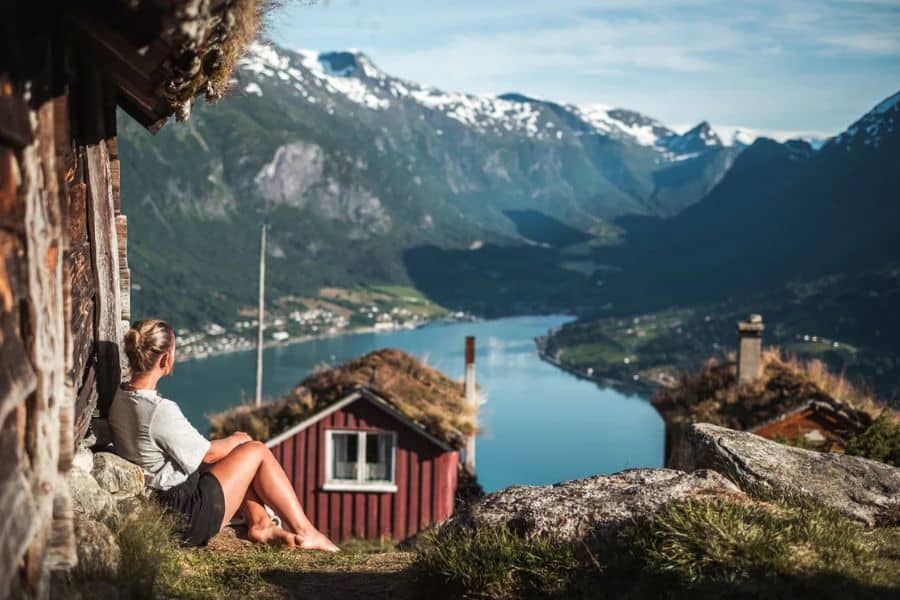
7 Scandinavian Lifestyle Habits for Americans to Adopt for a Longer Life
Denmark, Finland, Norway, and Sweden consistently top the World Happiness Report year after year. The US sits around 23rd, which should tell you something.
Americans work an average of 1,791 hours a year compared to around 1,400 for Norwegians. They sleep less, move less throughout the day, eat more processed food, and report significantly higher levels of chronic stress.
The result? Scandinavians live longer, experience lower rates of heart disease, and report far higher levels of daily contentment. So what exactly are they doing differently? Quite a lot, as it turns out. They live their lives by a set of habits, not rules, but wonderful lifestyle habits that allow them to actually live life instead of getting lost in the general humdrumness of it.
Friluftsliv: They Go Outside No Matter What

Friluftsliv (pronounced free-loofts-leev) is a Norwegian concept that translates roughly to “open-air living.” It means spending time outside every single day, no matter what the weather throws at you. Rain, snow, wind, grey skies that seem to last for weeks. You dress for it, and you go anyway.
It’s a daily habit woven into ordinary life. A walk before work, kids playing outside after school, come rain or shine, lunchtime spent away from a desk rather than hunched over a keyboard. In Sweden, some companies even tax-incentivize outdoor activity by subsidizing employees’ sporting equipment or compensating employees who cycle to work.
The Norwegian government has long promoted friluftsliv as a public health strategy, recognizing that access to nature isn’t a luxury but a foundation for physical and mental wellbeing.
Spending just 120 minutes a week in nature has been shown to significantly boost mood and overall well-being, and the Scandinavians take full advantage of it.
Americans, by contrast, increasingly live in a culture where time outside is squeezed between work, commutes, and screen time. Nature becomes something you visit on vacation rather than something you return to every day. Friluftsliv is the reminder that it doesn’t have to be that way.
Fika: The Pause That’s Actually Required

In Sweden, fika is a non-optional, mid-morning or afternoon break, usually involving coffee and something small to eat, taken with colleagues or friends. You step away from your desk, don’t look at your phone or emails, instead you stop, sit, connect, and then get back to it.
Americans tend to wear busyness like a status symbol. Eating lunch at your desk signals dedication, skipping breaks shows commitment, and taking time to simply sit and talk in the middle of a workday would be completely scandalous.
But Scandinavians see rest differently. A properly rested, socially connected person is more creative, more focused, and more resilient than someone running on caffeine and cortisol.
Fika isn’t really about coffee, more a daily, built-in reminder that you are a person first and an employee second. The social element matters too. Those moments of easy conversation with colleagues or friends strengthen bonds in ways that team-building exercises and Slack messages never quite manage.
Hygge: Finding Enough in the Ordinary

Hygge (pronounced hoo-guh) is the Danish concept of coziness, warmth, and togetherness. It’s that particular feeling of being completely content with exactly where you are and who you’re with. Candles on the table, a slow meal with people you love, conversation that goes nowhere in particular and doesn’t need to.
There was a huge movement in interior design for Hygge, and I loved it. All those gorgeous blankets, cushions, and pure coziness. I absolutely adopted this in my French home, with my winters spent in front of a log burner, burning brightly, and plenty of mood-setting candles and throws.
American culture is largely built on the premise that more is always better. More money, more experiences, more followers, more square footage. There’s always a next level to reach, a next thing to acquire. Hygge pushes back on all of that. It asks you to find deep, lasting satisfaction in small, everyday moments rather than reserving happiness for some future version of your life when everything finally falls into place.
The Danes have been practicing it for generations.
Lagom: Just Enough is Exactly Right

Lagom is a Swedish word that roughly translates to “not too much, not too little.” Just the right amount. It’s a concept that touches every corner of Scandinavian life, from how much people work to what they eat to how they consume and spend.
This philosophy is part of why burnout is far less normalized in Scandinavian countries than in the US. The cultural expectation isn’t to push until you break and then recover. It’s to find a sustainable rhythm and stay in it. Work hard during work hours, then close the laptop and be present at home. Eat well without obsessing, and buy quality things, but only what you actually need.
Research found that working more than 55 hours a week is associated with a 35% higher risk of stroke and a 17% higher risk of dying from heart disease compared to working a standard 35 to 40-hour week.
The Nordic Diet: Simple Food That Does a Lot

Scandinavian eating habits are built around fatty fish like salmon, mackerel, and herring, whole grains such as rye and oats, root vegetables, legumes, and berries. Seasonal, local, and largely unprocessed. The season and local bit is the way it’s done in France too, and it’s lovely because you actually look forward to things coming into season rather than them being available all the time.
Nordic diet followers show a 14% lower risk of heart attacks compared to people eating a standard Western diet. Anti-inflammatory markers drop measurably within just a few weeks of switching. Gut microbiome diversity, a key indicator of long-term health, is significantly higher in people eating a Nordic-style diet.
The standard American diet sits at almost the opposite end of the spectrum. Ultra-processed foods, refined carbohydrates, excess added sugar, and heavy red meat consumption drive chronic inflammation, which quietly accelerates aging and disease progression across the body.
The Sauna Ritual
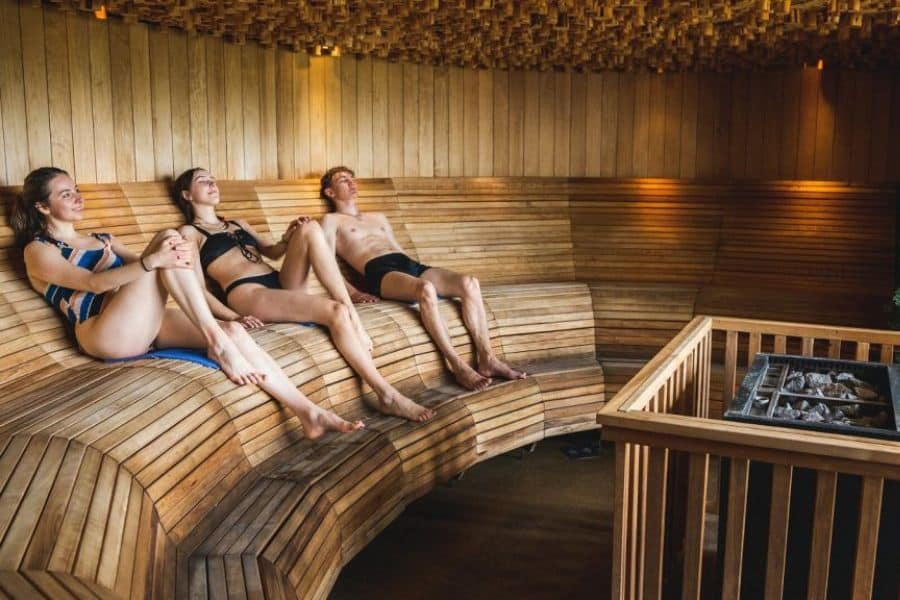
In Finland, there is roughly one sauna for every two people. That’s over three million saunas for a population of five and a half million.
Scandinavians, and Finns in particular, use the sauna several times a week as a matter of routine. The experience typically involves cycles of intense dry heat followed by a cold plunge, whether that’s a lake, a snowbank, or a cold shower. It’s part social ritual, part physical reset, and part meditation.
The health research behind regular sauna use backs it up, too. Men who use a sauna four to seven times a week have a 63% lower risk of sudden cardiac death compared to those who use it just once a week. A 30-minute session reduces blood pressure and raises heart rate to levels comparable to those during moderate exercise. It also lowers inflammation markers and supports deeper sleep.
Allemannsretten: Nature Belongs to Everyone
In Norway, Sweden, and Finland, it is written into law that every person has the right to walk, hike, camp, forage, and explore almost any land, regardless of who owns it. It’s an interesting concept to think of no trespassing signs blocking a forest path or a stretch of coastline.
This is called allemannsretten in Norway, roughly translated as “everyman’s right.” You can pitch a tent in a field, pick wild berries on private land, swim in any lake, and walk through any forest as long as you respect the land and the people who live near it. The rule is simple: don’t disturb, don’t destroy, and leave it as you found it.
Americans are so conditioned to private property boundaries that this concept is completely alien. Allemannsretten changes your entire relationship with the outdoors. When nature is always accessible, you walk more, breathe more fresh air, forage, and eventually start to slow down. It removes the friction between people and the natural world, and that friction, it turns out, has a high cost to both physical and mental health. I know that whenever I spend large portions of time in the garden, I feel very much at one with the world.