
The thought of either yourself or a family member having cancer is scary. But there are usually some obvious warning signs that, when you know what to look for, are fairly easy to detect.
However, before we get to that, it’s important to remember not to overreact and to think that every illness, cough, and bruise means you’re showing signs. Ever since WebMD came online, my daughter has been self-diagnosing every sniffle, and that’s not what this is about.
Forewarned is forearmed, but, like everything, you need to be aware that these are only signs, not an immediate cause for concern. They can help you detect early stages of cancer, but until they are checked by a health professional, don’t be alarmed.
9 Warning Signs That Can Help You Detect the Early Stages of Cancer
Most of us are pretty good at brushing off symptoms. We tell ourselves it’s probably nothing. And most of the time, we’re right.
But sometimes, we’re not.
Persistent Fatigue That Sleep Won’t Fix

Patients have described cancer-related fatigue as a bone-deep exhaustion that no amount of rest can touch. It’s not the kind of tired you feel after a long week at work or a big session in the garden.
Your body burns extra energy fighting cancer cells, which leaves very little in reserve for everyday life. Blood cancers like leukemia and lymphoma are particularly associated with this kind of exhaustion because they affect the production of red blood cells directly.
What makes this different from ordinary tiredness is that it doesn’t improve, but tends to worsen as the day goes on, rather than getting better. Cancer-related fatigue is one of the most commonly reported early symptoms, frequently appearing well before a diagnosis is made.
Lumps or Swollen Lymph Nodes

Your body has hundreds of lymph nodes, small bean-shaped structures found in your neck, armpits, groin, and elsewhere. Their job is to filter out harmful substances and help fight infection.
When cancer spreads, lymph nodes often swell. You might feel them as firm, painless bumps under the skin. Some people find just one, while others notice several.
The key thing to pay attention to is how long they stay swollen. A lymph node that puffs up during a cold or infection will usually settle down within a couple of weeks. Cancer-related swelling tends to stick around. The nodes often feel hard or fixed in place when pressed, rather than soft and movable.
This type of swelling is particularly associated with lymphoma and leukemia, but it can also signal that another type of cancer has begun to spread. Any lump that’s still there after three weeks deserves medical attention and possibly a biopsy.
Bloating or Abdominal Swelling

Bloating is normal, especially after a big meal, but what’s not normal is bloating that simply doesn’t go away. Bloating that’s there when you wake up, when you go to bed, and there day after day without a clear cause.
Ovarian cancer has a well-earned reputation as a difficult cancer to catch early, partly because its symptoms look so much like routine digestive complaints. Persistent bloating is one of the main ones.
Research has found that women with ovarian cancer are 3.6 times more likely to experience bloating than women without it, and it’s one of the symptoms most commonly reported before diagnosis.
The bloating linked to cancer tends to worsen over time rather than come and go with your diet or cycle. Your clothes tighten around the waist even though you haven’t gained weight anywhere else. Some women feel abdominal or pelvic pressure.
If the bloating has been consistent for three weeks or more, don’t dismiss it.
Chronic Cough or a Voice That Won’t Come Back

A cough that sticks around for three weeks or longer without a clear cause needs to be checked. The same goes for a voice that turns raspy or hoarse and stays that way.
Lung cancer often announces itself through a persistent cough before any other obvious symptoms appear. Some people describe their cancer cough as deeper or different in character from what they experience with a typical cold or respiratory infection. Coughing up blood, even in small amounts, is a more urgent signal and should never be ignored.
The larynx and throat can also develop cancers that cause hoarseness. Voice strain from overuse or a cold usually improves with rest, whereas hoarseness linked to cancer doesn’t.
Smoking increases the risk substantially, but it’s worth noting that non-smokers get lung and throat cancers too. If your voice has been off for more than a few weeks and you can’t explain why, get it seen.
Changes in Breast Appearance

As women, we know our bodies well, and that familiarity is actually one of the most useful tools we have when it comes to breast cancer.
It’s not always a lump you’re looking for. Skin that dimples and takes on a texture resembling an orange peel, one area of the breast that looks different or sits differently from the surrounding tissue, a nipple that inverts when it didn’t before, or discharge that appears without squeezing. These are all changes to watch for.
Inflammatory breast cancer doesn’t always present as a distinct lump. Instead, the breast may appear larger, feel warm, or show redness and thickening of the skin. It can look more like an infection than a cancer.
Regular self-exams won’t catch everything, but they will help you notice when something shifts. Men can develop breast cancer, too, though it’s far less common.
Persistent Indigestion or Stomach Discomfort

Heartburn is one of the most common complaints around. For me, it’s usually when I’ve eaten too much bread or drunk too much rosé.
But indigestion that keeps coming back, that antacids can’t touch, or that gets worse over time is something different. The upper digestive tract is home to several cancer types that first make themselves known through what feels like run-of-the-mill gut discomfort.
Esophageal cancer can feel like a burning sensation after meals or a vague sense of food getting stuck. Stomach cancer often starts as a dull ache that doesn’t respond to the usual remedies. Pancreatic cancer can cause stomach or upper abdominal pain that radiates toward the back.
Doctors look for what they call “alarm features” when assessing persistent indigestion. Pain that wakes you at night, indigestion that started after age 55 with no prior history, or stomach discomfort paired with unexplained weight loss are all reasons to push for investigation rather than just reaching for another antacid.
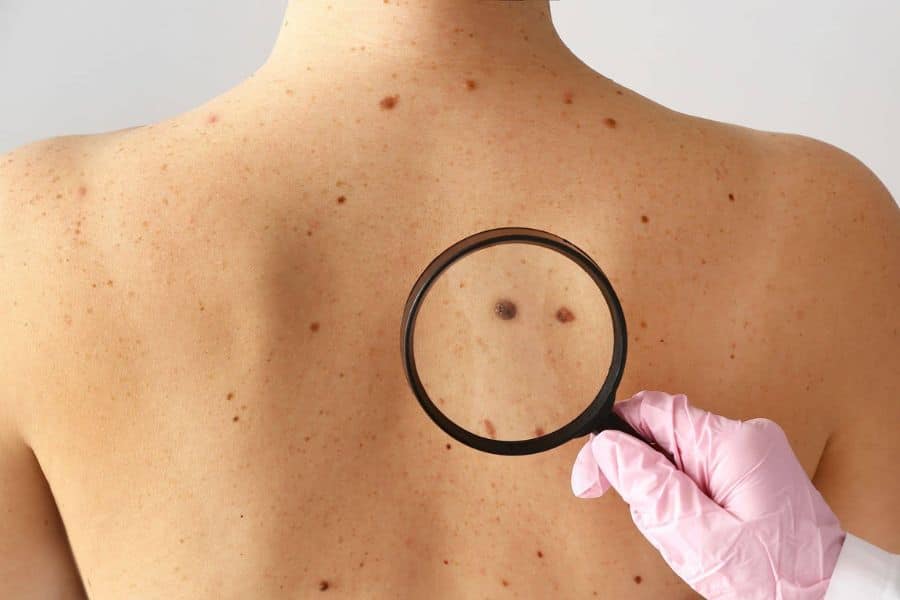
Skin Changes You Haven’t Seen Before
Your skin is one of your body’s most visible early-warning systems.
Most people know to watch moles for signs of melanoma, and the ABCDE rule is still the best starting point:
- Asymmetry
- Border irregularity
- Color variation
- Diameter larger than a pencil eraser
- Evolving appearance over time
But skin changes can also signal internal cancers. Jaundice, a yellowing of the skin and eyes, is often the first visible sign of liver problems and can indicate cancer. Itching without a rash, particularly on the legs or torso, sometimes precedes certain blood cancers.
A sore that won’t heal, especially on a sun-exposed area, can indicate basal or squamous cell carcinoma, both of which are highly treatable when caught early.
The overall rule is simple: if a skin change is new and still there after a few weeks, get it checked.
Persistent Pain Without a Clear Cause
Pain is your body’s way of telling you something is wrong. Most of the time, it has an obvious explanation, such as pulling a muscle, sleeping awkwardly, or overdoing it while weeding in the garden.
But pain that hangs around for weeks, doesn’t improve with rest or typical pain relief, and can’t be explained by an injury or known condition is worth investigating. A large meta-analysis found that the overall prevalence of pain across cancer patients was around 44.5%, and it frequently appears as one of the earlier symptoms depending on the cancer type.
Where the pain is located can offer clues. Back pain that worsens at night, particularly in the lower or mid-back, may point to bone involvement. Upper abdominal pain that radiates toward the back is a known early sign of pancreatic cancer. Persistent headaches that wake you from sleep, or that feel different from your usual headaches, may warrant investigation.
The difference between cancer-related pain and ordinary aches is that cancer-related pain tends to be progressive.
Frequent Infections or Low-Grade Fevers

Getting sick from time to time is part of life, and most of us have the odd cough and cold, or a bout of flu. But if you’re catching everything that goes around, taking longer than usual to recover, or developing infections in places that never used to give you trouble, your immune system may be under pressure.
Leukemia and lymphoma affect the production of white blood cells, which your body uses to fight infection. When cancer crowds out normal blood cell production in the bone marrow, the immune system weakens. Minor cuts become infected more easily, and colds turn into chest infections.
Low-grade fevers, hovering around 100°F (37.8°C), that come and go without cold or flu symptoms are another signal worth noting. These often appear at night and are frequently accompanied by severe night sweats that wake you up.
Many people put this pattern down to stress or just getting older. But multiple infections in a short period, or a clear shift from your usual baseline health, are good reasons to ask for blood work. A simple blood count can flag whether something more serious warrants further investigation.
Disclaimer: The health and wellness content in this article is for informational purposes only and is not a substitute for professional medical advice, diagnosis, or treatment. Always consult your healthcare provider if you have concerns about any symptoms you are experiencing.