
Compared to Europe, America’s history is relatively young. However, that doesn’t mean there isn’t history to be had; you just have to know where to look. And there’s nothing quite like walking down a street knowing the back story of the famous people who’ve walked there before you.
From the bar where Calamity Jane hung out with Wild Bill Hickock to the town where Mark Twain worked as a newspaper reporter, they’ve all got great tales to tell. So, if a trip to Europe is off the cards and you’re looking for a dose of history closer to home, these nine historic American towns have everything you could possibly want without the jetlag.
While the big cities get all the attention, tucked away across the country are towns that time forgot, or perhaps refused to let go of. Towns where the buildings still stand, the stories still echo, and the history envelops you.
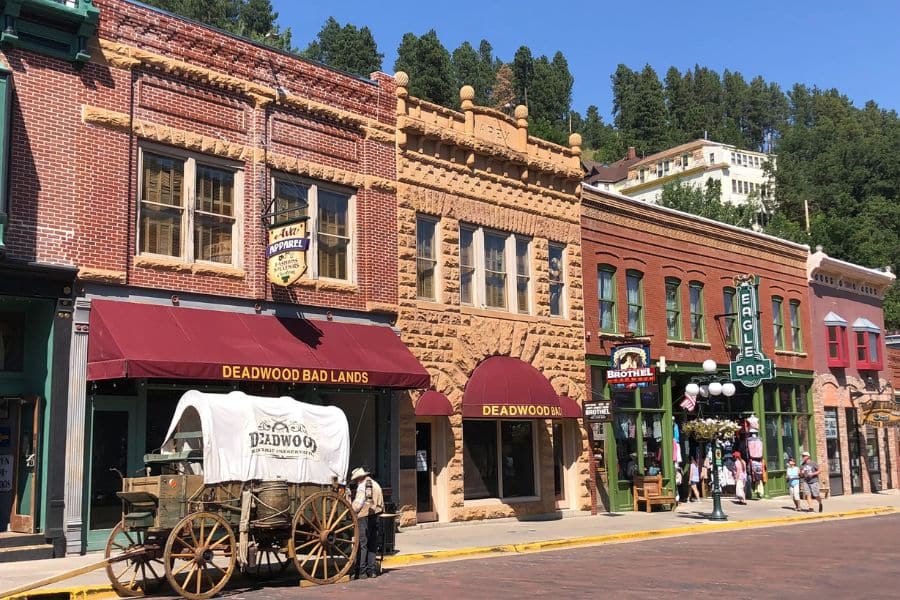
Deadwood, South Dakota
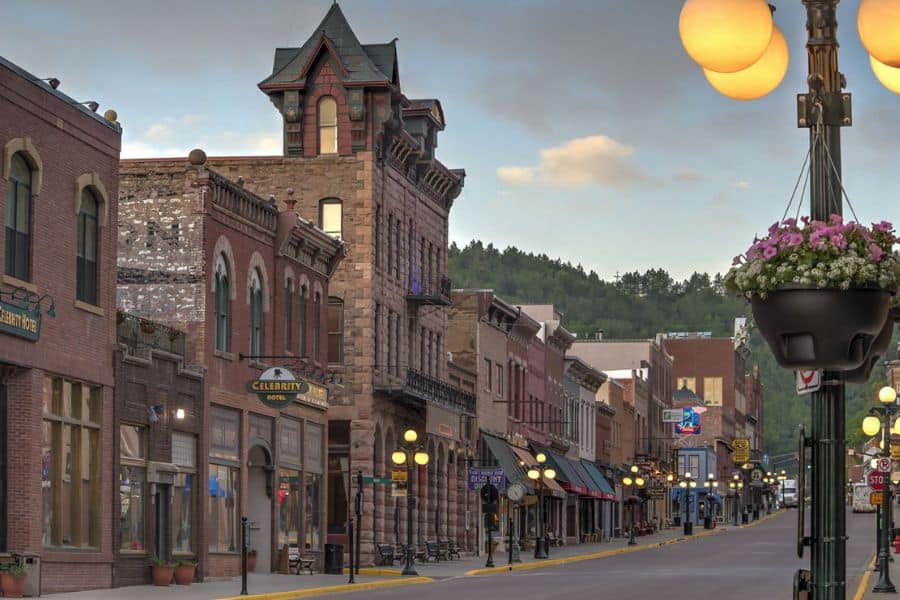
If you’re a Doris Day fan, you’ll no doubt have watched the musical Calamity Jane, set in the town of Deadwood. In 1876, thousands of miners, gamblers, and gunslingers flooded into a narrow canyon in the Black Hills, drawn by one thing: gold. The town that sprang up almost overnight was lawless, wild, and utterly chaotic.
Wild Bill Hickok arrived that summer and was shot dead while playing cards. Calamity Jane nursed the sick through a smallpox epidemic. The whole place felt like it was one bad hand of poker away from disaster. The entire town is a National Historic Landmark, and the Victorian brick buildings lining the main street have been carefully restored.
Top 3 Things to See:
- Mount Moriah Cemetery, where Wild Bill Hickok and Calamity Jane are buried side by side. It sits on a hill above the town with sweeping views over the Black Hills, and the headstones tell stories that read like frontier fiction.
- Saloon No. 10, the original site where Wild Bill was shot. It functions as a bar and museum, and daily reenactments of the assassination are staged for visitors. Sit in the dead man’s chair if you dare.
- The Adams Museum, one of the oldest museums in the Black Hills, has exhibits covering the Gold Rush era, the town’s famous residents, and the seedier side of life in a Wild West boomtown.
Where to stay in Deadwood >>>
Virginia City, Nevada
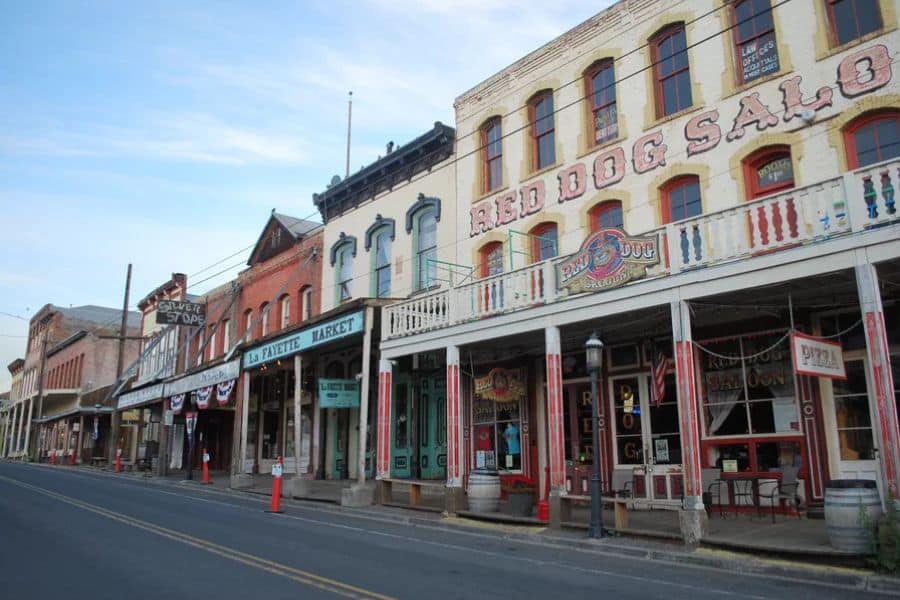
In 1859, two miners accidentally struck the Comstock Lode, one of the richest silver deposits ever discovered in North America. Within months, Virginia City exploded from nothing into a roaring city of thousands.
Mark Twain worked here as a newspaper reporter. George Hearst made his fortune in these mines. The silver pulled from these hills helped fund the Union Army during the Civil War and accelerated Nevada’s statehood.
By the 1880s, the silver was largely gone, but the buildings stayed. Virginia City was designated a National Historic Landmark District in 1961, and today its well-preserved 19th-century architecture draws visitors who want to walk streets where the original Wild West played out.
Top 3 Things to See:
- The Mark Twain Museum is inside the Territorial Enterprise building, where a young Samuel Clemens first started writing under his famous pen name. The exhibits trace both his career and the newspaper that launched it.
- The Washoe Club is the oldest saloon in Virginia City. The “bonanza kings” drank here when the mines were at their peak, and if you’re into ghost stories, this place has earned its reputation as one of the most haunted buildings in the West.
- Piper’s Opera House, built in 1885, hosted some of the biggest entertainment acts of its era. You can still tour the beautifully preserved interior and imagine what it looked like, packed with miners celebrating a lucky week.
Where to stay in Virginia City >>>
Colonial Williamsburg, Virginia
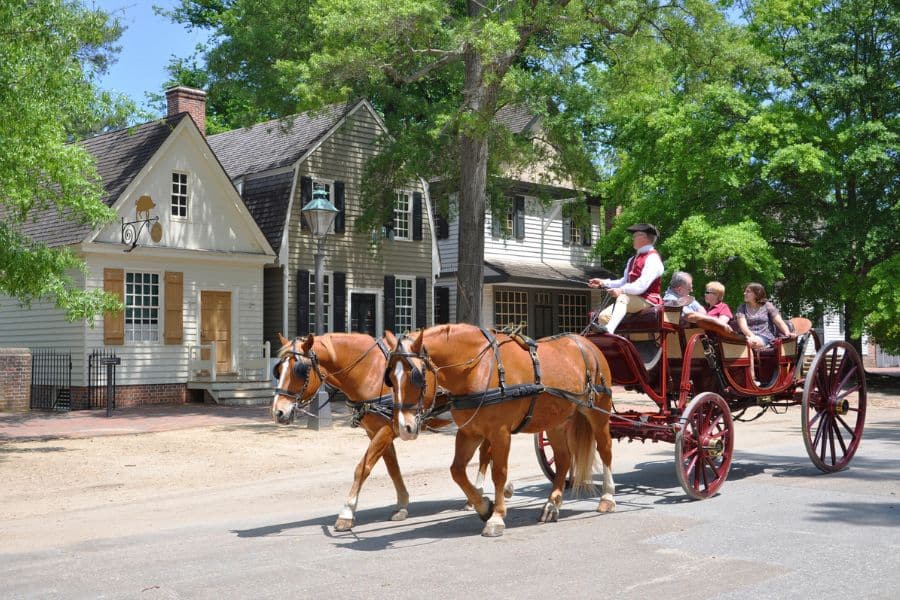
Williamsburg was the capital of colonial Virginia from 1699 to 1780, and for much of that time, it was the most politically important city in America. This is where Virginia legislators debated independence before any other colony, where Thomas Jefferson learned from his mentor George Wythe, and where the foundations of American democracy were laid, one heated argument at a time.
By the early 20th century, many of the colonial buildings had fallen into disrepair. Then John D. Rockefeller Jr. stepped in with his checkbook. The restoration project that began in 1926 has been running ever since.
Today, Colonial Williamsburg covers 301 acres, with 89 original 18th-century buildings and hundreds more reconstructed on their original foundations. Costumed interpreters go about daily colonial life around you as you explore.
Top 3 Things to See:
- The Governor’s Palace, home to seven royal governors and later to Patrick Henry and Thomas Jefferson as Virginia’s first elected governors. The rooms are furnished exactly as they would have been, and the formal gardens behind the building are stunning.
- The Capitol building, where Virginia legislators voted to instruct their delegates to introduce the resolution for independence from Great Britain in 1776, weeks before the Declaration was signed. The reconstructed building sits on its original foundations.
- The Raleigh Tavern, the unofficial meeting place for members of the House of Burgesses after the royal governor repeatedly dissolved their official sessions. Some of the most significant political conversations in American history happened over drinks at this bar.
Where to stay in Colonial Williamsburg >>>
Old Salem, North Carolina
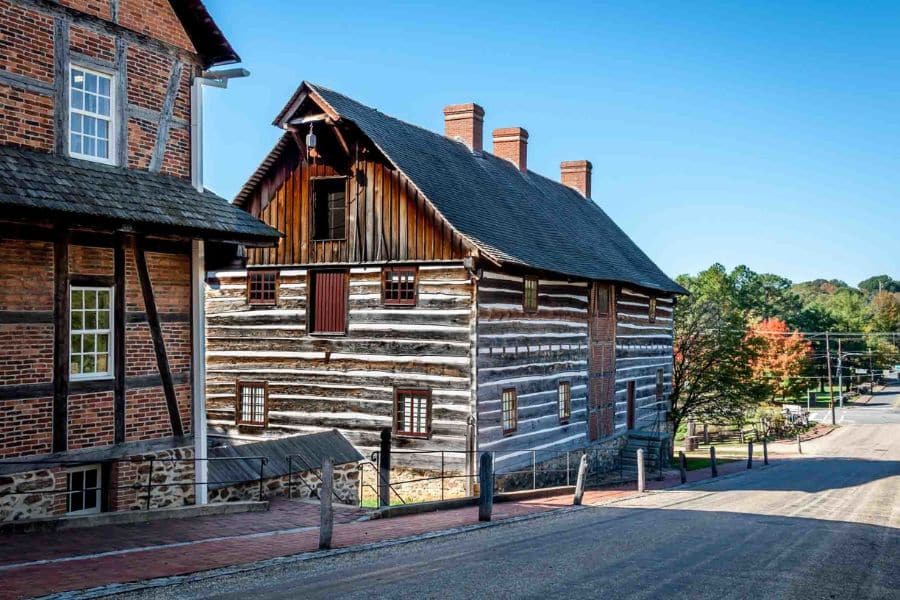
Most people have never heard of the Moravians. They were a Protestant denomination founded in 1457 in what is now the Czech Republic, and after centuries of persecution across Europe, a group of them purchased nearly 100,000 acres of land in the North Carolina backcountry in 1753. They called it Wachovia. Their central town, Salem, meaning “peace,” was built from 1766 onward with meticulous planning and even more meticulous record-keeping.
The Moravians were great administrators and documented everything, so historians were able to reconstruct the town with extraordinary accuracy. Around 70% of the buildings in the historic district are original. Skilled craftsmen and living-history interpreters still practice their trades in period clothing, from tinsmithing to cobbling to baking.
Top 3 Things to See:
- The Single Brothers’ House, built in 1769 as the home and workplace for unmarried men learning their trades. It was the first institutional building in Salem, and today you can watch live craft demonstrations that show exactly how those trades worked.
- The Winkler Bakery, the oldest continually operating bakery in the entire country. Everything is still made over a wood fire, and the Moravian sugar cake and spiced cookies coming out of that oven have been made the same way since 1800.
- The St. Philips Heritage Center, built in 1861 and considered the oldest surviving African American church in North Carolina. The museum explores the history of slavery and segregation within the Moravian community.
Where to stay in Old Salem >>>
Galena, Illinois
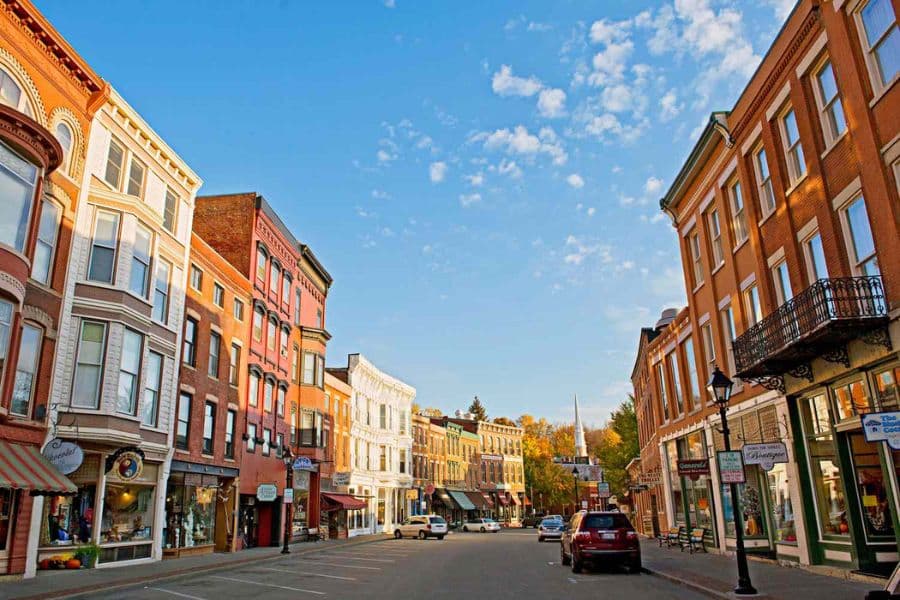
Before Chicago was Chicago, Galena was an important place. Sitting along the Galena River in northwestern Illinois, the town grew wealthy on lead mining in the 1820s and 1830s, and at its peak, its population of 14,000 rivaled that of young Chicago. Steamboats crowded its docks. The streets were lined with grand Italianate mansions and Federal-style storefronts that practically hummed with prosperity.
Then the lead ran out, the river silted up, and Galena froze in time. Which is why, walking through its downtown today, you feel like you’ve been transported back 150 years. The entire downtown area is listed on the National Register of Historic Places, with over 800 contributing properties. And then there’s the small matter of Ulysses S. Grant. He moved here before the Civil War to work at his family’s leather goods store.
Top 3 Things to See:
- The Ulysses S. Grant Home, a handsome Italianate house presented to the general by grateful Galena citizens in 1865. Most of the original furnishings are still there. Grant used it as his campaign headquarters for his 1868 presidential run, and you can tour every room as it looked during that period.
- The Galena and U.S. Grant Museum, housed in an 1858 mansion with 6,000 square feet of exhibits covering the lead mining era, the Civil War, and the nine generals who called Galena home.
- Main Street itself, which curves along the Galena River lined with 19th-century buildings housing independent shops, galleries, and restaurants. The DeSoto House Hotel, where Lincoln and Douglas both campaigned, and where Grant ran his presidential campaign.
Where to stay in Galena >>>
Natchitoches, Louisiana
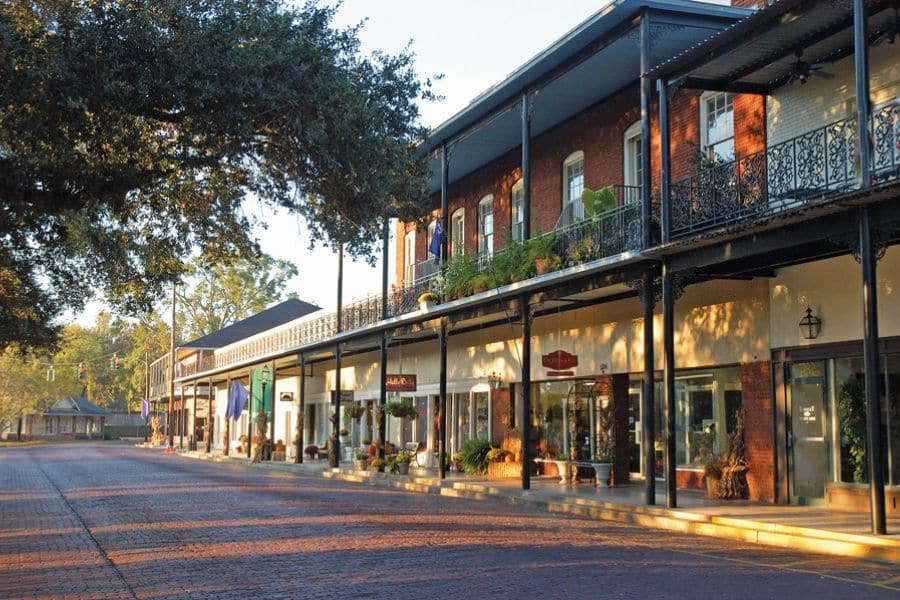
Natchitoches was established in 1714 by a French Canadian explorer, Louis Juchereau de St. Denis, making it the oldest permanent settlement in the Louisiana Purchase territory. That’s older than New Orleans. St. Denis built a small trading post here on the Red River to facilitate trade with the Spanish in Mexico, and the town that grew around it absorbed French, Spanish, African, Creole, and Native American influences until it became something entirely its own.
The 33-block National Historic Landmark District along Cane River Lake is spectacularly preserved, with wrought-iron balconies, brick streets, and centuries-old buildings that catch the light in the late afternoon. If it all looks a little familiar, it might be because Steel Magnolias was filmed here in 1989.
Top 3 Things to See:
- Front Street along Cane River Lake, where Victorian architecture with cast-iron gallery railings faces the water. The Kaffie-Frederick General Mercantile Store has been open since 1894, still operates its original freight elevator, and still has a 1910 cash register on the counter.
- Fort St. Jean Baptiste State Historic Site is a full-scale replica of the 1732 French colonial fort, where costumed rangers interpret life for French marines in the early 18th century. The original fort is long gone, but this reconstruction is impressively detailed.
- Lasyone’s Meat Pie Restaurant. This is not optional. The Natchitoches meat pie is a local institution, a hand-crimped pastry filled with spiced beef and pork that locals have been eating since the 1700s.
Where to stay in Natchitoches >>>
Tombstone, Arizona
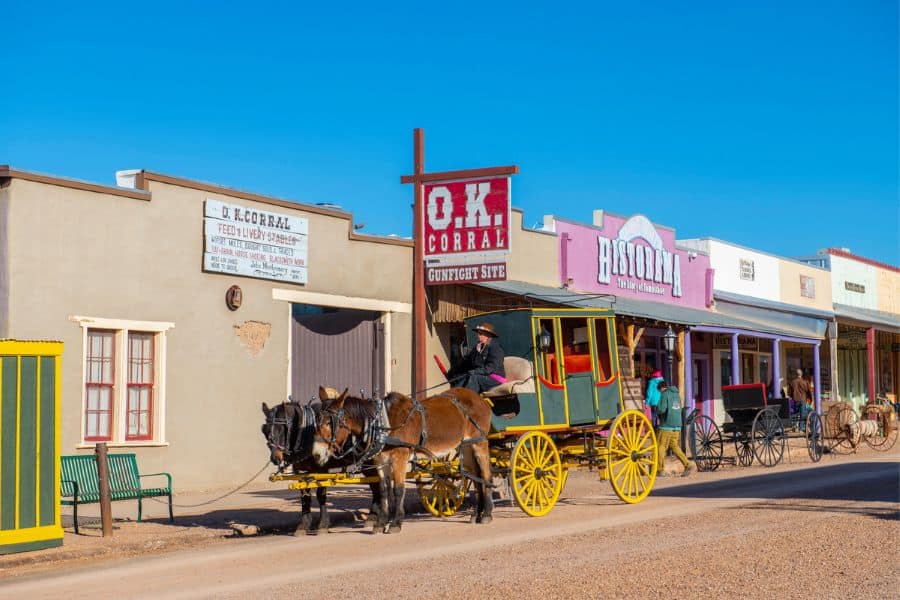
The name alone tells you something. Ed Schieffelin was warned when he rode into the Arizona territory in 1877 that all he’d find out there was his tombstone. He found silver instead, a lot of it, and named the town in honor of the joke. Within four years, Tombstone had 7,000 people, 100 saloons, four newspapers, and a reputation for violence that spread clear across the country.
On October 26, 1881, in a vacant lot near the O.K. Corral, Wyatt Earp, his brothers, and Doc Holliday faced down the Clanton and McLaury gang in a 30-second gunfight that produced three bodies and became the most written-about moment in Wild West history. The silver ran out by 1911, but the stories kept the town alive.
Allen Street has been preserved to look as it did in the 1880s, with boardwalks, saloons, and storefronts that make it easy to picture the town as it was. Tombstone calls itself “The Town Too Tough to Die,” and it has earned that.
Top 3 Things to See:
- The O.K. Corral, where daily reenactments of the famous gunfight take place with actors playing the Earps and the Clantons. The site itself is preserved, and the adjacent museum includes exhibits on Wyatt Earp and the events that made Tombstone famous.
- The Bird Cage Theater, which opened on Christmas Eve 1881, never closed its doors for the next eight years. It is one of the few buildings in Tombstone that survived the fires, and the original poker tables, gambling equipment, and stage fixtures are still inside. Doc Holliday’s Faro table is here.
- Boothill Graveyard, where the men killed in the O.K. Corral gunfight are buried alongside dozens of other Tombstone residents who died with their boots on. The headstone inscriptions alone are worth the visit.
Where to stay in Tombstone >>>
Silver City, New Mexico
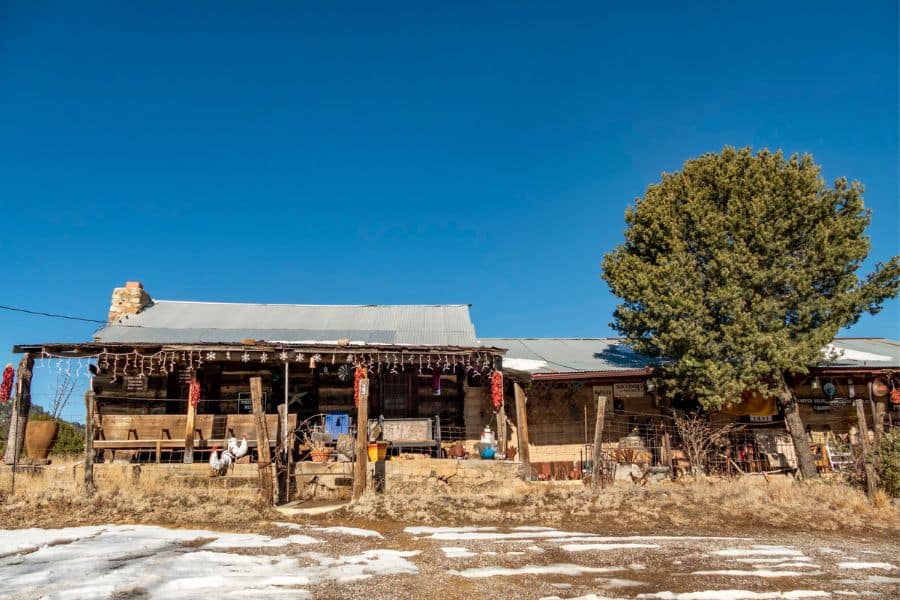
Long before American prospectors arrived, this corner of southwestern New Mexico was home to the Mimbres Mogollon people, then Apache bands, and finally Spanish colonists mining copper from the Santa Rita Hills. Silver City itself was founded in 1870, after the discovery of silver deposits on a hill west of town, and it grew fast, drawing the kind of characters that frontier boomtowns always attracted.
Billy the Kid grew up here. He arrived as a child named Henry Antrim, became an orphan at 14, and was arrested twice by Sheriff Harvey Whitehill before escaping jail by climbing up the chimney and heading for Tombstone. His mother is buried in the Silver City cemetery.
Silver City is New Mexico’s oldest incorporated community and still operates under its 1878 territorial charter. The historic downtown has a distinctive artistic energy today, with galleries and murals woven between Victorian-era buildings, but the bones of the frontier town are very much intact.
Top 3 Things to See:
- The Silver City Museum, housed in an 1881 Italianate mansion, covers everything from the Mimbres people to the silver rush to the famous 1895 flood that carved a 55-foot ditch through the middle of Main Street and permanently rerouted the town’s layout.
- The Big Ditch, the result of that same flood. What was once a disaster became a park. You can walk the paths along the shaded arroyo that runs where Main Street used to be, and the story of how it got there is one of the more unusual in American history.
- The Western New Mexico University Museum, which houses one of the finest collections of Mimbres black-and-white pottery in the world, most of it over a thousand years old.
Where to stay in Silver City >>>
New Castle, Delaware
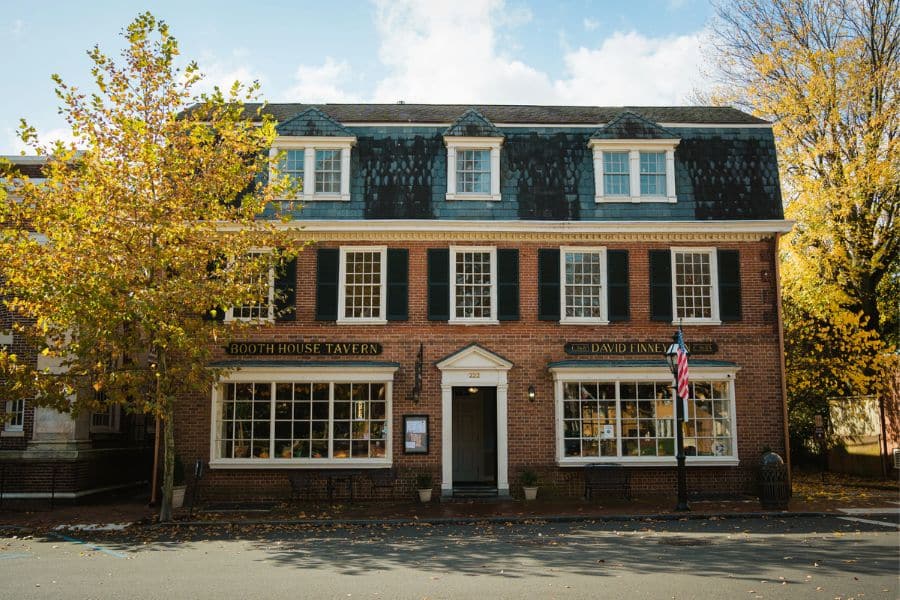
New Castle sits on the Delaware River, ten minutes south of Wilmington, and most travelers rush straight past it on I-95. That is a mistake.
Founded in 1651, New Castle is among the oldest continually occupied towns in America. It was the first capital of Delaware, the site where William Penn first set foot in the New World, and a center of colonial and revolutionary life for well over a century.
When the state capital moved to Dover in 1777, New Castle’s growth slowed, and its 17th- and 18th-century buildings remained frozen in time. According to preservation experts, it is considered the most authentically preserved colonial town in America after Colonial Williamsburg.
Top 3 Things to See:
- The New Castle Court House, built in 1732, served as Delaware’s first courthouse and state capitol. It is one of the oldest surviving courthouses in the United States, and the free tours cover Delaware’s formation, its vote for independence from both Pennsylvania and Great Britain, and the building’s role in early American justice.
- The Amstel House, the oldest surviving Georgian residence in New Castle, built in 1738. George Washington visited here. The period furnishings and original woodwork inside give you a very real sense of 18th-century domestic life among Delaware’s elite.
- The Dutch House, one of the oldest surviving structures in the state, furnished with Dutch colonial antiques that take you back to the 17th century when this town was a Dutch settlement called Fort Casimir. Most visitors have no idea this place exists. That’s half the appeal.
Disclaimer: This article is for general information only and is not professional advice. It may contain affiliate links. Please see our full Editorial Policy for details.

Kylie Lang is a nationally syndicated travel journalist with bylines on the Associated Press Wire & more, a lifestyle writer, and the founder and editor of Your Lifestyle Library (yourlifestylelibrary.com). She holds a BA (Honours) in History from the University of Kent and is a member of the British Guild of Travel Writers.