
Do you have that one corner of the yard where you keep meaning to squeeze in a vegetable bed but can’t quite bring yourself to sacrifice the flowers? The border by our front gate here in southwest France gets the best sun on the whole plot.
Every spring I stand there with a mug of coffee thinking I really ought to grow some food in it, and every spring I choose more flowers because I want it to look pretty when people walk by.
It took me a while to realize you don’t need to separate the edible from the beautiful.
You can grow food that looks as good as, or better than, half the ornamentals, and you can grow it right in the middle of a border where everyone will see it.
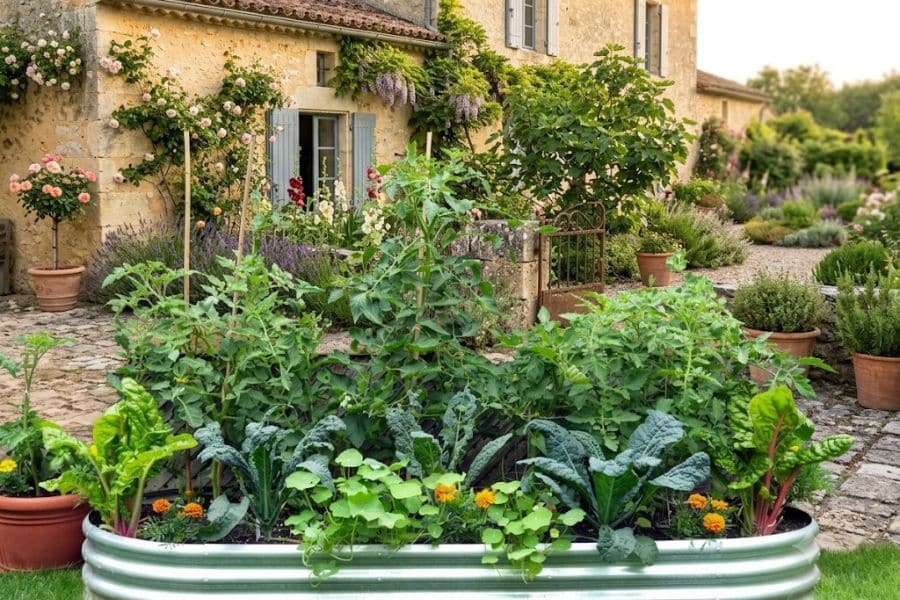
7 Edible Plants That Are as Pretty as They Taste
So here are 7 edible plants I’ve grown myself, all of which earn their place in a border on looks alone. The fact that you get to eat them is a bonus.
1. A Columnar Apple Tree in a Small Bed
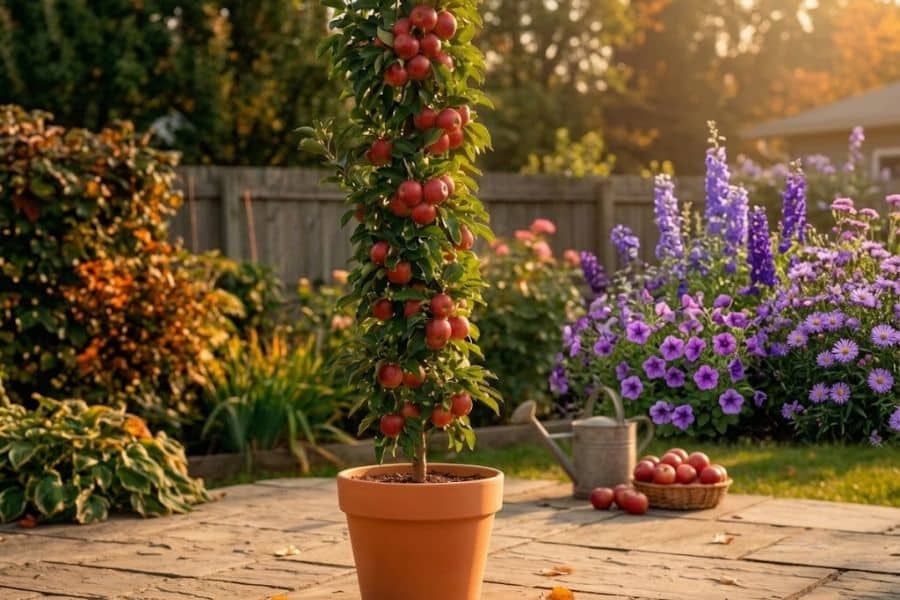
Columnar apples are the answer to everyone who ever said they’d love an apple tree but don’t have room. They grow straight up in a narrow pillar, maybe 18 inches wide and 8 feet tall at most, with the fruit clustered tight to the trunk.
You can plant one in a bed that’s barely 2 feet across, or in a big pot by a doorway, and it looks like a piece of green architecture the rest of the year.
In spring, it’s covered in pale pink blossom; in summer, it’s a neat green column; and in September, it’s apples.
Look for varieties sold as Ballerina, Urban, or columnar (the names vary depending where you shop). They want full sun, decent soil, and a stake for the first year or two while they settle.
Beyond that, they’re about as low-effort as a fruit tree gets, and they let you grow apples in a yard the size of a parking space.
2. Blueberries in a Pot by the Back Door
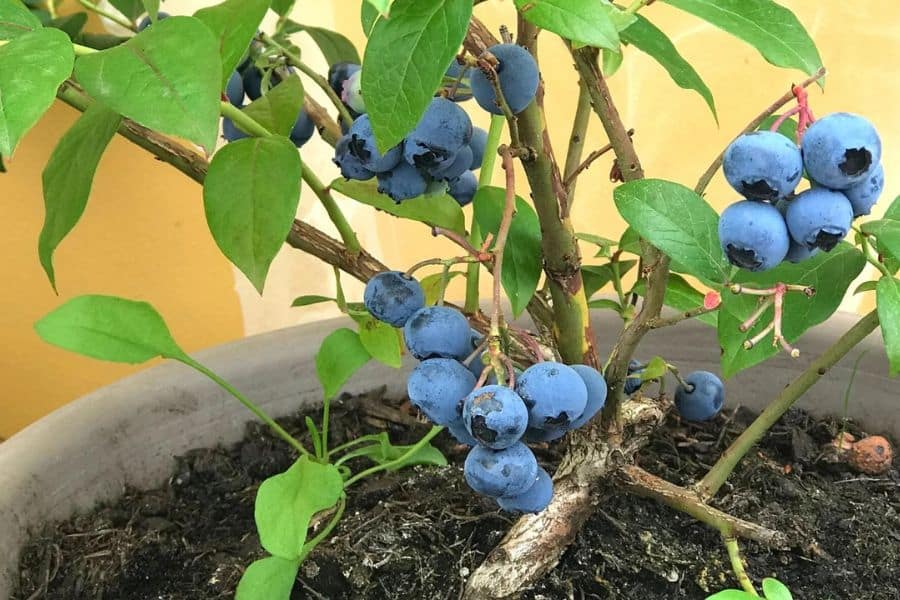
Blueberries are the sneakiest pretty plant in the edible world. Glossy leaves that turn scarlet and orange in fall, little white bell flowers in spring, and then the fruit itself, which goes from green to pink to the beautiful blue color we all know.
A well-kept blueberry bush in a big pot is prettier than most of the shrubs people pay a fortune for at the garden center.
The reason I keep mine in pots is soil. Blueberries want acid soil, and mine is chalky, so trying to grow them in the ground here would be a slow, sad failure. In a big pot filled with ericaceous compost (the kind sold for azaleas and rhododendrons), they’re happy as anything.
Buy two different varieties if you can, because they crop much better with a friend nearby. Duke, Bluecrop, and Chandler are all reliable and easy to find. Prune out the oldest woody stems every few years to keep new fruiting wood coming, and net them when the fruit starts to ripen, or the birds will beat you to breakfast every single morning.
3. Rainbow Chard Where You’d Normally Put a Bedding Plant
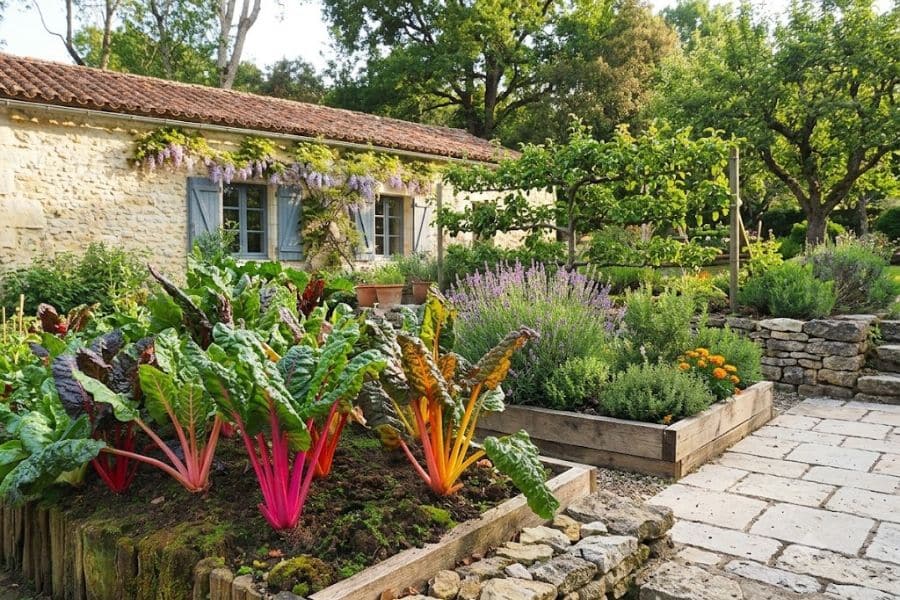
If you’ve never grown rainbow chard, you’re missing one of the easiest, showiest edibles going. The stems come in yellow, pink, orange, red, and white, and the leaves are large, glossy, and slightly crinkled.
I use it as a filler in gaps where I’d otherwise stuff in a bedding plant. It sits happily between perennials, keeps producing leaves from late spring all the way into fall, and if you cut the outer leaves and leave the center to keep growing, one plant will feed you for months.
The little ones are lovely in salads, the big ones cook down like spinach but hold their shape better, and the stems can be sautéed separately.
Sow a pinch of seed in April or May, thin to about 8 inches apart, and water them in dry spells or the leaves go bitter. Slugs will have a nibble when the plants are young, so I put a ring of coarse grit round each seedling until they toughen up.
After that, the plants pretty much look after themselves, and they’ll often survive a mild winter and give you another flush of leaves the following spring.
4. Scarlet Emperor Pole Beans up an Obelisk
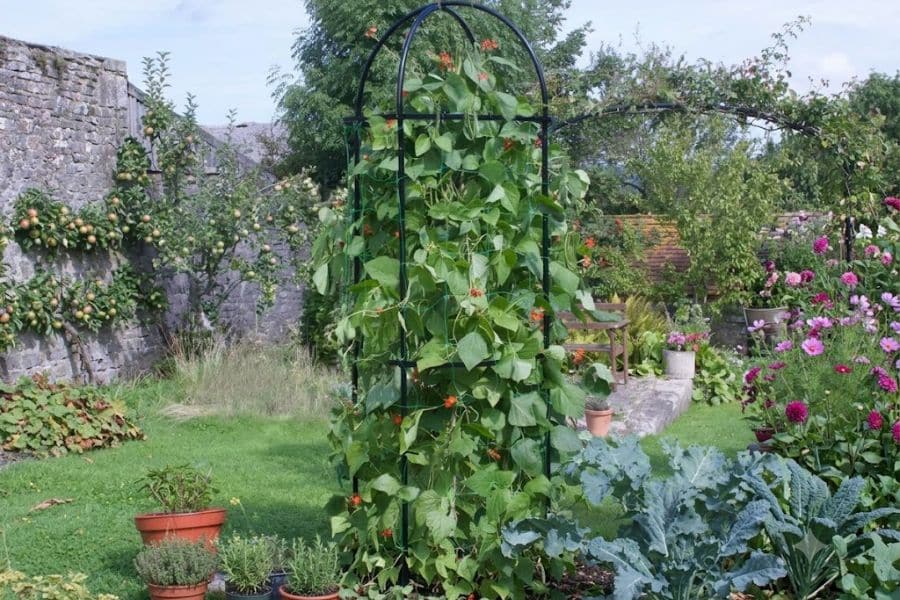
Scarlet Emperor is a pole bean, the kind my grandad grew up long bamboo canes on his allotment, with fiery red flowers that hummingbirds and bees love, followed by long green beans that keep coming as long as you keep picking.
Up a plain bamboo teepee, it looks like a vegetable, which is fine. Up a proper metal obelisk in the middle of a flower border, it looks like a deliberate design decision, which is better.
Sow the beans in pots indoors in April, or straight in the ground in May once the last frost has been and gone, and give them something at least 6 feet tall to climb.
Pinch out the tops when they reach the top of the support so they bush out sideways and set more flowers. Keep them well watered once they start flowering, or the pods drop off, and pick them young and tender rather than letting them turn into leathery giants.
5. Purple Sage in a Sunny Front Bed
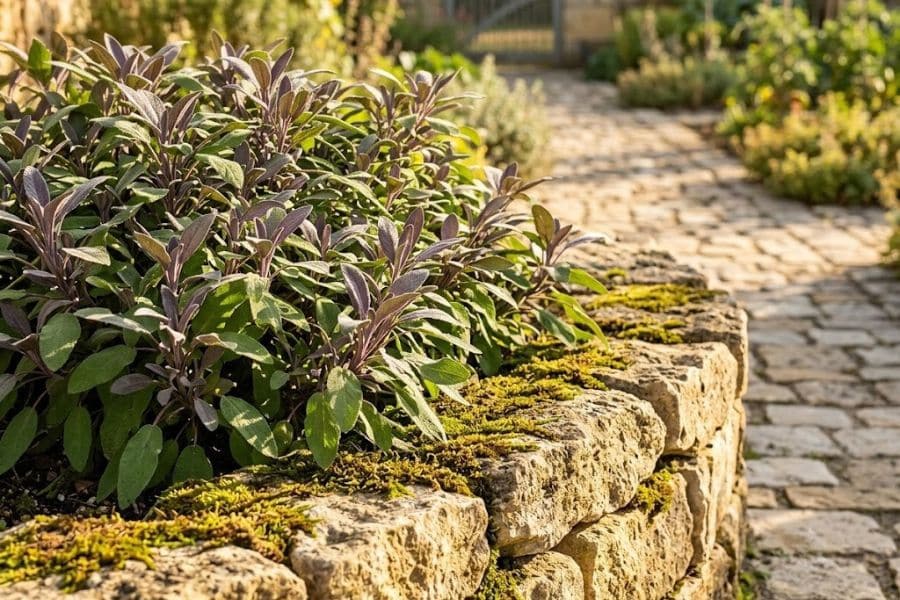
Herbs are the obvious choice for edible ornamentals, and purple sage is gorgeous. The leaves are that dusty purple-gray that goes with absolutely everything; it does pretty well all winter here in southwest France, and in June it throws up spikes of blue-purple flowers that the bees love.
I’ve got a clump in a sunny front bed alongside lavender and thyme, and the three of them together do more for that border than any of the fancier plants I’ve put in over the years.
Sage likes full sun, sharp drainage, and to be left alone. If your soil is heavy, dig in a couple of handfuls of grit before planting, or grow it in a pot.
It hates sitting in wet feet over winter, and that’s what kills most sage plants people lose.
Give it a light haircut in spring, taking off the tattier stems and shaping it into a soft mound, and it’ll happily last 5 or 6 years before it needs replacing.
6. Alpine Strawberries as a Border Edge
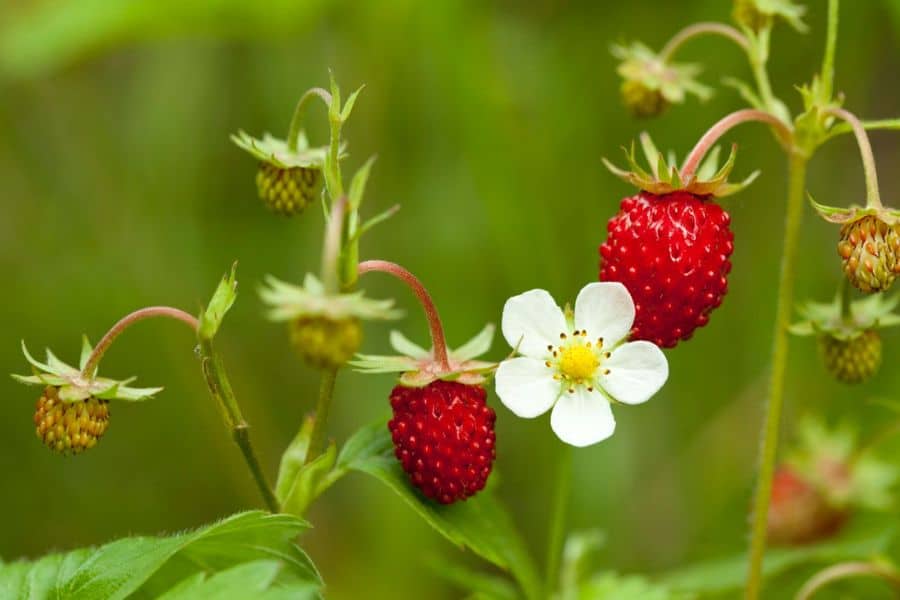
Regular strawberries are a bit of a menace in a border, sending out runners and sprawling everywhere. Alpine strawberries are the tidier, better-behaved cousin. They form neat little clumps about 8 inches high; they don’t run all over the place, and they produce tiny sweet berries all summer long.
I use them as an edging plant along the front of a shady border, where the soil stays a bit damper. They cope with part shade better than most edibles; they flower and fruit at the same time from June through October, and the little berries look like beads scattered through the leaves.
You can grow them from seed if you’re patient, or buy small plants in spring. Mignonette and Alexandria are the two varieties I’ve grown, and both are reliable. They don’t want to be fed much, and overly rich soil actually makes them leafy at the expense of fruit, so plant them and mostly leave them alone.
Every 3 or 4 years, lift and split the clumps to keep them productive.
7. Nasturtiums Spilling Over the Edge of a Bed
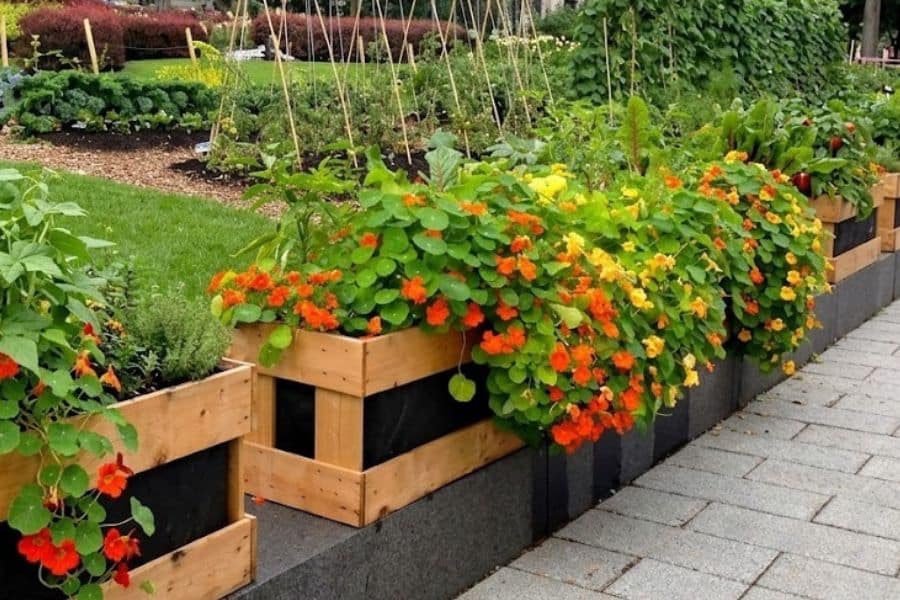
Nasturtiums are the plant I recommend to anyone who says they can’t grow anything. They sprout from big, fat seeds you can push into the ground with your finger; they flower from June until the first frost; they don’t want feeding or fussing; and every part of the plant above ground is edible. Flowers, leaves, seed pods, the lot.
The round lily-pad leaves are lovely, the flowers come in hot oranges and reds and buttery yellows, and sometimes a deep almost-black red, and the trailing kinds will spill over the edge of a raised bed.
I let them self-seed in the gravel by our front door, and every year they come back a bit different depending on which colors won the pollinator lottery.
The peppery leaves and flowers are gorgeous in a summer salad, adding a bit of watercress-like heat and a lot of color to the plate. You can also pickle the green seed pods and use them like capers, which is one of those things I read about years ago and finally got round to trying, and it turns out to be very much worth the effort.
Sow a handful of seeds in April or May, water them in, and don’t feed them, because rich soil gives you a jungle of leaves and no flowers. Poor soil, full sun, and a bit of neglect are exactly what they want.