
I take a handful of vitamins daily, from turmeric with cohosh pepper to cod liver oil tablets. All of the ones I take have a specific job and have been recommended to me by health professionals who know their stuff.
I’m also a woman in my mid-fifties who is extremely aware of her aging body and doing what she can to give it a helping hand. I’d never take supplements willy-nilly without knowing they had a purpose.
But did you know that when you take vitamins is almost as important as what you take? I didn’t till a while ago. I used to take them all at the same time, first thing in the morning, so I didn’t forget. Apparently that isn’t the right thing to do.

7 Vitamins That Don’t Work Unless You Take Them at the Right Time of Day
So what is the right thing to do? When should you take your vitamins, and what happens if you don’t take them at the right time? Firstly, not all vitamins are created equal, and these seven are specifically affected by the time you take them.
1. Vitamin B12: Take It Before Breakfast, Not With It
As we age, stomach acid production can drop by up to 40 percent, and the acid is what pries B12 loose from the food it’s bound to. Without enough of it, food-bound B12 just passes through.
Roughly 30 percent of adults over 50 have trouble absorbing B12 from food for exactly this reason. There’s a protein called intrinsic factor that has to attach to B12 in the gut before it can be absorbed, and older stomachs simply make less of it.
Piling scrambled eggs or your breakfast of choice on top of your B12 pill doesn’t help; it competes for the same slow, sluggish digestive machinery.
Synthetic B12 in supplement form gets around most of that, because it’s not bound to food protein in the first place. Take it first thing on an empty stomach with a glass of water, about 20 to 30 minutes before you eat, and it has a clear runway.
If you’re using a sublingual tablet that dissolves under the tongue, even better, because it bypasses the stomach entirely.
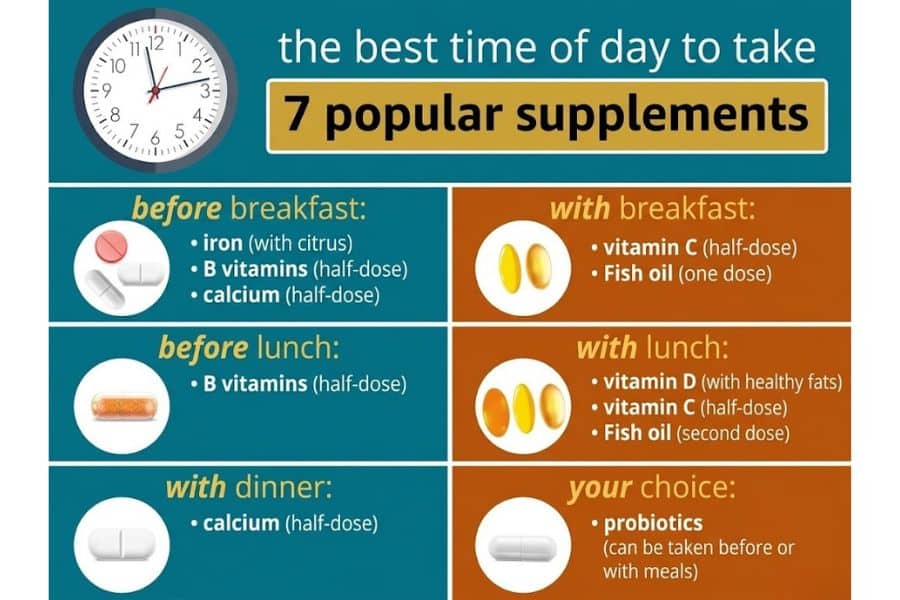
2. Vitamin D3: Pair It With a Meal That Has Fat In It
Vitamin D3 is fat-soluble, so it needs dietary fat to get through the intestinal wall. Take it with black coffee and a dry piece of toast, and a decent chunk of it goes straight down the drain.
A study on vitamin D absorption found that taking it with a fat-containing meal increased absorption by around 32 percent compared to a fat-free meal.
After 50, this matters more than it used to. Older skin makes less D3 from sunlight, and if you live somewhere with real winters, you’re already running on empty for months at a time.
The fix is to move it to your biggest meal of the day, whether that’s lunch or dinner. Not a huge meal, just one that has some fat in it. A few good options to eat alongside it:
- A drizzle of olive oil on your salad or vegetables
- Half an avocado
- A handful of walnuts or almonds
- Salmon, sardines, or mackerel
- Whole eggs, cheese, or full-fat yogurt
One small change, and you get a third more out of the same pill.
3. Calcium: Split the Dose, and Give Some to the Evening
If you take a single 1,000mg calcium tablet in the morning, your body absorbs less than 20 percent of it, because the gut simply cannot process more than about 500mg of calcium at a time. The rest is wasted.
So the person diligently taking one big pill a day for their bones is getting roughly half of what they think they are.
Splitting the dose in two is the answer, one in the morning and one in the evening. Calcium levels in the blood naturally dip overnight, and the body starts pulling calcium out of the bones to compensate.
A couple of other things to keep in mind: don’t take your calcium at the same time as your iron or your zinc, because they’ll all fight for the same absorption pathways. And keep it separate from magnesium too.
Calcium is a bit of a bully in the gut, and it does better on its own.
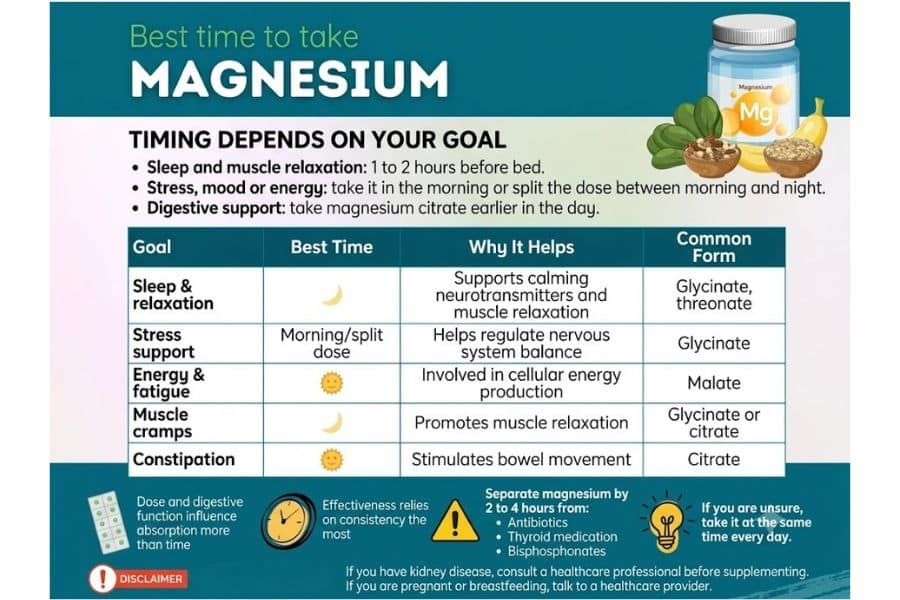
4. Magnesium: Save It for the Evening
Magnesium is involved in more than 300 biochemical reactions in the body, and around half of older adults don’t get enough of it from food alone. It’s the one that helps calm the nervous system, relax muscles, and support sleep, so taking it in the morning with your other pills is a bit like drinking a chamomile tea and then trying to run errands.
This is the one both my husband and I take daily, and it’s helped so much with my sleep, which is why I moved taking it to the evening, about an hour before bed.
If you want to use it for sleep, magnesium glycinate is good because it’s gentle on the stomach and crosses the blood-brain barrier more easily than the cheaper oxide form (which is mostly used as a laxative, so worth knowing before you buy the bargain bottle).
Magnesium citrate is another decent option, though it can loosen things up more than you’d like at higher doses. The one I take is Marine Magnesium as it helps with many menopause symptoms, including achy legs.
One more reason to move it away from breakfast: magnesium and calcium compete for absorption. If you’re taking both, they need to be hours apart. Calcium with breakfast and lunch, magnesium with dinner or before bed, and both of them get to do their job without stepping on each other.
5. Zinc: Take It Between Meals, and Nowhere Near Calcium or Iron
Zinc is one of the immune-support supplements that gets a workout every cold season, and it does matter for immune function and wound healing, both of which get creakier with age.
But zinc is a demanding roommate. It’s a highly reactive metal, and if it meets calcium or iron in your gut, they’ll block it from being absorbed almost entirely.
On an empty stomach, zinc can also make you feel queasy. That churning, slightly nauseous feeling about 20 minutes after taking a pill is very often zinc.
The compromise is to have it with a small snack that isn’t dairy and isn’t fortified with iron, such as a piece of fruit, a couple of crackers, or a handful of nuts, about two hours after a main meal.
Zinc absorption peaks about 150 minutes after you take it, so keeping that window clear of other minerals is the whole trick. If you take a multivitamin that already contains zinc, that’s usually fine because the doses are moderate, but a standalone zinc supplement wants some breathing room.
6. Vitamin C: Take It in Small Doses, Spread Through the Day
Vitamin C is water-soluble, but there is only so much it can absorb in one go. Above 1,000mg in a single dose, absorption drops by around 50 percent, and the rest gets filtered out by the kidneys and flushed.
So the mega-dose approach, one enormous 1,000mg tablet gulped down with breakfast, is largely a waste. You want smaller doses spread throughout the day, maybe 250- 500 mg at a time, twice or three times.
There’s a useful side effect to taking a bit of vitamin C with meals: it helps you absorb plant-based iron, the kind that comes from beans, lentils, spinach, and other leafy greens. So if you’re eating more of a plant-based diet in your 50s and beyond (which a lot of us are), a bit of vitamin C alongside your lunch or dinner earns its keep twice over.
An evening dose is fine too. Some newer thinking suggests vitamin C in the evening supports cardiovascular repair overnight, and unlike some other supplements, it won’t keep you awake.
7. Iron: On Its Own, or Not at All
Iron is the odd one out on this list, and worth a word of caution. Most adults over 50 do not need iron supplements, and taking iron you don’t need can cause real problems, from constipation to more serious issues over time.
Iron should only be on your shelf if a doctor has tested you and prescribed it, usually for diagnosed anemia. Postmenopausal women in particular tend to have less need for it, not more.
If you do need iron, it should be taken on its own. It blocks the absorption of just about everything, and just about everything blocks its absorption in return. Tannins in coffee and tea can cut iron absorption by up to 80 percent, so no morning cup within an hour either side. Calcium blocks it, zinc blocks it, and even a high-fiber breakfast can interfere.
The usual advice is to take iron on an empty stomach with a small glass of orange juice or water with a bit of lemon, because vitamin C helps with absorption.
If it upsets your stomach, take it with a very light snack, but never with dairy, coffee, tea, or your other supplements. And if you’re getting persistent constipation from it, talk to your doctor about a gentler form like iron bisglycinate.